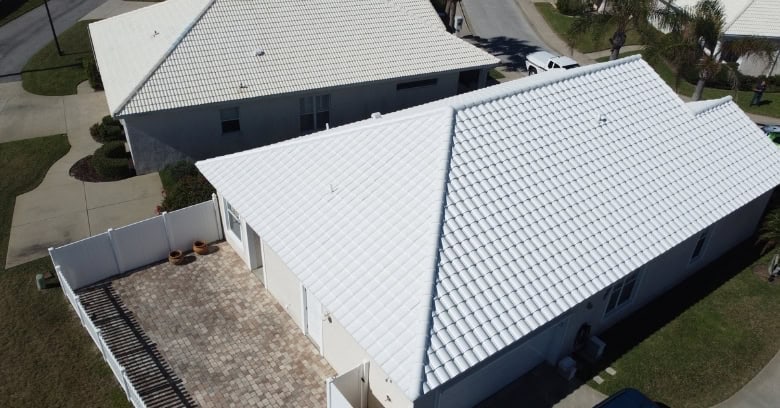
Looking for Roofing Services in Blue Springs Missouri?
APC Roofing takes on anything from a checkup to a full replacement, on shingle, metal and tile alike.
Reach us at 913-398-5020, and a roofer sets a time to come look at the house.
What a Roof Is Made Of: What's Tucked Away
The topmost material is nothing more than the outer layer, and a water barrier, plywood and framing sit below the surface. Bent metal covers the gap at a chimney, a pipe or a valley, and water there rarely traces back to worn shingles close by.
The attic air beneath the deck counts as part of the roof assembly, because moisture trapped up there softens plywood and rusts nails overhead. A brown mark on a ceiling can originate at any level of the roof, and work confined to the outside can miss the real source.
What a Roof Does for a House: More Than Meets the Eye
A pitched covering sends rain down toward the gutters, while nails and seal strips resist the pull of gusts. The framing bears the load above, snow included at the colder end of our territory, and intake and exhaust let the attic breathe.
Shedding water is the covering's task, and resisting wind is the fastening's job, and holding the whole thing up falls to what is underneath. A problem in one material reads as damage on a different part of the roof, so repairs target the root, not the visible mark.
Small Components on a Roof: A Shorter Story
An asphalt surface is expected to serve for decades, but the flexible seal around a stack splits well before the shingles do. Water works past that spot and follows the framing down, and a stain appears on the ceiling below.
A line of caulk at a chimney shrinks with every hot season, and coated metal rusts once the coating wears through. Hip and ridge caps open at the center crease, because the highest point stands open to glare and gusts.
Different Stages, Different Details: Near and Far
From the yard, the shape of the roof reveals dips, sags and wavy planes, and the gutters and trim can be checked in the same glance. Through binoculars, torn collars, lifted tabs and bare patches come into focus, but soft decking can only be felt from up close.
Moving across the planes, a roofer tests every connector and traces every flashing joint, and every course is checked for edges that have come loose. A steep or wet roof is not walked, and the eave, reached by ladder, provides the vantage point instead.
Inside the Attic: Clues From Below
Discolored wood around a fastener points to water that beat the covering, and a clammy touch means the problem is ongoing. A pinpoint of sky through the boards marks a gap, and the distance from the ridge and gable gets measured so the spot can be found outside.
Nails freckled with rust show condensation at work, not rain damage, and a matted, faded patch nearby confirms the same condition. A blocked eave packed with fill, or a bathroom fan venting into the attic, shows up only on an inside look, so a check from the ground alone leaves that kind of fault hidden.
What Comes Home With You: Kept for Reference
A record of the visit takes the form of photographs keyed to spots on the roof, and a caption states what each picture reveals. Sound parts get listed as plainly as anything that requires work, and trouble spots are ranked from most to least urgent.
A filed report from an earlier check-up serves as a reference going forward, and a pattern over time tells more than a single day ever could. A roof checked on a steady yearly cycle seldom surprises the owner, and a serious repair shows warning signs long before the work turns urgent.
Keeping a Shingle Roof in Shape: the Basic List
Worn boots around the stacks get exchanged for new ones, and dried sealant at walls and flues gets redone. Debris gets swept from the valleys and from the crickets, and every outlet gets checked for an open path.
A slipped shingle put back early is easy work, but putting off that step through storms can end in a drywall stain. A mat of moss holds water along the lower edges, and a gentle wash clears the growth, since a pressure washer strips granules.
How Often the Checkup Should Happen: the Basics
Somebody trained in the trade should go over the roof once a year, set for just after the roughest local weather each season. The goal is seeing deterioration ahead of any drip, and the homeowner learns roughly how much life the covering has left.
Following a storm, a walk around the house with eyes on the roof is a good habit, and any new mark on an upstairs ceiling is worth noting. A few minutes under the deck with a lamp each season pay off: damp wood, daylight and wet insulation are easy to see long before anything reaches the space below.
The Age of a Roof Seen From the Ground: What the Years Bring
Newer asphalt lies smooth and uniform in tone, and past the midpoint the south-facing side lightens ahead of the others. At the very end, tabs turn brittle and crack, and mending one area seems to open another.
An impression formed from outside has real value, but a walk on the roof is what confirms the condition. Once shingles are spent, patching stops making sense, and a reliable contractor says so outright, instead of offering another fix.
The Trough Behind the Fascia: What to Watch For
The covering's job on water stops at the drip edge, and from there a gutter does the remaining work. A hanger that has given way tips the run toward the wall, and the material there softens over time.
A weak area there more often means bad drainage than a shingle issue, and a new covering will not fix what backed-up water caused. Gutter pitch and downspout discharge get checked on a visit, and the metal at the drip edge gets looked over for gaps and poor overlap.
What Ventilation Is For: Why the Details Matter
Outside air should enter under the eaves and leave near the peak, and that flow carries built-up heat and dampness away from the attic. Where the opening gets sealed off, the attic runs hot in summer and stays sticky through humid stretches, and the covering wears out early.
A fan starved of intake draws air from the rooms below, not from outdoors, and competing setups on one roof can leave the lower attic stagnant. Fresh shingles laid over stale, trapped heat age nearly as fast as the old ones did, so the arrangement gets corrected while the deck is already open.
Weather Decides Every Job: Set by What's Nearby
At the colder end of our territory, ice at the eaves and the weight of snow shape the build, so an adhered barrier goes under the lowest rows. At the coast, uplift decides the fastening pattern, and reinforced edge metal and sealed seams get specified.
In towns at the colder end of our territory, where hailstones run large, a harder product makes sense, while ultraviolet light ages granules in every market we serve. The details get set by conditions at that specific location, not custom or what happened to be on the truck.
Houses and Commercial Buildings: One Steep, One Flat
A sharply angled pitch sheds water course over course, and shingle, tile and metal all serve that role. A store or warehouse shelters under a nearly flat, sealed membrane, and mechanical equipment and drains break through that surface.
Plenty of residences include a shallow section over an addition, and shingles in that spot often leak because runoff moves too slowly. A spot shaped that way calls for a sheet membrane, tucked under the steeper roof above, and another layer of shingles there brings back the same problem.
Tarps and Emergency Covers: What Holds Up
Plastic over a break keeps the rooms beneath dry for a time, but nothing gets solved underneath. A cover done right crosses the ridge and gets screwed down through battens, and the cover gets tensioned before the flapping starts.
A sheet cut too small leaves the edges of the opening exposed, since water runs sideways under a short edge. Plastic left in place for months traps heat and moisture against the deck, and the covering underneath ages faster than expected.
Where the Roof Changes Direction: an Explanation
Where shingles climb beside a wall, L-shaped pieces alternate with the courses, and a strip of trim above turns down over the top edges. Every chimney needs an apron at the front and metal carried up across each edge, and any stack wider than a small one calls for a cricket set into the slope uphill.
A smear of mastic over a bad patch opens up within a few seasons, so the lasting answer is new metal laced in properly. A failing chimney crown lets moisture into the stack above the roofline, and some leaks like that need a mason as well as a roofer.
Putting Requirements on Paper: Nothing Left Vague
A detailed listing names each material going on the roof, and a plain line covers tearing off versus covering over. A solid outline sets a rule for any soft sheathing found mid-job, and every vent, every flashing piece and the haul-away get called out individually.
Competing proposals listed in detail can be read side by side, and what one write-up covers and another skips becomes obvious. A roofer who will not put the plan down leaves the owner guessing, since a handshake settles nothing once a dispute starts.
A Tear-Off and Rebuild: What a Homeowner Sees
Plants take tarps and hard surfaces take padding before the crew begins, and the existing covering gets removed completely. At that stage, the wood underneath gets inspected, and anything that flexes underfoot gets sawn out and patched.
A water-resistant membrane, fresh flashing and ice protection get installed next, and the surface material, the ridge caps and the vents close out the job. A magnet gets run over the lawn and the driveway when the work is done, and the gutters get checked and cleared of scraps.
Maintenance Beyond Asphalt: What Owners Should Watch
Screw-down metal panels depend on a gasket beneath each fastener, and a worn spot gets cured with a new screw rather than caulk. Based on the house, tile may be mortar-set, foam-set or clipped directly, and the underlayment does the actual waterproofing.
Walking on the wrong spot cracks a piece, and a damaged unit gets swapped for another of matching shape. On a low-slope section, standing water and open seams are the things to watch, and the drain openings get kept free of debris.
Warning Signs Around a House: Easy to Act On
- Coarse grains washing out after every rain, long after the covering was installed.
- Shingle edges cupping upward, in patches that widen every year.
- A hardened gasket at a stack, easy to spot with binoculars.
- Discoloration on a bedroom ceiling, close to an outside wall or a chimney.
- Daylight through the attic boards, wherever nothing should show through.
- Clumps of moss under overhanging trees, pushing up the lower edges of the shingles.
- A bulge that catches the light at dusk, often pointing to trouble in the deck beneath.
- Dried beads separating at a skylight, easy to spot from the yard.
Roofing Services Near Blue Springs Missouri: APC Roofing, Step by Step
Before any recommendation gets made, a roofer walks the whole covering and checks the attic, and the evidence comes back as photographs and the verdict in writing. What is fine gets said as plainly as what needs attention, and the homeowner decides what happens from there.
Roofing Services Near Blue Springs Missouri: Straight Answers About the Roof
Get in touch at 913-398-5020 to schedule a visit to the property.
A Roof's Paperwork: Best Done Early
Saving the install date and the product names on the invoice pays off later, and each visit's report belongs with the earlier entries. Marking down every repair, with the location and the work done, leaves useful detail, and given enough time the pattern becomes clear.
Selling a property brings questions about what is overhead, and dated records answer all that better than memory ever could. A scanned set of the same files, stored separately, guards against a misplaced original, in case the paper sheets go missing in a move.
A Neat Result, Up Close: Quality You Can See
Rows sit true across each plane, with tidy trimming at the gable edges, and every fastener stays hidden under the shingle above. Flashing at walls is new and set in properly, and any sealant used is a neat bead, never a smear.
Intake and exhaust vents stay open and unblocked, and the gutters return to position, clean and fastened. A final sweep with a magnet tidies the yard and drive, and sawdust from a trimmed board is the most common leftover, easy to rinse from a walkway.
Anyone weighing choices for Roofing Services in Blue Springs Missouri has one straightforward next step. Contacting APC Roofing at 913-398-5020 puts a time on the books. Every stop covers the full roof, top to bottom, with nothing left unclear.
Verified

Verified