
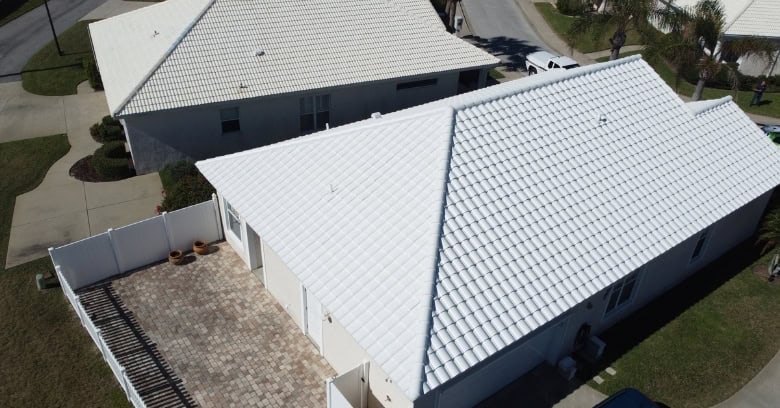
Need Roofing Contractors in Aurora Colorado?
APC Roofing covers everything from a routine checkup to a complete replacement, on shingle, metal and tile alike.
Call 720-902-6940, and a roofer heads out for a look at the house.
The Roof's Working Parts: a Plain Guide
What shows from the curb is just the outer layer, and felt or a synthetic membrane, boards and rafters lie out of sight. Flashing bridges the crossing wherever a wall, a pipe or a valley breaks the field, and trouble nearby seldom means a failure in the surrounding shingles.
The attic air beneath the deck counts as part of the roof assembly, because moisture trapped up there softens plywood and rusts nails overhead. Water showing indoors may come from any level of the structure, and work confined to the outside can miss the real source.
Everyday Work of a Roof: an Owner's Overview
A pitched covering sends rain down toward the gutters, while the fastening pattern stands up to uplift. What lies below carries the weight of everything on top, snow included at the colder end of our territory, while vents give damp attic air a way out.
Shedding water is the covering's task, and resisting wind is the fastening's job, while what is underneath answers for holding the roof up, unnoticed. A weak component shows up as a sign of trouble somewhere else on the roof, so the trail gets followed back before anything gets mended.
The Minor Pieces of a Roof: What Falls Behind First
The main covering is built for a long run, but the flexible seal around a stack splits well before the shingles do. Rain finds a way down past the weak point, and a mark spreads across the ceiling beneath.
Sealant around a skylight loses hold after enough summers, and metal flashing rusts at bends and cut ends. Cap shingles break along the seam, because wind and weather strike the peak harder than the slopes below.
A Walk Around the Property Beforehand: Near and Far
From across the street, the profile of the roof exposes dips, sags and wavy planes, and the fascia and gutter runs are visible at the same time. Through binoculars, torn collars, lifted tabs and bare patches come into focus, yet a few conditions still need a hand on the surface.
Once on the roof, a roofer checks every connector closely and follows the flashing at each wall, and the shingles are checked for brittleness and thin spots. A steep or wet roof is not walked, and the view comes instead from a ladder at the gutter line.
The Underside of a Roof: Clues From Below
A tide line on a rafter shows where rain has entered, and a clammy touch means the problem is ongoing. A glow through the planking in daytime marks a hole, and the distance from the ridge and gable gets measured so the spot can be found outside.
Rust on the nail shanks comes from moisture in the house, not rain, and a matted, faded patch nearby confirms the same condition. Fill pushed into the eave opening, or a fan duct ending in the attic, turns up only from inside, so a check from the ground alone leaves that kind of fault hidden.
The Follow-Up Paperwork: the Basics
Findings arrive as photographs tied to specific places on the roof, and a note explains what each picture shows. Solid sections are treated in the same plain language as sections that are not, and trouble spots are ranked from most to least urgent.
A saved report from an earlier stop gives the next check a baseline, and movement across seasons reads more directly than one day's condition. A roof tracked across each year brings few surprises, and a large job gets seen coming well ahead of time.
Seasonal Shingle Maintenance: a Short Rundown
Worn pipe gaskets get swapped out before failure, and brittle beads at the walls get cut out and run again. Anything the trees drop gets brushed out of the channels, and the gutter runs along the eaves get straightened.
A raised corner glued down in time stays a simple repair, but waiting out a rainy stretch invites water in from beneath. Lichen keeps the surface damp and works in under the shingles, and the growth gets treated and brushed off, never pressure-washed.
The Habit Worth Keeping: Consistency Pays Off
A trade professional should cover the roof on a yearly basis, placed right after the toughest season for roofs in that market. The point is finding small faults before a leak forms, and the family hears plainly where the roof stands.
Between visits, an owner can look at the roof from the yard after rough weather, and upstairs ceilings deserve a look for new marks. Checking the attic with a lamp each season makes sense: discolored boards, light through the deck and damp insulation turn up long before anything reaches the space below.
The Age of a Roof Seen From the Ground: What the Years Bring
Newer asphalt lies smooth and uniform in tone, and approaching midlife the sunniest side fades before the rest. Near the end, corners curl and granules gather in the gutters, and new leaks appear in different spots.
A reading from the ground supplies a fair estimate, but a roofer nearby will always see more. A worn-out field is past the point where patching helps, and a reliable contractor says so outright, instead of offering another fix.
A Channel That Has Given Up: What to Watch For
A roof moves water only as far as the drip edge, and the gutter takes over from that point. A channel hung the wrong way holds a pool against the house, and the rafter tails nearby rot over seasons.
A weak patch there usually traces to a stopped-up drain, not the shingles, and a fresh covering does nothing for a fault at the edge. How each gutter runs and where the water discharges get checked, and the flashing along the eave gets looked over for bent or missing pieces.
Keeping Things Working Underneath: Why the Details Matter
Outside air should enter under the eaves and leave near the peak, and the flow sweeps trapped heat and vapor out of the space. When that gets blocked, the attic overheats in summer and stays muggy through humid months, and the shingles age prematurely.
Exhaust hardware installed with no matching intake draws conditioned air up from the rooms below, and a mismatched pairing at the ridge and gables can cut the draft short. Fresh shingles laid over stale, trapped heat age nearly as fast as the old ones did, so the fix belongs in the same job as the new covering.
What Gets Chosen and Why: Different Choices for Different Homes
Toward the colder end of our territory, frozen gutters and heavy snow set the priorities, so peel-and-stick material gets laid along the overhang. Nearest the coast, uplift resistance governs the fastening choices, and hurricane-rated edges and sealed flashing get specified.
Across the hail belt at the colder end of our territory, impact ratings matter, while ultraviolet light ages granules in every market we serve. The details get set by conditions at that specific location, not routine or whatever was used on the last job.
Family Homes and Business Buildings: Different Structures Entirely
A pitched covering sends water downhill by lap, and the surface is usually shingle, tile or metal. A store or warehouse shelters under a nearly flat, sealed membrane, and mechanical equipment and drains break through that surface.
Some houses have a gently sloped patch over a back room, and shingles in that spot often leak because runoff moves too slowly. A low spot like that needs a continuous membrane tied in beneath the main covering, and putting shingles back on that spot solves nothing.
Tarps and Emergency Covers: What Lasts a Few Weeks
A secured sheet keeps rain out while repairs get scheduled, but the broken parts stay broken all the same. A cover done right crosses the ridge and gets screwed down through battens, and the cover gets tensioned before the flapping starts.
A sheet cut too small leaves the edges of the opening exposed, since water slips in under any edge that ends too soon. Film left in place for months holds heat and humidity against the deck, and the shingles beneath start to deteriorate.
The Tie-In at a Chimney or Upright Surface: Where Leaks Start
Short metal steps get laced between the courses up the side of a dormer, and a strip of trim above turns down over the top edges. A chimney gets an apron across the downhill face and metal tied in up each edge, and a wide stack gets a cricket built into the slope nearby.
Roof cement spread across an opening hardens and pulls away, and only a correct rebuild ends things for good. Soft mortar lets water into the brick above the flashing, and a mason may need to handle the stonework while a roofer handles the metal.
The Written Scope: a Careful Look Before the Ink Dries
A clear plan identifies every material, from the shingle to the metal, by name, and the document states plainly whether the work is a tear-off or a layover. A solid outline sets a rule for any soft sheathing found mid-job, and the metal, the ventilation and the yard cleanup are each called out.
Bids laid out in full are easy to check against each other, and the real differences between the two documents come into view. A business that keeps every particular verbal gives an owner nothing to hold onto, and memory is a poor record of what got agreed.
Replacing a Roof, Step by Step: the Basic Sequence
Shrubs, flower beds and the driveway get protected ahead of the work, and the existing covering gets removed completely. The bare deck gets checked plane by plane once the old covering is off, and anything that flexes underfoot gets sawn out and patched.
Ice barrier, underlayment and new flashing go down across the deck, and the covering, the ridge caps and the vents go on to finish the job. A magnet pass covers the grass and pavement at the end, and no debris gets left in the gutters.
Upkeep on Other Coverings: Particular Needs
Metal sheets held by visible fasteners stay dry because of the gasket under each fastener, and a cracked washer gets replaced along with a fresh screw. Concrete and clay tile get installed by mortar, by foam or by mechanical attachment, and the underlayment handles the water, not the surface material.
A careless step snaps a piece easily, and a damaged unit gets pulled and replaced to match the surrounding pattern. On the shallow parts of a roof, lingering water and loose seams are worth watching, and leaves get removed from the outlets regularly.
What Owners Tend to Notice: a Checklist
- Grit gathering at the downspout outlets, from a covering that is no longer new.
- Curled or lifting edges on the courses, noticeable from across the street.
- A vent seal that has pulled loose, easy to spot with binoculars.
- A ceiling ring in a top-floor room, new since the previous season.
- A glimpse of sky from under the deck, beside a vent stack.
- A carpet of moss along the eaves, holding moisture against the surface.
- A bulge that catches the light at dusk, widening a little each season.
- Dried beads separating at a skylight, worth a closer look before the next storm.
Roofing Contractors Around Aurora Colorado: APC Roofing's Approach
Before any advice gets given, a roofer goes over the whole covering and the attic, and what turns up gets delivered as pictures along with a written explanation. What is fine gets said as plainly as what needs attention, and the choice of what to do next stays with the homeowner.
Roofing Contractors Near Aurora Colorado: Straight Answers About the Roof
Phone 720-902-6940 and get a date on the calendar.
A Roof Timeline: Best Done Early
Writing down the installation date and the materials used is a smart habit, and each report from a follow-up visit joins the same file. Marking down every repair, with the location and the work done, leaves useful detail, and looking back after enough time shows what keeps recurring.
Once a home hits the market, the roof's age and condition come up in conversation, and a folder of dated pages settles things quickly. A scanned set of the same files, stored separately, guards against a misplaced original, because a single set can be destroyed in a flood or a fire.
What Good Work Looks Like: Points to Look For
The field reads as straight bands, with crisp cuts where each slope ends, and no nail head shows on the finished surface. Around chimneys and dormers, the flashing gets replaced rather than reused, and no gob of roofing cement stands in for a missing piece.
Ventilation openings stay in place and free of debris, and the drainage runs at least as well as before. The lawn and driveway get a magnetic pass at the end of the job, and wood shavings from a trimmed edge are the most common leftover from the work.
Anyone researching Roofing Contractors in Aurora Colorado is closer to an answer than a listings page ever gives. Contacting APC Roofing at 720-902-6940 puts a roofer on the calendar. Every stop takes in the whole roof, not just the part in question, and no part of the roof goes unchecked.
Verified

Verified
Verified
Verified


















