
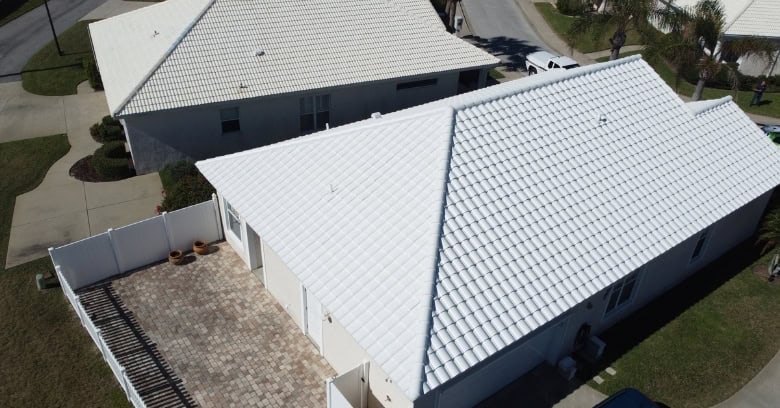
Trying to Find Residential Roofing in Aurora Colorado?
APC Roofing takes care of a routine checkup right up to a complete replacement, across asphalt, metal and tile alike.
Phone 720-902-6940, and a roofer arranges a visit to the house.
What a Roof Is Made Of: the Basics
What shows from the curb is just the outer layer, and a moisture barrier, sheathing and framing sit underneath. Flashing bridges the crossing wherever a wall, a pipe or a valley breaks the field, and trouble nearby seldom means a failure in the surrounding shingles.
The air under the rafters counts as part of the roof, the same as any material, since heat and humidity held there wear down the wood and covering overhead. A leak noticed inside can begin at any level of the roof, so a repair aimed only at the surface can miss the real cause.
Everyday Work of a Roof: Quiet but Constant
A pitched covering sends rain down toward the gutters, while nails and seal strips resist the pull of gusts. The trusses and sheathing support the load above, snow included at the colder end of our territory, while vents give damp attic air a way out.
The covering deals with water, and nails and seal strips deal with wind, and holding the whole thing up falls to what is underneath. A failure in one part puts pressure on neighboring parts, so repairs target the root, not the visible mark.
The Minor Pieces of a Roof: A Shorter Story
Most of the slope is designed to hold up for decades, but the flexible seal around a stack splits well before the shingles do. Moisture gets behind the covering and moves toward the room, and paint bubbles on the ceiling below.
Caulk along a wall joint hardens and pulls away in the heat, and metal flashing rusts at bends and cut ends. Hip and ridge caps open at the center crease, since the peak catches more weather than the rest of the roof.
Steps Before Heading Up: a Two-Step Read
From the driveway, the outline of the roof shows dips, sags and wavy planes, and the fascia and gutter runs are visible at the same time. A zoom lens singles out torn collars, lifted tabs and bare patches, yet a few conditions still need a hand on the surface.
Moving across the planes, a roofer tests every connector and traces every flashing joint, and the shingles are checked for brittleness and thin spots. A steep or wet roof is not walked, and the eave, reached by ladder, provides the vantage point instead.
Behind the Ceiling: Clues From Below
A watermark on the decking shows where rain has gotten in, and a soft, wet feel means the entry point is still open. Daylight visible between the boards marks an opening, and the position gets noted by measurement before anyone climbs.
Nails freckled with rust show condensation at work, not rain damage, and a compressed, faded patch nearby points to the same cause. Insulation crammed against the eave, or an exhaust fan dumping into the attic, comes to light only from inside, so a street-level glance never catches faults of that kind.
After the Roofer Leaves: What Gets Handed Over
A record of the visit takes the form of photographs keyed to spots on the roof, and a written line explains what each image shows. Sound parts get listed as plainly as anything that requires work, and faults are ordered from most to least pressing.
A saved report from an earlier stop gives the next check a baseline, and movement across seasons reads more directly than one day's condition. Regular yearly checks keep an owner from being caught off guard, and a large job gets seen coming well ahead of time.
Maintenance Tasks: Practical Habits
Worn pipe gaskets get swapped out before failure, and the joints at each flue get resealed. Needles and leaves get cleared from valleys and from behind chimneys, and every outlet gets checked for an open path.
A lifted tab sealed down early stays a small job, but waiting out a rainy stretch invites water in from beneath. Moss on a shaded slope traps moisture under the courses, and a biocide treatment clears the growth, with no pressure washer involved.
A Regular Routine: The Payoff
Somebody trained in the trade should go over the roof once a year, timed for right after the season that is hardest on roofs locally. The purpose is catching wear before a leak develops, and the family hears plainly where the roof stands.
After rough weather, anyone can scan the roof from the yard, and ceilings on the top floor are worth a look for new rings. Looking around the attic with a flashlight now and then makes sense: dark spots, daylight and matted insulation turn up long before anything travels any further.
A Roof's Age, Read From the Yard: What the Years Bring
A shingle surface in the first seasons looks crisp and even, and approaching midlife the sunniest side fades before the rest. At the very end, tabs turn brittle and crack, and a repair rarely holds for long at that stage.
What the lawn view suggests is a solid baseline, but only a hands-on check settles the matter. A roof near the finish line is better replaced than patched again, and a good contractor gives that answer plainly, rather than selling another repair.
A Channel That Has Given Up: the Basics
The covering's job on water stops at the drip edge, and the gutter picks up the flow at the edge. A clogged or sagging channel pushes water back behind the fascia, and the rafter tails nearby rot over seasons.
A weak patch there usually traces to a stopped-up drain, not the shingles, and a new covering will not fix what backed-up water caused. Gutter pitch and downspout discharge get checked on a visit, and the metal at the drip edge gets looked over for gaps and poor overlap.
What Ventilation Is For: Why the Details Matter
Outside air should enter under the eaves and leave near the peak, and that flow carries built-up heat and dampness away from the attic. Where the opening gets sealed off, the attic runs hot in summer and stays sticky through humid stretches, and the shingles age prematurely.
A powered fan with too little inlet area draws cooled air through the ceiling, and two mismatched setups on one roof can work against each other. Swapping the surface with the vents untouched repeats the same problem, so a proper replacement addresses the same issue at the same time.
Specifications That Follow the Weather: An Overview
At the colder end of the markets we serve, snow load and ice at the edge drive the design, so peel-and-stick material gets laid along the overhang. Near the coast, wind pressure sets how every panel gets nailed, and storm-rated trim metal and taped seams get called for.
Where hail falls hard at the colder end of our territory, an impact-rated covering is worth considering, while ultraviolet light ages granules in every market we serve. Specifications follow the weather at the house, not habit or a standard default.
Homes and Businesses: Split by Structure Type
A pitched covering sheds water through overlapping courses, finished in asphalt, clay or steel. A business roof relies on one continuous sealed sheet, and scuppers and equipment penetrate that same surface.
Many houses have a gently rising porch or addition, and a lapped product there lets water back up under the tabs. A spot built that way needs a sealed membrane tucked under the pitched roof above, and another layer of shingles there brings back the same problem.
Temporary Covers After Damage: Done the Right Way
A secured sheet keeps rain out while repairs get scheduled, but the trouble below stays untouched. A good cover goes up and over the peak and gets fastened with wood strips, and the material gets drawn tight enough to hold quiet in a gale.
A sheet cut too small leaves the edges of the opening exposed, because rain travels sideways toward a gap that stops short. A membrane left up too long traps moisture against the covering, and the covering underneath ages faster than expected.
The Detail Where a Roof Meets Something Upright: Getting the Work Right
Where shingles climb beside a wall, L-shaped pieces alternate with the courses, and counterflashing tucked into the masonry covers that metal from above. On a brick chimney, an apron handles the lower edge and metal runs up each edge, and a broad stack gets a diverter built into the roof behind.
Tar smeared over a gap gives way as the metal moves, so a rebuilt detail is the only answer that lasts. Eroded mortar joints let water into the brick above the flashing line, and part of that repair belongs to a mason, not a roofer.
A Contract Worth Reading: Comparing Bids
The rundown for a job should list every product by name, and the document says whether the existing roof gets stripped to the deck. The account explains how rotten decking gets handled if any turns up, and every vent, every flashing piece and the haul-away get called out individually.
Offers from different contractors can be weighed point for point, and the true difference between the two shows plainly. A crew that asks for trust instead of anything in hand has left out the part that matters, and a spoken assurance proves nothing after the fact.
What a Re-Roof Involves: What Changes at the House
Shrubs, flower beds and the driveway get protected ahead of the work, and the existing layers get torn off into a dumpster. At that stage, the wood underneath gets inspected, and weak spots come out, and solid planking follows.
Underlayment, new metal and ice-and-water membrane go on across the open deck, and the covering, the ridge caps and the vents go on to finish the job. The property gets swept with a magnet once the crew wraps up, and the gutters get a final check for leftover material.
Non-Shingle Roofing Care: What Owners Should Watch
A metal system with exposed fasteners relies on the gasket beneath every fastener, and a hardened washer gets swapped out along with a new screw. Based on the house, tile may be mortar-set, foam-set or clipped directly, and the layer underneath carries the job of shedding water.
A careless step snaps a piece easily, and a damaged unit gets swapped for another of matching shape. On a low-slope section, standing water and open seams are the things to watch, and grit and leaves get cleared from the scuppers.
Clues That Point to Trouble: From the Yard or the Attic
- Sand-like mineral grains in the gutter runs, long after the covering was installed.
- Tabs curling at the corners, noticeable from across the street.
- A hardened gasket at a stack, easy to spot with binoculars.
- A brown patch on upstairs drywall, still visible once dry.
- Pinholes of light in the sheathing, on a sunny afternoon.
- Green growth along the north-facing side, pushing up the lower edges of the shingles.
- A hollow spot in an otherwise even stretch, new since the previous year.
- Caulk cracked along a chimney, often after a hot summer.
Residential Roofing Around Aurora Colorado: APC Roofing, Step by Step
Before anything gets proposed, a roofer looks over the whole covering and the attic, and the findings arrive as photographs with a written note. What is fine gets said as plainly as what needs attention, and the choice of what to do next stays with the homeowner.
Residential Roofing Around Aurora Colorado: a Close Look at the Roof
Get in touch at 720-902-6940 and set a time for a visit.
Documentation for the Roof: Best Done Early
Noting when the covering went on, along with the brands used, is worth doing, and each report from a follow-up visit joins the same file. Including a line for every repair, the spot and the method, rounds out the picture, and a decade on, the trend stands out clearly.
Selling a property brings questions about what is overhead, and a folder of dated pages settles things quickly. A scanned set of the same files, stored separately, guards against a misplaced original, since a spill or a move should not be able to wipe out everything.
What Good Work Looks Like: Details to Check
Courses run straight and the cuts along the rakes come out clean, and nails stay covered by the layer above. The wall joints carry new flashing, tucked to match the way water runs, and caulk, where used at all, forms a thin, careful line.
Air can move from the eaves to the peak without obstruction, and the gutters return to position, clean and fastened. The property gets checked with a magnet for stray fasteners, and a quick hose-down removes the last of the sawdust from a walkway.
Anyone weighing choices for Residential Roofing in Aurora Colorado does not have to keep guessing about next steps. Contacting APC Roofing at 720-902-6940 puts a roofer on the calendar. Every visit covers the roof and the attic together, with nothing left unclear.
Verified

Verified
Verified
Verified


















