In the market for Commercial Roofing in Overland Park Kansas?
APC Roofing lays new membranes and metal panels on company property, with the flashings, outlets and trim included.
Call 913-398-5020 and a roofer will come out and look everything over.
Workplaces and Storefronts – an Overview
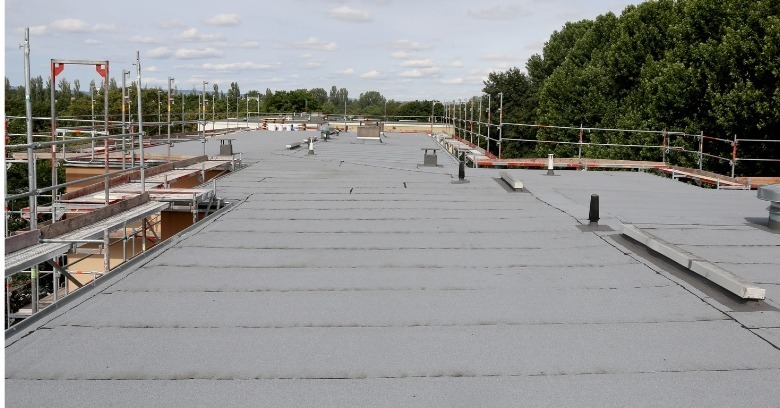
Employees, inventory and equipment are what the membrane protects, and a leak can halt sales rather than just mark a ceiling. The area on top of a big building stretches wide at a very shallow pitch, and the drainage layout and fastening pattern are calculated.
Mechanical units, vents and satellite dishes share the space overhead, and every duct or conduit crossing the covering demands a watertight seal. The purpose of the building drives the design, because a bakery and a document archive ask for different things.
Sheet Systems in Wide Use: Options on the Market
TPO, PVC and EPDM are single-ply products made as one flexible layer, modified bitumen is asphalt toughened with polymers and laid from rolls, and built-up roofing mops hot tar between plies of felt. A walk-behind welder fuses the overlaps on thermoplastic material, whereas rubber splices rely on primer and adhesive tape.
Restaurant hoods blow grease out beside the fans, and oily residue softens asphalt and EPDM, so PVC tends to be installed across the exposed zone. Built-up work finished with gravel carries real weight and holds up for decades, and the aggregate shields the bitumen from sunlight.
Metal on Shops and Plants – Details Worth Knowing
Exposed-fastener sheets are secured with screws through the flats, and each shank anchors in the framing below. Rubber washers under the heads harden and crack in the sun, and daily heating and cooling gradually loosen the fasteners.
A standing-seam roof is held by clips folded into the ribs, and the pans slide freely along the length. Corrosion sets in at side laps and sawn ends, and an elastomeric coating over sound metal can keep the damage in check.
Deck Types – Why the Base Counts
The structure underneath decides how everything above is secured, and the framing normally stays through every reroof. Steel with flutes holds screws securely, concrete wants adhesive or expansion anchors, and wood planking takes ring-shank nails or plates.
Rust from old leaks can leave soft spots in metal decking, and the failed section is removed and rebuilt. The underside can be viewed from below where no ceiling blocks the view, and cores drilled from above confirm the remainder.
Keeping a Membrane in Place: Matching the Choice to the Site
Mechanically fastened sheets carry rows of plates and screws in the laps, adhered work is stuck down across the full surface, and ballasted sheets lie loose under stone or pavers. The deck, the building's height and the site's exposure steer the decision, and the framing's spare load capacity limits how much weight can go on top.
Screw-down systems flutter between plates when gusts hit, whereas a glued sheet holds steady on a clean, dry substrate. Inspecting a ballasted system takes time, as every seam remains hidden until the stone or pavers are shifted.
Wind Forces Overhead: What Codes Expect
The strongest suction lands at each corner, as vortices form where the flow crosses the parapet line. Along the sides, a narrower band sees a little less, and the interior bears a light load.
More plates per square foot go in at corners and edges, with spacing taken from code tables for the building's height and exposure. An under-fastened outer angle lets the sheet curl up, and a blow-off can run well across the field.
Thermal Resistance: More Than Warmth
Polyiso sheets are laid across the deck with joints staggered, and a firm cover board spreads concentrated weight. The layer cuts energy use across the building, and tapered stock tilts the finished surface toward the drains.
Wet polyiso loses much of the R-value, and the soggy material sags while rust spreads beneath. Meter readings confirmed by cut cores trace the extent, and nothing ruined is left under a new covering.
Drains and Overflows: Clogs and Standing Water
Every interior sump is guarded by a strainer dome, and the bars catch bags, leaves and gravel before the pipe. Once silt coats the grate, flow drops sharply, and a wide pool gathers in the surrounding field.
Codes call for a backup outlet mounted above the main drain, so a steady spill up high signals a blockage below. Rain held across a wide area can put tons onto the beams, and a puddle that survives two days hints at settling or a choked strainer.
Locating an Opening Overhead: Why Care Pays
A soggy tile shows the spot where moisture emerged below, yet the defect up top may be dozens of feet distant. Runoff travels along the flutes of a steel deck, and joints between boards lead a trickle further still.
Up top, the laps, curbs and outlets uphill from the mark are inspected, and a low-voltage test can trace an elusive leak. Patching straight above the damp tile usually lands in the wrong place, and the next downpour sends water through again.
Air-Conditioning Gear – a Closer Look
Each large machine stands on a raised curb, and the covering turns up the sides beneath metal counterflashing. Inside corners need preformed pieces or patient detailing, and a pinhole at the crease lets rain run down behind.
A new unit from the HVAC contractor may sit on an adapter with no flashing, and stains appear below a few storms later. Condensate running loose over the membrane breeds growth and grime, so the flow should be carried to a drain.
Pipes, Vents and Conduit – the Small Stuff
Each round stack wears a prefabricated boot with a clamp, while awkward profiles are boxed in a pitch pocket and packed with filler. Sun and seasons shrink the compound until cracks open, so topping up is part of routine upkeep.
Gas lines and electrical conduit should sit on loose blocks, because a mount fastened through the sheet lets rain in. A walkway-grade pad under each base spreads the load, so heat and vibration scuff the buffer instead of the membrane.
Openings With Lids – Service Notes
Sunlight slowly turns acrylic bubbles dull and fragile, and hairline breaks radiate from each fastener. A gap at the frame corner lets rain inside, yet the membrane usually takes the blame.
The access hatch is lifted on every service visit, so the hinges, latch and weatherstrip wear out. Heat-activated vents over a warehouse are designed to fling wide, and no roofing work may block the mechanism.
The Low Wall Around the Edge: Common Trouble Spots
At the vertical face, the sheet climbs as base flashing, a termination bar clamps the upper end, and a counterflashing strip sheds water outward. A coping cap spans the crest to push rain aside, but joints whose sealant has cracked admit runoff beneath.
Weathered brick and block take on water through the faces, and to anyone downstairs the wet ceiling seems like a roof leak. An inspection covers the coping, the counterflashing and the wall as well as the membrane, and loose mortar is repointed rather than coated over.
Edge Metal Without a Parapet: Holding the Line
A continuous cleat is fixed along the eave and locks the hem of the flange, and a cover strip ties the sheet to the upper face. Perimeter pieces must carry a wind rating for the building's height, and an underrated section can let go in a gale.
Gutters along a long eave take a huge volume in a storm, so the hangers, seams and downspouts are sized for the flow. Bent or lifted trim belongs on the repair list, because a firm refastening spares the sheet a blow-off.
Service Visits and the Membrane: Protecting the Sheet
Refrigeration mechanics may call on a large store every few weeks, and a path gets a little more scuffed each season. An abandoned screw gets forced through the sheet by a passing boot, and a cabinet panel leaned on a corner cuts a slit.
A line of walkway pads guides people to every unit, and the abuse lands on something made to take the wear. Contracts with service firms can spell out where crews may walk, and loose screws and scraps should leave in a bucket.
Maintenance Visits: Small Jobs Kept Small
A walk-through twice annually suits most commercial coverings, plus an extra check after a severe storm. Good upkeep empties drain baskets of leaves and litter, seam edges are tested with a probe, and caulked joints are examined for cracking.
Ahead of the stormy months, outlets and perimeter metal get close attention, and a second pass seeks out what heat or heavy rain disturbed. Small problems are noted against a drawing of the building, which lets repairs be scheduled instead of rushed.
Documenting a Covering: Kept for Later Years
A sketch of the whole area places each unit, drain and hatch, and a written cross-section lists every layer from the deck up. Each fix is logged with a date and photographs, and core samples and scan readings are appended when available.
Many older properties change hands without a scrap of information about the covering, and each roofer who climbs up has to investigate afresh. A roof log stays with the site, and a copy passes to the next manager or buyer.
Repair, Restore or Replace: What Tips the Balance
A membrane that is mostly intact needs only spot patching, while an elderly but dry surface can accept a new liquid system. Extensive saturated boards make the job a replacement, as do laps cracking across the whole field, though age on paper proves nothing.
Cleaning, priming and repairs underneath come before any coating, because trapped moisture beneath gets locked in. Swapping only the ruined sections is sometimes a sensible middle course, if the rest of the sheet remains in good shape.
Reroof Paths: What Codes Allow
A recover puts a fresh membrane over the current roof, and a cover board sits in between. An overlay is allowed by code over no more than a single existing covering, and only where the insulation underneath is dry.
A tear-off strips everything down to the structure, and an open view shows what needs mending. Tapered insulation installed at the same time can reduce chronic puddling, and a cricket between outlets divides the flow.
Signs Worth Reporting – Before Leaks Spread
- A steady stream from the backup scupper in a storm, which betrays a choked everyday outlet.
- A ceiling tile whose stain spreads after every shower, which means leakage has crossed every layer.
- Dark streaks running down the outside wall below a scupper, which can point to seepage passing through the masonry.
- A gravel stop that moves when a gust hits, which can give wind a place to pry.
- Ponding visible from a higher window days after rain, which hints at a low area in the structure or a slow drain.
- A skylight whose plastic has turned chalky, which can admit rain at the frame.
- Water trickling down an interior column in a storm, which points to an entry somewhere on the membrane.
- Downspouts that gush at the joints, which can soak the wall and the ground below.
How APC Roofing Works on Commercial Roofing in Overland Park Kansas – Our Sequence
Our first stop is every drain, scupper and overflow, and after the outlets we move to the laps, curbs and edge metal. On a leaking building, cores and a meter check the foam, and the advice waits for the numbers.
A written report, photos and a sketch record what we found, and each item carries a location note. The conclusion is repair, restore or replace, and the why is explained in terms you can verify.
Commercial Roofing Throughout Overland Park Kansas: What Needs Doing Up Top
Call 913-398-5020 and a time is agreed with whoever runs the building.
Keeping Tenants in Mind: Noise, Odor and Debris
Power fastening through steel echoes through the space beneath, and adhesive fumes can drift into rooftop air intakes. Noisy steps are discussed with the manager beforehand, and vents beside the work can be covered while the cement sets.
Debris leaves by chute into a dumpster, and tarps can go over whatever sits below. Low-odor adhesives cut down the smell considerably, and the gentle option fits a store that stays open.
Staged Work on a Big Surface: Planning the Steps
A careful tear-off exposes only what can be dried in before the crew leaves, and the bare deck gets new boards and membrane promptly. A temporary tie-in joins the finished work to the existing covering overnight, and the barrier is cut out as work continues.
The forecast sets how much covering comes off, and a threatening sky scales the plan back. Bare foam hit by a downpour absorbs a great deal of water, and leaks can then reach stock and staff below.
Our Service Area's Range – What Changes by Market
At the colder end of our territory, hail and snow load both count, so a resilient top board and stronger framing are called for. Across all the towns we serve, UV and high temperatures age a membrane, and a pale surface sends much of the radiation back.
The coastal end of our territory demands fastening designed around hurricane gusts, and tropical downpours need generous overflow capacity. Low temperatures slow or stop many adhesives from curing, but heat-welded seams tolerate chilly air as long as the deck is dry.
Guarding Against Falls: Practical Precautions
Short parapets and bare perimeters leave nothing between a worker and the ground, so a warning line keeps crews back from the edge. Skylights look solid yet break under a careless step, so a screen or guardrail at each opening prevents a plunge.
Permanent anchors make later visits by other trades less risky, and a self-closing gate at the hatch adds a barrier. Our findings name each missing screen or rail, because a drop from a single floor can badly hurt someone.
For Commercial Roofing in Overland Park Kansas, speak with APC Roofing at 913-398-5020. A roofer will inspect the drainage, the seams and the flashings, and everything goes down on paper while the decision stays yours.
Verified

Verified
Verified
Verified
Verified