
Your rubber roof has been quietly doing its job for years. Now a seam near the edge is peeling back, the membrane is pulling tight where it meets the wall, or there’s a soft spot that wasn’t there last fall. You need someone who knows EPDM roofing in Overland Park, because a rubber roof patched with the wrong product can leak worse than before.
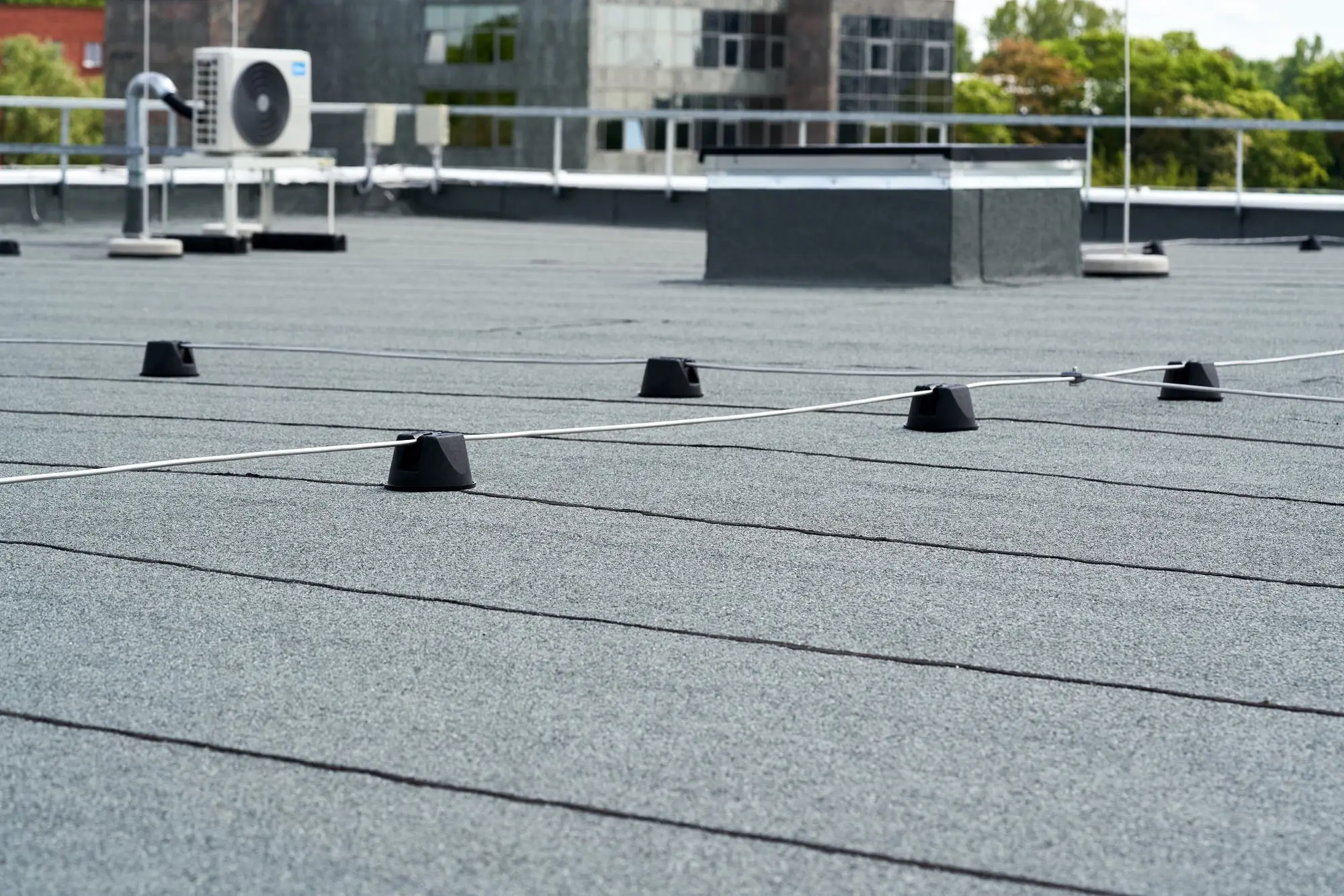
You shouldn’t have to wonder whether the person on your roof knows what they’re working with.
APC Roofing repairs and installs EPDM on homes and light commercial buildings. We’re GAF Certified, licensed and insured, in business since 2017, and your inspection is free. Call 913-398-5020 to have your roof looked at.
What EPDM is
EPDM is a synthetic rubber membrane, the “rubber roof” most people picture. It’s usually black, though white versions exist. It comes in large sheets, so a small residential roof may have few seams or none at all. Where sheets meet, they’re joined with seam tape or adhesive made for EPDM, and the edges and penetrations get their own flashing pieces.
On homes, you’ll usually find EPDM on porch roofs, garages, additions and other low-slope sections. On commercial buildings, it may cover the whole roof.
Why EPDM works in Overland Park’s climate
Kansas swings from hard freezes to stretches of serious heat, and EPDM handles that range well. The rubber stays flexible in cold weather, so it can move with the building through freeze-thaw cycles instead of cracking. It also holds up well to the sun’s UV.
There are trade-offs. Black EPDM soaks up heat in summer, which can warm the rooms right underneath. And like any membrane, it can be punctured by large hail or by someone walking across it carelessly. Thicker membranes resist punctures better, which is worth thinking about on a roof that sees foot traffic.
How EPDM roofs age and where they fail
Most EPDM problems show up in the same handful of places:
- Seams. Older seams that were glued rather than taped can lose their bond and open up, especially at corners and laps.
- Shrinkage. As the rubber ages, it can shrink slightly. You’ll see it pulling tight at walls and edges, sometimes lifting the flashing or “tenting” up off the corner.
- Flashing and penetrations. Pipe boots, vents and the joint where the roof meets a wall are common leak points.
- Punctures. Hail, fallen branches, dropped tools and foot traffic can all put small holes in the membrane.
- Ponding. Water that sits for days works at seams and gathers debris that can wear the surface.
None of these mean the whole roof is done. They do mean someone should look closely.
Repairing an EPDM roof the right way
The most common mistake with rubber roofs is patching them with asphalt roof cement or tar. Asphalt-based products don’t bond well to EPDM and can damage the rubber over time. They might stop a drip for a while, but they usually make the next repair harder.
A proper EPDM repair cleans the area, primes it and applies an EPDM patch or seam tape made to bond with the membrane. Opened seams get cleaned and re-taped. Shrinking flashing at walls may need new pieces. Our flat roof repair in Overland Park page covers how leaks on low-slope roofs get traced back to their source.
When it’s time for a new rubber roof
Replacement makes more sense when the membrane has shrunk badly, seams are failing in several places, or the insulation underneath has gotten wet. Wet insulation can’t be patched over. It needs to come out.
A new EPDM roof starts with checking the deck and insulation, setting up proper drainage, and then laying the membrane with seams, edges and flashing done carefully. If the existing roof is dry and sound, covering it may be an option. If it’s wet or already has layers, a tear-off is the better path. For more on the process, see flat roof installation in Overland Park.
EPDM vs. TPO
If you’re replacing a flat roof, you’ll probably hear about both. EPDM is rubber, stays flexible in cold weather and is simple to repair. TPO is usually white, with heat-welded seams, and its reflective surface keeps the roof cooler in summer. Neither is the right answer for every roof. A sunny roof over a living space may do better with TPO’s cooler surface, while a garage roof that sees little foot traffic might suit EPDM just fine. You can compare on our TPO roofing in Overland Park page.
How it works
- Book your free inspection. Call 913-398-5020 or request a free estimate online.
- Get a clear, honest assessment and estimate. We check seams, edges, flashing, drains and the insulation underneath, and you’ll get photos and a written estimate.
- The work gets done and the site gets cleaned up. Old material and scraps leave with the crew.
Financing is available through Aqua Finance, Fortifi, Hearth and Home Run Finance.
An open seam on a rubber roof can let water into the insulation for months before a ceiling stain shows up. At that point, a patch is no longer enough.
EPDM roofing questions
Can an EPDM roof be patched?
Yes, when the problem is limited to a seam, a puncture or a flashing. The patch needs to be EPDM-compatible material, not asphalt roof cement.
Is my rubber roof shrinking?
Look at the edges and the corners where the roof meets a wall. If the membrane looks pulled tight, lifted off the corner or is tugging the flashing away, it may be shrinking.
Should I choose black or white EPDM?
Black is the most common and holds up very well. White reflects more heat, which helps over living spaces. We’ll talk through which makes sense for your roof.
Can new EPDM go over my old roof?
Sometimes, if the existing roof is dry, sound and doesn’t already have extra layers. If the insulation is wet, it needs to be removed first.
Book your free EPDM roof inspection
Your rubber roof can likely keep working if the right fix happens at the right time. Call 913-398-5020 or request your free estimate online, and we’ll come take a look. For the bigger picture, see flat roofing in Overland Park.
When it’s done, the seams are tight, the edges are holding, and the next storm rolls off the way it should.


















