Searching for Commercial Roof Repair in Orlando Florida?
APC Roofing builds and mends the wide, low coverings above places of work, along with the details at units and drains.
Phone 407-270-1129 and a roofer will go up top and check every part.
Workplaces and Storefronts: Setting the Scene
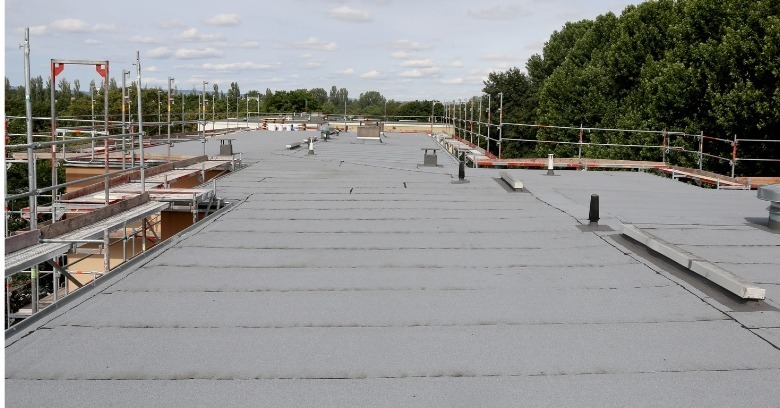
Desks, shelving and production lines lie under the sheet, so a drip can shut down a shift instead of staining a tile. Across a large building, the upper surface is broad and barely sloped, and the drainage layout and fastening pattern are calculated.
Condensing units, exhaust stacks and antennas are spread across the top, and every line or support is a hole that must be flashed. The work done below decides which assembly suits, and cold storage calls for vapor control an office can skip.
Sheet Systems in Wide Use – Sorting the Catalog
One flexible layer of TPO, PVC or EPDM is what single-ply describes, modified bitumen is rubberized asphalt sold by the roll, and built-up roofing stacks felt and hot tar in plies. The laps on a thermoplastic sheet are fused by a welding machine, whereas a rubber splice depends on primer and tape.
A commercial kitchen pushes greasy vapor up through the exhaust fans, and oily buildup degrades asphalt and EPDM coverings, so the stretch nearby is often PVC. Built-up plies under a gravel layer make a heavy, durable assembly, and the surfacing blocks sun that would dry out the bitumen.
Steel Over a Warehouse – Details Worth Knowing
Exposed-fastener sheets are secured with screws through the flats, and each shank anchors in the framing below. The sealing washers age and harden on a hot, sunny surface, and daily expansion and contraction slowly back the fasteners out.
A standing-seam roof is held by clips folded into the ribs, and the hardware lets each pan travel. Rust tends to appear at side laps and cut edges, and a coating over steel that is still sound can slow the damage.
Decking on Big Buildings – What to Check
Attachment methods are limited by what the original builders put in, and the framing normally stays through every reroof. Fluted steel accepts screws readily, concrete wants adhesive or expansion anchors, and plywood takes nails or plate fasteners.
Rust from old leaks can leave soft spots in metal decking, and a weakened section is taken out and replaced before new layers go down. The underside can be viewed from below where no ceiling blocks the view, and small cuts from the upper side answer the rest.
Anchoring the Membrane – What Suits Where
A fastened install uses plates and screws in the overlaps, adhered work is stuck down across the full surface, and ballasted sheets stay put under a blanket of stone. The deck, the building's height and the site's exposure steer the decision, and a frame with no spare capacity rules out a heavy layout.
A fastened membrane lifts and drops between plates in a gale, whereas glue keeps a sheet calm only over a dry, clean base. A ballasted layout turns inspection into a slow job, because gravel or pavers must come off before anyone sees a joint.
Wind on Low-Slope Work – Numbers Behind the Pattern
Pull is greatest at the outside angles, because swirling eddies form where the air crosses the perimeter. The strip down each side carries a smaller share, and the central field is spared most of the load.
Screws and plates are packed tighter toward corners and edges, as set out in engineering tables for height and wind speed. An outer angle with too few anchors allows the sheet to lift, and air forced underneath keeps widening the opening.
Foam Insulation – an Overlooked Component
Polyiso sheets are laid across the deck with joints staggered, and a tough cover board over the stack takes foot traffic. Insulation reduces the load on air conditioning and furnaces, and tapered units can slope a dead-flat deck to the outlets.
Soaked foam gives up most of the thermal resistance, and the heavy mass adds weight and rusts a steel deck. Scanning at dusk, with a few cores for proof, marks out the damage, and every ruined section is replaced rather than covered.
Outlets on a Big Building: Main and Backup
A metal strainer bolts over each interior opening, and the bars catch bags, leaves and gravel before the pipe. Once silt coats the grate, flow drops sharply, so a shallow lake forms across the low area.
An overflow opening is placed higher than the regular drain, so a steady spill up high signals a blockage below. Ponding piles extra weight onto joists sized for far less, and a puddle that survives two days hints at settling or a choked strainer.
Locating an Opening Overhead – No Guesswork
Ceiling stains record where rain finally came through inside, yet the defect up top may be dozens of feet distant. Corrugated decking channels seepage the length of the building, and gaps between insulation boards add more routes.
On the membrane, every lap, curb and outlet on the high side gets examined, and a low-voltage test can trace an elusive leak. Sealing whatever sits above the soggy tile rarely fixes anything, and the next rain brings the trouble back.
HVAC Equipment Up Top: Where Care Is Needed
A built-up curb lifts each machine above the field, and the sheet is carried up the faces and tucked under metal. Tight inside corners resist neat work, and a small gap lets wind-driven rain into the structure.
Swapping a machine for a newer model tends to add an adapter curb without flashing, and stains appear below a few storms later. Condensate running loose over the membrane breeds growth and grime, and the fix is carrying the flow to a drain.
Everything Else That Passes Through: Handling Each Type
Round stacks take a factory-made boot with a stainless band, while awkward profiles are boxed in a pitch pocket and packed with filler. Over time the compound pulls away and splits, so a fresh layer goes on every maintenance list.
Conduit and gas lines belong on free-standing supports, since every screw driven through the sheet is a future leak. Each base needs a protective pad beneath, so heat and vibration scuff the buffer instead of the membrane.
Hinged Covers Up Top: Where Attention Goes
Ultraviolet light leaves acrylic and polycarbonate hazy and weak, and splits appear around the screws along the rim. Rain slips past a dried gasket or an open frame corner, and the covering gets accused of a fault in the glazing.
Every trip up the ladder means lifting the hatch cover, so the latch, springs and weatherstrip eventually give out. Automatic smoke vents are built to burst open during a fire, so flashing and materials stay clear of the swing path.
The Low Wall Around the Edge: Staying Dry
At the vertical face, the sheet climbs as base flashing, a termination bar grips the upper end, and a counterflashing strip sheds water outward. Coping over the crest steers rain to either side, yet a single open butt joint sends runoff downward.
Unsealed brick draws water in and carries moisture indoors, and occupants below mistake the damp for a roof leak. Coping, wall and flashing are all looked at in the same inspection, and open mortar joints are repointed instead of caulked.
Metal Trim Where the Field Ends: Holding the Line
The flange is hooked onto a cleat fastened along the eave, and a cover strip ties the sheet to the upper face. Tested wind ratings decide which profile suits a given height, because a loose run of metal lets gusts pry up the membrane.
A box gutter on a long wall moves a torrent in heavy rain, so the hangers, seams and downspouts are sized for the flow. Crumpled or raised trim is a clear repair item, since early work protects the covering behind the edge.
Service Visits and the Membrane – Keeping Damage Down
Electricians, cable installers and HVAC crews all make regular trips up, and a path gets a little more scuffed each season. An abandoned screw gets forced through the sheet by a passing boot, and an access panel set down on a corner slices a gash.
Walkway pads set out a marked route to the equipment, so scuffing lands on a sacrificial layer. Service agreements can tell outside trades to stick to the protective strips, and screws and scraps can be bagged and taken down.
Maintenance Visits: Timing and Tasks
Twice annually is a sensible rhythm for a walk-through of a commercial system, plus an extra check after a severe storm. Regular servicing clears the strainers of collected debris, seam edges are tested with a probe, and hardened sealant is noted for redoing.
Ahead of the stormy months, outlets and perimeter metal get close attention, and the next round, after a hard season, searches for fresh movement. Small problems are noted against a drawing of the building, and repairs can be grouped and timed sensibly.
A Building's Roof History: Kept for Later Years
A marked-up plan locates every unit, drain and hatch, and the assembly is described from the structure to the membrane. A dated photo log follows each repair, and core and scan results are added whenever taken.
Plenty of older buildings arrive with no history at all, and every crew works out the layers again. Roof documentation outlasts any single service firm, and a copy passes to the next manager or buyer.
Fix, Refresh or Rebuild: The Main Signals
Isolated defects on an otherwise healthy membrane call for patches, and a worn surface with dry layers beneath can take a fluid-applied finish. Insulation ruined over broad areas points to tear-off, and so do seams that crack wherever flexed, though years alone never decide the matter.
Cleaning, priming and repairs underneath come before any coating, while lingering dampness gets bottled up. Swapping only the ruined sections is sometimes a sensible middle course, provided the rest of the field has good years left.
Reroof Paths – Guided by What Lies Beneath
In a recover, a fresh membrane goes directly over the old surface, and a separation board is laid in between. Codes limit an overlay to buildings with a single covering in place, provided the insulation beneath is dry.
A complete strip-off clears away every layer, and the exposed deck can be inspected and repaired. New tapered insulation can correct ponding during the same project, and crickets between drains split the runoff.
Early Warnings – Before Leaks Spread
- Water pouring from an overflow scupper during rain, which suggests a plugged strainer.
- Discolored ceiling panels that darken after wet weather, which shows moisture has worked through the insulation.
- Peeling paint high on the exterior wall, which can come from open joints up top.
- Rattling trim along an open eave, which can hand a gale a lever.
- Puddles seen from the hatch that linger for days, which can indicate an overloaded deck or a plugged outlet.
- A skylight bubble with hairline fractures, which may break when a worker leans on the glazing.
- Rust spots spreading on the underside of a steel deck, which points to an entry somewhere on the membrane.
- Downspouts that gush at the joints, which can signal a blockage or a separated seam.
How APC Roofing Carries Out Commercial Roof Repair in Orlando Florida: What Happens and When
The drains, scuppers and overflows get our attention before anything else, and after the outlets we move to the laps, curbs and edge metal. On a leaking building, cores and a meter check the foam, because saturation below changes the answer.
What we see is set down in writing, photographs and a drawing included, and each problem is labeled with a location. The outcome we propose is a repair, a coating or a replacement, and the why is explained in terms you can verify.
Commercial Roof Repair Throughout Orlando Florida – Get the Facts
Phone 407-270-1129 and a time is agreed with whoever runs the building.
Business as Usual Downstairs: Practical Arrangements
Screwing into a steel deck rings through the rooms beneath, and the smell of primers can reach the fresh-air intakes. The facility manager hears in advance when the noisy stage is coming, and vents close to the work can be blocked until curing ends.
A crane or chute takes stripped material to a bin, and desks and machines under an open section can be shielded. A water-borne glue smells much milder than a solvent type, and the gentle option fits a store that stays open.
Sequencing a Big Replacement – the Discipline Involved
A careful tear-off exposes only what can be dried in before the crew leaves, and new insulation and membrane go onto the opened area in the same pass. A temporary tie-in joins the finished work to the existing covering overnight, and the patch comes out once progress picks up.
The outlook decides how far the tear-off goes, and any hint of showers shortens the stretch. A downpour on exposed insulation leaves the boards waterlogged, and runoff may find a path to the offices underneath.
Seasons and Storms – Market by Market
The colder end of our territory adds hail and snow load to the list, which argues for tough cover boards and a structural check. Across all the towns we serve, UV and high temperatures age a membrane, and a white reflective surface cuts the warmth absorbed.
At the coastal end, attachment is engineered for hurricane gusts, and heavy tropical rain calls for extra overflows. Some adhesives will not cure below a set temperature, but heat-welded seams tolerate chilly air as long as the deck is dry.
Staying Safe Aloft – Measures Worth Having
A perimeter without a tall parapet leaves an open drop, and anyone close to the edge wears a harness tied to an anchor. A skylight dome cannot carry a person's weight, so every opening should get a screen or a railing.
Permanent anchors help everyone who services the units, and a self-closing gate at the hatch adds a barrier. A missing screen or warning line is flagged in our findings, as a single-story drop can still cause grave harm.
When you need Commercial Roof Repair in Orlando Florida, contact APC Roofing at 407-270-1129. Someone will go up and check the outlets, the laps and the edge metal, and everything goes down on paper while the decision stays yours.
Verified

Verified
Verified
Verified
Verified