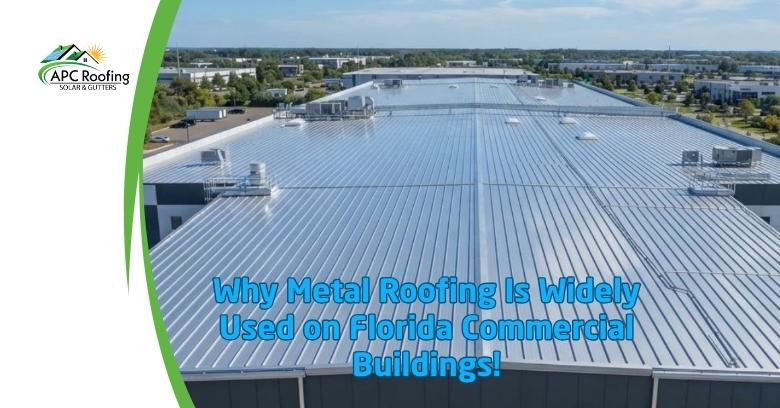
The roof over your building has been patched more times than anyone can count, and it’s still leaking. Maybe a tenant sent photos of a stained ceiling tile, or water dripped onto stock after the last afternoon storm. You know a commercial roof installation in Orlando is coming, and you’re worried about the cost, the disruption and picking a system that won’t let you down in five years.
Those are fair worries. A commercial roof is a big line item, most of it is out of sight, and every contractor seems to recommend something different. You need someone who’ll explain the options in plain language and plan the work around the people inside the building.
APC Roofing is a GAF Certified contractor, licensed in Florida (CCC1337030) and insured, and we’ve been in business since 2017. Your inspection and estimate are free. Call 407-270-1129 to set one up.
What Orlando weather asks of a commercial roof
Most commercial buildings around Orlando have flat or low-slope roofs, and Central Florida is hard on them in a few specific ways.
The sun works on a membrane every day of the year. UV and surface heat dry out and age roofing materials, and a dark roof can get very hot by midafternoon, which pushes up cooling costs for the space below. A light, reflective membrane sends much of that heat back.
Summer storms bring a lot of rain in a short time. On a low-slope roof that water has to reach a drain, scupper or gutter quickly, or it sits. Standing water adds weight, finds weak seams and shortens the life of the roof. Good drainage is planned into the installation, sometimes with tapered insulation that builds slope toward the drains where the deck itself is nearly flat.
Hurricane season, June through November, is about wind. Air rushing over a roof edge creates strong uplift at the corners and perimeter. A properly installed system follows the Florida Building Code and the manufacturer’s tested attachment pattern, with more fasteners or adhesive at the edges and corners than in the middle of the roof.
Choosing a commercial roof system
There isn’t one right membrane for every building. The deck, the slope, the rooftop equipment and how the building is used all shape the choice. These are the systems APC installs on commercial roofs.
TPO. A single-ply membrane, usually white, with seams welded together with hot air. It’s reflective, which helps a lot in Orlando heat, and it’s one of the most common choices for low-slope commercial roofs. Learn more on our TPO roofing in Orlando page.
EPDM. A rubber membrane with taped or glued seams. It’s flexible and has a long track record. It typically comes in black, though white versions exist for buildings where heat gain matters. See EPDM roofing in Orlando.
Built-up roofing (BUR). Layers of roofing felt and asphalt, often finished with gravel. It’s heavy and durable, and the gravel protects the layers below from the sun.
Some commercial buildings have steeper roofs where metal panels make more sense than a membrane. That’s part of the same conversation during your inspection.
What goes under the membrane matters
The roof deck decides how everything above it gets attached. Steel decking, concrete and wood each call for different fasteners or adhesives. Where old leaks have rusted or rotted part of the deck, that section needs to be replaced, not covered.
Insulation sits between the deck and the membrane on most commercial roofs. If it’s wet, it has to come out. Wet insulation doesn’t insulate, it adds weight and it keeps the deck damp. A moisture check during the inspection tells you how much of the old roof is still dry.
Recover or full tear-off?
Some buildings can take a recover, where a new membrane goes over the existing roof with a cover board in between. That’s usually faster and creates less mess. Code limits when it’s allowed, though. The existing roof generally can’t already have more than one covering, and the insulation underneath has to be dry.
A tear-off removes everything down to the deck. It costs more, but you see exactly what you’re building on, any damaged deck gets fixed, and the new insulation can be designed to drain better. The inspection tells you which one your building can take.
Keeping your business open during the work
Most business owners can’t close for a roof. A well-planned installation works in sections, removing only as much old roof as can be made watertight again by the end of the day. If the forecast turns, the section gets smaller.
You should know ahead of time when the noisy stages are coming, like fastening into a steel deck, and where the crew and materials will be staged. Adhesive odors can be pulled into the building through rooftop air intakes, so lower-odor products and temporarily covering nearby intakes are worth discussing for occupied buildings like stores, offices and restaurants.
How commercial roof installation in Orlando works with APC
- Book your free inspection. Call 407-270-1129 or request a free online estimate. We look at the drains, seams, flashing, rooftop equipment and the condition of the insulation.
- Get a clear, honest assessment and estimate. You get photos, a written summary of what we found and a recommendation to repair, recover or replace, with the reasons laid out so you can check them.
- The roof gets installed and the site cleaned up. The work is scheduled around your operations, and the crew cleans up when it’s done.
If repair is still realistic for your building, our commercial roof repair in Orlando team can take a look first. You can also see our full range of commercial roofing in Orlando.
Commercial roofing questions from Orlando building owners
How long does a commercial roof installation take?
It depends on the size of the roof, the system and whether it’s a recover or a tear-off. You’ll get a working schedule with your estimate, and weather can shift it.
Which commercial roof system is best for Orlando?
Reflective single-ply membranes like TPO are popular here because of the heat. EPDM and built-up roofs still make sense on many buildings. The best choice for yours depends on the deck, the drainage and how the space below is used.
Can a new roof go over my existing commercial roof?
Sometimes. If there’s only one existing roof covering and the insulation is dry, a recover may be allowed. If the insulation is wet or there are already two layers, a tear-off is the right call.
Do I have to close my business during the work?
Usually not. A well-planned job works in sections that are sealed up at the end of each day, and the loud or smelly steps can be planned around your business day. We’ll talk through the schedule with you before work starts.
Leaving a failing commercial roof alone tends to cost more later. Water soaks into the insulation quietly, and by the time it reaches the ceiling tiles the repair area is much larger.
A new roof that drains well, holds up through storm season and lets you stop worrying about every forecast is worth getting right. Call 407-270-1129 to book your free commercial roof inspection.