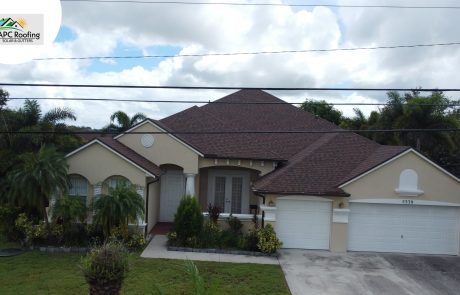
Considering Architectural Shingle Roofing Across Greater Orlando Metro Area?
APC Roofing mends torn, curled and lifted pieces and lays complete new coverings on ranch homes, two-story houses and detached garages.
Reach us at 407-270-1129 and you will hear in plain terms what is needed.
How the Pieces Are Made – Raw Ingredients
A mat of glass fibers makes each shingle strong, and a saturant of asphalt seals out rain, and a layer of granules on top screens out ultraviolet light.
Products that seem alike from the driveway can vary a good deal underneath, and more heft commonly lets a covering weather more summers. A showroom sample tells nothing beyond appearance, but a specification sheet names the ratings.
Strip Versus Laminated – Weight and Wind
A three-tab product is a single-layer piece with twin cutouts at the exposed edge, so the overall look is orderly. Architectural shingles join a full base ply to a shaped upper one, so the uneven profile casts shadows.
The heavier laminated construction puts more asphalt on the deck, and a stronger wind class is commonly assigned. Fasteners on an architectural shingle must catch the overlap of both plies, and a wrapper diagram shows the exact position.
Uses for the Flat Style: A Narrow Niche
Outbuildings and porches are frequent homes for three-tab, while a repair on an older house of that type stays uniform. Makers have pared back their tabbed lines, and some shades are no longer produced.
Textured shingles mask slight waves in the boards beneath, while a thin strip follows every undulation. Either style is laid over identical underlayment and metal details, so the difference lives entirely in the top layer.
Aging of the Top Coat – Normal or Worrying
A freshly laid covering releases surplus grains during its opening months, and the amount tapers off quickly. A steady stream of grit from an aging covering shows the top layer is going, and asphalt left bare hardens and fractures in the heat.
South- and west-facing planes bake the longest each afternoon, and dull patches gather there.
Self-Sealing Designs – Cold-Weather Care
Every shingle arrives with a sticky asphalt stripe, and warm days melt it just enough to anchor the next row. Adhesion keeps air from getting under the exposed edge of each course, and the nails stay just as essential for as many years as the covering lasts.
In the cold months at the colder end of our territory, sealing can take many weeks to happen, and a stiff wind can raise a loose tab before then. Dabs of asphalt cement applied by the installer are what makers specify in that case, and a printed diagram marks the spots and their spacing.
Securing Each Course: Tools and Technique
Nails are driven within a slim band set out by the manufacturer, so the shank ties in the row beneath too. Most shingles take four fasteners apiece, and six go in where the slope is steep or the wind is strong.
Nails placed high skip the course below, excess air pressure buries the head in the mat, and a slanted shank lifts the shingle laid over it. Every wind rating on a wrapper presumes the pattern was met, while a bad compressor setting repeats itself on every shot.
The Wood Below: Soft Spots
The deck under asphalt shingles is usually plywood or OSB, and every fastener needs solid material there to hold. Homes that once wore wood shakes may still have spaced slats up top, so a layer of sheathing comes before shingles.
During a tear-off, weak or water-damaged pieces are swapped for sound ones, since a nail in punky fibers pulls loose. Panels go down with a narrow space along each joint, because swelling in damp seasons buckles anything laid too tight.
Old Paper, New Fabric: Known Limits
Before any shingles go down, a water-resistant membrane is rolled over the deck, and its seams are lapped so rain crosses them without entering. Felt paper has mostly given way to synthetic underlayment, as the newer option is lighter, stronger and less prone to wrinkling.
Moisture that sneaks beneath a shingle is carried off by the membrane, yet the maker limits how long it may be left uncovered.
Self-Adhered Eave Membrane: Trapped Runoff
At the colder end of our territory, a heated attic thaws rooftop snow, and meltwater goes solid again where the roof extends past the wall. Trapped water behind the blockage creeps higher beneath the courses, and standard felt or synthetic sheet does not close around the nails.
Colder-market codes call for a peel-and-stick membrane along the lower edge, and it runs past the interior face of the outside wall. Throughout our service area, valleys and chimneys commonly receive it as well, because runoff slows and gathers at those spots.
Border Protection: Under and Over
A metal drip edge wraps the eaves and the rakes, and a flange throws runoff away from the fascia. The underlayment covers the lower flashing, while on the gable ends the sequence is flipped.
Current codes in many places make edge metal mandatory along every border of a shingled plane, as water tends to wrap under an unprotected rim.
Groundwork at the Eave – No Substitutes
Under the first visible course lies a starter strip, so tacky asphalt ends up at the very brink of the deck. Flipping an ordinary piece around keeps the adhesive away from where it is needed, and the tabs at the low border are held only by nails.
A starter run along each rake is common practice under current instructions, since wind crossing the roof tugs at its outer lines.
Where Slopes Meet: Choosing a Style
An open valley shows a strip of metal running down the crease, while the closed-cut version clips one side's courses along a snapped line. Weaving is a long-standing technique for thin, flexible tab shingles, but most laminated shingles are too stiff for that.
Nailing close to the fold is avoided, and an adhered membrane lies underneath the whole length. Debris packed into a valley stays damp long after rain ends, so water starts finding a path under the sides.
Brick and Framing Edges – Frequent Leak Points
Step flashing along a wall is set one to a course, while the lap siding covers the upright side. The corner where the eave reaches the house takes a kickout, and without one rain runs inside and rots the sheathing.
Chimney flashing combines a front apron, side steps and counterflashing cut into the brick joints, while stacks above a certain width require a cricket upslope.
Roof Penetrations: Wear Over Time
A typical boot is a metal or plastic plate carrying a flexible collar that grips the pipe, and sun eventually opens cracks where the seal wraps the stack. The upper half of the flange tucks beneath the shingles above, and water running down the slope passes over the exposed lower part.
Neoprene collars regularly fail well before the field shingles do, so replacing the shingles means replacing the boots too.
Where Slopes Crest – Fastener Length
Each hip and the ridge get a row of cap shingles across the joint, and architectural work uses a factory-made accessory. Pieces cut from strip shingles are much thinner, and in winter at the colder end of our territory the fold is prone to cracking.
The caps often conceal a vent along the peak, and the fasteners are sized to penetrate that channel and the wood below.
The Space Under the Deck – Blocked Paths
Outside air should come in through vents under the eaves, and a ridge exhaust lets it out. Loose-fill insulation piled into the corners can smother the flow, so a baffle in each rafter bay keeps the way clear.
A poorly vented attic turns into an oven under the deck, while indoor humidity collects there with nowhere to go. At the colder end of our territory, frost can form on the nail tips poking through overhead, and the melt soaks the insulation by afternoon. Mixing a ridge vent with gable louvers or a powered fan can short-circuit the flow, so the lower part of the space goes stagnant.
Local Extremes – Storms and Algae
Our markets take in mountain snow in one place and tropical heat in another, so the forces working on a shingle change from city to city. At the coastal end of our territory, a hurricane can drive powerful gusts for many hours, so a high-wind pattern with more nails is specified. Relentless sunshine hardens the binder over the years, while muggy weather encourages dark streaks.
At the colder end of our territory, freeze and thaw cycles pry at every small crack, and heavy snow adds weight on top of that.
Balls of Ice: Surface and Below
At the colder end of our territory, hail falls in many storm seasons, and several makers build shingles meant to take the hits. A strike scatters the grit from a small round area, and a heavy blow may fracture the fiberglass below.
Manufacturers earn an impact rating by dropping steel balls onto test panels, and a line that passes at the top level holds up better. Modified asphalt with added rubber is used by several makers, so the material bends where an ordinary mix would crack.
Blowing Weather – The Damage Done
The border of a roof and its corners see the greatest upward force, and a loose shingle rises and slaps back down. A tab bent far back keeps a mark along the fold, and the break in the mat will not heal. A piece in that state is swapped out, but one that lifted cleanly can be stuck back down.
Where a tab has blown away, the underlayment beneath lies open to the sun, and it was never made to stand up to daylight.
Stains and Green Growth – Cleaning Without Harm
Blackish discoloration in long vertical bands is algae, which survives by feeding on limestone filler. At the humid end of our territory, faces under trees and out of the sun collect it soonest, and the film alone rarely shortens the life of the covering.
Moss is a different matter, since it holds water against the surface, and it works under the edges and raises them. A pressure washer blasts granules off along with the growth, while a soft rinse with a roof-safe cleaner does the job without damage. Algae-resistant designs mix copper into the surface, while a strip of zinc at the ridge helps keep the stains from returning.
Shade and Color – Blends and Batches
Deep tones take in more solar warmth and reach higher surface temperatures, while pale ones stay cooler. Some product lines use specially coated granules that turn back more radiation, and a tested reflectance figure goes with them.
Shingles from separate production runs may not match exactly, so maker directions say to draw from more than one bundle at a time. Multicolored designs keep slight differences from showing, while a solid, even finish reveals them more readily.
Going Up Top – Frost and Footing
On a hot afternoon the coating turns soft, so a shoe sole scrapes away grit. At the colder end of our territory, a course stiff with cold can break under weight, and a skin of frost leaves the pitch slick.
The ground is the right place for anyone without roofing gear, since binoculars reveal nearly everything worth seeing.
A Second Layer: What Gets Missed
Local regulations commonly accept an overlay over an old roof, as long as there are not already two and the base is sound. With the old shingles left where they are, the decking is never exposed, which means damage stays trapped under fresh shingles.
Humps and hollows in the courses below show through, and step and valley metal commonly remains in service. A doubled covering rests on structure never meant for that weight, while the fasteners need more length to bite into the boards.
Things That Turn Up – When to Call
- Coarse granules wash onto the splash blocks, and the drifts get deeper each season.
- Some tabs flap loose or are gone altogether, so wind has broken the bond.
- The lower margins cup into a shallow dish, because the material has lost its flexibility.
- Cracks run across the tabs, and the layer below begins to soak up water.
- Some spots look dull and flat, where the stone coating has worn off.
- The seal around a plumbing stack has cracked, and drips may reach the ceiling below.
- Metal along a wall has pulled loose, so every storm can find a weak point.
- A stain spreads across the ceiling of an upstairs room, but the place moisture enters may lie higher up.
APC Roofing and Architectural Shingle Roofing in Greater Orlando Metro Area: Our Method
An inspection starts by walking each slope in turn, with a close look at the valleys, vents, flashings and edges. Inside, the attic is checked for stains and daylight, and darkened boards on the underside show past leaks.
Trouble of any kind is photographed, and the extent is measured. The results are put in writing in everyday words, and each recommendation carries its reasons. A small fix is described as small, and a worn-out covering is identified as such. The final say rests with the owner, from a single repair to a full replacement.
Architectural Shingle Roofing for Homes in Greater Orlando Metro Area – Help From People Who Know the Details
Phone 407-270-1129 and say what you have noticed.
Mending or Starting Over: Brittle Material
A split collar, a gap at a wall or some torn tabs makes a routine repair, while everything else on the slope remains. Patched areas show a visible contrast at first, and the original product line may have been discontinued.
Stiff, dried-out shingles split when raised for nailing, so the disturbed zone keeps widening. If hard, curled courses run from eave to ridge, replacement makes more sense than more patching.
Useful Lifetime: What Moves the Number
Flat three-tab designs usually run fifteen to twenty years, while architectural lines can go well beyond that. Attic airflow, sun exposure and the quality of the nailing move that figure, and a single violent storm may finish a covering off early.
The vent collars and flashings deserve an occasional look, as prompt fixes keep water out of the wood.
For a roofer's view of Architectural Shingle Roofing in Greater Orlando Metro Area, call APC Roofing at 407-270-1129. The whole covering and the attic are inspected in person, and the findings reach you in writing so the decision stays yours.