
A few shingles landed in the yard after the last storm. Or you’ve noticed black streaks running down one side of the roof, and the edges of some shingles have started to curl. You don’t know if this is a quick repair or the start of a new roof, and every answer you find online seems to come from someone trying to sell you something.
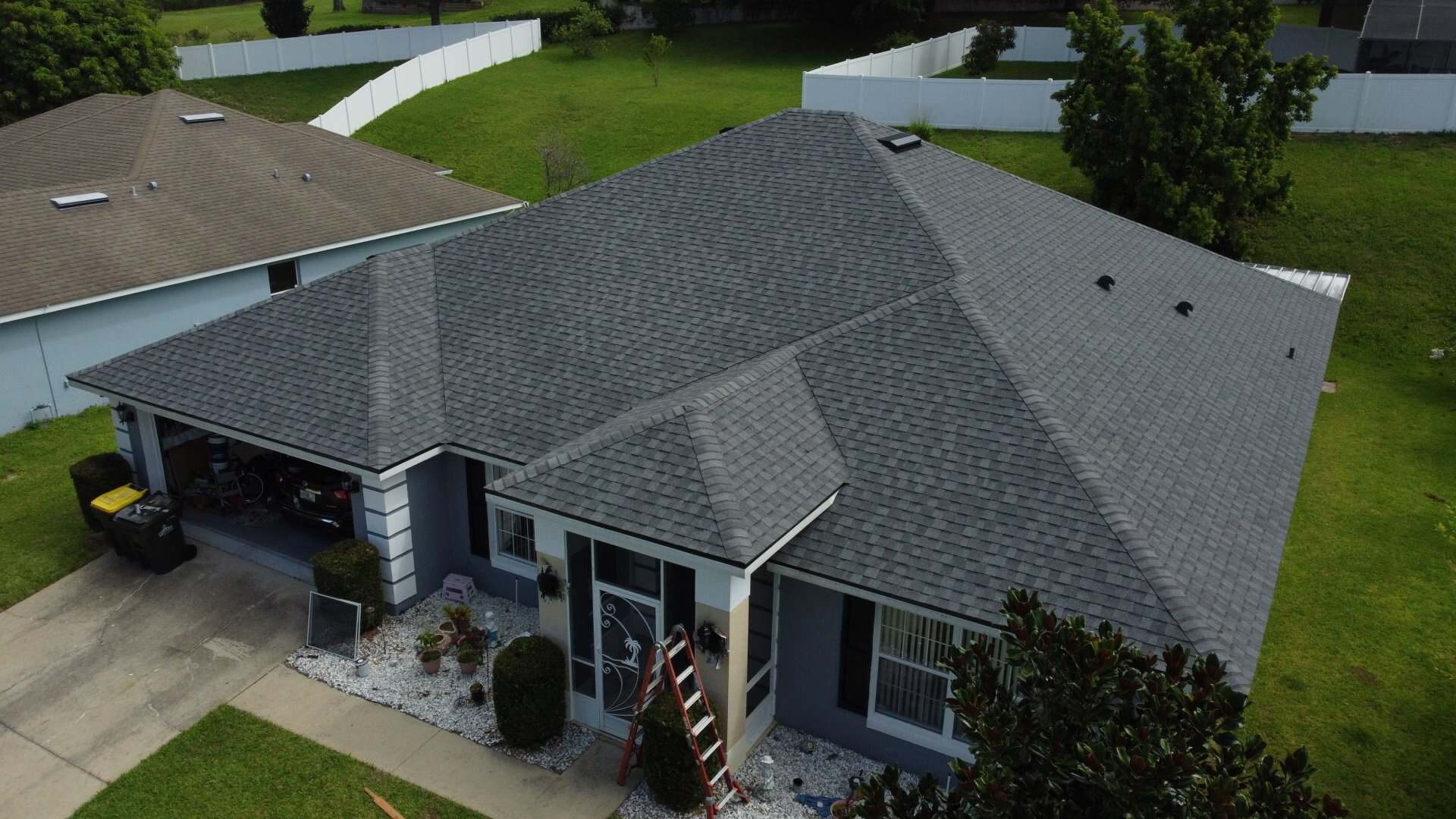
That’s an uncomfortable place to be. Shingle roofing in Greater Orlando covers most of the homes you’ll drive past, so there’s no shortage of roofers, yet it’s still hard to know who’ll give you the straight story.
APC Roofing repairs and replaces shingle roofs across the Orlando area from our headquarters in Clermont. We’re GAF Certified, licensed in Florida (CCC1337030) and insured, and your inspection is free. Call 407-270-1129.
Shingle roofing in Greater Orlando: where to start
The right next step depends on which question you’re really asking. Most homeowners land in one of four places.
“Something’s wrong. Can it be fixed?”
Missing shingles, a leak around a vent or a few creased tabs after a windstorm can often be repaired without replacing the roof. Shingle roof repair covers what’s usually involved and when it makes sense.
“My roof is old. Is it time?”
When repairs keep piling up, shingles are brittle, or granules are washing into the gutters, a new roof is often the better use of your money. The shingle roof installation page walks through what a new roof involves, from tear-off to cleanup.
“What kind of shingles do I have?”
Flat, uniform shingles with evenly spaced cutouts are 3-tab, an older style that’s common on homes built decades ago. Thicker shingles with a layered, dimensional look are architectural. Our 3-tab shingle roofing page explains what that older style means for repairs.
“Which shingle should I choose?”
If you’re replacing, most homeowners here choose architectural shingles. They’re heavier, generally carry higher wind ratings than 3-tab and look more substantial from the street. Premium or designer shingles go a step further on looks. Our asphalt shingle roofing page goes deeper on the material itself.
What Central Florida does to a shingle roof
Shingles here wear out from the top down. Strong sun all year dries out the asphalt and slowly loosens the protective granules on the surface. Without those granules, the shingle bakes faster and turns brittle.
Wind is the other big factor. Each shingle has a strip of sealant that bonds it to the one below. When a storm breaks that bond, the shingle can flap, crease and eventually tear loose, even if it doesn’t blow off right away. A creased shingle often looks fine from the ground.
Then there’s the humidity. Those dark streaks on so many Central Florida roofs are usually algae. It’s mostly a looks problem, not a leak, but it can make a roof seem older than it is. When you’re choosing new shingles, algae-resistant options are worth asking about.
Storm damage on a shingle roof
After a hurricane or strong storm, look from the yard for missing shingles, pieces in the gutters or on the lawn, and lifted or creased edges. Stay off the roof. A roofer can spot broken seals and creases up close and photograph them.
If the storm damaged your roof, you file the claim with your insurance company and pay your own deductible. We document the damage, give you a written estimate and work with your adjuster. Be wary of anyone who offers to waive or cover your deductible.
How it works with APC Roofing
- Book your free inspection. Call 407-270-1129 or request a free estimate online.
- Get a clear, honest assessment and estimate. You’ll see photos of your shingles, hear whether it’s a repair or a replacement, and get a written estimate.
- Your roof gets done and the site gets cleaned up. Many residential shingle roofs are replaced in a single day, and the crew cleans up before leaving.
Financing is available through Aqua Finance, Fortifi, Hearth and Home Run Finance.
Shingle roofing questions from Orlando-area homeowners
Can you match my existing shingles for a repair?
Often close, though not always exactly. Shingle colors and styles change over the years, and older shingles fade in the sun. We’ll tell you how close a match we can get before the repair.
Do black streaks mean I need a new roof?
Not by themselves. Streaks are usually algae, which is mostly cosmetic. It’s still worth having the roof checked if it’s older or you’ve seen other signs of wear.
Can new shingles go over my old ones?
Sometimes, but tearing off is usually the better choice. It lets the crew check the deck underneath and replace any soft wood, and it keeps the roof from carrying extra weight.
How do I know if my shingles were damaged in a storm?
Look for missing pieces, granules or bits of shingle on the ground, and lifted edges. Creased or unsealed shingles are hard to see from the yard, so an inspection is the surest way to know.
A shingle roof you don’t have to wonder about
Small shingle problems, like a lifted tab or a cracked pipe boot, can let water into the deck long before you see a stain. Once your roof has been checked and the right work is done, you can stop squinting up at it after every storm. You get a dry house, a clear answer and no surprise bill. Call 407-270-1129 to book your free inspection.


















