Hoping to find Commercial Roofing Installation in Lee's Summit Missouri?
APC Roofing builds and mends the wide, low coverings above places of work, with the flashings, outlets and trim included.
Reach us at 913-398-5020 and a roofer will walk the surface and explain the findings.
Over Stores and Warehouses: Setting the Scene
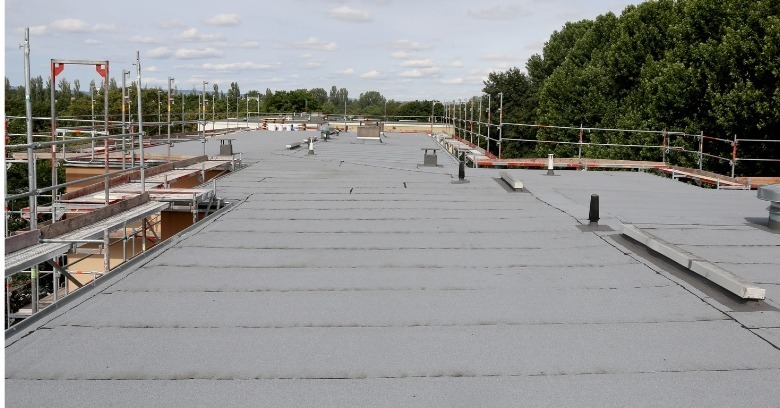
Desks, shelving and production lines lie under the sheet, so a small opening can interrupt a full day of trade. Wide commercial buildings carry a top surface that is nearly flat, so rain runoff and wind loads are set by design numbers.
Air handlers, fans and communications gear sit on the membrane, and every pipe, duct or support must have a sealed opening. How the building is used guides the specification, because a bakery and a document archive ask for different things.
Kinds of Low-Slope Covering: a Plain Primer
Single-ply goods such as TPO, PVC and EPDM go down as one broad layer, modified bitumen is asphalt toughened with polymers and laid from rolls, and built-up roofing is felt sealed with hot tar several plies deep. Seams in thermoplastic membranes melt together under a welding nozzle, but rubber gets primer and tape at every splice.
A commercial kitchen pushes greasy vapor up through the exhaust fans, and asphalt and EPDM membranes break down under oily buildup, so PVC tends to be installed across the exposed zone. A stone-covered built-up system is weighty and tough, since the aggregate protects the felts from ultraviolet light.
Panel Roofs on Low Buildings: Upkeep Notes
On an exposed-fastener system, screws pass straight through the face of each sheet, and the purlins below take the grip. Sunlight bakes the washers until the rubber splits, and the fasteners wiggle loose as the sheets expand and contract.
Standing-seam panels attach with clips tucked under the raised seams, and the pans shift slightly through the day. Corrosion gathers where sheets overlap and at trimmed ends, and an elastomeric coating over sound metal can keep the damage in check.
Decking on Big Buildings – What to Check
Attachment methods are limited by what the original builders put in, and the framing normally stays through every reroof. Corrugated steel gives screws a firm bite, a concrete slab needs glue or anchors set in drilled holes, and wood or gypsum plank uses fasteners rated for the material.
Rust from old leaks can leave soft spots in metal decking, and a damaged area is removed and a new piece fastened in place. Where a drop ceiling lifts out, the bottom of the structure is examined, and exploratory openings from above reveal the remainder.
Anchoring the Membrane: Weighing the Choices
A fastened install uses plates and screws in the overlaps, fully adhered systems are glued across the whole underside, and ballasted sheets lie free beneath river rock or concrete pavers. The deck, the building's height and the site's exposure steer the decision, and extra weight is used only where the structure can bear the load.
Gusts make a screwed membrane ripple between the fastener lines, but an adhered sheet lies quiet and demands a dry, clean base. Ballast makes any inspection slow, since the stone or pavers must be carried off to reach the laps.
Uplift on a Big Building: Setting the Screw Pattern
Each corner feels the hardest pull, because moving air curls and speeds up on spilling over the edge. Along the sides, a narrower band sees a little less, and the center is loaded far more lightly.
The fastening pattern gets denser toward corners and edges, with the layout drawn from design tables for the site. Skimping on anchors at the outside angle lets the covering pry loose, and the opening grows as each gust gets beneath.
Rigid Foam: More Than Warmth
Polyiso sheets are laid across the deck with joints staggered, and a gypsum or fiber cover board commonly caps the stack. Insulation reduces the load on air conditioning and furnaces, and tapered units can slope a dead-flat deck to the outlets.
Moisture in polyiso drives the R-value down sharply, and damp material sits against steel until the flutes corrode. Nondestructive meters and cored samples show how far the problem reaches, and each sodden piece is removed instead of buried.
Outlets on a Big Building: Main and Backup
Every interior sump is guarded by a strainer dome, and the bars catch bags, leaves and gravel before the pipe. A grate packed with sludge chokes the flow, and a wide pool gathers in the surrounding field.
A secondary outlet is set slightly above the everyday drain, and a stream from the upper spout shows the ordinary route has stopped. Ponded water adds load that the framing may not be sized for, and a puddle that survives two days hints at settling or a choked strainer.
Locating an Opening Overhead – a Careful Search
A brown ring on an acoustic tile shows where rain reached the room, yet the defect up top may be dozens of feet distant. Runoff travels along the flutes of a steel deck, and joints between boards lead a trickle further still.
Up top, the laps, curbs and outlets uphill from the mark are inspected, and a flood test on a small section can reveal a stubborn leak. Guesswork patches above the ceiling spot usually miss, and the next downpour sends water through again.
Cabinets and Condensate: Where Care Is Needed
A sturdy curb holds each machine clear of the membrane, and the sheet is carried up the faces and tucked under metal. Each folded inside corner takes careful work to stay watertight, and a small gap lets wind-driven rain into the structure.
A replacement condenser frequently arrives on an adapter curb nobody flashes, and water reaches the office below soon enough. A condensate tube emptying onto the sheet keeps a patch constantly damp, so the stream ought to be carried to a drain.
Pipes, Vents and Conduit – Detail by Detail
Round stacks take a factory-made boot with a stainless band, while oddly shaped items get a metal pan poured full of sealant. Sun and seasons shrink the compound until cracks open, so topping up is part of routine upkeep.
Gas lines and electrical conduit should sit on loose blocks, as a stand screwed into the deck punctures the waterproofing. A rubber pad beneath every foot distributes the weight, and the buffer takes the wear as everything expands and shifts.
Skylights, Hatches and Smoke Vents: Common Faults
Ultraviolet light leaves acrylic and polycarbonate hazy and weak, and cracks spread from the screws at the rim. Water gets in through a hardened gasket or a loose frame joint, yet the membrane usually takes the blame.
The hatch at the top of the ladder sees daily traffic on some buildings, so the hinges, latch and weatherstrip wear out. Smoke vents release automatically when a fusible link melts, so work nearby leaves every mechanism free.
Walls That Rise Past the Deck – Sealing the Junction
The field sheet continues upward as base flashing, a termination bar clamps the upper end, and metal counterflashing laps down from higher up. A coping cap crowns the parapet and throws rain clear, yet a gap between sections funnels runoff downward.
Porous brick or block can pass water straight through to the interior, and to anyone downstairs the wet ceiling seems like a roof leak. An inspection covers the coping, the counterflashing and the wall as well as the membrane, and a gap in the mortar is repointed, never just caulked.
Fascia Metal at the Outer Edge: What to Inspect
A cleat screwed to the nailer catches the folded hem of the flange, and a cover strip ties the sheet to the upper face. Gauge and profile are matched to the wind exposure at the building's height, because a loose run of metal lets gusts pry up the membrane.
Gutters on a large building must swallow drainage from an enormous area, and skimpy hangers or leaders lead to overflow and sagging. Bent or lifted trim belongs on the repair list, since early work protects the covering behind the edge.
Other Trades Overhead: Protecting the Sheet
Refrigeration mechanics may call on a large store every few weeks, and a worn lane appears between the hatch and the units. Screws left lying about are pushed into the membrane by work boots, and an access panel set down on a corner slices a gash.
Walkway pads set out a marked route to the equipment, and wear ends up on material built for foot traffic. Property managers can ask each contractor to keep off bare membrane, and nobody should leave scraps or screws behind.
Scheduled Inspections: Timing and Tasks
Twice annually is a sensible rhythm for a walk-through of a commercial system, and a damaging storm earns an additional check. Regular servicing clears the strainers of collected debris, the seams are traced with a probe, and brittle sealant gets marked for replacement.
Before the stormy part of the year, attention goes to outlets and perimeter flashing, and a follow-up hunts for whatever a harsh stretch of weather pulled apart. Little defects go into a log, each tied to a spot on the plan, and repairs can be grouped and timed sensibly.
Keeping Track of a System – Notes That Help
A useful dossier includes a plan with every unit, drain and hatch marked, and a layer-by-layer description runs from the deck upward. Every repair is entered with the date and photos, and core samples and scan readings are appended when available.
Older properties frequently hold no notes on the covering, so each contractor has to learn the build-up from scratch. Roof records stay with the site office, so a later buyer or manager starts out informed.
Repair, Restore or Replace: Reading the Evidence
A sound membrane with a handful of local faults simply gets patched, while an elderly but dry surface can accept a new liquid system. Widespread waterlogged boards signal a full replacement, and so do seams that crack wherever flexed, but the calendar alone is no verdict.
Cleaning, priming and repairs underneath come before any coating, and over damp material the new layer only seals the trouble in. Now and then the answer is replacing just the spoiled sections, as long as the remaining membrane has plenty of service ahead.
Routes to a Reroof: What Codes Allow
A recover lays new membrane over what is already there, and a cover board separates the surfaces. Codes limit an overlay to buildings with a single covering in place, and only over dry insulation.
A tear-off removes every component down to the structure, and an open view shows what needs mending. A new tapered layout can shed standing water, and saddles between drains steer water sideways.
Early Warnings – Before Leaks Spread
- Splashing from the upper overflow opening, which announces a stalled main outlet.
- A damp patch over a desk or shelf that returns, which reveals the foam above is getting soaked.
- Dark streaks running down the outside wall below a scupper, which can trace to a leaking downspout joint.
- Loose screws or gaps along the perimeter trim, which can give wind a place to pry.
- Standing water in the same place long after a downpour, which hints at a low area in the structure or a slow drain.
- A skylight dome gone cloudy or crazed, which may give way under a misstep.
- Wet insulation hanging from an open ceiling, which shows a leak traveling inside the assembly.
- A downspout that backs up in heavy rain, which can soak the wall and the ground below.
How APC Roofing Plans Commercial Roofing Installation in Lee's Summit Missouri: Readings Before Advice
We look first at the drains, scuppers and overflows, and the laps, curbs and perimeter come next. If there is a leak, the layers under the membrane are tested, since the condition underneath shapes the advice.
What we see is set down in writing, photographs and a drawing included, and every defect is keyed to a location. The conclusion is repair, restore or replace, and you get reasons to weigh for yourself.
Commercial Roofing Installation Around Lee's Summit Missouri: Plan the Next Step
Call us at 913-398-5020 and we will schedule a time to come out.
Business as Usual Downstairs – Planning Together
Drilling a steel deck sounds like thunder to everyone below, and adhesive vapors may be pulled in by the air handlers. Noisy steps are discussed with the manager beforehand, and nearby vents can be closed off during curing.
Old membrane and foam are lowered by hoist or dropped through a covered chute, and shelving or machinery directly below can be tarped. Low-odor adhesives cut down the smell considerably, so gentle formulas are often specified above working space.
Sequencing a Big Replacement – Order and Timing
A careful tear-off exposes only what can be dried in before the crew leaves, and each bare part gets fresh boards before more is taken up. A temporary closure protects the joint between finished and unfinished portions, and the stopgap is lifted at the restart.
The weather report limits the size of each tear-off, and a threatening sky scales the plan back. A downpour on exposed insulation leaves the boards waterlogged, and runoff may find a path to the offices underneath.
Weather Across the Region: How Specifications Adapt
The colder end of our territory adds hail and snow load to the list, which argues for tough cover boards and a structural check. Intense sunshine in every city we cover breaks a membrane down over time, so a bright, reflective finish reduces solar gain.
At the coastal end, hurricane wind pushes attachment requirements up, and tropical storms require ample secondary drainage. Some adhesives will not cure below a set temperature, but a welder copes with cool air far better than with a shower.
Staying Safe Aloft – No Shortcuts
Where the wall is low or missing, nothing catches a misstep over the side, and anyone close to the edge wears a harness tied to an anchor. Skylights look solid yet break under a careless step, and fixed screens rule out a plunge into the space below.
Permanent anchors make later visits by other trades less risky, and a gated ladder hatch adds another safeguard. Our findings mention any guard that is lacking, since even a low building is high enough for a serious fall.
For Commercial Roofing Installation in Lee's Summit Missouri, contact APC Roofing at 913-398-5020. A roofer will walk the membrane, the drains and the perimeter, and you receive the findings in writing and decide from there.
Verified

Verified
Verified
Verified
Verified