Looking for Commercial Roof Repair in Lee's Summit Missouri?
APC Roofing puts down and fixes low-slope systems over stores and offices, down to the drains, edge trim and equipment curbs.
Phone 913-398-5020 and a roofer will walk the surface and explain the findings.
Over Stores and Warehouses: Setting the Scene
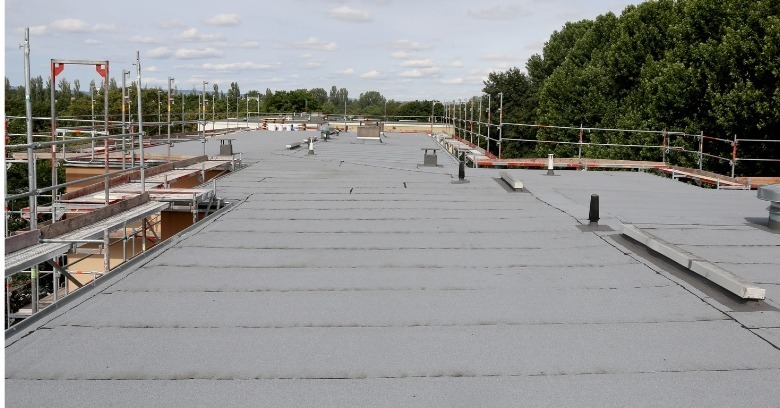
Staff, stock and machinery sit beneath the membrane, and a leak can halt sales rather than just mark a ceiling. A big footprint is covered at a gentle grade, and runoff and uplift are engineered rather than guessed.
Air handlers, fans and communications gear sit on the membrane, and every line or support is a hole that must be flashed. The purpose of the building drives the design, so a refrigerated plant is specified unlike a clinic.
Sheet Systems in Wide Use: a Plain Primer
One flexible layer of TPO, PVC or EPDM is what single-ply describes, modified bitumen comes as polymer-rich asphalt on a roll, and built-up roofing piles felt and tar ply on ply. The laps on a thermoplastic sheet are fused by a welding machine, but rubber is spliced with tape over a primed surface.
Fryer exhaust coats the area around a restaurant's fans, and oily residue softens asphalt and EPDM, so PVC usually covers the affected stretch. A stone-covered built-up system is weighty and tough, because the loose aggregate keeps ultraviolet light off the bitumen.
Panel Roofs on Low Buildings: Upkeep Notes
On an exposed-fastener system, screws pass straight through the face of each sheet, and the threads grip purlins or joists underneath. Rubber washers under the heads harden and crack in the sun, and daily heating and cooling gradually loosen the fasteners.
Standing-seam panels attach with clips tucked under the raised seams, and the pans shift slightly through the day. Rust tends to appear at side laps and cut edges, and a restorative coating can add service to sound steel.
Deck Construction: Grip and Strength
Fastening choices depend on the structure below, and the framing outlasts several coverings. Steel with flutes holds screws securely, concrete wants adhesive or expansion anchors, and wood or gypsum plank uses fasteners rated for the material.
Water held against a metal deck for years can thin the sheet, and the failed section is removed and rebuilt. Where a drop ceiling lifts out, the bottom of the structure is examined, and small cores from above show the rest.
Keeping a Membrane in Place: Weighing the Choices
Mechanically fastened sheets carry rows of plates and screws in the laps, adhered systems are rolled into a coat of adhesive, and ballasted sheets stay put under a blanket of stone. Height, exposure and the deck below guide the selection, and the framing's spare load capacity limits how much weight can go on top.
Between the plates, a fastened sheet balloons in stiff gusts, whereas glue keeps a sheet calm only over a dry, clean base. Ballast makes any inspection slow, since rock or pavers have to be cleared before a lap can be read.
Uplift on a Big Building – Numbers Behind the Pattern
The strongest suction lands at each corner, as vortices form where the flow crosses the parapet line. The zone running down each side follows close behind, and the central field is spared most of the load.
The fastening pattern gets denser toward corners and edges, as set out in engineering tables for height and wind speed. An outer angle with too few anchors allows the sheet to lift, and pressure underneath can strip a wide section.
Foam Insulation: More Than Warmth
Panels of polyisocyanurate rest on the structural deck in offset rows, and a firm cover board spreads concentrated weight. The layer cuts energy use across the building, and tapered stock tilts the finished surface toward the drains.
A saturated panel no longer holds back heat, and trapped water weighs on the structure and corrodes steel. Scanning at dusk, with a few cores for proof, marks out the damage, and each sodden piece is removed instead of buried.
Getting Rain Off: Main and Backup
A domed strainer sits over every interior sump, which keeps litter from entering the pipe. A grate packed with sludge chokes the flow, and a pond spreads across the field.
Codes call for a backup outlet mounted above the main drain, and a stream from the upper spout shows the ordinary route has stopped. Ponded water adds load that the framing may not be sized for, and a puddle that survives two days hints at settling or a choked strainer.
Tracing a Leak – No Guesswork
A brown ring on an acoustic tile shows where rain reached the room, but the fault on the surface can lie a long way off. Steel decking guides runoff down the corrugations, and joints between boards lead a trickle further still.
Laps, curbs and outlets upslope of the stain are checked by hand, and a low-voltage test can trace an elusive leak. Guesswork patches above the ceiling spot usually miss, and the next downpour sends water through again.
Rooftop Mechanical Units: Keeping Water Out
Each machine is bolted to a curb that rises from the deck, and flashing wraps the sides up to a sheet-metal cover. Each folded inside corner takes careful work to stay watertight, and a rushed job leaves gaps for rain.
An equipment change often brings an adapter curb that no roofer ever flashed, and the ceiling underneath begins to spot. Condensate discharged straight onto the covering discolors and softens the surface, and the fix is carrying the flow to a drain.
Objects That Rise Above the Surface – the Small Stuff
A snug molded boot slides over each round stack, while oddly shaped items get a metal pan poured full of sealant. The compound hardens, shrinks and separates at the edges, so topping up is part of routine upkeep.
Gas lines and electrical conduit should sit on loose blocks, since every screw driven through the sheet is a future leak. Pads cut from spare roofing stock go under each base, and the cushion saves the sheet from abrasion as the piping moves.
Glazing and Access Points: What Wears
Acrylic panes yellow and turn fragile after years of sun, and fractures tend to start at the fastener holes. A tired gasket on a skylight admits water, and the covering gets accused of a fault in the glazing.
Every trip up the ladder means lifting the hatch cover, so the latch, springs and weatherstrip eventually give out. Smoke vents are life-safety devices that pop open in a fire, so nothing placed during roofing work may pin the covers down.
Walls That Rise Past the Deck: Staying Dry
The covering bends upward and becomes base flashing, a screwed termination bar secures the top, and counterflashing hangs down to shield the fastened line. Formed metal coping caps the parapet to keep rain off the top, but joints whose sealant has cracked admit runoff beneath.
Brick and block that have weathered let water migrate indoors, so the stain that appears gets blamed on the membrane. An inspection covers the coping, the counterflashing and the wall as well as the membrane, and cracked mortar gets repointed rather than smeared with sealant.
Fascia Metal at the Outer Edge – Parts and Purpose
A cleat screwed to the nailer catches the folded hem of the flange, and a cover strip of membrane is laid over the upper face. Gauge and profile are matched to the wind exposure at the building's height, because a loose run of metal lets gusts pry up the membrane.
A box gutter on a long wall moves a torrent in heavy rain, so hanger spacing and outlet size follow the flow. Crumpled or raised trim is a clear repair item, since early work protects the covering behind the edge.
Foot Traffic From Technicians: Living With Guests
Mechanics who tend the condensers make the same trip many times a year, and a worn lane appears between the hatch and the units. A dropped screw gets pressed through the membrane by the next boot, and a falling wrench can split the sheet.
A line of walkway pads guides people to every unit, so heels grind on a tough layer and spare the waterproofing. A note at the ladder can ask every trade to stay on the protected strips, and screws and scraps can be bagged and taken down.
Planned Care for a Membrane – Staying Ahead of Leaks
Owners of commercial property do well to arrange a walk-through twice annually, and a damaging storm earns an additional check. Routine care lifts and empties each strainer, any open lap is found with a probe, and sealant at pockets and terminations is pressed for give.
The trip ahead of the stormy months focuses on outlets and perimeter metal, and a second pass seeks out what heat or heavy rain disturbed. Every minor fault is recorded with the exact spot, which lets repairs be scheduled instead of rushed.
Roof Records: Knowledge That Lasts
A marked-up plan locates every unit, drain and hatch, and a layer-by-layer description runs from the deck upward. Each fix is logged with a date and photographs, and cut samples and infrared findings get appended.
Lots of aging buildings have nothing on paper about the assembly overhead, which leaves every new contractor guessing. Roof documentation outlasts any single service firm, so a future manager or purchaser inherits a copy.
Mend, Coat or Start Over – Matching Work to Condition
Where the sheet is healthy apart from isolated defects, patching is enough, and a worn surface with dry layers beneath can take a fluid-applied finish. Insulation ruined over broad areas points to tear-off, and brittle joints throughout lead the same way, though age on paper proves nothing.
Cleaning, priming and repairs underneath come before any coating, since damp layers below stay hidden and soggy. A partial tear-off of the spoiled areas can be a reasonable compromise, provided the rest of the field has good years left.
Planning a Reroof – Picking a Direction
In a recover, a fresh membrane goes directly over the old surface, and a cover board sits in between. Building codes accept an overlay where only a single covering is in place, and only where the insulation underneath is dry.
A full tear-off removes every layer, right down to bare metal or concrete, and any soft or rusted area can be rebuilt. A tapered system can be designed to empty the low spots, and saddles between drains steer water sideways.
Things to Flag: What to Look Into
- A spout of runoff from the secondary scupper, which signals a clogged primary drain.
- A damp patch over a desk or shelf that returns, which shows moisture has worked through the insulation.
- Blotches or efflorescence on brick under the coping, which can suggest flashing trouble near the top.
- Loose screws or gaps along the perimeter trim, which can put the membrane at risk in a storm.
- Puddles seen from the hatch that linger for days, which may mean a low spot or a blocked outlet.
- A skylight bubble with hairline fractures, which may give way under a misstep.
- Rust spots spreading on the underside of a steel deck, which shows a leak traveling inside the assembly.
- A downspout that backs up in heavy rain, which can send runoff behind the fascia.
How APC Roofing Tackles Commercial Roof Repair in Lee's Summit Missouri: the Order of Work
The first thing we examine is each drain, scupper and overflow, and the laps, curbs and perimeter come next. If there is a leak, the layers under the membrane are tested, and no recommendation is made until the readings are in.
A written report, photos and a sketch record what we found, and every defect is keyed to a location. Each proposal names a choice: repair, restore or replace, and each reason is spelled out for the owner.
Commercial Roof Repair in Lee's Summit Missouri: What Needs Doing Up Top
Call 913-398-5020 and a time to look things over gets agreed.
Keeping Tenants in Mind: Noise, Odor and Debris
Power fastening through steel echoes through the space beneath, and solvent smells from adhesives can be drawn into the ventilation. Noisy tasks are scheduled with the manager's input, and outside-air vents next to the work can be sealed for the day.
Waste is sent to the ground through an enclosed chute, and anything valuable underneath can be protected. Low-odor adhesives cut down the smell considerably, and the gentler choice suits a building full of people.
Phasing a Large Replacement – Order and Timing
The amount torn off is capped by what can be dried in by nightfall, and fresh foam and sheet cover the bare area without delay. A temporary tie-in joins the finished work to the existing covering overnight, and the patch is trimmed off when roofers return.
Radar and forecasts govern how much comes off, and a front on the way shrinks the stretch. Water that lands on uncovered foam saturates the panels, and runoff may find a path to the offices underneath.
Regional Conditions: Timing and Materials
At the colder end of our territory, hailstones and drifted snow are real concerns, so a hard cover board and an engineer's review of the framing are sensible. Strong sun across every town we serve slowly bakes a membrane, and a pale surface sends much of the radiation back.
The coastal end of our territory demands fastening designed around hurricane gusts, and tropical storms require ample secondary drainage. Some adhesives will not cure below a set temperature, whereas welded seams can go down in cool weather but never onto a wet deck.
Safety for Everyone Who Goes Up: Rules on the Job
Short parapets and bare perimeters leave nothing between a worker and the ground, so warning lines and harnesses come into play. A skylight dome cannot carry a person's weight, and fixed screens rule out a plunge into the space below.
Permanent anchors help everyone who services the units, and a gate at the ladder top adds protection. Where a screen or warning line is missing, our findings say so, since a fall from even a single story can cause serious injury.
If Commercial Roof Repair in Lee's Summit Missouri is on your agenda, contact APC Roofing at 913-398-5020. We will cover the surface on foot, from the outlets to the parapets, and everything goes down on paper while the decision stays yours.
Verified

Verified