Looking for Commercial Roof Repair in Sanford Florida?
APC Roofing builds and mends the wide, low coverings above places of work, down to the drains, edge trim and equipment curbs.
Phone 407-270-1129 and a roofer will climb up and look closely.
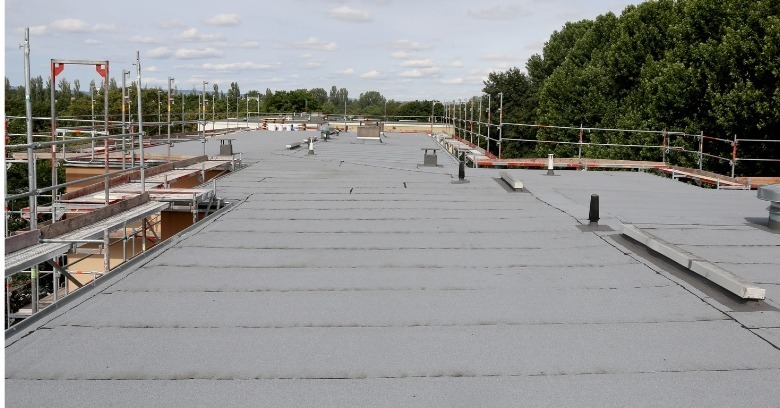
Over Stores and Warehouses – the Basics
Staff, stock and machinery sit beneath the membrane, so a small opening can interrupt a full day of trade. A big footprint is covered at a gentle grade, and runoff and uplift are engineered rather than guessed.
Air handlers, fans and communications gear sit on the membrane, and each support, line or duct gets careful flashing. The purpose of the building drives the design, since a cold store and a law office have different needs.
Sheet Systems in Wide Use: a Short Guide
Single-ply goods such as TPO, PVC and EPDM go down as one broad layer, modified bitumen is asphalt toughened with polymers and laid from rolls, and built-up roofing piles felt and tar ply on ply. Thermoplastic seams are welded with heated air, but rubber sheets are joined with primer and splice tape.
Kitchen exhaust leaves a film of grease around a restaurant's fans, and EPDM and asphalt swell and weaken beneath oily residue, so the stretch nearby is often PVC. Built-up plies under a gravel layer make a heavy, durable assembly, and the surfacing blocks sun that would dry out the bitumen.
Steel Over a Warehouse: What to Watch
Exposed-fastener sheets are secured with screws through the flats, and the purlins below take the grip. The neoprene washer at each head dries out under years of sunlight, and daily heating and cooling gradually loosen the fasteners.
A standing-seam system uses clips hidden inside raised ribs, which lets each pan glide lengthwise. Red rust breaks out at laps and along cut edges, and a retrofit coating can give sound metal more years of service.
Decking on Big Buildings – What to Check
Attachment methods are limited by what the original builders put in, and the framing normally stays through every reroof. Steel with flutes holds screws securely, concrete is glued or drilled for anchors, and plywood takes nails or plate fasteners.
Rust from old leaks can leave soft spots in metal decking, and a weak area gets a new panel before anything goes on top. The underside can be viewed from below where no ceiling blocks the view, and exploratory openings from above reveal the remainder.
Attachment Methods – Pros and Cons
Plenty of commercial sheets are pinned by screws and plates in each overlap, adhered work is stuck down across the full surface, and ballasted sheets stay put under a blanket of stone. Height, exposure and the deck below guide the selection, and a heavy design goes ahead only once the framing is confirmed adequate.
Gusts make a screwed membrane ripple between the fastener lines, but adhered work stays motionless and needs a dry surface to grip. A ballasted layout turns inspection into a slow job, because gravel or pavers must come off before anyone sees a joint.
Wind Forces Overhead: Setting the Screw Pattern
The strongest suction lands at each corner, since the flow tumbles and speeds up on turning over the edge. A band along each side takes somewhat less, and the middle of the field takes a small fraction.
Screws and plates are packed tighter toward corners and edges, as set out in engineering tables for height and wind speed. Skimping on anchors at the outside angle lets the covering pry loose, and pressure underneath can strip a wide section.
Insulating Foam – an Overlooked Component
Polyisocyanurate panels cover the deck with offset joints, and a dense cover board often goes on top. Insulation reduces the load on air conditioning and furnaces, and a tapered layout pitches the finished face toward the drains.
Wet polyiso loses much of the R-value, and damp material sits against steel until the flutes corrode. Meter readings confirmed by cut cores trace the extent, and each sodden piece is removed instead of buried.
Outlets on a Big Building – Laying Out the Route
Every interior sump is guarded by a strainer dome, and the bars catch bags, leaves and gravel before the pipe. Once silt coats the grate, flow drops sharply, and a wide pool gathers in the surrounding field.
Codes call for a backup outlet mounted above the main drain, so a gush at the upper spout means the normal path is shut. Ponded water adds load that the framing may not be sized for, and a pool that outlasts a downpour by two days marks a low spot or a fouled strainer.
Locating an Opening Overhead – a Careful Search
A stained ceiling tile marks only where the drops fell, yet the defect up top may be dozens of feet distant. Runoff travels along the flutes of a steel deck, and board joints carry a trickle further.
The roofer works uphill of the stain along laps, curbs and outlets, and an electronic scan can pinpoint a hidden leak. Patching straight above the damp tile usually lands in the wrong place, so a fresh ring appears in the next shower.
Package Units Overhead – a Closer Look
Each machine is bolted to a curb that rises from the deck, and the covering turns up the sides beneath metal counterflashing. Inside corners need preformed pieces or patient detailing, and a poorly sealed crease admits rain.
A replacement condenser frequently arrives on an adapter curb nobody flashes, and water reaches the office below soon enough. Condensate running loose over the membrane breeds growth and grime, and the water should be routed to a drain.
Smaller Openings – Detail by Detail
Each round stack wears a prefabricated boot with a clamp, while odd shapes go into a pitch pocket filled with sealant. The compound shrinks and cracks as the years pass, and adding fresh material is ordinary maintenance.
Conduit and gas lines belong on free-standing supports, because a mount fastened through the sheet lets rain in. A square of sacrificial material under each foot spreads the pressure, so daily movement rubs the buffer rather than the covering.
Hinged Covers Up Top – How Leaks Begin
Acrylic panes yellow and turn fragile after years of sun, and fractures tend to start at the fastener holes. Rain slips past a dried gasket or an open frame corner, and the covering gets accused of a fault in the glazing.
The hatch at the top of the ladder sees daily traffic on some buildings, and hinges, springs and weatherstrip wear from constant opening. Smoke vents release automatically when a fusible link melts, and no roofing work may block the mechanism.
Masonry Above the Roofline: Staying Dry
At the vertical face, the sheet climbs as base flashing, a termination bar grips the upper end, and counterflashing tucked into a reglet covers the fastened line. Formed metal coping caps the parapet to keep rain off the top, but joints whose sealant has cracked admit runoff beneath.
Weathered brick and block take on water through the faces, so the stain that appears gets blamed on the membrane. An inspection covers the coping, the counterflashing and the wall as well as the membrane, and open mortar joints are repointed instead of caulked.
Fascia Metal at the Outer Edge – Parts and Purpose
A continuous cleat is fixed along the eave and locks the hem of the flange, and a cover strip seals the sheet to the horizontal face. Gauge and profile are matched to the wind exposure at the building's height, since loose metal becomes a lever that gusts use against the field.
Gutters on a large building must swallow drainage from an enormous area, and the hangers, joints and leaders must be sized generously. Crumpled or raised trim is a clear repair item, and fastening down loose runs helps stop the membrane peeling away.
Service Visits and the Membrane: Living With Guests
Electricians, cable installers and HVAC crews all make regular trips up, and the direct path slowly abrades the covering. A forgotten screw is stepped straight into the covering, and a falling wrench can split the sheet.
Heavy walkway pads laid along the route show where to tread, and wear ends up on material built for foot traffic. Managers can require contractors to keep off the unprotected sheet, and cut-offs and fasteners go down with the worker who carried up the parts.
Planned Care for a Membrane: Small Jobs Kept Small
A walk-through twice annually suits most commercial coverings, and heavy wind is reason for an extra check. Routine care lifts and empties each strainer, any open lap is found with a probe, and brittle sealant gets marked for replacement.
The trip ahead of the stormy months focuses on outlets and perimeter metal, and a return after rough weather finds what shifted. Small problems are noted against a drawing of the building, so decisions can be made calmly and in advance.
Documenting a Covering – a Long Memory
A scaled drawing shows where each unit, drain and hatch sits, and a section view names each material from deck to membrane. Photos with dates accompany every repair entry, and moisture readings are added as taken.
Lots of aging buildings have nothing on paper about the assembly overhead, and each roofer who climbs up has to investigate afresh. Roof records stay with the site office, and a copy can go to a successor or a buyer.
Fix, Refresh or Rebuild: Reading the Evidence
A membrane that is mostly intact needs only spot patching, while an aged but dry surface can take a liquid-applied system. Insulation ruined over broad areas points to tear-off, and so do seams that crack wherever flexed, but the calendar alone is no verdict.
Any restoration coating depends on a washed, repaired substrate, because trapped moisture beneath gets locked in. Swapping only the ruined sections is sometimes a sensible middle course, where the surrounding membrane still has life left.
Planning a Reroof – Guided by What Lies Beneath
A recover puts a fresh membrane over the current roof, and a cover board separates the surfaces. Codes permit an overlay on a single existing covering, and the foam underneath must be dry.
A full tear-off removes every layer, right down to bare metal or concrete, and damaged sections of deck are mended while exposed. New tapered insulation can correct ponding during the same project, and crickets set between outlets push runoff aside.
Clues Around the Building – Before Leaks Spread
- Splashing from the upper overflow opening, which betrays a choked everyday outlet.
- A ceiling tile whose stain spreads after every shower, which confirms a path through the assembly.
- Dark streaks running down the outside wall below a scupper, which can suggest flashing trouble near the top.
- A gravel stop that moves when a gust hits, which can put the membrane at risk in a storm.
- A ceiling that sags or bows between the joists, which may reflect a depression or a sluggish drain.
- A hazy plastic dome over the warehouse floor, which is ready to fail at the frame or under a load.
- Rust spots spreading on the underside of a steel deck, which points to an entry somewhere on the membrane.
- A gutter pulling away from the hangers, which can send runoff behind the fascia.
How APC Roofing Approaches Commercial Roof Repair in Sanford Florida: What Happens and When
We begin with every drain, scupper and overflow, and next we go along each lap, curb and edge. On a leaking building, cores and a meter check the foam, and the advice waits for the numbers.
Everything we find is written up with photographs and a sketch, and every trouble spot is pinned to a location. The conclusion is repair, restore or replace, and each reason is spelled out for the owner.
Commercial Roof Repair for Property Owners in Sanford Florida: Plan the Next Step
Call 407-270-1129 and we will schedule a time to come out.
Working Above Occupants – Clear Communication
Drilling a steel deck sounds like thunder to everyone below, and glue fumes can travel down through open intakes. The loud part of the job is planned with whoever runs the building, and vents near the work can be shut while the cement cures.
Debris leaves by chute into a dumpster, and tarps can go over whatever sits below. Low-odor adhesives cut down the smell considerably, and the gentler choice suits a building full of people.
Staged Work on a Big Surface – Order and Timing
The amount torn off is capped by what can be dried in by nightfall, and the bare deck gets new boards and membrane promptly. A temporary closure protects the joint between finished and unfinished portions, and the patch is trimmed off when roofers return.
How much is stripped depends on the weather outlook, so an approaching storm means a smaller opening. Bare foam hit by a downpour absorbs a great deal of water, and leaks can then reach stock and staff below.
Regional Conditions – Market by Market
At the colder end of our territory, hail and snow load both count, and denser cover boards with verified beam capacity follow. Across all the towns we serve, UV and high temperatures age a membrane, and a white reflective surface cuts the warmth absorbed.
Hurricanes at the coastal end raise the bar for anchoring, and heavy tropical rain calls for extra overflows. Some adhesives will not cure below a set temperature, but heat-welded seams tolerate chilly air as long as the deck is dry.
Guarding Against Falls: a Standard Part of the Job
Many low buildings have no wall at the perimeter to catch a misstep, so warning lines or harnesses tied to anchors are used near the edge. Skylights look solid yet break under a careless step, and fixed screens rule out a plunge into the space below.
Permanent tie-off points benefit the service crews who visit later, and a gated ladder hatch adds another safeguard. Our findings mention any guard that is lacking, because a drop from a single floor can badly hurt someone.
If Commercial Roof Repair in Sanford Florida is on your agenda, dial APC Roofing at 407-270-1129. We will go over the entire field, drain by drain and seam by seam, and you receive the findings in writing and decide from there.
Verified

Verified
Verified
Verified
Verified