
During the storm you heard something flapping on the roof. Now there are a couple of shingles in the flower bed, a darker patch near the ridge, and you’re not sure if that’s the whole story. Wind damage roof repair in Republic, MO often starts this way, with a few obvious missing pieces and more damage hiding around them.
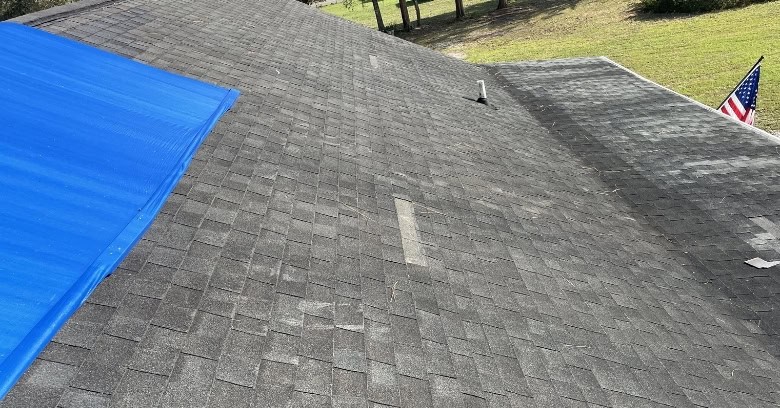
It’s easy to shrug off a handful of shingles. It’s also easy to worry that one windy night has cost you a whole roof. Neither guess helps much. What you need is someone to look at every edge and tell you plainly what’s loose, what’s gone and what’s still holding.
APC Roofing is GAF Certified, licensed and insured, in business since 2017, and serves Republic from our Springfield office. Your inspection is free. Call 913-398-5020 to get one scheduled.
Where wind gets a grip on your roof
Wind doesn’t push on a roof evenly. As it flows over the house, it creates lift, and that lift is strongest at the edges, the corners and along the ridge. Those are the spots where shingles let go first.
Once wind gets under the edge of one shingle, it can peel it back and catch the next one. That’s why wind damage often shows up in strips or patches instead of single scattered spots, and why a roof with a few missing shingles may have a dozen more that are lifted and barely hanging on.
Southwest Missouri gets plenty of this. Lines of spring and summer thunderstorms bring straight-line gusts, and even a storm that doesn’t produce hail can loosen a roof that was already aging.
The seal strip that holds shingles down
Asphalt shingles have a strip of adhesive on the underside that the sun warms and bonds to the shingle below. That seal is a big part of what keeps them flat in the wind.
A few things weaken it. Shingles installed in cold weather may not seal until a warm stretch arrives. Older shingles lose their grip as the adhesive dries out. And once wind has lifted a shingle and broken the seal, it rarely bonds back as well as before. A shingle that flapped in one storm is an easier target in the next.
Signs of wind damage
Some of this you can spot from the yard, and some needs a closer look:
- Missing shingles, or bare spots showing the black underlayment
- Shingles with a horizontal crease across them, where they bent back and forth
- Lifted or curled edges along the eaves, rakes and ridge
- Ridge cap pieces that are loose or gone
- Exposed nail heads where shingles shifted
- Bent or pulled-away flashing at the chimney or walls
- New water stains inside after a storm
Creased shingles are the ones homeowners most often miss. They’re still on the roof, so everything looks fine, but the crease is a weak line that cracks and lets water in.
When a limb comes down
Trees around Republic homes give shade and plenty of trouble during storms. A falling limb can punch through shingles and crack the decking underneath. Even a branch that just scraped across the roof can leave gouges and broken granule surfaces. Any impact like this is worth a look from the attic side too, where a cracked board or wet spot is easier to see.
What the wind rating on a bundle means
Shingle packaging lists a wind rating, and it’s natural to assume the roof can handle any storm under that number. In practice, the rating assumes the shingles were installed to the manufacturer’s instructions: the right number of nails, in the right place, with the proper starter strip at the edges. A roof with nails set too high or too few of them can fail well below its rating. When wind damage looks worse than it should, the original installation is often part of the reason.
Repairing wind damage
A small area of missing or creased shingles on a roof in decent shape is usually a straightforward repair. Damaged shingles come out, any soft decking gets replaced and new shingles go in, sealed and nailed properly.
Matching can be tricky. Older shingles fade, and some styles are no longer made, so a repair on an aging roof may be visible. If wind damage is spread across several slopes, or the shingles are brittle enough that they crack when lifted for a repair, a roof replacement in Republic may be the more sensible answer. Either way, you’ll see the photos and hear the reasoning.
If water is getting in now, move what you can, catch the drip and call 913-398-5020. Our emergency roof repair in Republic page explains how urgent repairs work.
Wind damage and insurance
If a storm caused the damage, you file a claim with your insurance company and pay your deductible under your policy. APC documents the damage with photos and measurements, writes the estimate and works with your adjuster. Be wary of anyone who offers to waive or cover your deductible. More on that is on the insurance roof claims in Republic page, and the storm damage in Republic page covers other kinds of storm damage.
How it works
- Book your free inspection. Call 913-398-5020 or request a free estimate online.
- Get a clear, honest assessment and estimate. You’ll see which shingles are missing, creased or lifted, and get a written estimate for the repair or replacement.
- Your roof gets done and the site gets cleaned up. The crew handles the work and leaves your yard clean.
Wind damage questions from Republic homeowners
Can a few missing shingles wait?
Not for long. Exposed underlayment isn’t made to take sun and rain on its own, and the shingles around a gap are easier for the next storm to lift.
Can lifted shingles be sealed back down?
Sometimes, if they’re not creased or brittle. Shingles that have bent sharply usually need to be replaced, because the crease will crack.
Why did my neighbor’s roof lose shingles and mine didn’t, or the other way around?
Roof age, shingle type, how the roof faces the wind and how it was nailed all play a part. Two houses on the same street can fare very differently in the same storm.
A roof that stays put next time
Wind damage tends to spread. Each loose shingle gives the next gust something to grab, and a small repair today can turn into a bigger one after a few more storms.
Call 913-398-5020 or book your free inspection online. You’ll know exactly what the wind did, what it takes to fix it and that your roof is ready for the next line of storms.


















