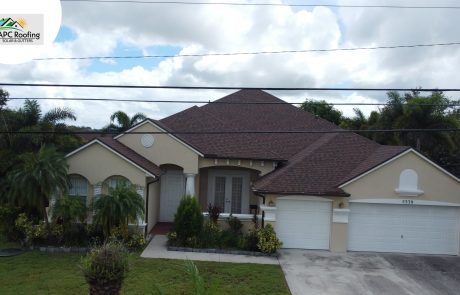
Weighing Shingle Roof Repair in Greater Orlando Metro Area?
APC Roofing re-covers slopes with laminated or flat strip products for homes of every age and size.
Dial 407-270-1129 and a visit will show what condition everything is in.
Components and Construction: Plant to Pallet
A fiberglass mat gives each shingle its strength, while asphalt soaked through the sheet turns rain away, and granules rolled into the surface shade everything beneath from ultraviolet rays.
Lines stacked side by side at a supplier are not always equal, and extra material usually means longer wear. A showroom sample tells nothing beyond appearance, while published data covers the wind and impact classes.
Strip Versus Laminated: How the Designs Differ
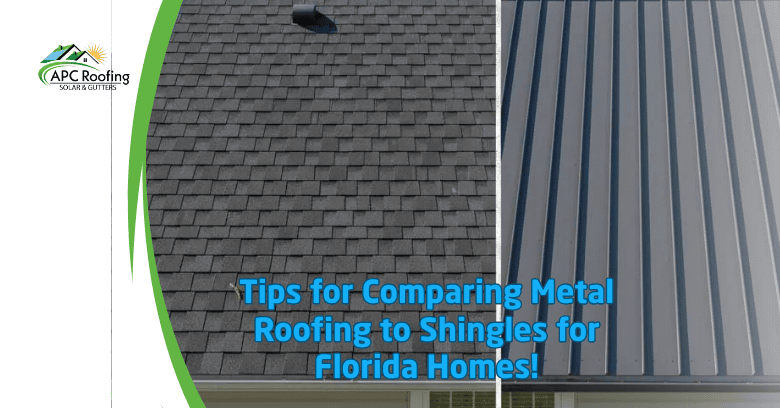
The three-tab type is a single sheet notched twice along the bottom, and courses laid this way form tidy straight bands. An architectural product bonds a contoured upper strip to a solid backer, and the covering appears textured and shadowed.
The double-ply build adds material and weight, and the rated wind resistance usually rises too. On a two-layer shingle, fasteners belong in the band where both plies overlap, and the manufacturer's markings set the target.
Uses for the Flat Style: Sensible Settings
A detached garage, a shed or a porch often suits three-tab well, while a house already wearing that type can be matched. Makers have pared back their tabbed lines, so an exact replacement can be hard to find.
Uneven plywood is less noticeable under a dimensional product, whereas a single-ply strip telegraphs each bump. Underlayment and flashings are the same under either style, while everything that differs is on top.
Loose Grit – Normal or Worrying
Some surplus grains rinse off a recently installed covering, and that shedding is expected. On a covering with many years behind it, drifts of granules at the outlets mean real surface wear, and uncovered asphalt dries out and cracks in sunlight.
Southern and western slopes absorb the hottest light, so bald patches tend to appear there sooner.
Sealant Lines: Resisting Uplift
A narrow glue stripe runs across every shingle, and bright sunshine activates it so the row above clings. Adhered courses keep their bottom edges down in a gust, while nails hold every shingle for its whole life on the house.
At the colder end of our territory, a covering installed in freezing temperatures can wait months to bond, so a windy day can fold back tabs that have not taken hold. The manufacturer's sheet calls for hand-applied cement, and each bundle label marks the right locations.
Placement on the Shingle: Common Slips
Every nail belongs inside a narrow stripe the manufacturer marks, so the shank ties in the row beneath too. A standard shingle gets four fasteners, and six go in where the slope is steep or the wind is strong.
A high nail catches only a single layer, excess air pressure buries the head in the mat, and a skewed shank tents the shingle on top. The wind resistance stated on the package depends on the specified pattern, and a poorly adjusted pneumatic tool repeats its error across an entire plane.
Sheathing Choices: Soft Spots
A deck of plywood or OSB lies beneath every shingle, because a fastener driven into nothing holds nothing. Many older homes still have spaced boards left from a wood-shake era, so a layer of sheathing comes before shingles.
During a tear-off, weak or water-damaged pieces are swapped for sound ones, since a shank in crumbling fibers cannot hold. Adjacent sheets are spaced slightly apart at their edges, because swelling in damp seasons buckles anything laid too tight.
Underlayment Basics – Types in Use
Before any shingles go down, a water-resistant membrane is rolled over the deck, and its runs overlap from the bottom edge upward. Asphalt felt is less common now that synthetic sheet has taken hold, because the replacement is lighter to carry and harder to rip.
Rain that gets past a damaged shingle drains across the membrane rather than into the deck, yet the maker limits how long it may be left uncovered.
Ice Dams at the Overhang – How Far Up
Across the colder end of our territory, snow over a warm attic turns to water, and a frozen band builds along the chilly lower edge. Trapped water behind the blockage creeps higher beneath the courses, and plain underlayment admits it around each nail hole.
Colder-market codes call for a peel-and-stick membrane along the lower edge, and it runs past the interior face of the outside wall. Valleys and chimney sides often get that product too, anywhere in our territory, because those junctions carry heavy flow.
The Outer Rim – A Code Item
Prefinished drip edge follows each eave and each rake, and water sheds into the gutter instead of onto wood. At the bottom of the roof, the flashing goes beneath the underlayment, while at the gable side the order flips.
A modern code commonly calls for edge metal along every border, because runoff can cling and curl back toward the wood.
Groundwork at the Eave – No Substitutes
Before any exposed shingles, a starter strip is laid along the bottom, and its glue stripe sits at the extreme outer margin. A rotated field piece strands the adhesive several inches up, and the tabs at the low border are held only by nails.
Makers often specify a starter product up the gable sides too, because gusts pry at a roof's perimeter.
The Low Seams – Methods Compared
A valley can be built open, with a metal channel left exposed down its center, and the closed-cut type carries one side's courses through while the other side is cut back. Weaving is a long-standing technique for thin, flexible tab shingles, whereas two-ply shingles do not bend well enough.
Fasteners stay out of the center of the channel, and an adhered membrane lies underneath the whole length. Collected leaves and twigs slow the flow and keep the surface wet, so water starts finding a path under the sides.
Vertical Surfaces – Frequent Leak Points
Every course that meets a wall gets its own folded step flashing, and siding or counterflashing laps down over its upright leg. Where the eave stops against the house, a kickout diverter goes in, and without one rain runs inside and rots the sheathing.
Masonry chimneys take a base apron, side step flashing and counterflashing grooved into the joints, and a broad stack calls for a saddle upslope.
Through-Roof Vents: Timing a Swap
A pipe boot is built from a flat base plate and a stretchy neoprene collar, and years of sun leave the seal brittle and split. The flange slips under the courses higher up, and water running down the slope passes over the exposed lower part.
Collars frequently need attention while the rest of the covering is healthy, and a tear-off is the natural time to change every boot.
The Topmost Seams – Final Courses
Cap shingles close the ridge and each hip, and makers of two-ply lines sell a purpose-built companion. Pieces cut from strip shingles are much thinner, and at the colder end of our territory a freeze can open splits along the bend.
A ridge vent often runs beneath the cap row, so the nails must be long enough to pass through it and bite the sheathing.
Breathing Room Above the Ceiling – Heat and Moisture
Intake openings in the soffits let cool air in near the bottom, and the ridge releases it. Batts pushed hard against the sheathing at the wall line can block movement, so baffles are installed to keep a clear gap.
An attic holding in heat warms the deck from underneath, while it also collects damp air from cooking, bathing and breathing. At the colder end of our territory, frost can form on the nail tips poking through overhead, and it drips onto the insulation once the day grows mild. Two kinds of exhaust on one attic may work against each other, which leaves the eaves without movement.
Across Our Range – Storms and Algae
Our service area stretches from high plains to subtropical towns, and the strain on asphalt shifts with the setting. At the coastal end of our territory, big storms off the ocean send steady wind across a house, so manufacturers list a high-wind nailing schedule. Long seasons of strong sun dry out the oils in the coating, while streaks spread faster where the air stays sticky.
At the colder end of our territory, freeze and thaw cycles pry at every small crack, and the weight of drifted snow adds its own strain.
Frozen Pellets: Surface and Below
At the colder end of our territory, hail comes through often enough to plan around, and impact-resistant lines exist for exactly that. A hailstone knocks granules loose where it lands, and a hard enough blow can crack the mat underneath.
Impact ratings come from a laboratory test that drops steel balls on the shingle, and a tougher product shows less damage afterward. Modified asphalt with added rubber is used by several makers, and the extra give absorbs part of each blow.
Blowing Weather: Folded Tabs
Force builds most at the eaves, the rakes and each corner, and a shingle no longer stuck down lifts again and again. A tab bent far back keeps a mark along the fold, and the break in the mat will not heal. Pieces left in that condition are taken out and replaced, but a piece that simply came unstuck can be glued down by hand.
Blown-off tabs leave the underlayment uncovered, and ultraviolet rays wear it down fast.
Growth on the Surface: Shade and Damp
Algae is what paints the long black marks on many slopes, which survives by feeding on limestone filler. At the humid end of our territory, faces under trees and out of the sun collect it soonest, and the stain itself is mostly a cosmetic problem.
Moss poses a real threat, as it traps moisture against the courses, and its roots creep under the tabs and pry them up. High-pressure spraying rips the grit away with the growth, while a cleaner applied gently loosens the film. Many makers offer algae-resistant lines with copper in the coating, while a strip of zinc at the ridge helps keep the stains from returning.
Choosing a Color: Beyond Looks
Dark shingles soak up more sunlight and run hotter, while a light gray or tan stays cooler. Certain companies make granules designed to scatter infrared rays, and their performance is published as a reflectance value.
Material made on separate days is rarely a perfect match, and the recommended practice is to shuffle packs during installation. A multi-tone blend disguises minor variations well, while a uniform finish lets them stand out.
Walking on Asphalt: Care Underfoot
Strong sunshine warms the bitumen until it goes pliable, and every tread grinds granules loose. At the colder end of our territory, a course stiff with cold can break under weight, and a thin film of frost makes the slope a slide.
A homeowner is far safer staying on the ground, since a zoom lens on a phone catches a lot.
Shingles Over Shingles: What Gets Missed
A re-roof over a prior roof is legal in many towns, provided there is only one and nothing beneath is rotted. The current shingles stay on top of the decking throughout the job, and weak spots stay just as they were.
Irregularities beneath carry up into the finished roof, and flashing past its prime is usually kept. Stacking one covering on another adds mass that the framing must bear, and the nails have to be long enough to pass through both into the deck.
Things That Turn Up: A Short List
- Granules pile up in the gutters, and more arrives after every heavy rain.
- Pieces are missing and bare underlayment peeks through, so wind has broken the bond.
- Shingle ends lift into curls, as years of sun shrink the top.
- Straight breaks run through a few pieces, and moisture soaks into the mat.
- Some spots look dull and flat, so the base is bare to sunlight.
- A rubber collar around a vent pipe has split, and rain slips through into the house.
- A strip of flashing at a dormer is rattling free, so every storm can find a weak point.
- A stain spreads across the ceiling of an upstairs room, while the opening outside can be several feet off.
How APC Roofing Works on Shingle Roof Repair in Greater Orlando Metro Area: Findings You Can Use
An inspection begins with a walk across each slope, taking in the valleys, the vents, the flashings and the edges. Inside the house, the attic is searched for stains and daylight, and darkened boards on the underside show past leaks.
What turns up is photographed, and damaged areas are measured. A plain written account follows, with the reasons given for each recommendation. Small faults are labeled as small, while a covering at the end of its life is called that. The homeowner decides what comes next, be it a repair, a replacement or no work yet.
Shingle Roof Repair Around Greater Orlando Metro Area: a Careful Look Before Any Advice
Dial 407-270-1129 and describe what you are seeing.
Mending or Starting Over: Knowing the Limit
Changing a boot, resealing a flashing or swapping a few torn tabs is everyday repair work, and the sound shingles nearby stay in service. New pieces will not match weathered ones exactly, and the tone that went on years ago may be out of production.
A sun-dried tab breaks as soon as it is pried back, and one fix can turn into several. When shedding and fractures appear on every face, a full tear-off is the honest recommendation.
Useful Lifetime: Care Along the Way
Three-tab work generally holds up for fifteen to twenty years, and dimensional products often go a decade longer. The ranges shift with attic ventilation, climate and installation care, and a severe storm can cut a covering's life short.
Checking the flashings and pipe seals now and then is sensible upkeep, as prompt fixes keep water out of the wood.
When you are weighing Shingle Roof Repair in Greater Orlando Metro Area, reach APC Roofing at 407-270-1129. Someone will walk every slope and look over the details, and the written findings let you decide.