Salt air rolling in off the Intracoastal Waterway, afternoon thunderstorms that build fast off the Atlantic, and hurricane seasons that test every shingle nailed to a Palm Coast roof: this is a climate that punishes weak materials. We've watched a well-installed metal roof shrug off what wears down traditional roofing in a fraction of the time, and that durability is exactly why more homeowners across Flagler County are asking about it before their next reroof.
Why does metal roofing hold up in Palm Coast, Florida?
Palm Coast sits close enough to the coast that salt spray is a real factor in how long a roof lasts, whether a property is tucked near the canals off Colbert Lane or sitting further inland toward Palm Coast Parkway. Untreated metals and lower-grade materials can corrode faster near the water, but properly coated steel and aluminum panels are built to resist that kind of breakdown for decades.
Wind performance is the other half of the equation. A metal roofing system installed to current Florida Building Code standards is engineered to handle the uplift pressures that come with tropical storms and hurricanes, holding fast where nailed-down asphalt shingles tend to peel and tear. Add in the reflective properties of metal roofing, which bounce back solar heat instead of absorbing it, and homeowners typically see a noticeable dip in summer cooling costs.
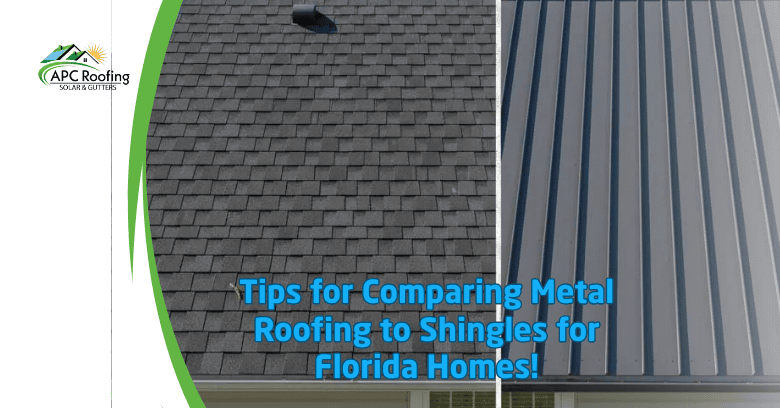
Then there's lifespan. Asphalt shingles in Florida's heat and humidity often need replacing every 15 to 20 years. A properly installed metal roof, by contrast, is built to last 40 to 50 years with routine maintenance, meaning fewer replacements, less long-term cost, and better protection through multiple hurricane seasons.
Metal roofing materials and styles we install
Not every metal roof looks or performs the same way, and choosing the right system depends on the home's structure, budget, and the aesthetic a homeowner wants. Our crews work with several proven options for Palm Coast properties:
- Standing seam panels: concealed fasteners, clean vertical lines, and strong wind uplift resistance, popular for both modern and traditional Florida homes.
- Metal shingles: designed to mimic the look of slate, tile, or shake while delivering the durability of metal.
- Corrugated and ribbed panels: a cost-effective option often used on garages, workshops, or more utilitarian structures.
- Aluminum: naturally corrosion-resistant, a strong fit for homes closer to the water where salt exposure is higher, including properties along the Intracoastal side of town.
- Galvanized and galvalume steel: coated for extra protection, offering a balance of strength and affordability.
- Copper: a premium option with a distinctive patina over time, chosen more for aesthetics and longevity than budget.
Coastal-grade finishes make a real difference here too. Kynar 500 and similar polyvinylidene fluoride coatings resist fading, chalking, and salt-driven corrosion far better than standard paint finishes, which is part of why we recommend them so often for homes in this part of Florida. On the color side, homeowners in Palm Coast tend to lean toward finishes that complement the area's coastal and Mediterranean-style architecture: soft grays, weathered bronze, classic charcoal, and coastal blues among the more requested tones.
Installation process for Palm Coast properties
Metal roofing is only as good as the installation behind it, and that process starts before a single panel goes up. Our crew begins with a structural assessment to confirm the roof deck and framing can handle local wind load requirements, since Flagler County's building standards are stricter than what many homeowners expect from older construction.
From there, installation follows a sequence built around Florida's humidity and rainfall patterns:
- Underlayment selection: a high-quality synthetic or self-adhering underlayment is chosen to guard against moisture intrusion in a climate where afternoon storms are routine.
- Ventilation planning: proper attic and roof ventilation prevents heat and moisture buildup, which is especially important given how much humidity Central Florida holds through the summer months.
- Fastening to coastal standards: fasteners and clips are selected and spaced to meet wind uplift requirements specific to hurricane-prone areas like Flagler County.
- Flashing and drainage detailing: valleys, penetrations, and edges are flashed carefully to handle the heavy, fast rainfall this area sees during storm season.
Skipping any one of these steps is usually where roof failures start, which is why our crews treat the underlayment and flashing work with the same care as the visible panels themselves.
Local considerations: weather and regulations in Palm Coast
Palm Coast falls squarely within Florida's hurricane-prone wind zones, which means roofing work here isn't just about appearance, it's about meeting code. Roof tie-down and uplift requirements under the Florida Building Code are non-negotiable for compliant installations, and our crew builds every project around those standards rather than treating them as an afterthought.
Humidity and salt spray are the other constant factors. A roof that isn't rated for coastal exposure can show signs of corrosion or finish failure well ahead of schedule, which is part of why material selection matters as much as workmanship. And for homeowners in planned communities or HOA-governed neighborhoods such as those found throughout the Grand Haven and Palm Harbor sections of town, we factor in HOA approval requirements early, helping homeowners choose colors, profiles, and finishes likely to clear architectural review without delays.
How long does a metal roof last in Florida's climate, and what warranty should you expect?
Florida's climate is hard on roofing materials, but metal roofing systems are engineered specifically to handle it. With proper installation and routine maintenance, a metal roof in this region can reasonably be expected to last 40 to 50 years, well beyond the typical asphalt shingle lifecycle. Warranty coverage varies by manufacturer and material, but many coastal-grade finishes and panel systems carry long-term warranties against fading, corrosion, and paint failure, on top of workmanship warranties from the installing contractor. We tell homeowners to ask specifically about coastal exposure warranty terms, since standard warranties sometimes carry different conditions for homes within a certain distance of saltwater.
How should you choose a color and finish for your home?
Color choice affects more than curb appeal in this climate. Lighter, reflective finishes help reduce heat absorption, which can ease the load on air conditioning systems during Florida's long summers. Darker tones offer a bolder look but may run slightly warmer. Homeowners generally weigh three things when choosing a finish:
- How the color complements the home's exterior and neighborhood aesthetic.
- How well the coating is rated for UV and salt exposure.
- Whether the HOA has restrictions on approved roofing colors.
Walking through samples in actual sunlight, rather than indoor lighting, is the best way to judge how a finish will really look once installed.
Why Palm Coast homeowners choose APC Roofing
APC Roofing is based in Clermont, Florida, and has built its reputation serving homeowners across Central Florida and the greater Daytona Beach area, including Palm Coast, Daytona Beach, Holly Hill, Deltona, Sanford, Kissimmee, and Orlando. That regional footprint means our crews understand the differences between inland wind exposure and coastal salt exposure, and we apply that knowledge directly to how each metal roofing project is designed and installed. One homeowner near the Palm Coast waterway told us after a recent install that the difference in attic temperature alone was noticeable within the first week, exactly the kind of feedback that keeps us refining how we vent and insulate these systems.
Every installation is backed by licensed, insured work and manufacturer-backed warranties, so homeowners aren't left guessing about coverage if an issue comes up down the road. We also bring a portfolio of completed metal roofing projects across the region, giving Palm Coast homeowners a real look at workmanship and finish quality before committing to a project.
Common concerns Palm Coast homeowners raise before installation
A few concerns come up consistently during consultations, and most are easier to resolve than homeowners expect:
- Will it be noisy during rainstorms? With proper solid decking and insulation, a metal roof is not noticeably louder than asphalt shingles during Florida's heavy afternoon rains.
- Is the upfront cost worth it? Metal roofing costs more initially than asphalt, but its 40 to 50 year lifespan and lower repair frequency often make it the more economical option over time.
- Can it lower insurance premiums? Many insurers offer discounts for wind-resistant roofing systems that meet Florida Building Code standards, which is worth confirming with a provider before installation.
- Can it go over an existing roof? In many cases, metal roofing can be installed over certain existing structures, though a structural assessment determines whether that's the right approach versus a full tear-off.
Ready to protect your Palm Coast home?
A metal roof installed correctly for Florida's coastal climate is one of the most effective long-term investments a Palm Coast homeowner can make, standing up to hurricane winds, salt air, and decades of Florida sun far better than traditional shingles. The right move now is to schedule a professional structural assessment and inspection before storm season narrows the window for scheduling, since demand for roofing work tends to spike once hurricane forecasts hit the news. Our crew brings hands-on experience with metal roofing in Palm Coast, Florida, and throughout the surrounding Daytona Beach and Central Florida communities, and we can walk through material options, code requirements, and HOA considerations specific to your property. Waiting until a roof is already failing limits choices and often costs more in emergency repairs than a planned installation would. Reach out to APC Roofing to schedule an inspection and get a clear, honest assessment of what your home on the Flagler County coast actually needs before the next storm season arrives.
Verified

Verified
Verified
Verified