You’ve replaced shingles after one too many storms, or your roof is getting close to the end and you’d like the next one to be your last for a long while. A few houses on your street have switched to metal, and you’re wondering if standing seam metal roofing in Palm Coast is worth it. You also have questions: how it holds up near the ocean, whether it’s loud in the rain and how to tell a good install from a bad one.

Those are the right questions to ask. A metal roof is a big decision, and you shouldn’t have to make it on a sales pitch alone.
APC Roofing installs and repairs metal roofs on Florida homes. We’re GAF Certified, licensed in Florida (CCC1337030) and insured, and in business since 2017. Your inspection and estimate are free.
What standing seam metal roofing is
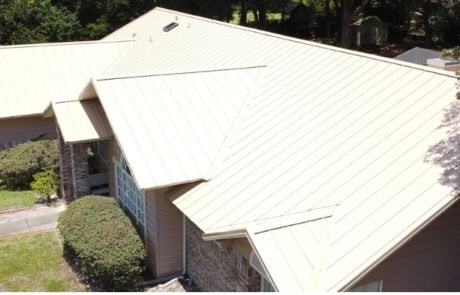
A standing seam roof is made of long metal panels that run from the eave up to the ridge. Where two panels meet, their edges rise into a raised seam that’s folded or snapped together above the flat of the roof. The panels are held down by clips hidden under those seams, so no screws go through the face of the metal.
That’s the main difference from exposed-fastener metal, like the ribbed panels on many barns and sheds, where screws with rubber washers go straight through the panel. Those washers age in the sun and eventually need attention. A standing seam roof keeps its fasteners out of the weather. If you’re comparing the two, our corrugated metal roofing page covers the exposed-fastener option.
Standing seam metal roofing in Palm Coast: why homeowners choose it
Wind
Interlocked panels with hidden clips give wind very little to grab. When you’re comparing systems, ask whether the panel and clip assembly has been tested and approved for use in Florida at your home’s wind requirements. Your roofer should be able to show you that paperwork.
Rain
Metal sheds water quickly, and the raised seams sit above the water running down the panel. Summer downpours, hurricane-season rain from June 1 through November 30 and fall nor’easters all run straight off.
Sun and heat
There are no granules to wash off and no shingles to curl. Lighter finishes reflect more of the sun, which helps keep heat out of the attic. Good paint systems hold their color far longer in strong UV than lower-grade finishes.
Salt air and choosing the metal
This is the question that matters most this close to the ocean. Salt in the air settles on the roof and, over time, attacks bare or scratched metal.
Aluminum doesn’t rust, so it’s often the first choice for homes near the water. Coated steel panels are common too and perform well in many locations, but the coating is what protects the steel, so cut edges and scratches need care. Many manufacturers set rules about how close to salt water a given panel and finish can be installed. Ask about that before you choose, and ask what it means for the manufacturer’s coverage at your address.
Mixing metals is the other thing to watch. When certain metals touch, such as copper and aluminum, or steel fasteners in aluminum trim, they can corrode each other. Flashing, trim and fasteners should be compatible with the panels.
What a good standing seam install looks like
Metal grows and shrinks as it heats and cools, and a Florida roof swings a long way between a cool morning and a hot afternoon. The clips under the seams let panels slide slightly as they expand, so the metal doesn’t buckle or tear its fasteners loose.
Some waviness in the flat part of a panel, called oil canning, is normal on metal roofs. It’s cosmetic and doesn’t affect how the roof sheds water. Thicker metal and panels with small stiffening ribs show it less.
Underneath, the deck gets checked and repaired, and a high-temperature underlayment goes down before the panels. Pipe boots, wall flashing and valley details are made for metal, and the ridge is closed so wind-driven rain can’t blow in under the cap.
Most metal roof installs start with a tear-off so the deck can be inspected. Covering an old roof hides any rot underneath.
Standing seam repair and upkeep
Standing seam roofs need less upkeep than most, but they aren’t maintenance-free. After a big storm, look from the ground for bent panels, lifted trim or debris. A light rinse now and then helps wash salt off, especially in spots the rain doesn’t reach. Sealant around pipes and other penetrations should be checked every few years.
If something does go wrong, a damaged panel or a leaking boot can usually be repaired without replacing the roof. Our metal roof repair in Palm Coast page explains how.
How it works
- Book your free inspection. Call 386-259-8425 or request a free online estimate.
- Get a clear, honest assessment and estimate. We look at your current roof and deck, talk through panel, metal and color choices for your location, and give you photos and a written estimate. Financing is available through Aqua Finance, Fortifi, Hearth and Home Run Finance.
- Your new roof goes on and the site gets cleaned up. The crew installs the panels and trim and cleans up before leaving.
If your current roof is already leaking, waiting through another rainy season can let water rot the deck, which adds to the cost of any new roof.
Standing seam questions from Palm Coast homeowners
Is standing seam metal a good choice near the ocean?
It can be, with the right metal and finish. Aluminum is a common pick close to salt water because it doesn’t rust. Check the manufacturer’s rules on distance from salt water for any panel you’re considering.
Is a metal roof loud when it rains?
Installed over a solid deck with underlayment, a standing seam roof isn’t much louder than other roofs in most rooms. Metal on open framing, like a shed or barn, is what drums in the rain.
How long does a standing seam metal roof last?
Metal roofs are known for long service lives. How long yours lasts comes down to the metal, the finish, the quality of the install and how much salt it sees, so we’ll go over that for your home rather than quote a number.
Can standing seam go on a low-slope roof?
Some standing seam systems are made for lower slopes than shingles can handle. Very flat sections still usually need a membrane, which we can tie into the metal.
Talk to a Palm Coast metal roofer
Call 386-259-8425 to book your free inspection, or start your estimate online. You’ll come away knowing which metal suits your spot on the coast and what a roof that rides out the next storm season looks like on your house. You can see more of our Palm Coast metal roofing work here.