Looking for Corrugated Metal Roofing Across Palm Coast Florida?
APC Roofing works on ribbed sheet and concealed-clip panels alike, from a pole barn to a family home.
Dial 386-356-2111 and you will hear in plain words what condition the roof is in.
Identifying a System: Hints in Plain Sight
Exposed-fastener roofing is pinned by screws passing through every panel, whereas standing seam hangs on clips hidden under tall ribs. Most metal on houses is coated steel, and aluminum and copper are less frequent choices.
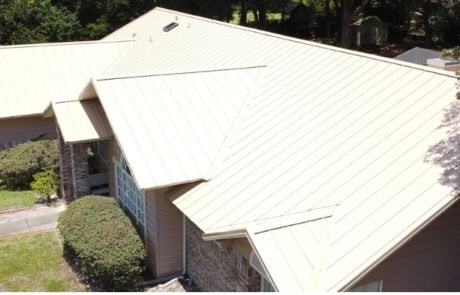
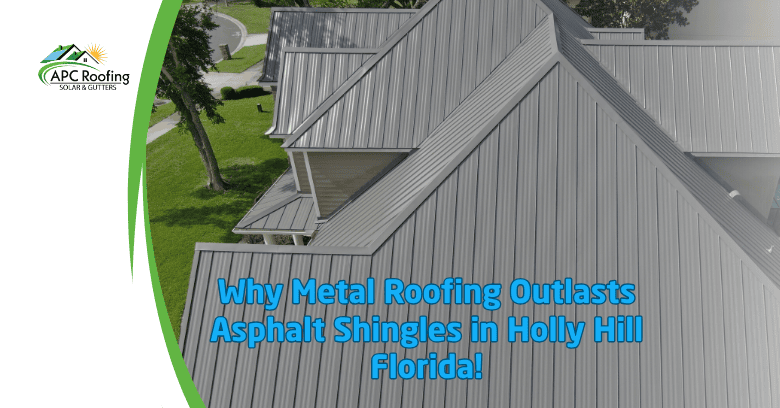
From a driveway, lines of screw heads across the panels mark a through-fastened roof, and clean flats between raised joints, bare of hardware, belong to standing seam. Outbuildings and porches lean toward ribbed or corrugated sheet, and dwellings use both.
Rolled Shapes – Reach Between Supports
A corrugated sheet curves up and down in regular round waves, while ribbed designs show angular ribs and wide flats. One length rides over a neighbor at a side lap, and a maker's pattern says where screws go.
With deep ribs, a ribbed panel bridges wider spacing, while corrugated keeps a place on vintage buildings and farmhouse designs. Taller ribs give runoff more room on a long slope, and a shallow pattern is plenty for a small porch or shed.
Fasteners in the Open – Why Installation Matters
Each screw draws a panel snug against a rafter or purlin, and a gasketed washer under each head does the sealing. Sun and temperature swings dry out neoprene over time, and the panels usually last a great deal longer.
Driving a screw past snug crushes a washer and dimples the metal, and a shallow or off-square setting never seals fully.
Hardware Swaps: Part of Upkeep
Washers on corrugated or ribbed panels give out as a group, so a complete re-screw comes due at some point. Tired fasteners are pulled one by one, and a screw one size larger takes each place so threads grip solid material.
A re-screw ends drips and steadies sheets that rattle in wind, but rust damage, open laps and failed flashing are untouched. Screw style depends on what lies beneath, with coarse threads for wood and self-drilling tips for steel, and color-matched tops blend in with a painted finish.
A Covering in Motion – Built to Allow Travel
A steel sheet grows in afternoon heat and shrinks back by dawn, and a long run can gain a quarter inch between noon and midnight, with aluminum going about twice as far. Where nothing lets a panel slide, the metal elongates screw holes, and washers begin to leak.
A tick from warming metal after sunrise is normal, and a roof built with slack is unharmed.
Under Upright Joints: Hidden Hardware
Each long pan is fixed solid in one short zone, while clips on every other section permit movement. Trim at an end that travels is bent with clearance underneath, and metal with no play winds up torn or kinked.
Each pan is set in place, and clips are driven through into the deck along one side, so each new pan conceals all hardware below.
Closing a Seam – Suited to Pitch
Snap-together panels latch by hand, while other designs are crimped over by a machine. A double-lock grips harder against wind-driven rain, so maker ratings reach lower pitches.
Pan width and rib height vary from product to product, and building shape and personal taste steer a buyer. Parts made for one system rarely suit a rival brand, so any repair hinges on knowing exactly which panel is installed.
Stock Weight – Worth Confirming
Steel thickness is given as a gauge, and higher numbers mean thinner sheet. Farm structures often use twenty-nine, while twenty-six and twenty-four are typical choices for houses.
Aluminum uses decimal figures rather than gauge, and with either metal, a stouter panel holds shape. Different grades look identical once installed, so a product data sheet is a reliable guide.
Factory Protection: What Lasts
Coil stock is dipped in molten zinc or an aluminum-zinc alloy, and a primer and a colored enamel are baked over the metal. A scratch that stays within paint does no harm, whereas a gouge through to bare metal soon shows red.
PVDF finishes hold color for decades, while polyester grades dull faster in strong sun. Lime in fresh concrete eats into an aluminum-zinc layer, so a gap or barrier separates panels from new block or stone.
Which Metal Suits: Salt Air
Aluminum carries less weight and does not redden, but a dropped tool or a falling branch dents a soft sheet sooner. Close to salt water, at the coastal end of our range, metallic coatings break down faster, and makers restrict certain products near surf.
Copper usually goes on small accent roofs over bays and entries, and years outdoors take bare metal to brown and then green.
Mixing Metals – Matching or Separating
A copper pipe or flashing above steel sends corrosive drainage down over the panels, and streaks appear years ahead of perforation. Aluminum on pressure-treated boards turns white and pits, and fasteners of an unsuited metal leave a ring of damage.
New flashing or trim has to match the metals already in place, or a strip of membrane goes between dissimilar metals.
Looks, Not Leaks: Choices That Help
What the trade calls oil canning is a mild wave in a flat pan, and a sun low in the sky exaggerates every contour. A panel that looks uneven sheds rain as well as a perfect sheet, and the roof lasts no less.
Striations, heavier stock and narrower pans keep rippling in check, and an even deck beneath helps as well. Photos of finished roofs give a fair idea of how much oil canning shows, and you decide what to order.
Indoor Comfort: Noise and Heat
Metal spanning open rafters, with air beneath, is what clatters, because nothing there soaks up impact. A home has sheathing, a membrane and an insulated ceiling under steel panels, and in a living room few can pick out any change from shingles.
A pale or cool-pigment coat sends much of the sun back, so upstairs spaces bake less. Deep shades absorb as much as dark asphalt, and airflow and insulation lower down count just as much. Metal loses daytime warmth shortly after the sun sets, so evenings indoors feel better sooner.
Protecting Whoever Is Below: Chosen With Care
At the colder end of our territory, snow slides readily off smooth coated steel, and a whole mass may come down at once on anything under an eave. Stops attached to the metal let a load leave slowly, and typical spots are above doors, walks, decks and gas meters.
A standing seam roof gets brackets that squeeze an upright joint rather than pierce a pan, whereas corrugated panels get mounts anchored through to purlins, and where snowfall is rare, nothing is added.
Damage From Above: Documented Plainly
Hail visits the colder end of our range with some regularity, and a heavier gauge or striated pans resist dents better. A crease that cracks paint exposes bare metal to rust, and a trim piece pushed out of place can channel rain inside.
Once a storm has passed, a roofer photographs and measures every mark, so the size and position of each dent are known.
Holding On in a Gale: Layout Matters
Corners and borders see heavy suction, an open field much less, and a loose flange gives moving air a handle. Trim along every outer line is hemmed and hooked onto a continuous cleat, and nothing is left free to flap.
Spacing shrinks where loads climb, at corners and a rim, following a maker's layout for a site's exposure. At the coastal end of our territory, hurricane country asks for more holding power still, and only systems with a high wind rating qualify.
Penetrations – Careful Detailing
A flexible boot is formed around every rib and banded tight to a pipe, and placement is down in a pan rather than on a crest. A chimney or skylight is built up on a curb with a cricket above, so no water dams up.
Sealant finishes a joint already made watertight by folded metal, as ultraviolet light turns soft compounds brittle in a few seasons.
Channels Between Roof Planes: Built to Drain
A valley pan goes down ahead of any panel, and each sheet is cut to a matching angle. Raw ends are folded under and locked to a cleat, and nothing pierces a channel that carries rain.
On a run too long for one sheet, an endlap joins pieces with sealant between, and screws pass through both thicknesses, upper over lower.
Limits Near Flat: Gentle Spots on a House
Corrugated and ribbed sheet usually needs around three inches of rise in every foot, and on a gentler slope, overlaps start to let water through. Mechanically seamed panels are approved much lower, with some lines cleared almost down to flat.
Nearly level spots over sunrooms and porches turn up on plenty of houses, and each incline is measured on site, and a part too low for any panel gets a membrane instead.
A Base Layer: Wood or Open Framing
On a house, the panels go over solid sheathing, and a heat-rated synthetic membrane goes in between, since felt paper cooks under summer metal. On a barn or shop, panels often span open purlins, so support spacing and gauge are matched.
With an old roof gone, damaged sheathing is cut away and rebuilt, because screws in decay have nothing to grip.
Going Over the Existing Roof – Battens and Underlayment
Local codes commonly accept metal set over a lone shingle layer, so waste is kept out of a landfill. Steel panels weigh well under two pounds per square foot, and ordinary framing copes without trouble. Battens over a fresh membrane go across existing shingles, and fasteners are long enough to bite solid boards below.
Where a roof was already recovered once, or the decking is soft, everything comes off, because a problem covered with steel keeps growing out of sight.
Finishing Off: Vented or Solid
Shaped closures fill spaces under every rib at an upper line and a lower line, and wind-driven rain, wasps and birds stay out. A ridge cap may be vented or sealed, as existing ventilation requires.
Trim at every rake plus a drip edge over a gutter finish a roof's border, and water falls clear of fascia instead of running behind.
Day of Installation: Handling and Footing
Each seamed pan is rolled out to reach a whole slope, and no cross joint interrupts runoff. Big panels need a team so nothing buckles in transit, and a pan that gets bent should not go on the roof.
A foot goes only in flats directly above supports, since pressure on a rib bends the metal out of shape. Moisture turns a painted panel into a slide, and nobody without a harness should go up.
What to Watch For: Plain to See
- Red staining around each screw, low on a slope.
- Loose screws riding high, by a peak.
- A rake edge torn free, over a front door.
- A pipe collar tipped to one side, close to a ridge.
- A cut end turning red, in a valley.
- Blotchy color, on a south exposure.
- A drip that follows a row of screws, in an upstairs bedroom.
- A gap along a rib, at the low end of a panel.
How APC Roofing Tackles Corrugated Metal Roofing in Palm Coast Florida: Order of Work
Our starting point is pinning down which system is up there and how the panels are secured, and next come screw locations, perimeter trim, pipes, valleys and overlaps. Gauge, finish and hardware are noted as we go, and from inside, the attic shows any old leaks.
Findings come to you in a report with pictures, and each repair is explained. Where a reseal will do, a reseal is what we propose, while replacement comes up only when a roof is truly spent.
Corrugated Metal Roofing Around Palm Coast Florida: A Careful Look
Phone 386-356-2111 and a visit gets put on the calendar.
Deciding on Scope: Weighing Choices
One badly damaged sheet can be swapped alone, and a difference in shade stays visible. Resealing a lap or replacing a boot stops a local leak, while re-fastening cures aged washers.
Widespread perforation puts replacement on the table, and a covering with every joint and collar given out is no different. A partial job on just one side is sometimes a sensible middle course, when harm is local.
Aging Gracefully: Upkeep Over Time
A carefully installed panel system can pass forty years, but estimates of service are a rough guide only. Standing seam, with no holes through a pan, gets by on less maintenance, while ribbed sheet gets new fasteners once washers tire.
Metals of different kinds touching, unhemmed cuts and sealant used in place of flashing shorten a roof's service, and regular inspection turns up faults while minor. Piles of leaves behind a chimney keep a patch of metal damp for days, so clearing debris away helps paint last.
When you are weighing Corrugated Metal Roofing in Palm Coast Florida, phone APC Roofing at 386-356-2111. Someone will climb up and read how the panels are attached, along with every edge and opening, and a written summary lays out what we saw so you can choose.
Verified

Verified
Verified
Verified