Hailstorms in eastern Kansas rarely announce themselves politely. A storm cell tracks southwest to northeast across Johnson County on a humid April evening, drops stones for eight minutes, and moves on. The next morning the lawn is littered with leaf confetti, the car has a few dimples, and the roof looks exactly the way it looked the day before. That last part is the misconception. Experienced roofing contractors will say the same thing after nearly every hail event, that the most expensive damage is the damage nobody can see from the driveway.
That matters because hail rarely produces an immediate leak. It fractures the asphalt mat beneath the surface and knocks granules loose, starting a UV clock on the exposed asphalt. The failure shows up one to five years later as cracking, curling, and finally water in a bedroom ceiling, long after the claim deadline has passed. Homeowners in Shawnee Kansas and nearby Overland Park who assume there is no leak, so no problem often end up paying full price for a replacement that insurance would have covered.
This article covers what happens to a roof during a hailstorm in the Shawnee and Overland Park Kansas areas, how adjusters decide whether a roofing slope is damaged, what you can do before the next storm to reduce such damage, and how to evaluate roofing contractors in a market that fills with out-of-state crews within hours of a hail report. The goal is practical – fewer surprises, better documentation, and a roof that survives the next round.
How Hail Actually Damages a Roof
Deferred Failure, Not Instant Holes
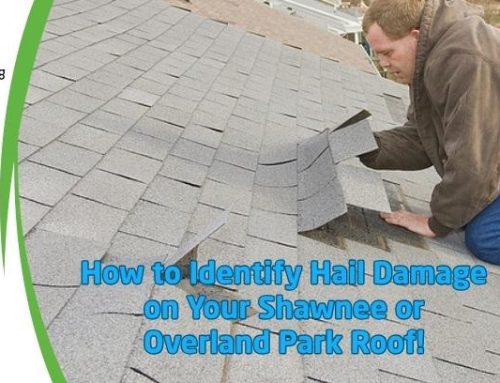
Hail impacts an asphalt shingle in two ways.
- It bruises the mat, a soft, spongy spot you can feel with a thumb but often cannot see.
- It dislodges the ceramic granules that shield the asphalt from ultraviolet light.
Neither creates a hole but both dramatically shorten the roof’s remaining life.
Stone size and shingle condition decide the outcome. Aged three-tab shingles can bruise at roughly one inch of hail. Most architectural shingles need something closer to 1.25 to 1.5 inches or more. Softening factors stack the deck th at include shingle age, deck deflection between rafters, low slope, and south or west-facing exposure that has already baked for a decade. Roofing contractors inspecting two identical houses on the same Shawnee street often find damage on one and nothing on the other for exactly these reasons.
Soft Metals Tell the Story First
Before anyone climbs a ladder, the ground-level evidence is usually on the metal. Gutter aprons, downspouts, fascia wrap, vent caps, turbine vents, and the fins on the air conditioning condenser all dent long before a shingle shows a mark. Dented gutters often get a full roof approved because they prove stone size and impact direction.
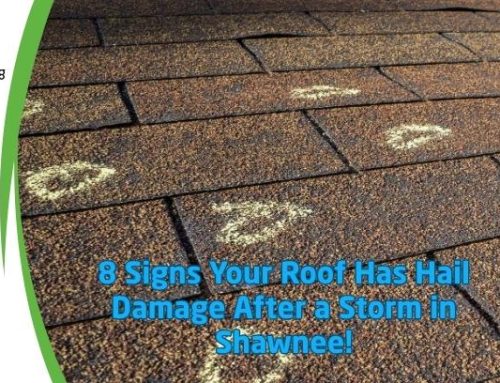
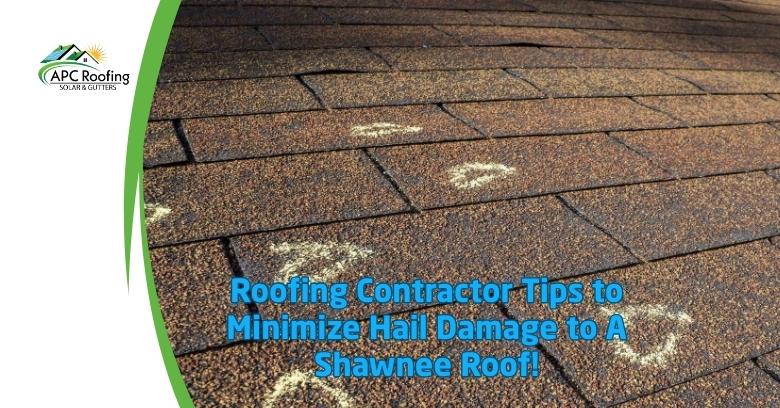
When evaluating a slope, the standard method is a 10 x 10-foot test square marked on each elevation. An adjuster is generally looking for roughly eight or more random hits inside that square before calling the slope damaged. Random is the operative word as directional, repeating marks are usually manufacturing or foot-traffic scuffs, not hail.
Hardening the Roof Before the Next Storm
Class 4 Impact-Resistant Shingles
The impact rating standard is UL 2218. A Class 4 shingle survives a two-inch steel ball dropped twice on the same spot without the mat fracturing; FM 4473 is the equivalent test using ice balls. These products are the most effective upgrade available to homeowners in the eastern Kansas hail corridor and roofing contractors routinely recommend them on replacements in Shawnee, Lenexa, Merriam, and Overland Park Kansas.
Options worth asking about include Malarkey Legacy, which uses SBS polymer-modified asphalt that stays flexible in cold weather which is relevant for late March and April hail. GAF Timberline AS, Owens Corning Duration Storm, CertainTeed Landmark IR, Atlas StormMaster Shake, and IKO Nordic also carry Class 4 ratings. Expect impact-resistant products to cost more than standard shingles. Several Kansas insurance carriers offer premium credits for impact-resistant roofs, commonly cited in the 10 to 30 percent range on the wind and hail portion of the policy. The figure is carrier-specific and should be confirmed in writing before placing the order.
Accessories, Decking, and the Details That Fail First
A Class 4 field does little good if everything around it is thin. Practical upgrades that roofing companies can price alongside a replacement:
- Heavier gutters – Six-inch K-style in .032 aluminum resists denting far better than five-inch .027. Since gutters are the first thing an adjuster photographs, they also affect future claims.
- Metal gauge on accessory roofs – On porches and outbuildings, 26-gauge corrugated panels hold up to hail noticeably better than 29-gauge.
- Deck condition – Older housing stock in Shawnee Zip Codes such as 66203, 66216, 66217, 66218, and 66226 may have 1×6 plank decking rather than 7/16-inch OSB, which affects re-decking cost and re-nailing requirements.
- Vent hardware – Plastic vent caps and aging turbine vents crack early; metal replacements survive.
- Layer count – IRC R908.3 caps asphalt roofs at two layers and a second layer hides hail bruising on the layer beneath, which usually forces a full tear-off anyway.
What to Do in the 72 Hours After a Storm
Documentation beats memory. A short, disciplined routine protects the claim without anyone setting foot on the roof:
- Note the storm’s time-to-file-it-limitation periods, often one to two years, so the clock matters.
- Photograph the soft metals from the ground. Gutters, downspouts, window wraps, the AC condenser, mailbox, and deck boards can all show stone-sized damage.
- Collect a hailstone if any remain. Photograph it sitting beside a coin or tape measure for scale.
- Check interior ceilings and attic sheathing for staining, though absence of staining proves nothing after hail.
- Schedule a professional inspection. Reliable roofing contractors will provide a written assessment with slope-by-slope photos, not a verbal text or phone message that you have hail damage.
- File the claim only after an inspection confirms there is something to claim. A no-damage claim still appears on the loss history.
Storm season in Johnson County peaks from late March through June, with a secondary window in September and October. Homeowners in Shawnee and Overland Park Kansas who run this checklist twice a year lose very little time and avoid the far more common outcome of discovering five-year-old hail damage during a pre-sale inspection.
Kansas Insurance and Legal Realities
Deductibles, ACV, and RCV
Many Kansas policies now carry percentage wind and hail deductibles rather than flat amounts. One to two percent of Coverage A can mean thousands of dollars out of pocket before the carrier pays anything. Metal roofs are increasingly written with actual-cash-value-only language or cosmetic damage exclusions, meaning dents in standing seam panels may not be covered at all.
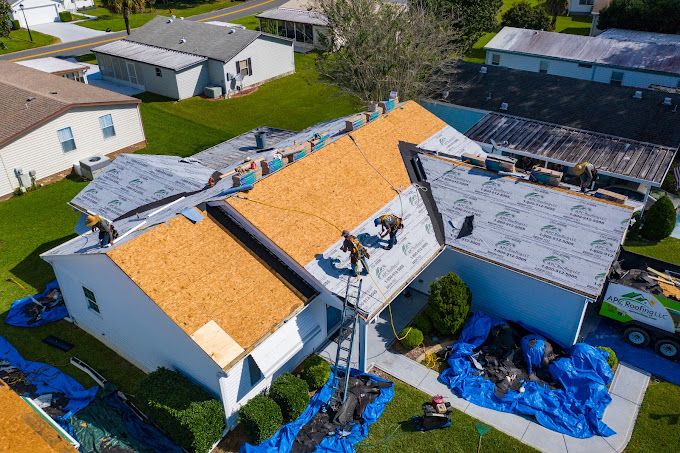
Replacement cost value policies typically pay in two stages: an initial check for actual cash value, then recoverable depreciation released once the work is completed and invoiced. The claim cycle commonly runs two to eight weeks from inspection to first check, while a roofing contractor usually finishes the work in one to three days on a single-family home. In the current market, architectural shingle replacement across the Kansas City metro is priced per square installed, so get that per-square price in writing.
The Rules That Protect Homeowners
Kansas requires roofing contractors to register with the Kansas Attorney General under the Kansas Roofing Registration Act and to carry a registration number. Registration is not the same as a license and it is reasonable to ask for the number before signing anything. Kansas law also bars contractors from paying, waiving, or rebating a homeowner’s insurance deductible commonly called eating your deductible which is an illegal offer, not a generous one. Finally, homeowners have a three-business-day right to cancel a roofing contract tied to an insurance claim after the insurer denies all or part of it. Reliable roofing companies working around Overland Park Kansas explain these provisions without being asked.
Choosing Among Roofing Companies After a Hail Event
Storm chasers arrive fast and leave faster. The evaluation that separates durable roofing companies from temporary ones is not complicated:
- Verify the Kansas Attorney General registration number and confirm general liability and workers compensation coverage.
- Ask who pulls the permit as reroof permits are handled through the City of Shawnee codes administration and you should verify current requirements before work begins.
- Require a written scope listing tear-off versus overlay, decking replacement terms, underlayment, ice-and-water placement, ventilation, and flashing.
- Ask whether manufacturer certifications back the warranty. Credentials such as GAF certification and CertainTeed Master Shingle Applicator certification matter because they govern what warranty can be issued.
- Ask about shingle matching before signing, since discontinued colors frequently force a slope-wide or full replacement.
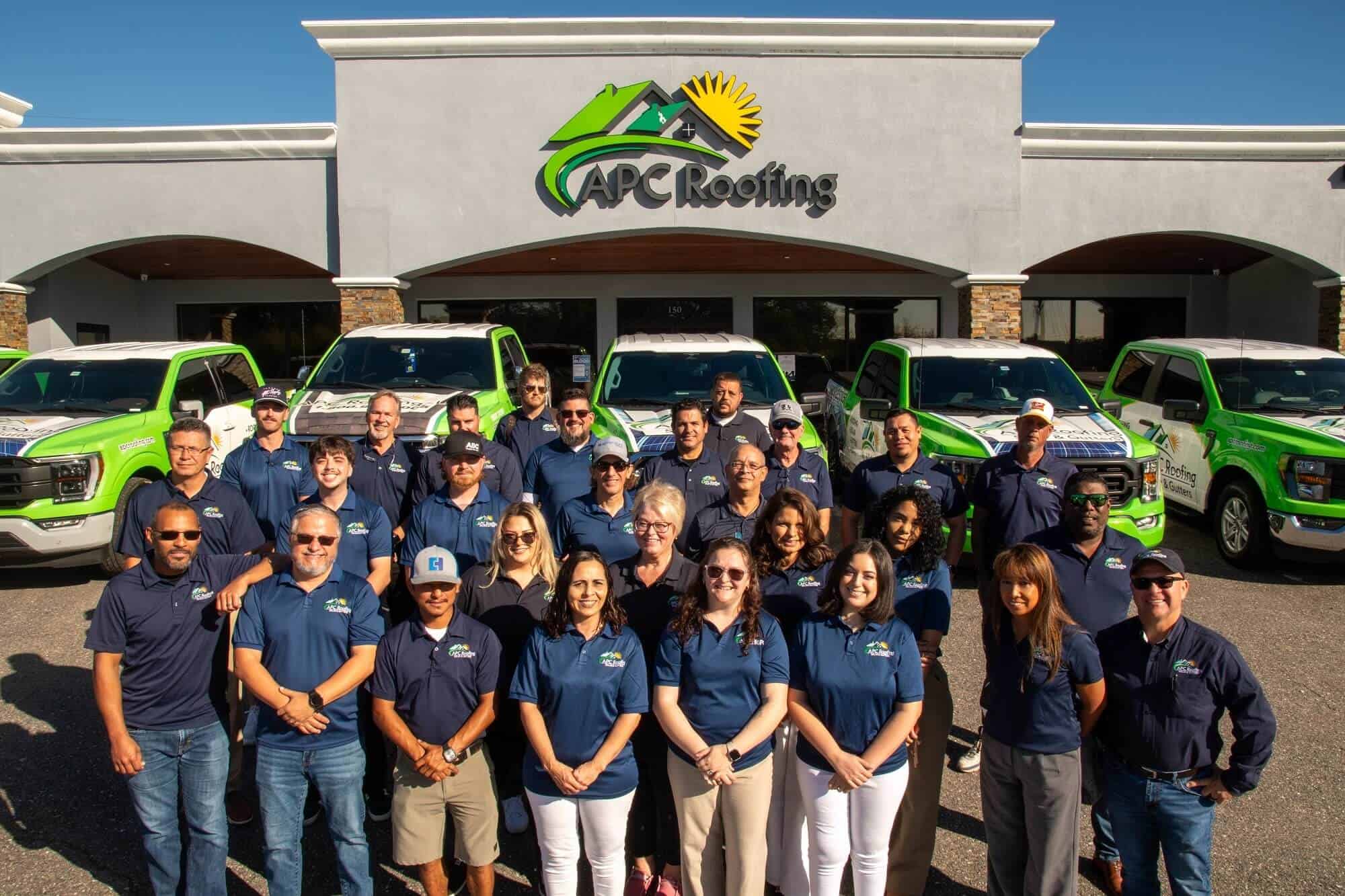
APC Roofing, a BBB-accredited roofing contractor with GAF Certified status, approaches hail work the same way with free estimates, financing options, and staff who handle insurance documentation directly. Those are the capabilities worth comparing when interviewing roofing contractors, whether the property is a ranch in Shawnee Kansas or a commercial building closer to Overland Park.
The Bottom Line
Hail does not announce itself with an immediate leak and that single fact drives nearly every expensive mistake that roofing companies see homeowners make after a storm. Undocumented damage becomes uncovered damage and a roof with a fractured mat will fail years later at full retail cost.
The practical response is a seasonal routine of photographing the soft metals after every significant storm, getting a written, slope-by-slope inspection from registered roofing contractors rather than a verbal opinion, understanding the deductible structure and valuation language in the policy before you need it, and specifying Class 4 impact-resistant shingles on the next roof replacement. Peak hail season in Johnson County runs from late March through June, which means the window to act is before the cell forms, not after it passes.
A homeowner in Shawnee or Overland Park Kansas who schedules an inspection post-season has options; one who waits for a ceiling stain to show up has a bill!
Key Takeaways
- Hail rarely causes immediate leaks as it fractures the shingle mat and strips granules, with failure typically appearing one to five years later.
- Dented gutters, downspouts, vent caps, and AC condenser fins are the clearest ground-level evidence of hail and often support a full roof approval.
- Adjusters generally mark a 10-foot by 10-foot test square per slope and look for roughly eight or more random impacts before calling that slope damaged.
- Class 4 shingles rated to UL 2218 cost more in material and may qualify for carrier premium credits on the wind and hail portion.
- Kansas law requires contractor registration with the Attorney General, prohibits deductible rebating, and grants a three-business-day cancellation right after a claim denial.
Frequently Asked Questions
Can hail damage be seen from the ground?
Usually not on the shingles themselves. Reliable ground-level clues include dented gutters, downspouts, fascia wrap, vent caps, and air conditioner fins, which dent at smaller stone sizes than shingles bruise.
How long after a storm can you file a claim?
Most policies impose notice and suit-limitation deadlines, commonly one to two years from the date of loss. Filing promptly is better, because matching the damage to a specific storm date becomes harder as time passes.
Will filing a hail claim raise premiums or cause non-renewal?
Weather-related claims are generally treated differently than liability claims, but carriers do consider claim frequency at renewal. Inspecting first and filing only when damage is documented helps avoid adding a no-payment claim to the loss history.
What is the difference between ACV and RCV?
Actual cash value is replacement cost minus depreciation; replacement cost value pays the full cost to rebuild. Under an RCV policy, the depreciation withheld initially is usually recoverable once the work is finished and invoiced.
Are free inspections from door-knockers legitimate?
Some are; many are not. Verify the Kansas Attorney General roofing registration number, local address, and insurance certificates before allowing anyone on the roof or signing any document.
Do impact-resistant shingles actually lower insurance premiums?
Several Kansas carriers do offer credits for Class 4 roofs, commonly cited in the 10 to 30 percent range on the wind and hail portion of the premium. The discount is carrier-specific, so confirm eligibility and required documentation in writing beforehand.
Can a discontinued shingle color be matched?
Often not exactly. When a close match is not available, insurers may approve slope-wide or full replacement, so discuss matching before finalizing the scope.
How long does a typical reroof take?
One to three days for most single-family homes, weather permitting. The insurance side moves slower, generally two to eight weeks from inspection to the first check.