Searching for Hail Damage Roof Repair in Springfield Missouri?

APC Roofing examines a slope in the calm after a rough spell, noting where the elements took the heaviest toll.

Dial 913-398-5020 and describe what you are seeing from indoors.


How Air Travels Over Shingles – Reading the Uneven Pull

Pressure concentrates at the eaves, the rakes and the ridge, and a broad open middle carries far less of that duty. Blowing air working under a raised flap lifts the shingle set above the flap, so a nail under a shingle ends up doing the whole job alone.

A house corner throws wind into small eddies, and hardware spacing shrinks at that point on a well-built roof. A course near a structure's outside edge absorbs more force than a course out in the open field, which is why a crew raises the fastener count there on purpose.

What the Crew Leaves to the Sun: No Machinery Involved

Asphalt shingles carry a line of sealant that fuses down to the row set beneath, and a firm hold forms there, doing much of the work, not nails alone. A strong blast can snap a bond without moving the shingle, while a section with a frayed seam still looks untouched from the ground.

A broken seal stays quiet for the next windy spell, and rain then reaches nail heads left bare for the first time. A single shingle adrift on a wide slope is a small matter alone, while a broad run of parted shingles is a serious gap.

A Manufacturer's Printed Figure: an Assumption Worth Checking

A sample piece is built new, with every tab sealed before any force is applied, and only then does a machine bring the airflow up to speed. A roof that has carried several seasons of weather no longer acts like unweathered shingles straight off a supplier's truck, so a rating drawn from the original goods does not describe an aged roof.

A nail driven above the marked strip catches only the upper edge of a shingle, and the wind needed to lift a shingle turns out lower than expected. Heat and cold cycles work a shingle's mat until stiffness sets in, and a laboratory rating fits new construction, never an older roof.

What a Hailstone Does to a Roof – a Mark With Depth

At the colder end of our territory, stones fall heavier than anywhere else we cover, though a milder shower still reaches every market we serve. A strike drives surface granules down into the asphalt underneath, leaving a tender patch that feels different from the sound surface nearby.

A saturated inner core actually keeps rain out of a roof, and a fault at that depth is never merely cosmetic. A hail-marked shingle gives up service life sooner than a sound shingle nearby, and a roof weakens in patches rather than all at once after a wide hailfall.

What Else Takes a Beating – Damage With No Warning

What a thick shingle takes without complaint can bruise a light-gauge trim piece, so a mark from a storm remains long after the weather clears. Rubber torn at a pipe penetration sends rain straight past a boot's seal, and a wet patch shows near an interior wall soon after. A bruised gutter face keeps working even after a hard storm, while a crimped downspout carries water over the leading lip without help.

A pitted vent cap sits alongside a dimpled fascia and a scuffed drip edge on one visit, which keeps a whole roof in one set of findings. A split collar, a warped flange and a battered gutter face rarely turn up without a shingle nearby in equally rough shape, and neither kind of damage shows up alone.

What Ends Up in a Downspout: Worth a Second Glance

A mineral coat baked onto a shingle screens the asphalt from direct sun, and exposure without that finish shortens a shingle's working life. A storm's runoff moves dislodged grains into the trough at the eave, and a heap of sand there says a great deal about the slope above.

Asphalt left bare stiffens and splits as the seasons pass, so a minor fault becomes a reason for replacement later on. Sand in a gutter run is material the roof no longer carries, so a look at that spot after a storm is worth the effort.

A Leak That Only Happens in a Blow: Why a Sound Roof Still Drips

A shingle's lap directs a vertical descent down across the surface, and a strong gust uncovers a route that ordinary wet weather never finds. Gable louvers admit blown moisture through open slats in a hard blow, and dampness pulled in that way lands on the insulation nearby.

A Falling Limb: Harder Than the Damage Looks

Sudden momentum drives an entire mass through one narrow point of contact, and the framing bears force the finish alone never reveals. A panel underneath can crack though the outer layer looks untouched, which is why the attic gets a separate look after every storm.

Wood swinging in a gust wears shallow arcs into the mineral coat, so the pattern left behind traces how far that motion carried. Getting to a split panel calls for removing the covering above the crack first, and the work grows once the true extent becomes clear.

Signs Inside the Attic – Quick to Check

Open sky glimpsed from within means a piece of the covering is gone, so a person can pin down the location before ever climbing outside. A wet section of decking darkens and rust often follows at fastener tips, which lets a roofer trace the mark back to the break above.

Insulation flattened in one place shows where runoff has settled again and again, and the fibers rarely spring back once squeezed that way. A driven shower through a vent can wet framing at the gable end, and knowing that is worth confirming before anyone opens the slope.

Down Where People Live – What the Damage Tells You

Discolored edges spread outward from where rain finally let go, because water can travel the length of a rafter before any hint develops. Peeling alongside a joint says the board underneath stayed damp for a while, and a small mark can sit directly under a much larger fault.

A drip at a fan or a light is reason to cut the breaker without delay, and only after that switch is confirmed off does the cleanup begin. A dark line under a flue traces the outer face of the chase, which puts the search exactly where two different materials meet.

The Metal Details on a Roof – Small and Critical

The wall component depends on staying lapped correctly as well as anchored firmly, so pressure acting under a slack seam undoes both requirements at once. A squall catching the end of a course can tear the drip edge loose, and the damage travels along that whole run once the break starts.

Caps at the top of a roof face turbulence from both directions at once, so a flaw at the crown means the seam stays unsealed for the full distance. Vent sections pulled free let weather straight into the space a vent once covered, so insulation across a wide stretch can end up wet, not just underneath.

Glass Placed Into the Roof – Points of Failure

The frame under a skylight stands above deck level on purpose, and every face of that structure gets a flashing cut just for that face. A blow can shatter the outer glass of the unit and spare the inner one, and the assembly comes out complete rather than in pieces.

Debris striking a plastic dome can leave a pattern that spreads with heat, and warm weather can lengthen a split that started out tiny. Moisture trapped between the panes of a sealed glass unit means the edge seal has failed, and that fixture gets swapped rather than dried out.

Swamped Within Seconds: Reading the Signs

A cloudburst can push more water at a trough than that trough can hold, and the surplus pours over the front lip instead of down a downspout. A wad of debris at an outlet can leave an entire drain line backed up behind that point, and dampness trapped that way can seep in wherever the metal meets the trim.

What Bridges the Gap: What Stays On

A sheet fastened over an opening can keep rooms dry while a proper fix waits, so nobody should mistake that covering for a completed repair. A covering battened along every edge stays firm without further help, and each screw for that step reaches into the rafters underneath.

A sheet weighted rather than tied down can lift the moment the wind returns, and debris from that failure can end up scattered across the yard. Every penetration made in haste becomes one more spot to seal properly, so a roofer plans exactly where every screw for that cover lands.

Keeping Everything in Order – a Straightforward Description

Close-up shots are captured from several angles while marks are still clear, and the record shows the roof exactly as things stood after the storm. Dimensions get written down beside each damaged spot on a visit, and a note like that needs no further context to be useful.

Wind keeps moving debris that an earlier storm loosened, so a fresh look afterward can turn up something different entirely. Any review of the property draws on findings written up in ordinary language, and none of that material gets altered for anybody's benefit.

A Sudden Rush of Visitors: Worth a Second Thought

Crews from far away can show up in numbers soon after severe weather, and a share of that traffic does solid, honest work. Paperwork handed over on a driveway still counts as a real contract, and nobody should feel rushed through terms that matter.

A business rooted in the area tends to stay put once a season passes, and a repair that fails down the road still has someone accountable on record. Pressure to sign a contract before anyone has been on the roof is worth resisting, and asking a second opinion before committing is always reasonable.

Another Blow Lands – What Gets Left Behind

Material weakened by an earlier storm reacts sooner to the next one, so the threshold for further failure drops with every fresh episode. A creased shingle carries a line that later sun cannot undo, which no amount of resealing along the edge actually cures.

Water reaching a deck a second time can carry on into insulation and drywall well beyond that point, and interior finishes end up part of the repair once that happens. Repeated soaking softens the wood fibers surrounding every fastener, and covering over material in that condition wastes the new stock used.

Signs Worth a Call to a Roofer: Notes Worth Keeping

  • Bare patches where a shingle used to sit, on any elevation of a house.
  • A pitted cover on a stack or a vent, unchanged by anything since the storm.
  • Sandy drifts along a gutter run, more than a covering normally sheds.
  • Light where there should be none up top, anywhere along a ridge line.
  • A brown ring on a ceiling that grows after rain, usually right under a roof plane.
  • Wetness at the top of a wall beside a chimney, drying out between storms.
  • A cracked dome over a light shaft, once a storm has cleared.
  • A gutter hanging away from a fascia board, after a heavy limb came down.

How APC Roofing Takes On Hail Damage Roof Repair in Springfield Missouri – Our Method

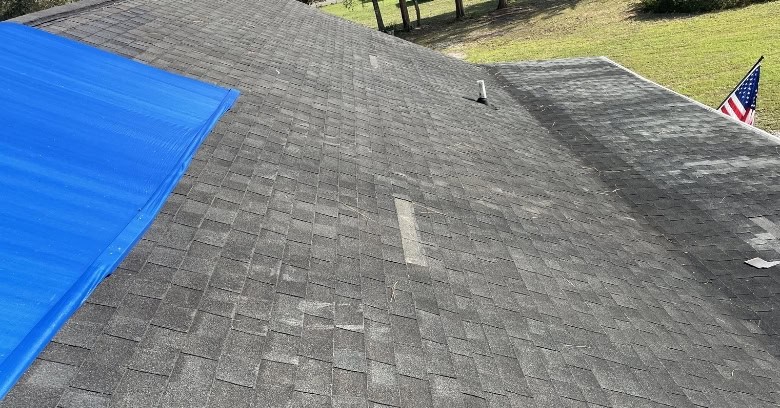
The first steps happen at ground level, watching the yard for debris before a ladder comes out, and dented gutters or downspouts get photographed up close from below. Each roof face gets covered on foot wherever conditions allow, and the framing gets checked from inside once the surface pass is done.

Everything found gets photographed, measured and put into a written report, and the phrasing stays everyday rather than technical trade terms. What gets proposed comes with the reasoning spelled out, and nobody presses a homeowner toward one option over another.

Hail Damage Roof Repair for Homes in Springfield Missouri – Help From People Who Know Shingles

Reach us at 913-398-5020 and say what you noticed outside.


Snow on a Roof: Built to Take More

At the colder end of our territory, a big accumulation rests on the structure for days, and wet, packed snowpack weighs far more than dry powder ever does. Frozen runoff at the roof's edge can pond meltwater on the slope, and a downspout assembly can come down when solid buildup pulls hard enough.

At the colder end of our territory, drifts pile up in valleys and beside dormers, and pressure in that spot concentrates well beyond the surrounding area. A mass shedding off the eaves can strip away hardware never meant to hold that force, and hangers can bend under strain from a sudden release like that.

A Harder Grind for Roofing Material by the Water: Fatigue Builds in Hardware

At the coastal end of our territory, a large system can take a full day to move through, and exposed metal there can rust sooner than metal set inland. A load held that steadily can work fasteners loose in a way a brief burst never would, and fastening along the edges carries much of that extended strain.

Wet blown against an elevation can work into window heads and trim, which is why the whole house gets checked after a storm like that, not just the roof. Along the coast, roofs typically go on with extra fastening at rakes and eaves, so nothing gets put back with less holding power than the original had.

A Patch on an Established Surface – What Stands Out Up Close

Material from a current production run differs in tone from shingles baked by years of sun, and nothing leaves a factory looking weathered. A mended area on a visible elevation can show up as a distinct patch, and time takes some of the edge off a mismatch like that.

When a specific line has been dropped, a similar design takes over that spot, and the outline rarely lines up with total precision. When much of a face has been patched, piecing the work together stops making visual sense, and doing one full side fresh looks far more deliberate than a piecemeal approach.

Signs of Careful Work: What to Notice

The row over a repair sits flush against the deck below, and the exposure lines up with the older courses nearby. New flashing gets woven into the shingles rather than smeared over the surface, and the overlaps alone do the real work of keeping water out.

Nails land at the spot the next row of shingles covers completely, and nothing sits crooked or cuts through the mat underneath. A snapshot taken soon after a repair is worth saving for the future, since later wear can be judged against a clear starting point.

If Hail Damage Roof Repair is what brought you here after rough weather in Springfield Missouri, contact APC Roofing at 913-398-5020 and ask for a roofer to take a look. What the weather left behind gets examined closely and photographed, and a homeowner gets walked through exactly what was found.


Kyle Near

Verified

★★★★★
APC roofing lives up to their A+ rating. Chelsea and Lucio, 2 roofing consultants stopped by my house and informed me that APC was putting on a roof for my neighbor that day and apologized for any noise. They told me that my neighbor had quite a bit of wind damage and asked if I had ever had my roof inspected, in which I had not. They offered a complimentary roof inspection and hopped right up there to take a look. Chelsea and Lucio came down, and she showed me pictures of broken and missing shingles and, let me know that there is enough damage to warrant filing a claim with my insurance. They told me about the company, helped me with filing my claim, and walked me through the next steps. It's really awesome that they will be here throughout the process to make sure everything goes smoothly and that I can contact them directly if I have any other questions or concerns. What a team! They both are very kind, knowledgeable, and funny, a real pleasure to work with. I feel extremely…

Rochelle Oliveira

Verified

★★★★★
Great company to work with

MP Alvarez

Verified

★★★★★
Very happy with my new roof, the process was completely painless. Got my drone out, got some shots and just looks amazing. Communication along the way was great and the job was done on time. The best part is that the wife is happy. Thank you to everyone @ APC.

Luis Diaz

Verified

★★★★★
The replaced my roof took care of what damaged did exist and I've had plenty of rain in the last 10 months and it's been leak free. Great Job and mattieral still looks like the day it was installed.

El Faro SDA

Verified

★★★★★
I worked directly with Phillip. Great customer service! Not only the roof looked great, the fast replacement with top notch quality products throughout the process was also noteworthy. Highly recommended!