Looking for Roofing Contractors in Springfield Missouri?
APC Roofing handles everything from a simple checkup to a full replacement, on asphalt, steel and clay coverings alike.
Phone 913-398-5020, and a roofer sets a time to come look at the house.
The Roof's Inner Build-Up: a Plain Guide
The visible covering on top is only the outer layer, and a water barrier, plywood and framing sit below the surface. Flashing bridges the crossing wherever a wall, a pipe or a valley breaks the field, and trouble nearby seldom means a failure in the surrounding shingles.
The space under the sheathing works as a component of the roof, too, since heat and humidity held there wear down the wood and covering overhead. A stain on an upstairs ceiling can trace back to any level of the roof, and a fix aimed only at the outer surface can leave the real source untouched.
The Jobs a Roof Performs, Component by Component
A sloped covering sheds every storm's water downhill, and the fastening pattern resists wind uplift. The rafters and the deck carry the weight overhead, snow included at the colder end of our territory, and intake and exhaust let the attic breathe.
Shedding water is the covering's task, and resisting wind is the fastening's job, and holding the whole thing up falls to what is underneath. A problem in one material reads as damage on a different part of the roof, so the cause gets traced instead of the symptom being patched.
Minor Roof Components: Not All Equal
A field of sound shingles can go for decades, but a rubber collar at a vent pipe gives out far sooner. Rain finds a way down past the weak point, and a stain appears on the ceiling below.
A line of caulk at a chimney shrinks with every hot season, and aluminum flashing pits at the bends in salt air. Shingles bent into caps split at the seam, as nothing shelters the peak from gusts and glare.
What Appears Early: What Turns Up at Each Point
From the yard, the shape of the roof reveals dips, sags and wavy planes, and the gutters and trim can be checked in the same glance. Good binoculars show up torn collars, lifted tabs and bare patches, though some faults cannot be judged without climbing onto the roof.
On the slope, a roofer works over every pipe connector and traces each flashing run, and the field is read for brittleness, granule shedding and loose edges. A rain-slicked or very steep covering stays off limits underfoot, and the eave line, reached by ladder, becomes the vantage point.
Inside the Attic: Clues From Below
A stained patch on the plywood shows water that got in before, and a soft, wet feel means the entry point is still open. Sunlight visible from inside marks a way in, and a tape measure fixes the distance from the peak and gable wall.
Rust on the nail shanks comes from moisture in the house, not rain, and a matted, faded patch nearby confirms the same condition. A soffit choked with insulation, or a bath fan venting into the attic space, is spotted only from inside, so ventilation trouble of that kind escapes a yard-only check.
What Comes Home With You: the Basics
The visit produces photographs linked to particular spots on the roof, and a caption states what each picture reveals. Good sections get the same plain treatment as sections that do not, and problem areas are ranked by urgency.
A saved report from an earlier stop gives the next check a baseline, and change over time is easier to judge than condition on a single day. A covering looked at on a regular schedule rarely catches the owner off guard, and large jobs show warning signs well ahead of the work becoming pressing.
Keeping a Shingle Roof in Shape: Practical Habits
New rubber boots go on the pipes ahead of any cracking, and the joints at each flue get resealed. Debris gets swept from the valleys and from the crickets, and every outlet gets checked for an open path.
A raised corner glued down in time stays a simple repair, but delay through a wet season can let water reach the ceiling below. A mat of moss holds water along the lower edges, and a gentle wash clears the growth, since a pressure washer strips granules.
Staying Ahead of Trouble: The Payoff
A roofer should walk the roof once a year, timed for the point when local weather turns roughest. The aim is spotting aging before rain gets through, and nobody is left guessing about the roof's condition.
In the months between visits, a look from the driveway after high wind helps, and top-floor rooms are worth checking for fresh stains. Checking the attic with a lamp each season makes sense: rust on nail tips, daylight and wet fill appear long before anything reaches the living space.
Reading a Roof's Age: Early Signs to Late Signs
Freshly laid, a shingle covering is flat and evenly toned, and by mid-life the sun-facing side fades ahead of the shaded side. Toward the end, granules collect in the gutters and the mat starts to show, and new leaks appear in different spots.
An impression formed from outside has real value, but a walk on the roof is what confirms the condition. A covering that has reached the end of a normal service life raises a replacement question, and a good contractor gives that answer plainly, rather than selling another repair.
The Trough Behind the Fascia: What to Watch For
A roof moves water only as far as the drip edge, and the gutter line handles the flow after that. A run choked with leaves sends overflow behind the trim board, and the wood underneath begins to rot.
Trouble along that edge usually comes from standing water, not the covering, and replacing the roof leaves the real cause untouched. Gutter pitch and downspout discharge get checked on a visit, and the drip-edge metal and the overlap at each joint get looked over as well.
What Ventilation Is For: What Homeowners Should Know
Outside air should enter under the eaves and leave near the peak, and that movement removes heat and moisture from under the deck. When that gets blocked, the attic overheats in summer and stays muggy through humid months, and the deck and shingles suffer early.
Adding roof openings without matching intake draws air from the rooms beneath, and competing setups on one roof can leave the lower attic stagnant. A new covering placed over a poorly vented attic inherits the same fault, so the fix belongs in the same job as the new covering.
Specifications That Follow the Weather: How Choices Differ
At the colder end of our range, ice and drifting snow set the build, and a waterproof membrane covers the bottom few feet of deck. Closest to the ocean, gusts decide how the covering gets anchored, and impact-and-wind-rated shingles and sealed seams get chosen.
In towns at the colder end of our territory, where hailstones run large, a harder product makes sense, while strong sun bakes asphalt across every market we serve. Specifications follow the weather at the house, not custom or what happened to be on the truck.
Houses and Commercial Buildings: Split by Structure Type
A pitched covering sends water downhill by lap, laid in asphalt, tile or metal. A business roof relies on one continuous sealed sheet, and internal drains and heating units share space on that roof.
Many houses have a gently rising porch or addition, and a shingled surface there lets rain linger long enough to work under the courses. A spot like that needs a welded or adhered membrane, laced under the pitched covering above, and re-laying shingles there repeats the same fault.
Tarps and Emergency Covers: What Lasts a Few Weeks
A sheet shields a gap for a little while, but nothing gets solved underneath. A sound cover sits over the ridge and gets held down by wood battens screwed through the material, and the fabric gets stretched so no loose fold can catch the wind.
A cover has to reach well past the damaged area, since water runs sideways under a short edge. Film left in place for months holds heat and humidity against the deck, and mildew and rot follow underneath.
The Detail Where a Roof Meets Something Upright: No Room for Guesswork
Short metal steps get laced between the courses up the side of a dormer, and an overlapping strip above keeps runoff off that metal. On a brick chimney, an apron handles the lower edge and metal runs up each edge, and a wide stack gets a cricket built into the slope nearby.
Tar smeared over a gap gives way as the metal moves, and a proper tie-in, rebuilt from scratch, is what holds. Soft mortar lets water into the brick above the flashing, and part of that repair belongs to a mason, not a roofer.
The Written Scope: Nothing Left Vague
A detailed listing names each material going on the roof, and the document says whether the existing roof gets stripped to the deck. The account explains how rotten decking gets handled if any turns up, and every vent, every flashing piece and the haul-away get called out individually.
Competing proposals listed in detail can be read side by side, and what one write-up covers and another skips becomes obvious. A business that keeps every particular verbal gives an owner nothing to hold onto, because nobody can confirm later what got said.
Replacing a Roof, Step by Step: What Happens
Shrubs, flower beds and the driveway get protected ahead of the work, and the existing covering gets removed completely. The bare deck gets checked plane by plane once the old covering is off, and anything that flexes underfoot gets sawn out and patched.
A protective membrane, new flashing and full underlayment get installed, and the new covering goes down, capped and vented at the top. The property gets swept with a magnet once the crew wraps up, and the gutters get a final check for leftover material.
Beyond the Shingle Roof: Particular Needs
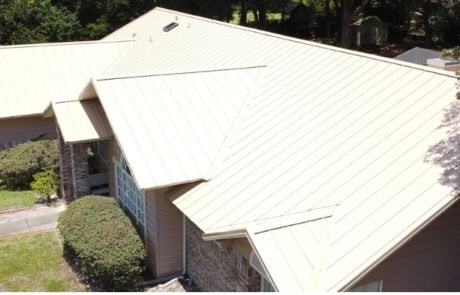
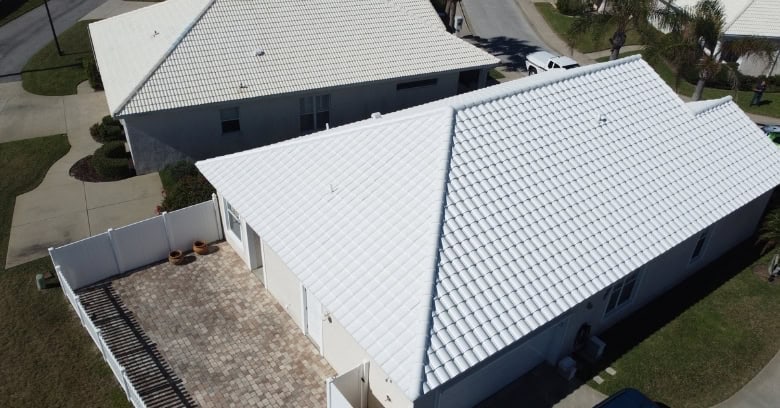
Metal sheets held by visible fasteners stay dry because of the gasket under each fastener, and a brittle washer gets replaced whole, never smeared with anything extra. Clay and concrete tile go down by more than one method, from mortar to foam to clips, and the underlayment does the actual waterproofing.
A foot planted wrong breaks off a piece, and a damaged unit gets lifted out and replaced with one of the same profile. A modified-bitumen or single-ply section needs the seams and any puddling checked, and leaves get removed from the outlets regularly.
Warning Signs Around a House: From the Yard or the Attic
- Sand-like mineral grains in the gutter runs, well beyond what a new roof sheds.
- Tabs curling at the corners, in patches that widen every year.
- A pipe boot with an open gap, easy to miss without a zoom lens.
- A ceiling ring in a top-floor room, darker around the rim.
- Daylight through the attic boards, wherever nothing should show through.
- Moss packed into the laps, pushing up the lower edges of the shingles.
- A dip between rafters, visible against the sky.
- Rust streaks below a metal joint, worth a closer look before the next storm.
Roofing Contractors for Springfield Missouri Households: APC Roofing's Approach
Before any recommendation gets made, a roofer walks the whole covering and checks the attic, and the report shows up as photographs and a clear written account. What is fine gets said as plainly as what needs attention, and the homeowner decides what happens from there.
Roofing Contractors Near Springfield Missouri: a Close Look at the Roof
Reach us at 913-398-5020 to schedule a visit to the property.
A Roof's Own History: A Short List
Saving the install date and the product names on the invoice pays off later, and each visit's report belongs with the earlier entries. Tallying each repair, the location and the method, keeps things complete, and given enough time the pattern becomes clear.
Once a home hits the market, the roof's age and condition come up in conversation, and paperwork with dates carries more weight than recollection. A duplicate set, saved to a phone or a drive, is worth making, since a spill or a move should not be able to wipe out everything.
Standards Worth Holding a Crew To: a Homeowner's Guide
The lines run true from eave to ridge, with rake cuts trimmed sharp, and every fastener stays hidden under the shingle above. Metal against any wall or chimney rests flush and secure, and no gob of roofing cement stands in for a missing piece.
Air can move from the eaves to the peak without obstruction, and the downspouts remain connected and unclogged. The yard gets swept with a magnet before the crew leaves, and sawdust from a trimmed board is the most common leftover, easy to rinse from a walkway.
Anyone weighing choices for Roofing Contractors in Springfield Missouri has one straightforward next step. A call to APC Roofing at 913-398-5020 moves the scheduling forward. Every visit looks at the roof as a whole, not one spot alone, and nothing is left to guess at.
Verified

Verified
Verified
Verified