Need Residential Roofing in Springfield Missouri?
APC Roofing covers everything from a routine checkup to a complete replacement, across asphalt, metal and tile alike.
Phone 913-398-5020, and a roofer arranges a visit to the house.
The Roof's Inner Build-Up: the Working Structure
The surface a passerby notices is only the outer layer, and underlayment, decking and rafters sit beneath the surface. Bent metal covers the gap at a chimney, a pipe or a valley, and a leak at that spot rarely points to failed shingles nearby.
The space under the sheathing works as a component of the roof, too, because trapped heat and damp age the deck and shingles above. A stain on an upstairs ceiling can trace back to any level of the roof, so attention paid only to the outside can miss where the water entered.
The Jobs a Roof Performs: an Owner's Overview
Gravity and overlap send each shower to the ground, and the fastening pattern resists wind uplift. What lies below carries the weight of everything on top, snow included at the colder end of our territory, while vents give damp attic air a way out.
Water is the covering's job, and wind is the fastening's task, while what is underneath answers for holding the roof up, unnoticed. A weak component shows up as a sign of trouble somewhere else on the roof, so the cause gets traced instead of the symptom being patched.
Minor Roof Components: What Falls Behind First
The main covering is built for a long run, but a rubber collar at a vent pipe gives out far sooner. A path opens for water to travel down into the house, and a stain appears on the ceiling below.
Sealant along metal edges dries and shrinks in strong sun, and metal flashing rusts at bends and cut ends. Cap shingles break along the seam, because wind and weather strike the peak harder than the slopes below.
What Appears Early: What Turns Up at Each Point
From the yard, the shape of the roof reveals dips, sags and wavy planes, and the gutters, fascia and trim come into view at the same time. Binoculars pick out torn collars, lifted tabs and bare patches, though some faults cannot be judged without climbing onto the roof.
Once on the roof, a roofer checks every connector closely and follows the flashing at each wall, and the covering is checked for brittleness, granule shedding and curling. Nobody walks a covering that is wet or too steep, and the check is made instead from a ladder at the eave.
Inside the Attic: Signs Worth Finding
A dark ring on the sheathing shows water has come through, and moisture felt by hand shows the water is still coming through. Daylight visible between the boards marks an opening, and the position gets noted by measurement before anyone climbs.
Rust on the nail shanks comes from moisture in the house, not rain, and a matted, faded patch nearby confirms the same condition. A blocked eave packed with fill, or a bathroom fan venting into the attic, shows up only on an inside look, so a yard-only look passes over faults like that.
After the Roofer Leaves: a Plain Account
The visit produces photographs linked to particular spots on the roof, and a caption states what each picture reveals. What is holding up gets named as clearly as what is not, and faults are ranked by how soon repair is needed.
A report kept on file lets the next check be measured against a known starting point, and movement across seasons reads more directly than one day's condition. A roof tracked across each year brings few surprises, and a serious repair shows warning signs long before the work turns urgent.
Seasonal Shingle Maintenance: the Basic List
Worn boots around the stacks get exchanged for new ones, and dried sealant at walls and flues gets redone. Debris gets swept from the valleys and from the crickets, and every outlet gets checked for an open path.
A shingle corner resealed in good weather takes little effort, but putting off that step through storms can end in a drywall stain. Lichen keeps the surface damp and works in under the shingles, and a biocide treatment clears the growth, with no pressure washer involved.
The Habit Worth Keeping: Consistency Pays Off
A roofer's walk-through belongs on the calendar every year, timed for right after the season that is hardest on roofs locally. The aim is spotting aging before rain gets through, and nobody is left guessing about the roof's condition.
After rough weather, anyone can scan the roof from the yard, and any new mark on an upstairs ceiling is worth noting. Climbing to the attic hatch with a flashlight twice a year is a smart move: damp wood, daylight and wet insulation are easy to see long before anything reaches the space below.
Reading a Roof's Age: What Changes Over Time
Freshly laid, a shingle covering is flat and evenly toned, and approaching midlife the sunniest side fades before the rest. At the very end, tabs turn brittle and crack, and new leaks appear in different spots.
What the lawn view suggests is a solid baseline, but the true condition shows only from up top. A worn-out field is past the point where patching helps, and a reliable contractor says so outright, instead of offering another fix.
The Channel at the Bottom: The Stakes Explained
A sloped roof delivers water only to the eave, and a gutter takes the water the rest of the way. A clogged or sagging channel pushes water back behind the fascia, and the framing at that spot decays.
A weak patch there usually traces to a stopped-up drain, not the shingles, and reroofing alone will not solve a fault at that spot. The slope of every gutter and where each downspout empties get checked, and the metal at the drip edge gets looked over for gaps and poor overlap.
Keeping Things Working Underneath: The Basics
Cooler air should enter through the soffit and rise out at the ridge, and that movement removes heat and moisture from under the deck. Where the opening gets sealed off, the attic runs hot in summer and stays sticky through humid stretches, and the covering wears out early.
A fan starved of intake draws air from the rooms below, not from outdoors, and stacking two setups the wrong way can leave one choking the other. A roof placed over bad ventilation inherits an existing weakness, so the underlying cause gets addressed in the plan for the new roof.
One Company, Many Conditions: An Overview
At the colder end of our territory, ice at the eaves and the weight of snow shape the build, and a sticky underlayment protects the lowest courses. Nearest the coast, uplift resistance governs the fastening choices, and reinforced edge metal and sealed seams get specified.
Across the hail belt at the colder end of our territory, impact ratings matter, while intense sun dries out asphalt everywhere we work. The details get set by conditions at that specific location, not habit or a standard default.
Houses and Commercial Buildings: Different Demands
A pitched covering sheds water through overlapping courses, and shingle, tile and metal all serve that role. A store or warehouse shelters under a nearly flat, sealed membrane, and rooftop units and drains get set directly into the surface.
Many houses have a gently rising porch or addition, and shingles in that spot often leak because runoff moves too slowly. A spot built that way needs a sealed membrane tucked under the pitched roof above, and a second round of shingles there fails the same way.
Protecting a Damaged Roof for Now: What Holds Up
Plastic over a break keeps the rooms beneath dry for a time, but a quick layer does not mend anything below. A good cover goes up and over the peak and gets fastened with wood strips, and enough tension keeps gusts from finding any slack.
A tarp needs to extend well beyond the break, since water runs sideways under a short edge. Material left on for a long stretch keeps the roof from drying out, and the covering underneath ages faster than expected.
Doing the Vertical Joints Properly: No Room for Guesswork
Short metal steps get laced between the courses up the side of a dormer, and a cap of counterflashing laps down from above. Every chimney needs an apron at the front and metal carried up across each edge, and a wide stack gets a cricket built into the slope nearby.
A smear of mastic over a bad patch opens up within a few seasons, so a rebuilt detail is the only answer that lasts. Crumbling mortar lets rain soak into the masonry higher up, and a mason may need to handle the stonework while a roofer handles the metal.
The Written Scope: Nothing Left Vague
A detailed listing names each material going on the roof, and a plain line covers tearing off versus covering over. The account explains how rotten decking gets handled if any turns up, and every vent, every flashing piece and the haul-away get called out individually.
Thorough scopes from rival bidders can be checked point by point, and the gaps between the two sets of paperwork come into view. A roofer who waves off the specifics gives no genuine protection, since a handshake settles nothing once a dispute starts.
How a Re-Roof Unfolds: Start to Finish
Beds, bushes and walkways get protected before demolition begins, and the old covering gets stripped into a trailer. Opened up, the decking gets checked for soft spots and breaks, and any spongy spot gets swapped for new stock.
Underlayment, new metal and ice-and-water membrane go on across the open deck, and the main covering, the ridge line and the vents finish the work. A magnetic sweep covers the yard and the drive at the end of the workday, and the gutters get a final check for leftover material.
Non-Shingle Roofing Care: Notes by Covering Type
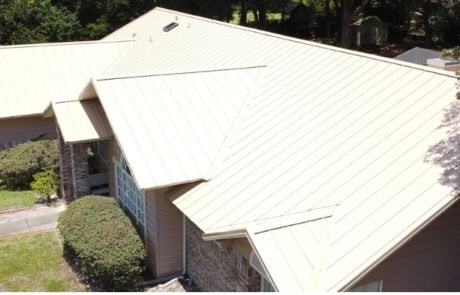
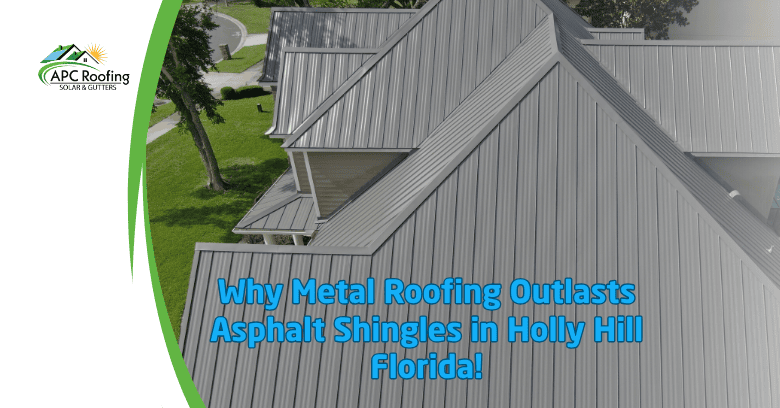
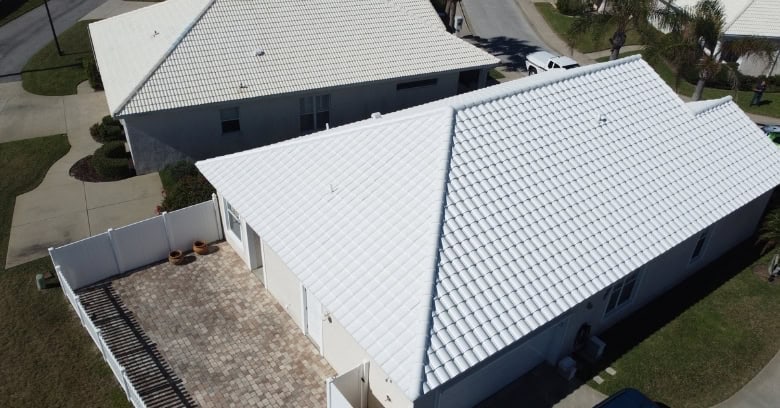
Screw-down metal panels depend on a gasket beneath each fastener, and a brittle washer gets replaced whole, never smeared with anything extra. Across our markets, tile sets by mortar, by foam or by clips, based on the property, and the underlayment does the actual waterproofing.
Weight placed wrong breaks a piece, and a damaged unit gets lifted out and replaced with one of the same profile. Where part of a roof runs nearly flat, ponding and split seams are the warning signs, and debris gets cleared from drains and scuppers.
Clues That Point to Trouble: From the Yard or the Attic
- Granules collecting in the gutters, in amounts that keep returning each season.
- Tab ends that curl instead of lying flat, noticeable from across the street.
- A hardened gasket at a stack, letting water run down into the attic.
- Paint blistering overhead after a storm, close to an outside wall or a chimney.
- A glimpse of sky from under the deck, on a sunny afternoon.
- Green growth along the north-facing side, in spots that stay damp longest.
- A wave running across a plane, new since the previous year.
- Caulk cracked along a chimney, left behind by an earlier patch.
Residential Roofing in Springfield Missouri: APC Roofing's Approach
Before anything gets suggested, a roofer takes in the whole covering and the attic together, and what turns up gets delivered as pictures along with a written explanation. Sound parts get named as plainly as parts that need work, and the homeowner sets the order of any work.
Residential Roofing in Springfield Missouri: Plain Talk, Careful Work
Get in touch at 913-398-5020 to schedule a visit to the property.
A Roof Timeline: Easy to Maintain
Noting when the covering went on, along with the brands used, is worth doing, and each report from a follow-up visit joins the same file. Including a line for every repair, the spot and the method, rounds out the picture, and over time the pattern shows which areas keep needing attention.
When a house goes up for sale, a buyer's inspector asks about the roof, and a folder of dated pages settles things quickly. A scanned set of the same files, stored separately, guards against a misplaced original, in case the paper sheets go missing in a move.
What Good Work Looks Like: Small Things, Handled Properly
The field reads as straight bands, with crisp cuts where each slope ends, and nails stay covered by the layer above. Around chimneys and dormers, the flashing gets replaced rather than reused, and any sealant used is a neat bead, never a smear.
The soffit vents breathe freely and the ridge vent stays clear, and the gutter runs finish straight and fastened. The yard gets swept with a magnet before the crew leaves, and wood shavings from a trimmed edge are the most common leftover from the work.
Anyone who came here searching for Residential Roofing in Springfield Missouri can get a straight answer without more digging. Getting in touch with APC Roofing at 913-398-5020 sets the process moving. Every visit takes in the whole roof and the attic beneath, with nothing left to chance.
Verified

Verified
Verified
Verified