Considering Metal Roof Repair in Springfield Missouri?

APC Roofing puts up and mends screw-down sheet and clip-held panels, across homes as well as sheds and barns.

Reach us at 913-398-5020 and a roofer will come out and describe what the metal shows.


Telling Systems Apart – Surface Clues

A corrugated or ribbed covering is secured with screws set through the metal, whereas standing seam hangs on clips hidden under tall ribs. Most metal on houses is coated steel, and aluminum or copper appears now and then.

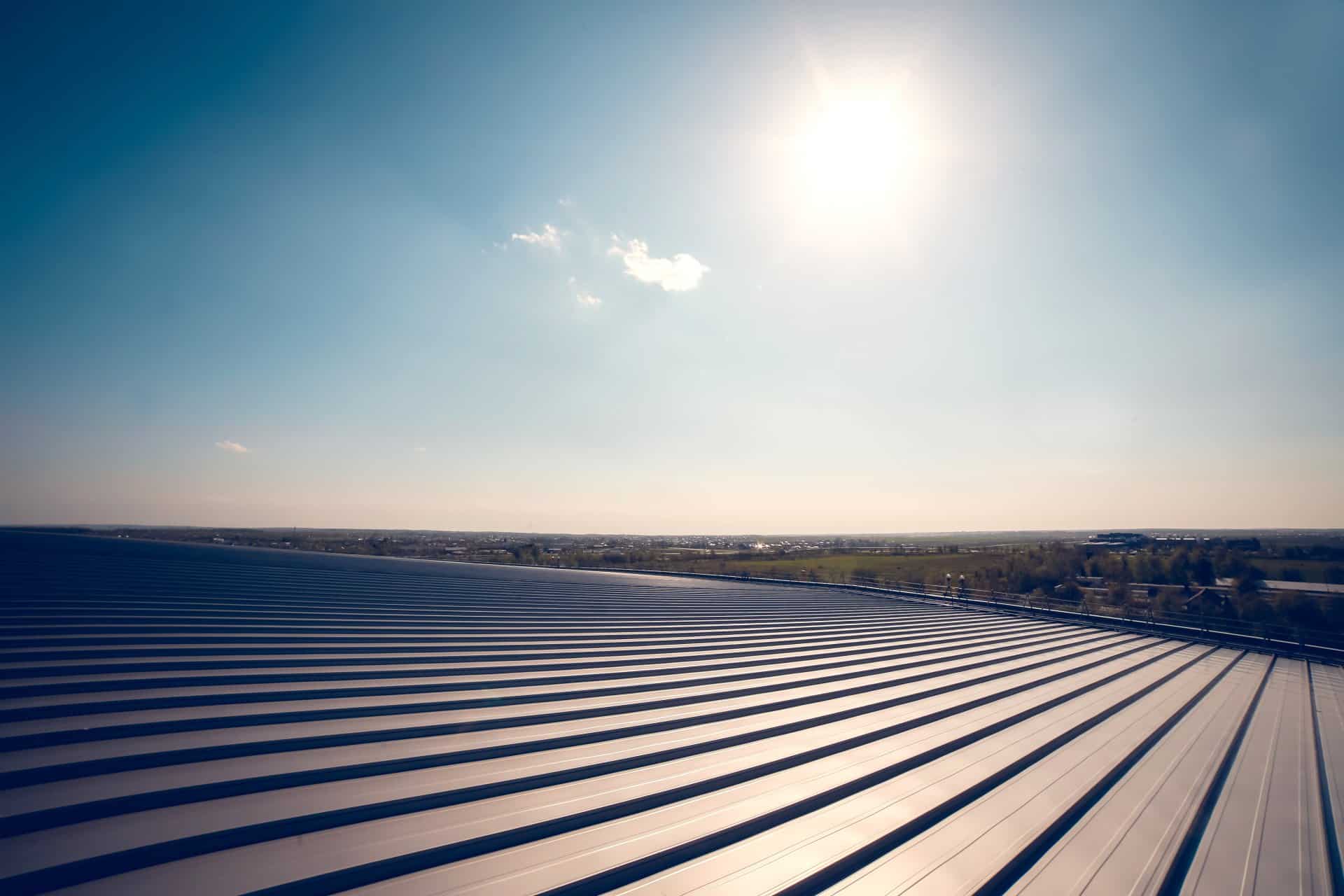
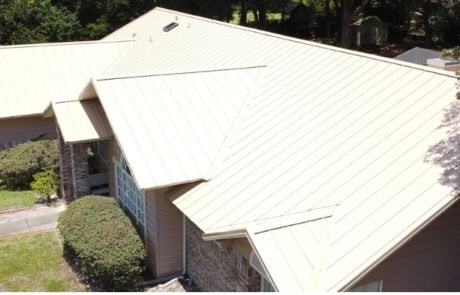
Screw heads marching in rows, easy to spot from below, point to exposed fasteners, and clean flats between raised joints, bare of hardware, belong to standing seam. Farm buildings and garages commonly have ribbed or wavy sheet, while residences take either style.

Profile Options: Old Look, New Look

Corrugated goods swell and dip in gentle, repeating arcs, while ribbed designs show angular ribs and wide flats. Side by side, adjoining lengths overlap by one crest, and a maker's pattern says where screws go.

A squared profile resists bending and reaches further between purlins, and a rounded wave appeals on older or rustic structures. Taller ribs give runoff more room on a long slope, while a low pattern handles short runs like a porch or lean-to.

Fasteners in the Open: Small Parts, Big Job

A single screw pins the metal firmly to framing below, while a washer at each head keeps rain from following a shank. Sun and temperature swings dry out neoprene over time, and the panels can go on for decades more.

Driving a screw past snug crushes a washer and dimples the metal, while an underdriven or tilted fastener never seals all the way around.

Fastener Replacement: Part of Upkeep

Washers dotted across a ribbed field grow old together, so a complete re-screw comes due at some point. Every existing fastener is removed, and a screw one size larger takes each place so threads grip solid material.

A full re-screw with new washers closes leaks at each head and tightens loose sheets, yet rusted panels, opened laps and poor flashing still need separate repairs. Thread type follows whatever support lies below, since lumber and steel purlins take different screws, and a painted cap keeps new work inconspicuous.

Thermal Movement – Built to Allow Travel

Steel swells with heat and draws back as temperatures fall, and a long run can gain a quarter inch between noon and midnight, with aluminum going about twice as far. Metal held too rigidly wears fastener holes into slots, and seals start to fail.

Creaks as the day warms come from steel adjusting, and a well-built roof takes no harm from some noise.

Beneath Raised Seams – Out of Sight

One short stretch of every long pan is pinned tight, and floating clips everywhere else let the pan glide. At an unanchored end, trim is bent with clearance, whereas a pan with no play lets go or distorts.

As a pan is laid, clips are driven into the deck along one leg, so no fastener head is left out in the weather.

Quick-Fit or Heavy-Duty – Suited to Pitch

A snap-together rib engages when an installer presses down, while other designs are crimped over by a machine. A double-lock seam holds far better against strong gusts and standing water, and maker approvals cover shallower slopes.

Every product line has distinct spacing and rib size, and a home's design and a buyer's taste guide selection. Clips, trim and closures are bought to suit one particular panel, and a mismatch shows up as gaps and loose joints.

How Much Material Is Up There – Worth Confirming

A steel panel is rated by gauge, and a smaller number means a thicker sheet. Farm structures often use twenty-nine, and residential work leans on twenty-six and twenty-four.

Aluminum uses decimal figures rather than gauge, and in both cases a heftier panel stays straighter and tougher. Standing in a yard, nobody can judge weight by eye, so printed product data gives a firm answer.

Factory Protection: Choosing a Finish

Steel for roofing is hot-dipped in zinc or an aluminum-zinc blend, and a baked primer goes on before a color coat. Scrapes confined to paint are harmless, whereas a gouge through to bare metal soon shows red.

A PVDF finish stands up to sunlight for a long time, while polyester grades dull faster in strong sun. Wet mortar and fresh concrete attack an aluminum-zinc coating, so panels are kept away from a new chimney or stone wall.

Weighing Options – Coast and Country

Aluminum is lighter than steel and never forms red rust, though an impact leaves a deeper mark. Salt air at the coastal end of our territory attacks zinc-based layers, so a marine-grade finish is often chosen for homes near a beach.

Copper turns up chiefly on bay windows, dormers and entry roofs, and years outdoors take bare metal to brown and then green.

Chemistry on a Rooftop – Isolation and Compatibility

A copper pipe or flashing above steel sends corrosive drainage down over the panels, and streaks appear years ahead of perforation. Aluminum on pressure-treated boards turns white and pits, and fasteners of an unsuited metal leave a ring of damage.

Flashing added later should match whatever metal is already installed, or a strip of membrane goes between dissimilar metals.

Looks, Not Leaks: Setting Expectations

Oil canning is a gentle waviness across the flat of a standing seam pan, and faint hollows show at sunrise and fade by noon. A panel that looks uneven sheds rain as well as a perfect sheet, and the roof lasts no less.

Thicker metal, a slimmer width and striations rolled into every pan tame rippling, and an installer who does not overdrive clips helps as well. Pictures of houses with and without oil canning make comparison easy, and you make the call on profile.

For People Inside – Day and Night

An outbuilding with bare framing under the metal makes a loud din in rain, since one thin layer is all that stands between sky and interior. A dwelling puts decking, a membrane and insulation between the panels and any bedroom, and indoors most people hear little more than on shingles.

A light-colored panel sheds much of the sun's warmth, so the attic runs noticeably cooler. A charcoal or black panel gets hot, and venting and insulation under the deck do as much for comfort as color. Thin steel cools off right after dusk, and the attic eases off soon afterward.

Retention Hardware – Clamped or Fastened

Where winters bring real snow in our territory, slick panels shed a snowpack quickly, and a slab arriving all at once can injure someone or rip a gutter off. Guards break a load into small harmless chunks, and a doorway, walkway or meter below decides placement.

For standing seam, bolted clamps grip each upright joint, while ribbed or corrugated sheet takes mounts driven into structure with sealing washers, and in our warmer markets a house goes without.

What Ice Does – Photographs and Measurements

At the colder end of our range, hail arrives most years, and stouter panels with striations hold shape better. Paint knocked off at a crease leaves base metal exposed to corrosion, and a flattened rib or a shifted cap can leak.

Once a storm has passed, a roofer photographs and measures every mark, so the size and position of each dent are known.

Holding On in a Gale: Trim Held Tight

Wind load concentrates at corners, rakes and eaves, and once air slips under an unsecured edge, pressure can roll the metal up. Each finishing piece is folded back and locked over a full-length cleat, and no gap is left to work into.

Clips and screws are packed closer in high-load zones near corners, per manufacturer guidance for local conditions. On the hurricane coast at the far end of our territory, fastening counts rise again, and only systems with a high wind rating qualify.

Vents and Stacks: Detail Work

A pliable-based collar is shaped to fit a panel and clamped onto a pipe, and a hole is cut in a flat, not through a seam. A chimney or skylight is built up on a curb with a cricket above, so runoff is steered aside.

Sealant backs up flashing and never stands in for folded metal, since weather hardens and splits any compound long before the panels are done.

Meeting Planes – No Screws in the Water

A valley pan goes down ahead of any panel, and every sheet is trimmed on the skew. Every raw end is turned under and caught by a cleat, so no hole sits where runoff gathers.

An endlap on a long run holds sealant between overlapping sheets, and fasteners pass through both thicknesses, with uphill metal on top.

Limits Near Flat: Gentle Spots on a House

Screw-down panels typically call for roughly three in twelve, and on a gentler slope, overlaps start to let water through. A mechanically locked seam can be installed far lower, with some lines cleared almost down to flat.

Many homes have a gentle stretch over a porch or a later addition, and a measurement comes before any panel is named, and an area that metal cannot serve is given a membrane.

Substrate: Wood or Open Framing

On a house, the panels go over solid sheathing, and a synthetic sheet rated for heat is sandwiched between, as asphalt felt turns brittle up there. An outbuilding may have nothing but purlins under the metal, and distance between supports sets a minimum gauge.

With an old roof gone, damaged sheathing is cut away and rebuilt, because crumbling plywood cannot anchor a clip.

Going Over the Existing Roof: Condition Decides

A single layer of shingles can usually remain under new metal, code permitting, so waste is kept out of a landfill. At well under two pounds per square foot, steel is a light load, and ordinary framing copes without trouble. A synthetic underlayment and rows of battens come next, and fasteners are long enough to bite solid boards below.

Soft spots, old leak stains in the attic or a second layer rule out an overlay, because moisture trapped under new metal keeps doing damage.

Finishing Off – Tight Against Weather

Shaped closures fill spaces under every rib at an upper line and a lower line, and driving rain and wasps are blocked. A ridge piece either breathes or is left solid, depending on how an attic is ventilated.

Rake trim, drip edge and an apron into a gutter close off a roof's outline, and water falls clear of fascia instead of running behind.

Day of Installation: Slick When Wet

Standing seam panels are formed at full slope length, so no crosswise joint sits in the path of runoff. A long panel calls for several people spaced along the metal, and a kinked pan is not usable.

Weight should go only into pans over framing, as a seam under a boot can bend open. A damp or dew-covered pan gives a shoe nothing to hold, and a homeowner is better off staying on the ground.

Warning Signs – No Ladder Needed

  • Red staining around each screw, partway down a pitch.
  • Screws backed out of holes, mid-panel.
  • A rake edge torn free, following a gusty night.
  • A flue collar sitting crooked, close to a ridge.
  • A sheared end streaked orange, at the bottom of a run.
  • Color gone patchy, across one face of the house.
  • A ceiling stain in a straight line, in a garage.
  • An endlap gaping, near a valley.

How APC Roofing Takes On Metal Roof Repair in Springfield Missouri – Step by Step

The first thing we do is identify which panel system is on the house and what holds the panels down, before each fastener, edge, boot, valley and lap is read in sequence. We note thickness, coating and hardware along the way, and the attic is searched for stains and soft decking.

A report with photos sets out what is up there, and each recommendation carries reasons. If a covering needs only new screws, we say exactly that, and a roof past saving is described plainly.

Metal Roof Repair for Property Owners in Springfield Missouri: A Careful Look

Call 913-398-5020 and we will pick a time together for a visit.


Repair or Replacement – When a Tear-Off Makes Sense

A single ruined panel can come out and a sound panel go in, but brand-new paint stands out against faded neighbors. Replacing a cracked boot deals with water at a pipe, while a re-screw takes care of hardened washers.

Perforation across many panels means replacement, and a covering failing at nearly every joint is in the same position. A partial job on just one side is sometimes a sensible middle course, if everything else is sound.

Planning Ahead – Upkeep Matters

Coated steel put on properly often gives forty years or better, though climate, care and material all make a difference. Standing seam asks for less upkeep, since nothing pierces a pan, whereas exposed-fastener sheet needs a re-screw partway through.

Galvanic contact, unfinished cuts and caulk in place of flashing hasten replacement, and regular inspection turns up faults while minor. Pine needles packed into a valley trap water against coated steel, so clearing debris away helps paint last.

Before deciding on Metal Roof Repair in Springfield Missouri, reach APC Roofing at 913-398-5020. We will inspect all hardware, every edge and each penetration, and a written summary lays out what we saw so you can choose.


Kyle Near

Verified

★★★★★
APC roofing lives up to their A+ rating. Chelsea and Lucio, 2 roofing consultants stopped by my house and informed me that APC was putting on a roof for my neighbor that day and apologized for any noise. They told me that my neighbor had quite a bit of wind damage and asked if I had ever had my roof inspected, in which I had not. They offered a complimentary roof inspection and hopped right up there to take a look. Chelsea and Lucio came down, and she showed me pictures of broken and missing shingles and, let me know that there is enough damage to warrant filing a claim with my insurance. They told me about the company, helped me with filing my claim, and walked me through the next steps. It's really awesome that they will be here throughout the process to make sure everything goes smoothly and that I can contact them directly if I have any other questions or concerns. What a team! They both are very kind, knowledgeable, and funny, a real pleasure to work with. I feel extremely…

Rochelle Oliveira

Verified

★★★★★
Great company to work with

MP Alvarez

Verified

★★★★★
Very happy with my new roof, the process was completely painless. Got my drone out, got some shots and just looks amazing. Communication along the way was great and the job was done on time. The best part is that the wife is happy. Thank you to everyone @ APC.

Luis Diaz

Verified

★★★★★
The replaced my roof took care of what damaged did exist and I've had plenty of rain in the last 10 months and it's been leak free. Great Job and mattieral still looks like the day it was installed.

El Faro SDA

Verified

★★★★★
I worked directly with Phillip. Great customer service! Not only the roof looked great, the fast replacement with top notch quality products throughout the process was also noteworthy. Highly recommended!