Corrugated metal is everywhere around the Ozarks: on barns, workshops, carports and a growing number of farmhouse-style homes. If you’ve got one, you may be dealing with drips around the screws, rust streaks, or panels that rattle in the wind. If you’re thinking about putting one on, you want to know whether it’s a good choice for your building or just the lowest-cost metal option on the quote. Either way, you’re looking for someone who knows corrugated metal roofing in Springfield, MO well enough to give you a straight answer.
You deserve that before you spend money on new panels or another round of sealant.
APC Roofing is a GAF Certified contractor, licensed and insured, and we install and repair corrugated and other metal roofs on homes and outbuildings. The inspection and estimate are free. Call 913-398-5020 to have yours looked at.
What corrugated metal roofing is
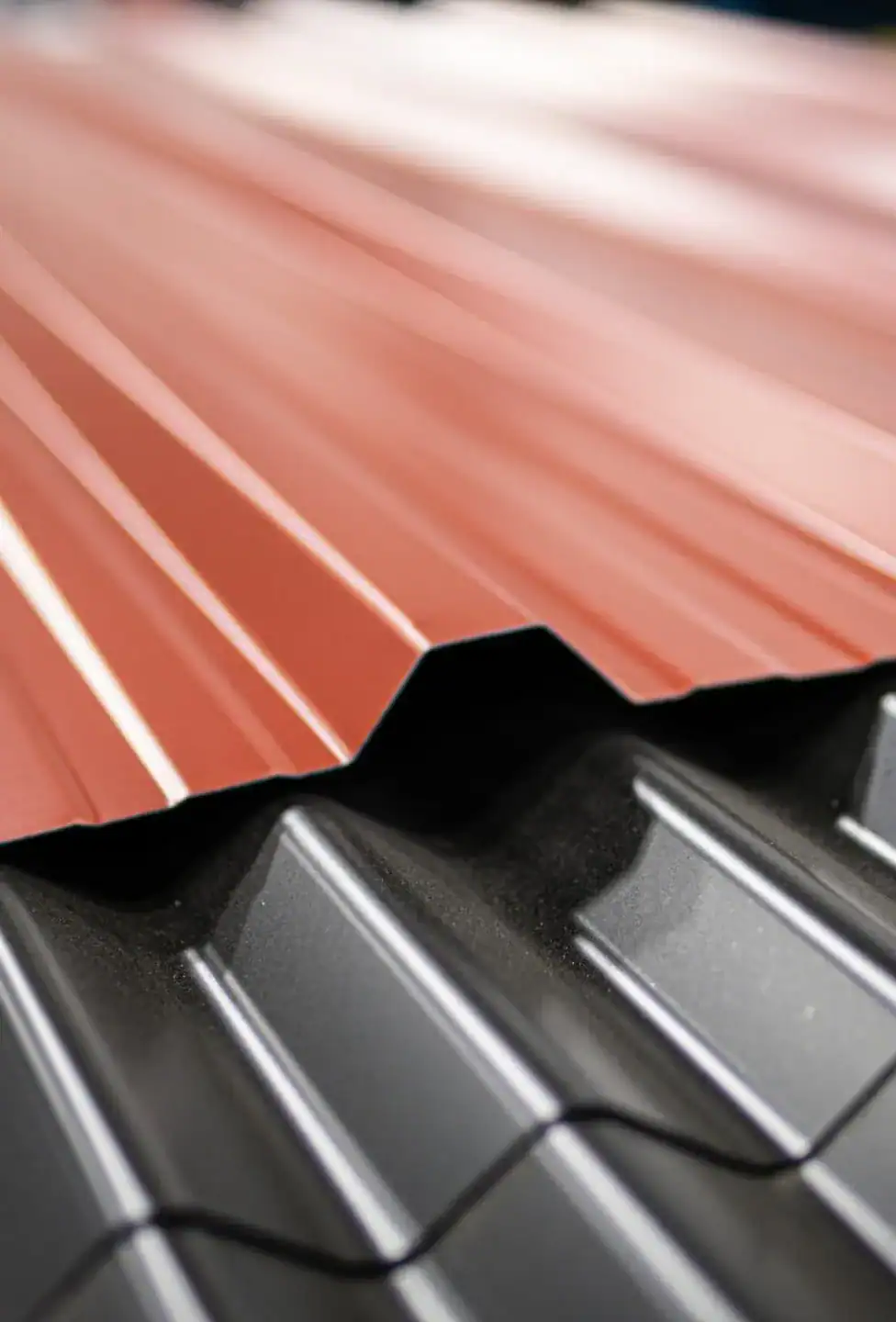
Corrugated panels have that familiar wavy profile. Ribbed panels, often called R-panel or AG panel, are a close cousin with squared ribs instead of rounded waves. Both are exposed-fastener systems: each panel is screwed straight through into the framing or decking, and a rubber washer under every screw head seals the hole.
That’s the big difference from standing seam, where the fasteners hide under raised seams and clips let the panels move. You can compare the two on our metal roofing in Springfield page.
Why people choose corrugated metal
- Cost and speed. Exposed-fastener panels usually cost less than standing seam and go up faster.
- Strength over open framing. On barns, sheds and shops, panels can span across purlins without full decking.
- The look. On a farmhouse or rustic-style home, the classic wave profile fits the style.
- Shedding snow and rain. Like any metal roof, it lets snow slide off and drains quickly.
Where corrugated roofs leak
Most problems on a corrugated roof come from the same few places.
The screws and washers. Years of sun and heat dry out the rubber washers until they crack and stop sealing. Metal also expands on hot afternoons and shrinks on cold nights, and that daily movement can work screws loose or wallow out the holes. On an older corrugated roof, this is the most common leak by far. The fix is often replacing the fasteners across the roof, sometimes with a slightly larger screw where holes have widened.
Overtightened or crooked screws. A screw driven too hard crushes the washer; one driven at an angle never seals at all. Both leak early.
Laps and trim. Where panels overlap side to side and end to end, and where trim meets the panels at the ridge and edges, water can be driven in by wind. Closure strips under the ridge and at the eave keep out wind-driven rain and pests.
Rust. Cut edges and scratches expose bare steel. Mixing metals causes trouble too. Copper or certain treated lumber touching steel panels can speed up corrosion, and the wrong screws can rust out early.
How corrugated metal roofing in Springfield, MO handles the weather
Spring hail is the first thing people ask about. Thinner corrugated panels dent more easily than heavier gauges. Many dents are cosmetic, but hail that cracks the finish or damages screws and washers can lead to rust and leaks later. After a hailstorm, it’s worth having the fasteners checked, not just the panels.
Wind is the second. Exposed-fastener roofs depend on enough screws in the right places, especially at edges and corners, to stay put in a strong Missouri storm. Freeze-thaw winters test the laps and flashing, and humid summers can cause condensation under panels over an uninsulated shop or barn.
Putting corrugated metal on your home
Corrugated panels can go over solid decking on a house, with underlayment beneath. In some cases they can go over an existing shingle roof using furring strips, if the decking and framing are sound and local code allows. A tear-off lets the decking be checked and replaced where needed, which is often the better route. Our metal roof installation in Springfield page walks through how a new metal roof goes on.
Repair or replace?
If the panels are solid and the problem is aging fasteners, loose trim or a few bad laps, a repair usually makes sense. If panels are rusted through, badly bent or the roof leaks in many places, new panels are the better use of your money. See metal roof repair in Springfield for more on what a repair covers.
How it works with APC Roofing
- Book your free inspection. Call 913-398-5020 or request a free online estimate.
- Get a clear, honest assessment and estimate. We check the panels, fasteners, laps, trim and flashing, and you get photos and a written estimate with your options.
- Get the work done and the site cleaned up. Old screws, metal scraps and trim pieces are picked up before the crew leaves.
Financing is available through Aqua Finance, Fortifi, Hearth and Home Run Finance.
Corrugated metal roofing questions
Is corrugated metal good for a house?
It can be, especially on farmhouse or rustic designs. It costs less than standing seam, but the exposed screws need checking and eventually replacing over the life of the roof.
Why does my corrugated roof leak around the screws?
Usually the rubber washers have dried out and cracked, or the screws have loosened from the metal expanding and contracting. Replacing the fasteners often stops it.
Do you tear off the shingles before corrugated metal goes on?
Yes. APC Roofing always tears the old roof off first, because it lets the decking be inspected and repaired.
Does hail damage corrugated metal?
Thinner panels dent more easily. Many dents are cosmetic, but cracked finishes and damaged washers can lead to rust and leaks, so a check after a big storm is smart.
A metal roof that stays tight
Worn washers let in a little water every storm, and over time that rots decking and rusts the panels from underneath. There’s no reason to panic about it. It’s just easier and less costly to catch early.
Get the fasteners and laps checked, and your home, shop or barn stays dry through spring storms and winter freezes. Call 913-398-5020 to book your free inspection.