You’re looking at a roofing quote, and one line says 3-tab shingles while another says architectural. Or your current 3-tab roof is losing granules, a few tabs went missing after a windy week, and you’re not sure whether to patch it or move up to something heavier. Either way, you want a straight answer about 3-tab shingle roofing before you spend money on it.
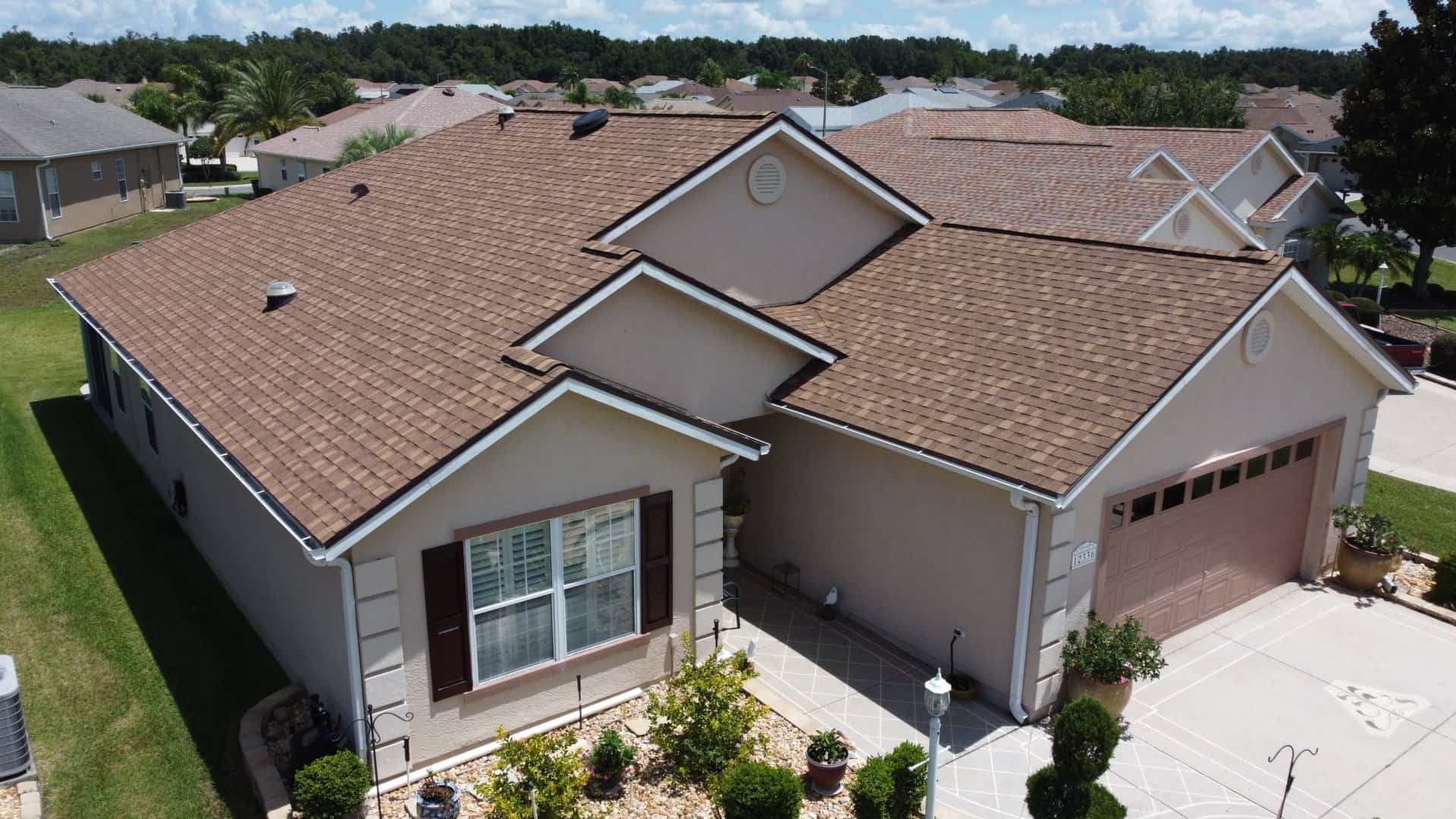
That’s a fair thing to want. The difference between the two shingle types is real, but it doesn’t play out the same on every house. A good roofer should be able to tell you which one makes sense for yours without steering you toward the bigger ticket.
APC Roofing has worked on shingle roofs since 2017 across Central Florida, the Daytona Beach area, the Kansas City metro and Springfield, Missouri. We’re GAF Certified, licensed and insured, and your inspection is free. Call 866-995-0704 to set one up.
What a 3-tab shingle is
A 3-tab shingle is a flat, single-layer asphalt shingle. Each strip has two notches cut along its lower edge, which leaves three equal tabs showing once it’s nailed down. Course after course, those notches line up into a neat grid with no shadow lines. That even, flat look is how you can spot one from the street.
Architectural shingles, also called laminated or dimensional shingles, are built from two or more layers bonded together. They’re thicker and heavier, and the layered edge casts shadows that give the roof more texture. Most new shingle roofs today use them. Our architectural shingle roofing page covers them in more detail.
The trade-offs of 3-tab shingle roofing
Less material makes for a lighter shingle and a lower material cost. It also leaves less asphalt protecting the mat inside, so a 3-tab shingle tends to dry out and turn brittle sooner than a laminated one sitting in the same sun.
Wind is the bigger issue. A 3-tab has a long, straight exposed edge. When its sealant strip lets go, the wind catches a full tab instead of a small corner, which is why 3-tab roofs often lose whole tabs in a storm that leaves the architectural roofs down the street looking fine.
Hail is the other one. Impact-resistant shingles are tested under a standard called UL 2218, and its top rating, Class 4, is what many insurers look for when they offer a credit for an impact-resistant roof. Those Class 4 products are laminated shingles, not 3-tabs. If a premium credit matters to you, ask your insurance agent before you choose a shingle.
How your weather plays into it
In Central Florida and the Daytona Beach area, sun and wind do most of the damage. Year-round UV bakes the asphalt, and summer storms and hurricane season test every sealant strip on the roof. A thin shingle with a long open edge starts at a disadvantage on both counts.
Around Kansas City and Springfield, hail is a regular part of spring, and winter brings freeze-thaw cycles that work on aging shingles and loosen nails. One-inch hail is the size the National Weather Service uses to call a thunderstorm severe, and storms like that aren’t unusual in western Missouri and eastern Kansas. A single-layer shingle has less to give before the mat underneath gets bruised.
None of that makes a 3-tab roof the wrong choice. It means the case for one is stronger on some buildings than on others.
Where a 3-tab roof still makes sense
- Detached garages, sheds and workshops, where a premium shingle is hard to justify
- Rental homes, or a house going on the market soon, when you want a sound roof at a controlled cost
- Repairs on an existing 3-tab roof, where the patch has to match what’s already up there
- Buildings with weight limits, or homes where you simply like the flat look
Repairing a 3-tab roof
Matching is the hard part. Shingle colors shift in the sun over the years, and manufacturers retire color lines, so a new patch can be watertight and still easy to spot from the curb. One thing that often helps is pulling sound shingles from a less visible slope or a garage roof to use on the front, then putting the new ones where nobody looks.
In cooler months, new tabs may need to be hand-sealed, since the factory adhesive strip won’t bond until the sun warms it. And if your roof shows curling on every slope or bald patches where the granules have worn off, a repair may only buy you a short stretch of time. You’ll see photos of what’s up there and hear which way we’d lean. Our shingle roof repair page goes deeper on the repair side.
Nailing matters more than the label on the bundle
Every shingle carries a wind rating from lab testing, but that rating assumes the shingle was nailed exactly the way the manufacturer specifies. A nail driven above the marked nailing strip holds one layer instead of two. Many manufacturers also require six nails per shingle, instead of four, for their higher wind coverage, along with a sealed starter strip at the eaves and rakes.
On a 3-tab roof, with that long exposed edge, the fastening does a lot of the work. Ask any roofer how they plan to nail your roof before you sign.
How it works with APC Roofing
- Book your free inspection. Call 866-995-0704 or request a free online estimate.
- Get a clear, honest assessment and estimate. You’ll see photos of your roof and hear whether 3-tab, architectural or a simple repair makes the most sense, and why.
- Your roof gets done and the site gets cleaned up. Many residential shingle projects are finished in a single day.
If you’d rather spread out the cost, financing is available through Aqua Finance, Fortifi, Hearth and Home Run Finance. You can see every shingle option we offer on our shingle roofing page.
3-tab shingle questions
Can you use 3-tab shingles for ridge caps?
Yes, that’s the traditional way. Each 3-tab shingle is cut at its notches into three pieces, which get bent over the ridge and nailed down in overlapping rows. How far a bundle goes depends on how much of each piece is left exposed, and the manufacturer’s instructions spell that out. Many newer roofs use pre-made hip and ridge shingles instead.
Are 3-tab shingles still made?
Yes, though the color choices are narrower than for architectural shingles, and some lines have been discontinued over the years. That’s worth knowing before you plan a repair on an older roof.
Can I mix architectural shingles into a 3-tab roof?
On a separate roof plane, like a garage or an addition, it can work fine. On the same slope, the thickness difference usually shows and can leave the rows uneven. Matching the existing shingle, or redoing that whole slope, generally looks better.
Will a 3-tab roof pass an insurance or home inspection?
A sound, well-installed 3-tab roof generally can. Inspectors and insurers mostly look at age, condition and visible damage. Some Florida insurers pay close attention to roof age when they write or renew a policy, so it’s worth asking your agent.
Keep your options open
Shingles that are already curling or missing tabs won’t get better on their own, and a lifted section can let water reach the decking over a single stormy season. A look now, while a repair is still on the table, usually costs you less than a look later.
You want a roof that fits your house and your budget, keeps the rain out and doesn’t come with a surprise bill. Call 866-995-0704 or start your free estimate online.