Flat Roofing

Looking for Flat Roof Repair in Shawnee Kansas?

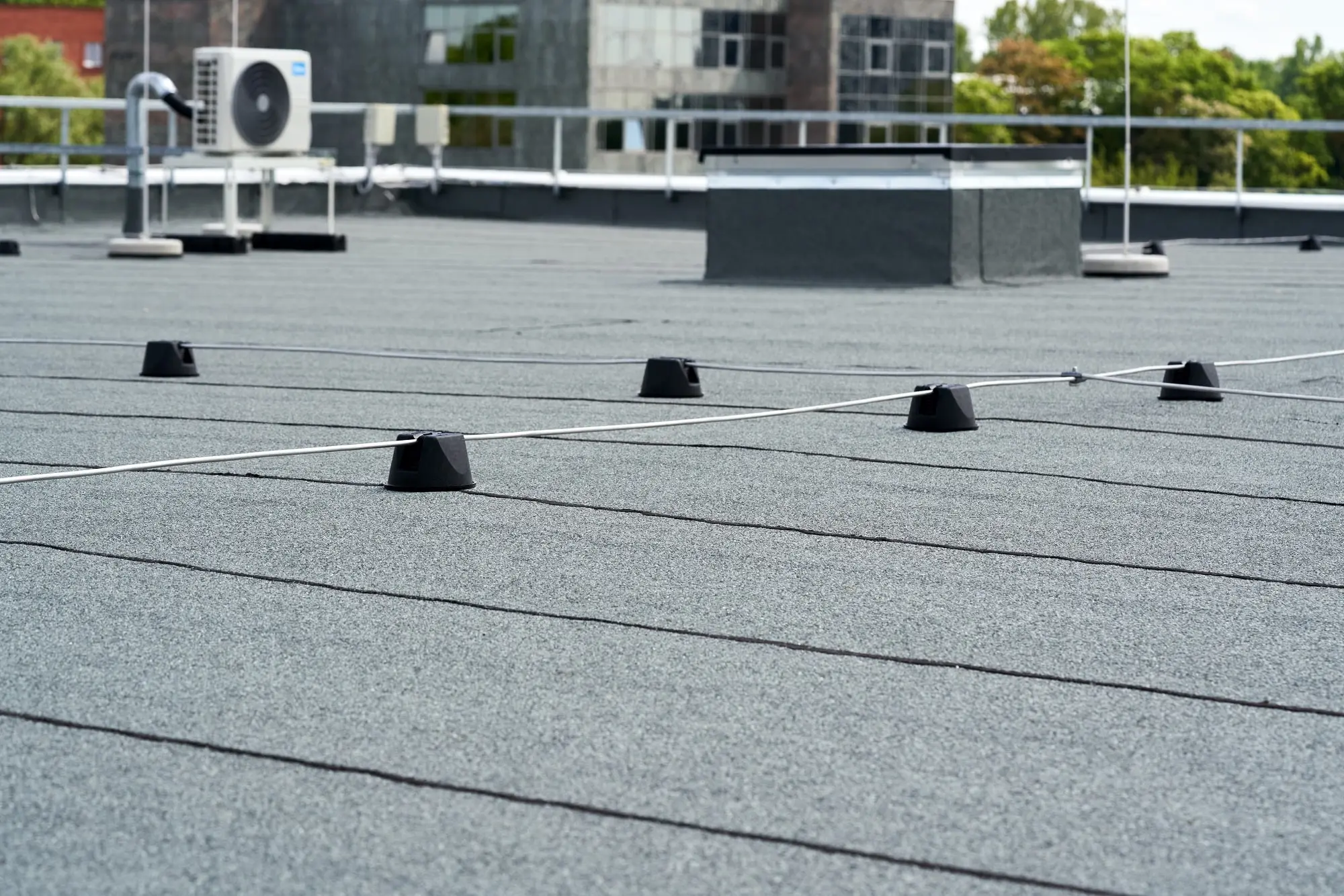
APC Roofing lays new membranes and patches worn ones, and on a typical residence that means porches, garages and rear additions.

Call 913-398-5020 and a roofer will climb up and give you a plain account.


Runoff by Design – a Question of Shape

What people call a flat roof is built to fall slightly toward an outlet, and codes commonly ask for at least a quarter inch of drop per foot. Rafters shimmed on one side can make the change in height, or tapered foam on the deck can supply the difference where carpentry never did.

Water races off a steep main roof during a storm, but a low section can stay wet for an hour or more, which gives every flaw many more chances to leak. Behind a chimney or skylight curb, a cricket splits the flow, which keeps a pond from gathering where the current would stall.

Beyond What Shingles Handle – Reading the House

An asphalt roof is allowed by code only at two in twelve and up, and tile has an even steeper requirement. Short of the limit, driven rain climbs back under the courses, and the plywood soaks up moisture and softens.

Many homes combine a shingle main roof with a sheet-covered porch, with the material picked to suit the incline below. A sheet covering goes down as one unbroken surface with closed seams, so water can linger without reaching the deck.

Kinds of Sheet: Names Decoded

Single-ply roofing means TPO or EPDM, supplied in wide rolls, and modified bitumen comes in narrower strips of polymer-blended asphalt, and built-up roofing puts gravel over felt and tar. A lightweight membrane puts little load on residential framing, and a roofer can inspect each join along the full length.

TPO is normally a white plastic membrane, but EPDM is a black rubber compound. Deck type, outlet layout and rooftop units steer the choice, and we say what we recommend and why, and the homeowner chooses.

How the Joins Are Made: Done by Hand

Leaks seldom start in the open area of a sheet, but the overlaps between widths are where trouble collects. A TPO seam is melted together with a stream of hot air, and a dull hooked probe traced along the joint shows any gap.

On EPDM, primer and tape hold each lap shut, and dust or damp at installation weakens the adhesion for years. Weathered rubber joins commonly peel back at a corner, and a cover strip over the opening makes the spot watertight again.

Picking a Shade: the Practical Side

A reflective TPO sheet sends a large share of solar heat back up, so the space under a porch or addition runs cooler. EPDM in black takes in radiant energy, and the deck under the sheet stays warm into the evening. Reflecting sunlight helps a great deal in the hot markets we cover, but the advantage shrinks at the colder end of our territory.

Gauge: Sorting the Options

Membrane depth is stated in mils, thousandths of an inch, and 60 sits a step above 45 for house work, and heavier rolls exist for roofs that see traffic. A denser covering tolerates a dropped wrench far better, and the additional body holds up longer against sunlight. A slim and a heavy grade look identical from the ground, so the proposal states the mil figure in writing.

Under the Top Layer: How the Pieces Fit

A cover board commonly lies directly under the membrane, and rigid insulation panels come after, and the deck supports everything above. A foam core cuts heat moving through the ceiling, and each extra inch adds R-value. Insulation that takes on water loses the benefit and grows heavy, and the waterproof skin overhead keeps the dampness from ever drying. Meter readings, infrared images and a small core show the size of the affected area, since nothing on the surface may look wrong.

The Changeover – Order Matters

Where a porch butts a steeper roof, the membrane climbs beneath the courses, and rain sheds from above onto the membrane. The sheet's top edge is shielded from the weather, and the joint does not rely on caulk at all.

A membrane run over the tabs rather than under catches water behind, and wind-driven rain reaches the framing below. Wet drywall where the porch ceiling meets the house often leads back to a reversed junction, and the proper repair redoes the detail from the eave up.

Metal Trim – Held Tight

Wind crossing a low roof pulls upward at corners and along the perimeter, and a loose section can be torn back in one long piece. Bent metal grips the sheet all along the outside, and the lower lip steers runoff past the fascia into the gutter.

A termination bar anchors the membrane at the wall line, with sealant run along the top so rain cannot slip behind, and counterflashing overhead keeps rain off the joint. Bent trim or nails backing out along the rim are a repair item, since a quick reset guards the membrane from uplift.

Parapet Walls – Built to Drain

Base flashing carries the membrane up the inside face, and metal counterflashing sheds water off the upturned edge. A stone or precast coping sits along the top of the parapet, with an inward pitch that drains runoff onto the roof.

Separated joints along the crest channel rainfall into the wall, and the damp can surface well below. Brick needs repointing wherever mortar has cracked, and a stucco-covered frame needs sealed corners and a tight top.

Emptying the Surface: Keeping the Flow Moving

Water from a low roof goes out through an inside outlet, a scupper or a gutter along the edge, and a blockage at any opening leaves water standing. The interior drain rests in a shallow sump beneath a dome-shaped strainer, and a leader pipe drops through the framing to grade.

An overflow opening is placed above the main outlet, and parapet-enclosed roofs need a second way out by code. A service visit includes clearing strainers and gutter throats, and a displaced dome is secured over the drain.

Pools That Linger – the Trouble Explained

Rainfall that remains on the membrane forty-eight hours after a storm counts as a defect in the trade, and a sagging deck or a plugged outlet sits behind the problem. Constant immersion speeds the aging of the sheet beneath, and dirt and algae build up there. The mass of a broad, shallow puddle presses the framing down a little, and the bigger dip catches more rain next time.

Swapping the membrane leaves the contours of the deck untouched, so tapered insulation, a cricket or an added drain has to do the correcting. The framing and the routes open to new piping decide the remedy, and a level on the roof settles the plan.

Holes in the Field: Caught Early

Sharp objects can breach a single-ply membrane at any age, and a loose fastener underfoot or a dropped blade is enough. At the colder end of our territory, large hail can split an old, brittle membrane, and broken limbs can slash a surface wherever trees overhang.

A minor opening spotted early is a straightforward patch, but months of rain through the gap saturate the insulation beneath. Tracing pinholes calls for walking the field slowly, foot by foot, and a glance from a ladder misses tiny punctures.

Protecting the Route – Sparing the Sheet

A membrane is made to keep out rain, not to carry people, and repeated trips to the air conditioner on the roof grind at the surface. Thick pads are welded or adhered along the path to rooftop units, and the strips carry the abrasion in place of the membrane. Where mechanical gear sits up top, the scope includes traffic protection, and heating and cooling crews are asked to keep to the marked lane.

Rooftop Flooring: Heavy Loads, Easy Access

Pedestals under the pavers hold tables and chairs above the membrane, and rain slips underneath to the outlets. Large planters need a check of what the joists can carry, because waterlogged earth weighs a great deal more.

Pavers come up individually without tools, so the membrane below can be reached without tearing anything out.

Openings for Equipment – Where the Surface Is Broken

A vent pipe takes a molded boot of matching membrane, and a clamp draws the collar snug around the stack. A skylight or a unit sits on a curb raised above the deck, and the membrane turns up all four faces beneath metal. A bracket or cable bundle that no boot fits goes into a pitch pocket, which is a shallow collar of pourable sealant.

Over time the fill shrinks and splits, and a top-up is part of normal care.

Repair or Start Fresh: Weighing the Evidence

Water on a membrane typically gets in at a single small spot, and a matching piece sealed over the damaged section brings the surface back. On TPO, the overlay is welded and then probed, and EPDM covers are primed and taped with rounded corners.

Full replacement is justified when seams are opening everywhere, or the membrane has hardened and split, or much of the insulation below is waterlogged. We give a straight recommendation, and photographs and readings support the verdict.

Overlay or Strip – Choosing the Route

A fresh membrane can be installed over an existing roof with a board in between, and codes limit the method to houses with a single covering. An overlay calls for insulation that is dry, since moisture sealed in keeps rotting the wood.

Removal down to the deck is what a tear-off means, so soft decking can be replaced and proper fall built in, and code demands the method where a house carries two coverings. The route follows the meter readings and how many layers are there, and a written summary of the findings arrives before the decision.

How Age Shows – What Hastens Wear

Ultraviolet light, daily heat swings and pooled rain break down a membrane gradually, and service traffic scuffs trails across the field. Yearly attention to strainers and pitch pockets lengthens the working span, and small cuts patched early keep the insulation dry.

Things to Watch For – Noticed Around the House

  • A yellowed patch on the ceiling under the porch roof, an indication that rain has crossed the insulation.
  • Runoff shooting from the backup scupper during a downpour, usually because the main outlet is stopped.
  • A section of perimeter metal raised after a windstorm, a spot where the membrane may start coming away.
  • Algae creeping along the rim, which shows rain sitting for days.
  • A drooping line above the porch from outside, which may mean the deck is carrying ponded weight.
  • Bubbles in the membrane noticed from a second-floor window, often from moisture trapped below or a lost bond.
  • Dark streaks on a wall below a parapet, commonly caused by open coping joints.
  • Moisture where the porch ceiling joins the main structure, usually a clue the tie-in has opened.

How APC Roofing Goes About Flat Roof Repair in Shawnee Kansas – the Sequence Up Top

We look first at the drainage: outlets, strainers and low spots, and every lap is probed from one end to the other next. Afterward, the edge metal, parapets, curbs and pitch pockets are examined, and when a leak is present, a meter and a core sample test the insulation.

Everything we find goes into a written report with photographs, and every part is rated in plain words. Where a patch will do, we say so, and a membrane past saving is described honestly.

Flat Roof Repair in Shawnee Kansas: Practical Help With Low Roofs

Phone 913-398-5020 and we will schedule a visit to the property.


Roof Coatings: Honest Limits

Fluid material can be sprayed or rolled onto an existing membrane, and the liquid hardens into a skin with no seams. Over a healthy membrane, a coat adds years and reflects heat, but on a worn-out roof the layer covers damage instead of solving anything.

Silicone tolerates standing water, whereas acrylic deteriorates wherever puddles remain. Cleaning, priming and patching account for the bulk of the labor, because leftover grime or chalk leads to peeling. We say plainly when a coating suits a roof, and when the sheet below calls for real work instead.

Weather and Scheduling: Work Windows

The primer and tape used on EPDM need a dry surface, and a chilly spell slows the adhesive's grab. Welding TPO with hot air works on brisk mornings, but rainfall halts membrane installation of every type.

A small repair fits into a short dry spell, whereas a full replacement needs several settled days. Each section opened for installation is made watertight before the crew departs, so no rain reaches the house after hours.

For Flat Roof Repair in Shawnee Kansas, phone APC Roofing at 913-398-5020. A roofer inspects the membrane, the outlets and the trim, and a written account follows, and the decision stays with you.

steve persaud

Verified

★★★★★
APC roofing provided the best price and the best service. Ivan was courteous and professional,he kept me informed thru out the process The installers were professionals and did excellent work. They made sure the yard was spotless when the job was completed.. Highly recommended.

R

Verified

★★★★★
Nicholas Rodriguez was so helpful and knowledgeable, I would highly recommend this company to my friends and family.

Tammy Baker

Verified

★★★★★
Love our new roof! Brian Derminer was our roof specialist. He explained the process and was there to answer any questions. APC worked with us and our insurance/mortgage company to get the job done. Kayla at the office was a great help too. When the roofers came it took then no time to replace the roof. It's beautiful 😍 Tammy & Owen Mount Dora

Danielle Aigner

Verified

★★★★★
I had a great time working with Kylan. He answered all my questions and handled the whole process with great care.

Angelina Salcedo

Verified

★★★★★
I highly recommend working with APC especially Nelson he did an exceptional job making sure everything worked out smoothly thank you !