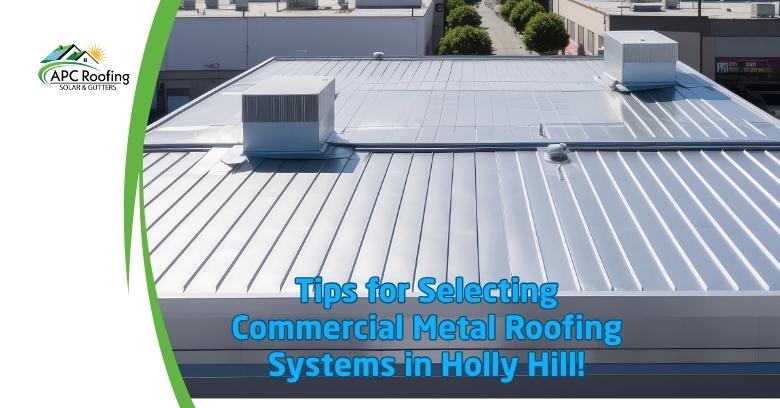
In Need of Standing Seam Metal Roofing Throughout Sanford Florida?
APC Roofing installs panel coverings and mends worn sheet, whether for a shop, a porch or a whole house.
Reach us at 407-270-1129 and someone who knows the trade will come out to take a look.
Naming a System: Visible Clues
A corrugated or ribbed covering is secured with screws set through the metal, but standing seam is anchored by clips concealed beneath upright folds. Coated steel is what the great majority of metal-roofed homes carry, and aluminum or copper appears now and then.
Screw heads marching in rows, easy to spot from below, point to exposed fasteners, while plain pans and tall ribs with nothing in sight are standing seam. Barns, workshops and porches often wear corrugated or ribbed sheet, and dwellings use both.
The Cross-Section – Span and Style
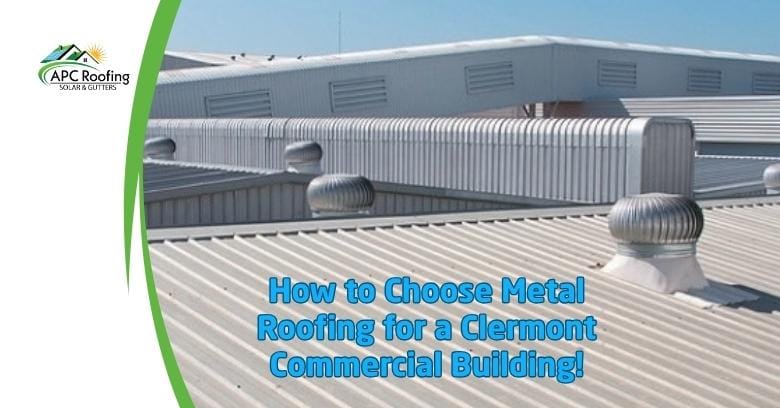
Corrugated sheet ripples in smooth, repeating curves, while ribbed panels carry squared ribs with wide flats between. One length rides over a neighbor at a side lap, and a printed fastening schedule sets where screws land.
Ribs make a stiffer panel that crosses longer spans, while corrugated keeps a place on vintage buildings and farmhouse designs. A tall rib keeps heavy rain inside a channel on a broad roof plane, whereas a short porch covering gets by with a low pattern.
Hardware in the Weather – Driven Right or Wrong
A screw pulls the metal tight against a purlin or the deck, while a washer at each head keeps rain from following a shank. Sun and temperature swings dry out neoprene over time, and the panels can go on for decades more.
Overdriving tears a washer and dishes the metal, and a shallow or off-square setting never seals fully.
Refreshing Hardware: Scope and Limits
Every washer across a ribbed or corrugated field weathers at the same rate, so at some stage all seals get changed. Each original fastener is taken out, and a bigger diameter is driven in to grip where an old thread stripped.
Re-screwing with new washers fixes leaks at screw heads and snugs down sheets that flutter, though perforations, split laps and faulty trim remain as before. Replacements are chosen for whatever framing lies underneath, lumber or steel, and a painted cap keeps new work inconspicuous.
A Covering in Motion – Stress at Screw Holes
A steel panel stretches in sunshine and draws in after dark, and a longer run shifts farther still, while aluminum goes about double. A panel pinned at both ends slowly slots every screw opening, and washers begin to leak.
Ticking heard as morning sun lands on steel is ordinary expansion, and a careful installation suffers no damage.
Anchoring Standing Seam – Laid in Sequence
A long pan is locked down at a single band, and sliding clips everywhere else let the metal move with temperature. Flashing at an unanchored end is shaped with space beneath, and a pan held rigid throughout tears loose or buckles.
Each pan is set in place, and clips are driven through into the deck along one side, so each new pan conceals all hardware below.
How Seams Close – Suited to Pitch
One kind of rib clicks shut under a firm push, while other designs are crimped over by a machine. A double-locked joint stands up to gales and to water sitting against the metal, and published ratings run down to lower slopes.
Pan width and rib height vary from product to product, and a choice depends on the home and a preferred style. Clips, trim and closures are bought to suit one particular panel, so a repair calls for knowing exactly which panel is up there.
Stock Weight – Beyond Appearances
Panel thickness in steel is stated in gauge, and a low figure signals thick metal. Outbuildings commonly get twenty-nine, and residential work leans on twenty-six and twenty-four.
Aluminum is specified in thousandths of an inch instead, and in either metal thicker stock dents less and lies flatter. From the ground, light and heavy metal look alike, so a product data sheet is a reliable guide.
Rust Resistance – Aging in Sunlight
Roofing steel leaves a mill with a zinc or aluminum-zinc layer over plain sheet, and a primer and a colored enamel are baked over the metal. A mark in a topcoat alone keeps steel protected, but a sheared edge exposes steel that will corrode.
A PVDF finish stands up to sunlight for a long time, while polyester grades dull faster in strong sun. Uncured concrete and mortar harm an aluminum-zinc coating, so panels are kept away from a new chimney or stone wall.
Picking an Alloy: Near the Water
Aluminum is lighter than steel and never forms red rust, but a soft sheet dents from smaller blows. At the coastal end of our territory, salt spray breaks down galvanized coatings faster, and manufacturers set limits on how near a shoreline a product may go.
Copper is usually kept to small accent roofs over a bay or a porch, and with nothing applied, color shifts over the years.
Mixing Metals – Isolation and Compatibility
Runoff from copper eats through coated steel downhill, and staining shows up well ahead of pinholes. Pressure-treated framing corrodes aluminum laid directly on top, and an ordinary screw of an unsuited alloy fails as well.
New flashing or trim has to match the metals already in place, or a separator tape sits wherever unlike metals meet.
A Matter of Taste: What Can Be Done
Oil canning names shallow dips and bulges across a flat pan, and raking light early or late in the day brings out each rise and fall. A warped look in the metal lets no rain through, and the roof lasts no less.
Heavier gauge, narrower pans and pencil ribs in each flat all reduce waviness, and an installer who does not overdrive clips helps as well. Images of real houses show oil canning from obvious to barely there, and you decide what to order.
Inside the House – Day and Night
A racket many recall comes from sheet over open framing, because nothing there soaks up impact. A home has sheathing, a membrane and an insulated ceiling under steel panels, and loudness indoors is close to what asphalt gives.
Cool-pigment coatings return the bulk of the sunshine, so the attic runs noticeably cooler. A charcoal or black panel gets hot, and venting and insulation under the deck do as much for comfort as color. Within an hour of sundown, a metal covering is cool, and an attic beneath follows suit.
Guards and Placement – Only Where Needed
In the snowier part of our service area, a metal roof sheds snow fast, and a heavy sheet coming off in one piece can hurt a person or tear away a gutter. Stops attached to the metal let a load leave slowly, with placement over doorways, decks and equipment.
On standing seam, brackets clamp onto a rib without a hole, whereas on corrugated sheet, mounts go into solid wood with gasketed fasteners, and homes where snow seldom falls go without.
What Ice Does: Documented Plainly
At the colder end of our territory, hail is a regular event, and thicker steel shows fewer dents. Where a blow splits paint, bare metal can corrode, and a flattened rib or a shifted cap can leak.
Once a storm has passed, a roofer photographs and measures every mark, so the size and position of each dent are known.
Storm-Ready Attachment – A Denser Pattern
Wind load concentrates at corners, rakes and eaves, and a loose flange gives moving air a handle. Each finishing piece is folded back and locked over a full-length cleat, so a storm finds nothing to pry at.
Spacing shrinks where loads climb, at corners and a rim, set by a maker’s tested layout for each exposure. Where hurricanes reach, at the coastal end of our territory, the number of fasteners goes up again, and panels carry an uplift rating to suit.
Where Something Pokes Through – Careful Detailing
A flexible boot is formed around every rib and banded tight to a pipe, and a hole is cut in a flat, never across a crown. Square penetrations take a curb and a cricket on a high side, so runoff is steered aside.
A bead of sealant supports a properly formed detail rather than working alone, since weather hardens and splits any compound long before the panels are done.
Inside Corners – No Screws in the Water
Valley metal is laid before a single panel, and sheets are cut on a diagonal to suit. Every raw end is turned under and caught by a cleat, and fasteners stay clear of wherever rain concentrates.
On a run too long for one sheet, an endlap joins pieces with sealant between, and fasteners pass through both thicknesses, with uphill metal on top.
Shallow Sections – Measured, Not Guessed
Through-fastened sheet generally wants about three inches of rise per foot, because on less, runoff lingers long enough to wick past laps. A mechanically locked seam can be installed far lower, and some products are allowed on nearly flat decks.
Many homes have a gentle stretch over a porch or a later addition, and a measurement comes before any panel is named, and below every panel limit, a membrane goes on.
Under Everything – Out of Sight Once Done
A house takes panels on a solid, continuous deck, and a synthetic barrier made for high heat sits on top, because old felt bakes and sticks under hot steel. Farm buildings frequently carry metal over bare purlins, and support distance dictates grade.
With an old roof gone, damaged sheathing is cut away and rebuilt, because screws in decay have nothing to grip.
Why the Old Roof Comes Off First
We tear the old roof off down to the deck before any metal goes on, so we can see and fix the wood first. Where a roof was already recovered once, or the decking is soft, the damaged boards are replaced, since trapped dampness under metal has no way to dry.
Finishing Pieces: Vented or Solid
Closures matching a panel shape stop up hollows under each rib at both extremes, so wind-blown rain and nesting animals stay out. A ridge cover can include a vent or be solid, depending on how an attic is ventilated.
Rake trim, drip edge and an apron into a gutter close off a roof’s outline, and fascia boards stay dry.
Day of Installation – Carrying and Stepping
Standing seam is produced to fit each run from bottom to top, and one pan spans eave to ridge with no joint across. A long panel needs several people to steady the metal on the way up, and a creased pan should not be installed.
On panels, a step belongs in a flat above a purlin or deck, because ribs and seams crush under a boot. Moisture turns a painted panel into a slide, and nobody without a harness should go up.
What Homeowners Can Spot – No Ladder Needed
- Brown rings at fastener heads, partway down a pitch.
- Loose screws riding high, on long panels.
- Trim bent up at a corner, facing prevailing wind.
- A collar gapping around a stack, on a back slope.
- A sheared end streaked orange, in a valley.
- Color gone patchy, where afternoon light hits.
- Spots on a ceiling in a row, in a garage.
- A gap along a rib, at the low end of a panel.
How APC Roofing Approaches Standing Seam Metal Roofing in Sanford Florida – Step by Step
We start by identifying which panel type is installed and how the panels are held, followed by every screw or clip, edge, boot, valley and lap. Notes cover gauge, finish and every kind of hardware, and the attic is searched for water marks.
What we find goes into a report with photographs, and every item comes with the why. When a small fix works, nobody pushes a bigger job, and a finished roof is described without softening.
Standing Seam Metal Roofing Across Sanford Florida: Plain Findings
Phone 407-270-1129 and we will schedule an inspection.
Repair or Replacement – When a Tear-Off Makes Sense
A single ruined panel can come out and a sound panel go in, though new metal looks brighter than weathered neighbors. Resealing a lap or replacing a boot stops a local leak, while new fasteners seal screw holes again.
When corrosion has gone through across a whole field, a tear-off is due, and a covering the wind has twisted out of shape is in the same position. Somewhere in between, a single worn plane of the roof can be redone, when damage stays in one place.
Aging Gracefully – Upkeep Matters
Good metal work frequently reaches forty years, but estimates of service are a rough guide only. Concealed-clip panels require less upkeep because no rubber seal sits in the sun, whereas exposed-fastener sheet needs a re-screw partway through.
Copper runoff, bare edges and caulked joints where flashing belongs shorten the life of a roof, and a visit now and then spots trouble early. Wet leaves left sitting on panels stain and dull a colored finish, and sweeping debris clear helps a finish.
Before deciding on Standing Seam Metal Roofing in Sanford Florida, phone APC Roofing at 407-270-1129. Someone will climb up and read how the panels are attached, along with every edge and opening, and a written summary lays out what we saw so you can choose.
« All Services in Sanford Florida