Asking about Flat Roof Installation in Sanford Florida?
APC Roofing replaces and patches the coverings on shallow slopes, and on a typical residence that means porches, garages and rear additions.
Phone 407-270-1129 and a roofer will inspect every detail and explain the findings.
Getting Runoff Moving – a Question of Shape
What people call a flat roof is built to fall slightly toward an outlet, and codes commonly ask for at least a quarter inch of drop per foot. Carpenters can set the change in height into the rafters, or a tapered insulation layout can produce the difference during a reroof.
A steep shingled roof sheds a downpour in seconds, but a low section can stay wet for an hour or more, so each seam sits in moisture long afterward. A ridge called a cricket turns runoff aside at a chimney or curb, and puddles never get a pocket to settle in.
Beyond What Shingles Handle: Porch and Garage Work
Building codes allow asphalt tabs only where the rise reaches two inches per foot, and concrete or clay tile demands a sharper incline. Under the limit, rain blown by wind creeps beneath the overlaps, and nails and decking stay damp for days.
Many homes combine a shingle main roof with a sheet-covered porch, with the material picked to suit the incline below. Sheet roofing forms one unbroken barrier once the joins are closed, so water can linger without reaching the deck.
Kinds of Sheet – Sorting the Catalog
TPO and EPDM arrive as wide single-ply rolls, and modified bitumen uses polymer-enriched asphalt in smaller strips, and built-up roofing alternates felt and tar under gravel. A light membrane asks little of porch and garage framing, and a crew can check every join closely.
TPO is a plastic membrane usually made in white, but EPDM is a black rubber compound. Which product fits depends on the deck, the drains and any rooftop gear, and we say what we recommend and why, and the homeowner chooses.
Joins Between Rolls: Care at Every Edge
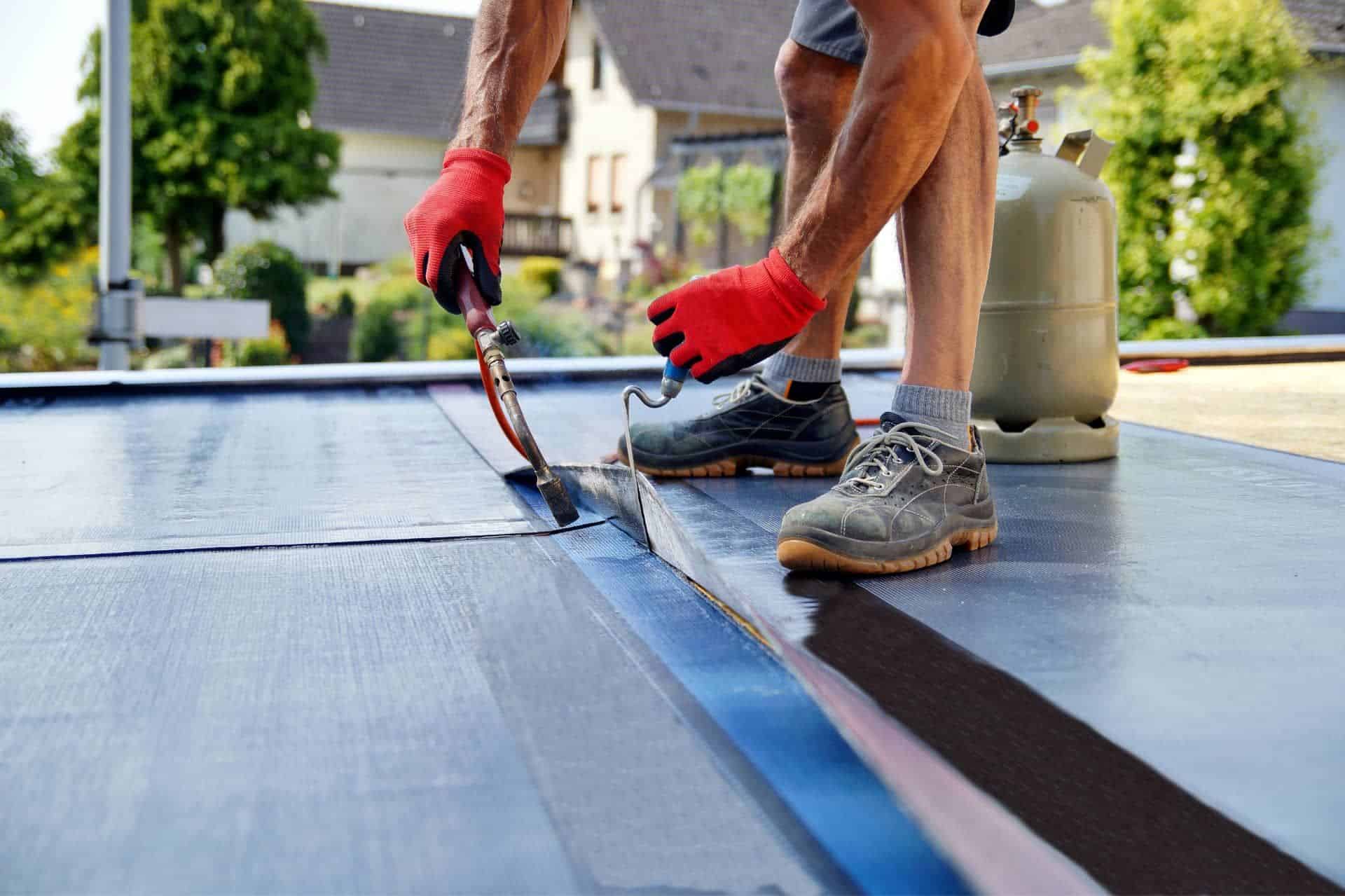
Leaks seldom start in the open area of a sheet, and the overlap between neighboring widths is where problems sit. TPO seams are melted into one piece by a machine blowing hot air, and a blunt probe drawn along the joint finds any gap.
On EPDM, primer and tape hold each lap shut, and moisture or grime trapped at installation leaves weak adhesion. On an old rubber roof, joins tend to curl at the ends, and a cover strip across the opening keeps water out once more.
White or Black – Beyond Looks
A bright TPO roof reflects a good part of the sunshine, so an addition beneath stays more comfortable. Black rubber roofing absorbs radiant energy, so the framing below climbs in temperature. Turning back the sun matters in the hotter parts of our service area, but the advantage shrinks at the colder end of our territory.
Thin or Thick: Sorting the Options
Membrane depth is stated in mils, thousandths of an inch, and 45 and 60 appear on a great many homes, and stouter rolls are made for busier roofs. More substance on top copes better with a stray screw, and the additional body holds up longer against sunlight. From the lawn, every gauge looks much the same, so the proposal spells out the mil figure.
Under the Top Layer: How the Pieces Fit
Right against the membrane there is often a cover board, and rigid insulation comes next, and the deck at the base is usually plywood on a porch. Polyiso slows heat passing into or out of the rooms, and greater depth raises the R-value. Drenched insulation quits performing and gets heavy, and a sealed membrane on top leaves the dampness nowhere to go. An electronic meter, an infrared camera or a test cut shows how far the problem spread, since nothing on the surface may look wrong.
The Changeover – Order Matters
Where a porch butts a steeper roof, the membrane climbs beneath the courses, so runoff from higher up spills onto the membrane. No part of the sheet's top edge faces the sky, and the joint does not rely on caulk at all.
A membrane laid over the lowest course instead catches runoff behind the lip, and heavy rain finds the framing beneath. A drip at the inside corner of a porch ceiling often traces to a reversed junction, and relaying the detail correctly is the fix.
Securing the Border: the Outer Detail
Wind crossing a low roof pulls upward at corners and along the perimeter, and an opening can let the membrane peel back across a wide area. A formed metal strip pins the sheet along the outside, and a drip lip turns runoff down into the gutter.
A termination bar anchors the membrane at the wall line, and sealant along the top keeps rain from slipping behind, and tucked-in counterflashing protects the joint. Loose fasteners or a bowed drip edge call for a roofer, because a firm perimeter keeps gusts from prying underneath.
Parapets and Copings: Sealed at the Crest
Base flashing carries the membrane up the inside face, with metal counterflashing covering the upturned edge. A stone or precast coping sits along the top of the parapet, with a lean toward the roof that keeps water off the exterior.
Open joints along the crest let rain inside the wall, and the stain may appear well below the opening. On brick, cracked mortar also needs repointing, whereas stucco over framing relies on tight corners and a sealed top.
Emptying the Surface – Clear and Working
Water departs a low roof at an inside outlet, a wall scupper or a gutter at the edge, and leaves or grit can choke any opening. A domed strainer covers an interior drain set in a shallow sump, and piping in the house leads down to the yard or a storm line.
An overflow scupper sits higher than the main outlet, and codes call for a second way out on a roof ringed by parapets. Leaves and grit come out of strainers and gutter throats during maintenance, and a missing or shifted dome is replaced.
Water That Stays Put: Why Shape Matters
Rainfall that remains on the membrane forty-eight hours after a storm counts as a defect in the trade, and a sagging deck or a plugged outlet sits behind the problem. Constant immersion speeds the aging of the sheet beneath, and algae and silt take hold on the wet stretch. Inches of rain spread over a roof put real strain on the joists, so the sag grows each time rain gathers.
A new covering alone does nothing for a misshapen deck, and the answer is tapered insulation, a cricket or an extra drain. The suitable remedy turns on the structure and where piping can go, and readings from a level on site settle the plan.
Punctures and Cuts – Tracking Down Pinholes
A single-ply sheet can be breached by a sharp object at any age, and a fallen screw or a dragged toolbox can do the damage. At the colder end of our territory, large hail can split an old, brittle membrane, and blown limbs can rip a surface in any market we serve.
A little hole caught soon takes nothing more than a patch, but the same gap left through a rainy season soaks the insulation underneath. Pinholes are located by a slow walk over the full field, and a glance from a ladder misses tiny punctures.
Walkway Pads – Built for Foot Use
A membrane serves as a waterproof skin rather than a floor, and each trip out to the air conditioner on the roof leaves a little wear on the surface. Walkway pads are heat-welded or adhered in a line toward the units, so the strips absorb the abrasion instead of the membrane. Any roof carrying mechanical gear gets traffic protection in the scope, and anyone doing service work is asked to follow the marked lane.
Elevated Platforms: Weight and Access
Pedestal-set pavers hold patio furniture clear of the membrane, and rain slips underneath to the outlets. Large planters need a check of what the joists can carry, because saturated earth grows much heavier after a shower.
A paver lifts straight off a pedestal by hand, so the membrane below can be reached without tearing anything out.
Things That Pass Through – Flashing Every Protrusion
A molded boot made from the same membrane seals a plumbing vent, and a stainless band cinches the collar to the stack. Units and skylights rest on curbs that rise from the deck, and the membrane turns up all four faces beneath metal. Brackets or bundled cables of odd shape go into a pitch pocket, which is a shallow collar of pourable sealant.
The fill settles and cracks over several seasons, and a periodic top-up is standard upkeep.
Mend or Start Over – the Honest Verdict
Water on a membrane typically gets in at a single small spot, and a matching piece sealed over the damaged section brings the surface back. On TPO the overlay is welded down and tested with a probe, and on EPDM the cover is primed, taped and cut with rounded corners.
Replacement is the better choice once many seams are failing, or the sheet has become brittle with age, or large stretches of insulation are soaked. We state clearly which option fits, and photographs and meter readings back up the verdict.
Layer On or Strip Off – Choosing the Route
A new membrane can go over an old roof with a separator board between, and building codes permit the method only over a single covering. An overlay calls for insulation that is dry, because trapped moisture under the new sheet keeps harming the deck.
A tear-off takes all old material off the deck, so rotten boards come out and the fall is set right, and a roof with two coverings must be stripped by code. Readings from a meter and a tally of layers point to the route, and a written summary of the findings arrives before the decision.
The Toll of the Years – What Hastens Wear
A membrane slowly degrades under ultraviolet light, temperature swings and pooled rain, and boots on the way to units leave worn tracks across the field. Yearly attention to strainers and pitch pockets lengthens the working span, and small cuts sealed quickly keep the insulation from soaking.
Signs Worth a Call – Early Notice
- A water ring on a ceiling beneath the membrane, which shows moisture has soaked through the insulation.

- Water spilling from an overflow scupper during rain, which suggests the main outlet is plugged.
- Edge metal bent or lifted after high wind, where the membrane can begin to peel.
- A green film at the edge of the roof, which reveals runoff that never clears.
- A visible sag along the porch line from the lawn, an indication that pooled water is bending the deck.
- Puffy blisters glimpsed from a window overlooking the membrane, which suggest trapped moisture or loose adhesion.
- Dark trails on the exterior under a parapet, commonly caused by open coping joints.
- A wet stripe on the porch ceiling next to the house, usually a clue the tie-in has opened.
How APC Roofing Tackles Flat Roof Installation in Sanford Florida: Order and Method
The first thing we check is the drainage, outlets and low spots included, and the laps are probed from end to end next. Curbs, pitch pockets, parapets and edge metal are examined afterward, and during an active leak, meter readings and a core cut test the insulation.
A written report with photographs records the findings, and each component gets a plain verdict. If a repair is enough, we say so, and a failing membrane is described frankly.
Flat Roof Installation for Homes in Sanford Florida – Membrane Roofers Nearby
Phone 407-270-1129 and we will set a time to come out.
Painted-On Protection: Good Uses and Bad
An existing membrane can take a rolled or sprayed fluid, and the liquid cures into a jointless skin. Applied to a sound roof, a coat adds service and reflects the sun, but across open laps or soaked insulation the layer masks trouble without solving anything.
Silicone tolerates standing water, but acrylic loses adhesion where puddles stay. Cleaning and mending beforehand make up the bulk of the effort, since material laid over grime or chalk lets go. We tell you directly when a coating is a sensible choice, and when the sheet below calls for real work instead.
Weather and Scheduling: Setting the Dates
EPDM tape and primer must go onto a dry surface, and a chilly spell slows the adhesive's grab. Welding TPO with hot air works on brisk mornings, but rain halts every kind of membrane installation.
A small repair can be done in a brief pause between showers, but a full replacement calls for a run of settled days. Any area opened during installation is sealed watertight before the crew leaves, so the house is protected until the next day.
When you need Flat Roof Installation in Sanford Florida, speak with APC Roofing at 407-270-1129. A roofer goes over the membrane, the outlets and the edge metal, and the findings arrive in writing so you can decide.