Water is coming through the ceiling, or a storm just tore shingles off your roof. You need to know what to do in the next hour, who to call and how to keep a bad day from getting worse.
Take a breath. Most roof emergencies follow the same steps, and getting the first few right protects your family and your home. This page walks you through them, then explains how emergency roofing help works with APC Roofing.
APC Roofing is GAF Certified, licensed and insured, and has served homeowners since 2017 across Central Florida, the Daytona Beach area, the Kansas City metro and Springfield, Missouri. When you’re safe, call 866-995-0704 and tell us what you’re seeing.
First, keep everyone safe
Get everyone out from under the damaged area and keep them out. A ceiling holding water sags before it falls, and when it goes, it goes all at once.
If water is near light fixtures, ceiling fans or wiring, turn off power to that part of the house at the breaker, but only if the panel is dry and you can reach it without standing in water. If the panel is wet or water is pooled in front of it, leave it alone and call an electrician or your utility.
Don’t climb onto the roof to look. Wet or damaged decking can give way, and many storm injuries happen in the calm afterward, not during the weather. Watch for downed power lines outside and stay well away from them.
Then, limit the water damage
Water damage grows by the hour, and the first hour is the easiest one to act in. Once everyone is safe:
- Move furniture, electronics and papers out of the room.
- Put buckets or bins under drips, and empty them before they overflow.
- If a ceiling is visibly bulging with water, a small hole at the lowest point, made with a broom handle from the side and at arm’s length, can drain it in a controlled way. Only do this if you can stay out from underneath.
- Open interior doors and run fans to keep air moving.
None of this fixes the roof, and none of it is worth taking a risk for. It does cut down on what has to be replaced later.
Take photos before anything gets cleaned up
This is the step people skip and wish they hadn’t. Before you clean up, take photos and short videos inside and from the ground outside. Get the ceiling, walls, floors, belongings and anything you can see on the roof or in the yard.
Keep receipts for anything you buy or pay for because of the damage, like fans, a dehumidifier or a hotel night. If you file an insurance claim, your insurer will rely on that record, and repairs made before the damage is documented can make an honest claim harder to prove.
What an emergency roofing visit involves
The first goal is to understand the damage and keep more water out. When we come out, we inspect the roof and the attic, because the wet area is almost always bigger than the hole you can see. We photograph and document what we find and explain what needs to happen now and what can wait.
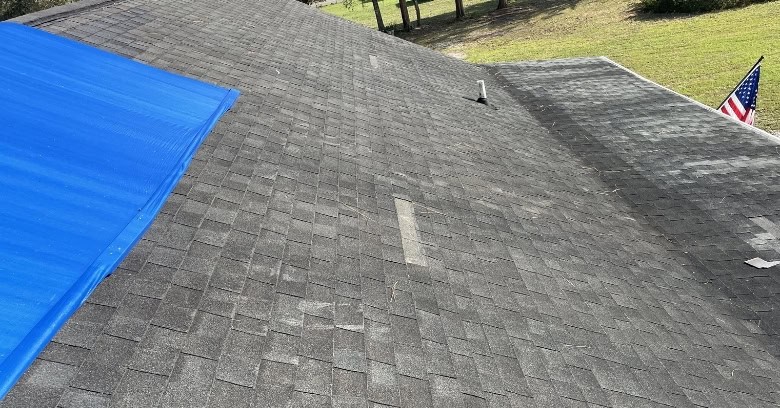
Sometimes a temporary cover is needed to protect the house until the permanent repair can be done. If that’s part of the plan, ask that the temporary work be written up separately from the permanent repair. Insurance policies often treat the two differently, and one blended invoice makes both harder to sort out.
Then you get a written estimate for the permanent fix, whether that’s a roof leak repair or something bigger.
After a big storm, a lot of homes need help at once. Call as soon as you safely can and describe what you see from the ground. That helps us understand how urgent your situation is.
Storms we see in our markets
In Central Florida and around Daytona Beach, the usual causes are hurricane and tropical-storm wind, heavy summer downpours and fallen limbs. Wind lifts shingles and tiles at the edges first, and once a shingle’s seal breaks, the next gust finds the same spot.
In the Kansas City metro and Springfield, hail and severe thunderstorms lead the list, with ice and heavy winter weather adding to it. Hail damage isn’t always visible from the ground, and a roof can look fine while the shingles have been bruised. Our storm damage page explains what to look for after each kind of storm.
If you’re filing an insurance claim
You file your own claim with your insurance company, and you pay your own deductible. We inspect and document the damage, provide a written estimate and work with your adjuster so the damage on your roof is clearly accounted for. Be wary of anyone who offers to waive or cover your deductible, or who pressures you to sign on the spot after a storm. Our insurance roof claims page explains the process.
How it works with APC Roofing
- Call once you’re safe. Call 866-995-0704 or request a free online estimate, and tell us what you’re seeing.
- Get a clear, honest assessment and estimate. We inspect the roof and attic, document the damage with photos and give you a written estimate for the repair.
- Get your roof fixed and the site cleaned up. The crew makes the permanent repair and leaves your property clean.
If the damage is bigger than expected, financing is available through Aqua Finance, Fortifi, Hearth and Home Run Finance.
Emergency roofing questions
Should I get on the roof to check the damage?
No. Wet or damaged decking can give way, and wind or debris can still be a hazard. Look from the ground and take photos from there.
Is my roof leak an emergency?
If water is coming in steadily, a ceiling is sagging or the leak is near wiring, treat it as urgent. A small, slow drip still needs attention soon, because water spreads in the attic before it shows on the ceiling.
Should I call my insurance company or a roofer first?
Get everyone safe first, then document the damage. You can call your insurer to start a claim and call us for an inspection at the same time. The inspection and estimate are free.
What if a tree fell on my roof?
Stay out of the rooms under it and keep away from any downed lines. Call your utility if lines are involved, and have the tree removed by a tree service before roof repairs begin.
Get from damage to a dry home
A damaged roof feels overwhelming in the moment. With the right first steps and a clear plan, it gets fixed, and life goes back to normal.
Once you’re safe, call 866-995-0704 or start your estimate online. You’ll get an honest look at the damage and a roof that keeps your family dry again.