Looking for Storm Damage Roofing Near Republic Missouri?
APC Roofing walks a slope after a hard night outdoors, reading the flashings and the vents along the way.
Phone 913-398-5020 and set a time for a roofer to stop by.
A Roof Shaped by Moving Air – an Uneven Push
Along the eaves, the rakes and the ridge the force runs highest, while an open middle section stays comparatively calm. Blowing air reaching under a curled tab pushes on the course set above the tab, and one fastener beneath a course answers for the whole pull from there on.
A building corner carries the turbulence a roofline creates, and hardware spacing shrinks at that point on a well-built roof. A row of shingles at that outside edge carries more push than a row set farther out, so extra fasteners there exist for exactly that reason.
A Roof's Quiet Final Step: Left to the Weather
Every shingle carries a strip of sealant that fastens down to the course beneath, and a firm hold forms there, doing much of the work, not nails alone. A strong blast can snap a bond without moving the shingle, and the shingle shows no gap at all.
Nothing announces a broken seal until the wind comes back, and water reaches wood that had remained dry before that joint failed. Left alone, a single unsealed shingle is a minor thing, but a long band of parted shingles turns into a way in.
The Rating on a Bundle: an Assumption Worth Checking
Technicians secure factory-fresh material to a sample and close every seal, and a known airspeed is pushed across the surface. Years of sun and cold change how a shingle performs compared with the shingle's very first months in place, which is why that rating fits day one and nothing after.
Fastening outside the marked zone leaves a shingle with a weaker hold, which puts the actual limit under a label's stated figure. A weathered mat behaves differently from the sample once tested at a factory, and a laboratory rating fits new construction, never an older roof.
Ice From the Sky: More Than a Dimple
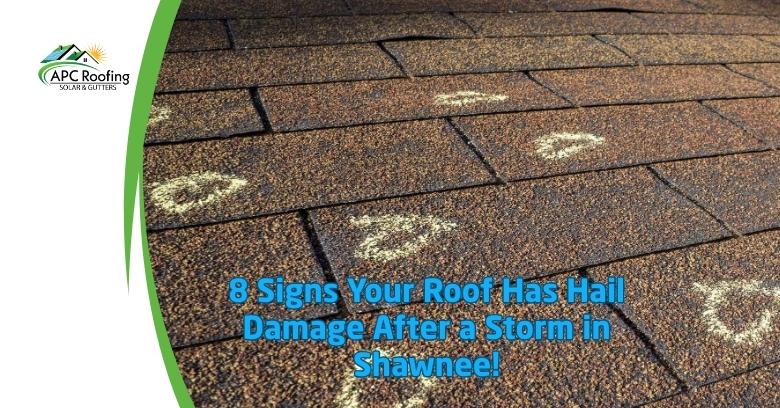
At the colder end of our territory, stones fall heavier than anywhere else we cover, while milder weather reaches every other market too. A hit presses the mineral coat into the mat sitting beneath, and the struck area no longer feels as firm as the surrounding shingle.
A saturated inner core actually keeps rain out of a roof, and a dent at that depth reaches the material that matters most. A struck shingle weathers faster than a sound shingle nearby, which shortens the years a covering has left.
What Else Takes a Beating: Where a Blow Registers
Impact a shingle survives leaves a mark on a metal cap, because bent material never straightens back out without help. A cracked collar no longer grips a pipe a collar once surrounded, and a wet patch shows near an interior wall soon after. Marks on a gutter's surface rarely stop a gutter from working, but a flattened downspout holds a run's water behind a flattened point.
A marred cap, a marked fascia and a pockmarked drip edge all get read together, so nothing made of trim is left out of a written record. Trouble in the metal fixtures seldom arrives without a shingle nearby in equally poor shape, and the damage on that hardware is a reasonable clue to how the shingles have held up.
A Story in the Grit: Where the Sand Came From
Colored granules bedded into a shingle block sunlight from reaching the asphalt below, and a sheet with nothing left on top goes brittle fast. A hard rain washes displaced grains all the way to a gutter, and a handful scooped from that spot says plenty about the roof.
A shingle stripped of a protective coat starts to curl at the edges, so a minor fault becomes a reason for replacement later on. A heap at an outlet is a rough measure of what washed down, so a look at that spot after a storm is worth the effort.
Water Pushed Uphill by Wind: a Different Kind of Path
A lapped run of shingles handles whatever comes from directly above, and a lateral shove from a strong gust upsets that assumption completely. A turbine housing passes rain through once wind reaches a certain speed, and dampness pulled in that way lands on the insulation nearby.
A Heavy Bough on a Roof: Worth Opening Up
Momentum arriving fast concentrates weight in one tight spot, and the framing takes the full brunt of that force. A panel underneath can crack though the outer layer looks untouched, and the underside tells a roofer what a glance from above cannot.
Debris dragged by wind leaves a scraped trail across the roof, and the mark is lighter than the surrounding material. Getting to a split panel calls for removing the covering above the crack first, so the finished work covers more area than the scar first suggested.
Reading the Underside of a Deck: Seen From Below
A gleam between the boards signals a gap somewhere in the covering, so a person can pin down the location before ever climbing outside. Damp sheathing stains in a pattern that follows the path water traveled, and the darkest mark generally sits closest to the actual opening.
Insulation flattened in one place shows where runoff has settled again and again, so that stretch is worth replacing even as the top layer still looks intact. A gable vent can let driven rain reach framing well away from any break in the covering, and knowing that is worth confirming before anyone opens the slope.
Evidence Inside the House – the End of a Long Path
A discolored area forms where a drop of rain finally let go, since water can travel the framing for feet before letting go there. A seam that has opened shows the panel swelled and then dried out, so a broad patch can trace back to nothing bigger than a pinhole.
A drip at a fan or a light is reason to cut the breaker without delay, so nothing indoors gets touched until the switch is confirmed off. Dampness at the top of a wall adjacent to a chimney can run down inside the chase, and the reglet sawn into the brick is examined as part of the same check.
The Metal Details on a Roof – What Pulls Free
Every wall unit up there is fastened and lapped at the same time, so pressure acting under a slack seam undoes both requirements at once. A blast under the drip edge at a gable can fold the flange upward, so the section above starts to go the same way once that piece lets go.
Ridge-cap fasteners bite directly into the deck beneath the caps, so a flaw at the crown means the seam stays unsealed for the full distance. A section that lifts leaves an unbroken slot running the same length, and the mess found below often spreads well past the point of entry.
What Lets Daylight In – What a Storm Finds
A built-up curb keeps the glazing above the level of the covering, because water must never arrive at that base head-on. A heavy jolt can ruin the upper pane without touching the seal below, and nothing laminated gets mended in place.
A dome hit by a falling branch can crack as force travels through the material, and a fracture from one storm can keep growing after that storm passes. Cloudiness inside the glass is a broken seal, not everyday dirt, and that fixture gets swapped rather than dried out.
Swamped Within Seconds – Watching for the Backup
A cloudburst can push more water at a trough than that trough can hold, and a curtain of water falls off the edge in front of the house. Anything gathering on the roof can pile up at the single opening meant to move debris onward, and dampness trapped that way can seep in wherever the metal meets the trim.
What Bridges the Gap – Anchored, Not Weighted
A tarp over an opening can hold the line for a few days at most, and sunlight degrades that kind of covering within a matter of weeks. A covering run over the ridge and down both slopes moves water downhill as designed, so a support strip backed by lumber spreads the load across a wider stretch.
Loose weight on top rarely secures a sheet once the gusts pick up, and a house can end up exposed again for anyone to see. Every penetration made in haste becomes one more spot to seal properly, and nothing gets fastened through material that was already solid.
Noting the Details Early: What a Roofer Writes Down
The state of the house gets captured on camera while conditions are still current, and nothing gets tidied up or moved before that record is made. Comments in everyday language accompany a description of each spot, and a note like that needs no further context to be useful.
A broken covering rarely stays exactly as the first storm left the surface, and marks seen now may look different again next week. Anyone reviewing the file sees the same pictures and notes a homeowner already has, and that plain account is the whole of a roofer's part in the process.
A Line of Unmarked Rigs: Worth a Second Thought
Canvassing teams can appear on a block within a week of a bad night, and a share of that traffic does solid, honest work. Paperwork handed over on a driveway still counts as a real contract, and reading every line before agreeing is always worth the extra minute.
A contractor whose office sits nearby stays reachable long after the work is done, and a repair that fails down the road still has someone accountable on record. Urgency coming from a salesperson rather than the condition of a roof deserves suspicion, and a damaged roof rarely changes meaningfully overnight.
What a Repeat Visit Brings: Back Again
Material weakened by an earlier storm reacts sooner to the next one, and less force is required with each fresh round of damage. Where a course folded over once, the mat carries a break along that fold, which no amount of resealing along the edge actually cures.
Once framing has taken on water before, a fresh leak follows the same open path, so work that started on a roof can spread into the rooms below. Cycles of swelling and drying can open the layers inside a panel, which turns what should be a simple job into a larger, structural one.
Signs Worth a Call to a Roofer: Inside and Out
- Shingles out of line on a single plane, on any elevation of a house.
- Soft metal marked where a stone or a branch made contact, on the faces that took the worst of a storm.
- A heap of mineral grains under a spout, in amounts that keep returning.
- A visible gap in a deck seen from inside, near a vent or a stack.
- A wet patch upstairs that returns again and again, however small a mark looks at first.
- A soft spot in the wallboard near a corner, with no plumbing anywhere close by.
- Glass in a skylight chipped or broken, whether or not the covering nearby is torn.
- A length of gutter holding trapped water, visible from the yard below.
How APC Roofing Takes On Storm Damage Roofing in Republic Missouri: From the Call to the Finish
A visit opens at ground level, crossing the yard and the driveway for anything that came down, and scattered wreckage gets a record made before any cleanup starts. Every roof plane gets covered wherever the pitch allows safe footing, and the attic gets checked from inside for anything missed from below.
The pictures and dimensions go into a plain account kept on file, and anything uncertain gets marked as uncertain rather than guessed at. A recommendation comes with the reasoning laid out step by step, and the decision on what happens next stays with the homeowner.
Storm Damage Roofing for Homes in Republic Missouri: a Careful Look at What Happened
Phone 913-398-5020 and describe what is showing up indoors.
Snow Banked on a Slope – Ready for Tougher Conditions
Out at the colder end of our territory, a large fall remains on the rafters well after the weather has moved on, which strains the wood beneath more than fresh powder would. A frozen lip at the overhang can hold melt above that point, and a ceiling near the outside wall can stain as a result.
Up at the colder end of our territory, a lower roof beside a taller section collects drifting snow, and one section can carry many times what the rest of the roof holds. A sheet coming free from a metal surface can drop without warning, which can leave dents wherever a large piece comes down.
A Harder Environment Near the Shoreline: Hardware That Fails First
At the coastal end of our territory, a large system can take a full day to move through, while rain rides sideways for much of that span of time. A drawn-out shove can flex every shingle tab thousands of times over a day, and failures can multiply the more that sort of weather lingers.
Rain driven sideways can get behind siding as well as under shingles during a hard storm, which is why the whole house gets checked after a storm like that, not just the roof. Along the coast, roofs typically go on with extra fastening at rakes and eaves, and repair work there follows that same stricter approach.
A Patch on an Established Surface – How Close a Repair Can Get
Granules fade with age, so freshly made stock looks noticeably brighter, and the surrounding roof ends up setting the visual standard. Replacement shingles near a driveway can catch the eye of anyone passing, while work on the back of a house draws far less attention.
When a specific line has been dropped, a similar design takes over that spot, and a close substitute still shows a little on close inspection. A slope covered in individual patches tends to read as pieced-together rather than one continuous surface, and redoing the whole side is a suggestion worth considering, not a requirement.
What a Homeowner Should See Afterward – the Details That Hold Up
A mended section sits down without any visible ridges, and the exposure lines up with the older courses nearby. Flashing goes under and over the layers as the design intends, so sealant only backs up the main barrier, not the whole defense.
No fastener shows on the visible face of a completed area, and the count per shingle matches the maker's specification. A snapshot taken soon after a repair is worth saving for the future, because change is easiest to see beside a known baseline.
If Storm Damage Roofing is what brought you here after rough weather in Republic Missouri, get in touch with APC Roofing at 913-398-5020 to arrange for a roofer to come out. What is up there gets inspected, measured and photographed in full, and the next step gets described without any pressure attached.
Verified

Verified
Verified
Verified