Searching for Metal Roofing Within Republic Missouri?
APC Roofing lays new panels and brings worn coverings back into shape, on houses, garages, porches and outbuildings.
Call 913-398-5020 and a roofer will come out and describe what the metal shows.
Identifying a System: Visible Clues
Ribbed and corrugated panels take screws through a flat or a crest, while standing seam is attached with clips tucked inside raised joints. Coated steel is what the great majority of metal-roofed homes carry, though aluminum and copper have a place too.
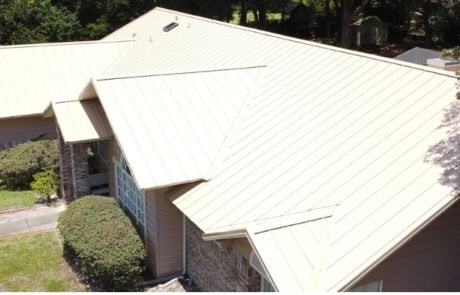
A glance from a lawn at lines of screw heads points to a through-fastened roof, and uninterrupted pans separated by raised folds mean standing seam. Barns, workshops and porches often wear corrugated or ribbed sheet, and dwellings use both.
Profile Options: Matching a Building
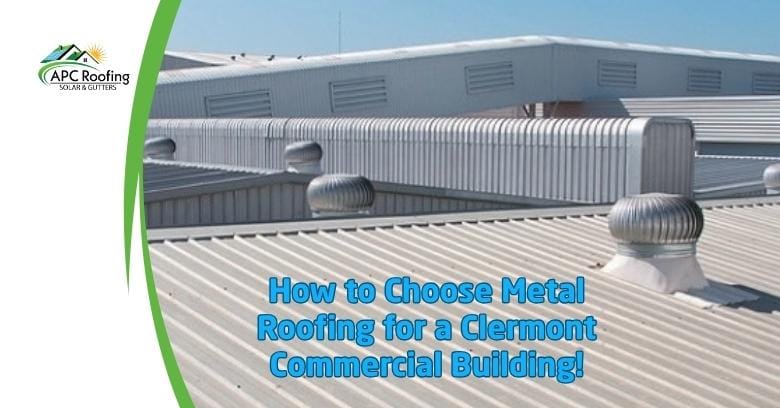
Corrugated sheet rises and falls in rounded, evenly spaced waves, and a ribbed panel has trapezoid ribs separated by broad pans. Each sheet laps over a neighbor along a long edge, and fastener placement follows a published pattern.
Ribs make a stiffer panel that crosses longer spans, and a rounded wave appeals on older or rustic structures. Taller ribs give runoff more room on a long slope, and a lean-to or porch manages fine with a gentle pattern.
Fasteners in the Open: Every Detail Counts
Each screw clamps a panel down onto wood or steel framing, while a washer at each head keeps rain from following a shank. Synthetic rubber ages in the sun, going hard and then cracking, though the coated metal nearby stays sound far longer.
A screw set too tight crushes a washer out sideways, and a fastener stopped short or angled leaves a gap for rain.
Fresh Fasteners – Where Help Stops
Every washer across a ribbed or corrugated field weathers at the same rate, and a whole-roof re-screw is routine over the years. Every existing fastener is removed, and a wider replacement goes back in where threads can still find purchase.
Re-fastening stops water at every head and holds down sheets that lift, though perforations, split laps and faulty trim remain as before. New screws are matched to whatever framing lies beneath, with wood threads for lumber and drill points for steel, and tops painted in a panel color keep new work from standing out.
Thermal Movement: Oval Holes and Loose Seals
A steel sheet grows in afternoon heat and shrinks back by dawn, and a long run adds up to a measurable distance, and aluminum reaches about double. A panel pinned at both ends slowly slots every screw opening, and a washer stops sealing.
Snapping sounds at sunrise come from panels shifting against clips, and a careful installation suffers no damage.
Holding Down a Seamed Covering: Out of the Weather
One short stretch of every long pan is pinned tight, while floating clips elsewhere allow the pan to slide. At an unanchored end, trim is bent with clearance, and rigid fastening over a big pan shears or wrinkles the metal.
Each pan is set in place, and clips are driven through into the deck along one side, so no fastener head is left out in the weather.
How Seams Close: Which Suits the House
Snap-together panels latch by hand, and mechanical versions are turned over with a powered seamer. A double-lock seam holds far better against strong gusts and standing water, and approvals extend to flatter roofs.
Every product line has distinct spacing and rib size, and a home's design and a buyer's taste guide selection. Accessories such as clips and closures fit a single system, so a repair calls for knowing exactly which panel is up there.
Light or Heavy: Reading a Label
A steel panel is rated by gauge, and a lower figure means more metal per sheet. A shop or barn frequently has twenty-nine, while houses often take twenty-six or twenty-four.
For aluminum, sheet is sized in thousandths, and more material means fewer marks and less waviness. Different grades look identical once installed, so a label on a bundle shows what was delivered.
Rust Resistance: What Lasts
Raw steel is galvanized, or given an aluminum-zinc treatment, before shipping, and a primer and a colored enamel are baked over the metal. Scrapes confined to paint are harmless, but a cut that reaches base steel is where corrosion takes hold.
PVDF finishes hold color for decades, and polyester families fade and chalk more quickly. Lime in fresh concrete eats into an aluminum-zinc layer, and a barrier belongs wherever panels meet new stonework.
Which Metal Suits: Salt Air
An aluminum panel is light and immune to red rust, but a dropped tool or a falling branch dents a soft sheet sooner. Salt air at the coastal end of our territory attacks zinc-based layers, so a marine-rated system often goes up near a beach.
Copper is usually kept to small accent roofs over a bay or a porch, and the metal weathers to a natural patina with no paint.
Mixing Metals: A Slow Chemical Fight
Runoff from copper eats through coated steel downhill, and a dark streak shows long before any hole. Aluminum on pressure-treated boards turns white and pits, and an ordinary screw of an unsuited alloy fails as well.
A new piece of flashing belongs in a metal that matches existing work, or a strip of membrane goes between dissimilar metals.
A Matter of Taste – Why Installation Counts
In trade terms, oil canning describes soft ripples across a broad flat between seams, and low sun at dawn or dusk shows up every hollow. An irregular-looking finish keeps weather out just as well, and nothing shortens the life of the roof.
Narrow pans, heavier stock and striated flats hold waves back, and careful handling on a true deck makes a difference. Photos of finished roofs give a fair idea of how much oil canning shows, and you make the call on profile.
Comfort Below: What Reaches Living Space
A racket many recall comes from sheet over open framing, because nothing there soaks up impact. Residential metal goes over plywood and underlayment, with insulation above each ceiling, and occupants notice only a slight change from shingles.
Cool-pigment coatings return the bulk of the sunshine, so the attic runs noticeably cooler. A deep hue absorbs heat like any dark surface, and without venting and insulation, color alone does little. Thin steel cools off right after dusk, and the attic eases off soon afterward.
Holding a Load Up There – Clamped or Fastened
At the colder end of our territory, snow slides readily off smooth coated steel, and an avalanche off an eave can flatten shrubs, gutters or anyone underneath. Retention bars keep a load up top to melt off gradually, with placement over doorways, decks and equipment.
For standing seam, bolted clamps grip each upright joint, whereas on corrugated sheet, mounts go into solid wood with gasketed fasteners, and at the warm end of our range snow gear is unnecessary.
Pounding From the Sky: What a Hit Can Open
Hail is common across the colder end of our territory, and heavier grades with stiffening ribs shrug off more stones. A strike sharp enough to break a finish lets rust start, and a flattened rib or a shifted cap can leak.
Once a storm has passed, a roofer photographs and measures every mark, and the depth of each dent is gauged.
Staying Put in a Blow – A Denser Pattern
Perimeter bands of a roof take a heavier pull than a central field, and an unfastened edge lets pressure build beneath. Each finishing piece is folded back and locked over a full-length cleat, so a storm finds nothing to pry at.
An attachment pattern grows denser toward every corner, per manufacturer guidance for local conditions. At the coastal end of our territory, hurricane country asks for more holding power still, and panel and hardware are rated as one assembly.
Penetrations – Careful Detailing
Each pipe takes a boot made for panel roofs, with a base pressed to follow corrugations, and a hole is cut in a flat, not through a seam. A skylight, chimney or larger unit sits on a raised curb with a cricket uphill, so runoff is steered aside.
Sealant finishes a joint already made watertight by folded metal, because a compound shrinks and pulls away with time.
Where Slopes Meet: Made to Shed
A valley pan goes down ahead of any panel, and each sheet is cut to a matching angle. Raw ends are folded under and locked to a cleat, so no fastener sits where water collects.
Where a long run needs more than one length, a lap is sealed between layers, and fasteners through both thicknesses keep water from backing up.
Near-Flat Areas: Where Locked Seams Help
Screw-down panels typically call for roughly three in twelve, and at anything less, rain creeps sideways across laps toward screws. A mechanically locked seam can be installed far lower, with certain lines suited to decks that are nearly flat.
Many homes have a gentle stretch over a porch or a later addition, and a measurement comes before any panel is named, and below every panel limit, a membrane goes on.
What Lies Underneath – Purlins on Outbuildings
Residential panels are laid on a solid deck, and a synthetic barrier made for high heat sits on top, because traditional felt degrades quickly up there. An outbuilding may have nothing but purlins under the metal, and support distance dictates grade.
Once an old covering comes off, spongy sheathing is found and swapped, since a clip in decayed wood holds nothing.
When the Old Roof Stays: Condition Decides
Where code allows, metal can be installed over one layer of shingles, so the house is spared a tear-off and debris. Steel panels weigh well under two pounds per square foot, so reinforcement is rarely needed. A synthetic underlayment and rows of battens come next, and clips or screws go down into solid structure.
Where a roof was already recovered once, or the decking is soft, everything comes off, since dampness sealed beneath panels goes on rotting structural lumber.
Completing the Job – Fillers and Trim
Closure strips shaped to a panel profile plug hollows under every rib where a run starts and stops, so wind-blown rain and nesting animals stay out. A ridge cover can include a vent or be solid, according to how an attic sheds heat and moisture.
Rake trim, drip edge and an apron into a gutter close off a roof's outline, and water falls clear of fascia instead of running behind.
Day of Installation: Slick When Wet
Standing seam is produced to fit each run from bottom to top, so no crosswise joint sits in the path of runoff. A long panel needs several people to steady the metal on the way up, and a damaged pan is replaced, not flattened out.
Feet go in a flat where something solid lies below, since pressure on a rib bends the metal out of shape. Morning dew alone can make metal treacherous, so owners do better keeping off the roof.
What to Watch For – A Look From Below
- Orange halos at fasteners, just above a gutter line.
- Screws backed out of holes, by a peak.
- A rake edge torn free, following a gusty night.
- A boot pulled away from a pipe, beside a chimney.
- Corrosion along a cut, along a rake.
- Uneven fading, across one face of the house.
- Spots on a ceiling in a row, under a porch roof.
- A lap that has separated, beside a hip.
How APC Roofing Tackles Metal Roofing in Republic Missouri: Order of Work
We begin by figuring out which system is up there and how the panels are anchored, followed by every screw or clip, edge, boot, valley and lap. Panel grade, paint and hardware are recorded, and the attic is searched for stains and soft decking.
What we find goes into a report with photographs, and every item comes with the why. A sound covering is called sound, and a finished roof is described without softening.
Metal Roofing Across Republic Missouri: A Careful Look
Phone 913-398-5020 and a visit gets put on the calendar.
Deciding on Scope: Piece by Piece
A panel torn by a falling limb can be changed individually, though new metal looks brighter than weathered neighbors. A properly resealed lap closes a drip, and new screws restore a roof full of aged seals.
Perforation across many panels means replacement, and a covering riddled with failed seams is no better off. Somewhere in between, a single worn plane of the roof can be redone, when harm is local.
The Long View: What Cuts Life Short
Good metal work frequently reaches forty years, and every estimate is approximate. A seamed pan roof has fewer parts that age, whereas screw-down sheet has washers changed out at some point.
Mixed metals, raw cut edges and caulk doing the job of flashing all shorten a roof's service, and a visit now and then spots trouble early. Wet leaves left sitting on panels stain and dull a colored finish, so getting debris off the panels is worth the effort.
When you are weighing Metal Roofing in Republic Missouri, reach APC Roofing at 913-398-5020. Someone will climb up and read how the panels are attached, along with every edge and opening, and a write-up leaves every decision in your hands.
Verified

Verified
Verified
Verified