Thinking About Steel Roofing in Ozarks Region Missouri?
APC Roofing builds and maintains coverings made of coated sheet and aluminum, whether for a shop, a porch or a whole house.
Call 913-398-5020 and a roofer will look closely and explain plainly what is up there.
Sorting Out Types – Surface Clues
A corrugated or ribbed covering is secured with screws set through the metal, while standing seam is attached with clips tucked inside raised joints. Coated steel is what the great majority of metal-roofed homes carry, while aluminum and copper account for a minority.
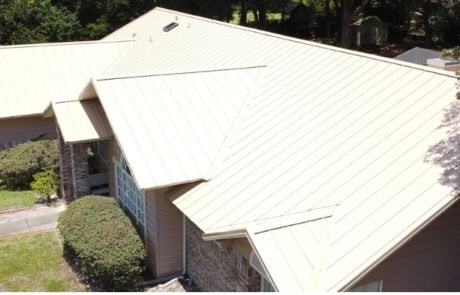
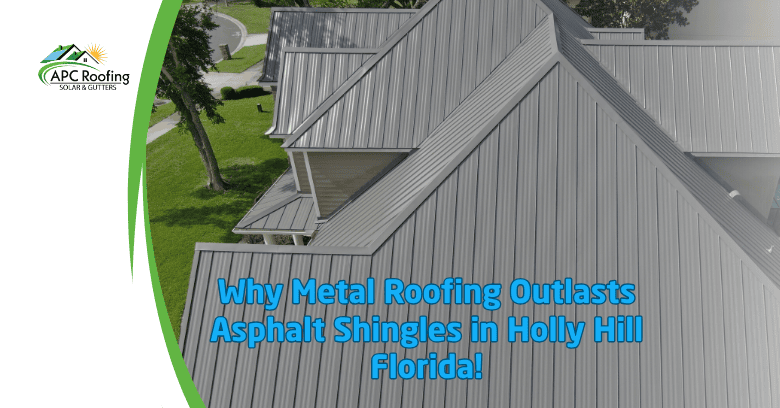
A glance from a lawn at lines of screw heads points to a through-fastened roof, and smooth pans between tall ribs with nothing poking through are standing seam. Corrugated sheet is a regular choice on barns, shops and porches, though a house can suit either.
The Cross-Section: Which Suits a Building
Corrugated sheet ripples in smooth, repeating curves, while ribbed designs show angular ribs and wide flats. Each sheet laps over a neighbor along a long edge, and every screw lands where a maker's layout calls for.
A squared profile resists bending and reaches further between purlins, and corrugated suits older buildings and a farmhouse look. Rib height governs how much water a long slope can move, while a low pattern handles short runs like a porch or lean-to.
Hardware in the Weather: Aging in Sunlight
Each screw draws a panel snug against a rafter or purlin, and a sealing washer beneath each head closes a drilled hole. Sun and temperature swings dry out neoprene over time, though the coated metal nearby stays sound far longer.
Driving a screw past snug crushes a washer and dimples the metal, and a shallow or off-square setting never seals fully.
Swapping Out Hardware: Worth Doing, With Limits
Every washer across a ribbed or corrugated field weathers at the same rate, so eventually a full new set of seals is needed. Every existing fastener is removed, and an oversized screw returns to every hole to catch undamaged fibers or metal.
A full re-screw with new washers closes leaks at each head and tightens loose sheets, but red rust, gaping laps and cracked flashing need other remedies. New screws are matched to whatever framing lies beneath, with wood threads for lumber and drill points for steel, and color-matched tops blend in with a painted finish.
Growth and Shrinkage: Why Slack Matters
Steel swells with heat and draws back as temperatures fall, and a long run can gain a quarter inch between noon and midnight, while aluminum goes about double. Metal screwed down with no give wears each hole into an oval, and washers then stop sealing.
Snapping sounds at sunrise come from panels shifting against clips, and a properly detailed roof suffers no harm.
Holding Down a Seamed Covering: Hidden Hardware
A long pan is locked down at a single band, and floating clips everywhere else let the pan glide. A finishing piece at an opposite end has room built in underneath, and rigid fastening over a big pan shears or wrinkles the metal.
Clips are screwed to the deck along one edge of every pan as work proceeds, so nothing that holds the roof down is left exposed.
How Seams Close – Suited to Pitch
A basic profile engages with a firm push along a full length, and heavier-duty versions are folded over by a motorized tool. A double-lock seam rides out storms and sheds pooled water, and published ratings run down to lower slopes.
Every product line has distinct spacing and rib size, and building shape and personal taste steer a buyer. Parts made for one system rarely suit a rival brand, so parts are not mixed between makers.
Heavier and Lighter Stock: Barn or Residence
Steel is described by gauge rather than inches, and a low figure signals thick metal. Farm structures often use twenty-nine, and homes typically get twenty-six or twenty-four.
Aluminum is called out in decimal inches, and more material means fewer marks and less waviness. A view from below reveals nothing about grade, so printed product data gives a firm answer.
Protection Built In: When Damage Matters
Steel for roofing is hot-dipped in zinc or an aluminum-zinc blend, and a baked primer goes on before a color coat. Scrapes confined to paint are harmless, but an unprotected cut or a gouge to bare steel is where red rust starts.
A PVDF finish stands up to sunlight for a long time, while polyester grades dull faster in strong sun. Wet masonry corrodes aluminum-zinc coated sheet, so metal and new brick are kept apart.
Weighing Options: Near the Water
Aluminum carries less weight and does not redden, but a soft sheet dents from smaller blows. Along the coastal end of our service area, salt in the air shortens the life of zinc-based coatings, so a marine-grade finish is often chosen for homes near a beach.
A copper accent over a bay window is a familiar touch, and with nothing applied, color shifts over the years.
Chemistry on a Rooftop – Matching or Separating
Rain rinsing off a copper detail wears through coated steel downhill, and staining shows up well ahead of pinholes. Pressure-treated framing corrodes aluminum laid directly on top, and a bare steel screw in soft sheet breaks down too.
Flashing added later should match whatever metal is already installed, or tape and membrane keep dissimilar metals from meeting.
Looks, Not Leaks: What Can Be Done
What the trade calls oil canning is a mild wave in a flat pan, and a sun low in the sky exaggerates every contour. A warped look in the metal lets no rain through, and nothing shortens the life of the roof.
Stiffening ribs, a stouter grade and a smaller pan width lessen waves, and careful handling on a true deck makes a difference. Photos of finished roofs give a fair idea of how much oil canning shows, and you make the call on profile.
Inside the House – Sound and Temperature
Panels laid straight over bare purlins ring out in a downpour, because a single thin skin vibrates freely. On a house, a solid deck, underlayment and ceiling insulation sit below the panels, and indoors, few people notice more noise than under asphalt.
A light-colored panel sheds much of the sun's warmth, and the attic beneath stays cooler on a summer afternoon. Deep shades absorb as much as dark asphalt, and airflow and insulation lower down count just as much. Within an hour of sundown, a metal covering is cool, so evenings indoors feel better sooner.
Protecting Whoever Is Below – Only Where Needed
Across the colder end of our territory, snow does not cling to painted steel, and a whole mass may come down at once on anything under an eave. Retention bars keep a load up top to melt off gradually, with placement over doorways, decks and equipment.
For standing seam, bolted clamps grip each upright joint, whereas corrugated panels get mounts anchored through to purlins, and in our warmer markets a house goes without.
Pounding From the Sky – Photographs and Measurements
At the colder end of our territory, hail is a regular event, and panels with an impact rating are an option. Where a blow splits paint, bare metal can corrode, while a buckled seam can part enough to admit water.
After any storm, each affected area is photographed and measured, and the depth of each dent is gauged.
Uplift: Built to a Pattern
Wind load concentrates at corners, rakes and eaves, and a blast under a raised lip can tear a panel away. Trim along every outer line is hemmed and hooked onto a continuous cleat, and no gap is left to work into.
Spacing shrinks where loads climb, at corners and a rim, as manufacturer tables call for at each site. Where hurricanes reach, at the coastal end of our territory, the number of fasteners goes up again, and products are chosen with a wind rating to match.
Where Something Pokes Through – Flashing Done Right
A flexible boot is formed around every rib and banded tight to a pipe, and a flat location lets a flange bed down evenly. A bigger penetration is framed with a curb and a small cricket upslope, so runoff is steered aside.
Caulk plays a supporting role to folded metal, as ultraviolet light turns soft compounds brittle in a few seasons.
Inside Corners: Hooked and Clear
Each valley gets a separate pan in advance of the panels, and panels are trimmed on a diagonal to match. Raw ends are folded under and locked to a cleat, so no fastener sits where water collects.
A sealed endlap connects consecutive lengths on an extended run, and fasteners pass through both thicknesses, with uphill metal on top.
Additions and Wings – When a Membrane Wins
Corrugated and ribbed sheet usually needs around three inches of rise in every foot, and at anything less, rain creeps sideways across laps toward screws. A mechanically locked seam can be installed far lower, and a few products go almost to flat.
Many homes have a gentle stretch over a porch or a later addition, and we measure pitch on site, and below every panel limit, a membrane goes on.
A Base Layer – Out of Sight Once Done
On a house, the panels go over solid sheathing, and a synthetic barrier made for high heat sits on top, because traditional felt degrades quickly up there. Sheds and barns often fasten directly to purlins, and support distance dictates grade.
Once an old covering comes off, spongy sheathing is found and swapped, because screws in decay have nothing to grip.
A Recover Instead of a Strip – Grounds for Refusal
Panels can often go on top of one shingle layer where code permits, and the mess and hauling of removal are avoided. New steel adds well under two pounds per square foot, and typical framing carries a little extra easily. Battens on top of a synthetic membrane are laid across existing shingles, and every fastener is sized to reach solid wood.
Where a roof was already recovered once, or the decking is soft, everything comes off, since dampness sealed beneath panels goes on rotting structural lumber.
Small Parts at Edges: Vented or Solid
Strips cut to match a profile close off space under each rib at high and low points, so wind-blown rain and nesting animals stay out. A ridge cap may be vented or sealed, and attic airflow needs are what decide.
Trim at every rake plus a drip edge over a gutter finish a roof's border, and water falls clear of fascia instead of running behind.
Care on Site: Handling and Footing
A seamed panel comes off a forming machine cut to the length of a run, so no crosswise joint sits in the path of runoff. Big panels need a team so nothing buckles in transit, and a kinked pan is not usable.
Each step should land in a flat with support right underneath, as a seam under a boot can bend open. Morning dew alone can make metal treacherous, and nobody without a harness should go up.
Signs Worth a Call – A Look From Below
- Orange halos at fasteners, on a slope facing afternoon sun.
- Screws no longer tight against metal, at an eave.
- Edge metal curled back, following a gusty night.
- A pipe collar tipped to one side, over a kitchen.
- Rust creeping from a trimmed end, next to a skylight.
- Faded paint, where afternoon light hits.
- A drip that follows a row of screws, under a porch roof.
- A gap along a rib, at the low end of a panel.
How APC Roofing Approaches Steel Roofing in Ozarks Region Missouri – Step by Step
Our starting point is pinning down which system is up there and how the panels are secured, before each fastener, edge, boot, valley and lap is read in sequence. Thickness, coating and hardware style go into notes, and the attic is searched for stains and soft decking.
Every finding goes into a report with images, and each recommendation carries reasons. When a small fix works, nobody pushes a bigger job, while a worn-out roof is named as such.
Steel Roofing for Property Owners in Ozarks Region Missouri: Plain Findings
Reach us at 913-398-5020 and a visit gets put on the calendar.
Saving What Is There: Piece by Piece
A lone bad pan can be taken out and exchanged, though new metal looks brighter than weathered neighbors. Resealing a lap or replacing a boot stops a local leak, while new fasteners seal screw holes again.
Rust through sheet after sheet calls for a new covering, and a covering the wind has twisted out of shape is in the same position. A partial job on just one side is sometimes a sensible middle course, if everything else is sound.
Aging Gracefully – Upkeep Matters
Coated steel put on properly often gives forty years or better, but estimates of service are a rough guide only. A seamed pan roof has fewer parts that age, whereas screw-down sheet has washers changed out at some point.
Dissimilar metals, raw edges and sealant used instead of proper flashing wear out a covering ahead of schedule, and a visit now and then spots trouble early. Leaves and needles piled in a valley or behind a chimney keep the metal wet, and brushing debris off protects paint.
For a roofer's view on Steel Roofing in Ozarks Region Missouri, dial APC Roofing at 913-398-5020. Someone will climb up and read how the panels are attached, along with every edge and opening, and a write-up leaves every decision in your hands.