Considering Corrugated Metal Roofing Within Ozarks Region Missouri?
APC Roofing installs panel coverings and mends worn sheet, on houses, garages, porches and outbuildings.
Phone 913-398-5020 and you will hear in plain words what condition the roof is in.
Identifying a System: Hints in Plain Sight
Ribbed and corrugated panels take screws through a flat or a crest, but standing seam is anchored by clips concealed beneath upright folds. Nearly every residential job uses coated steel, and aluminum or copper appears now and then.
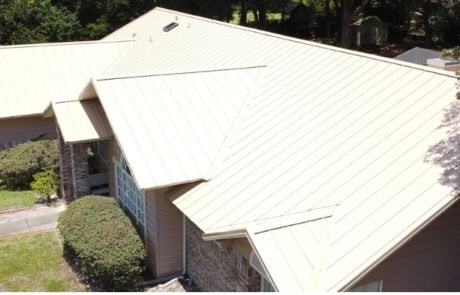
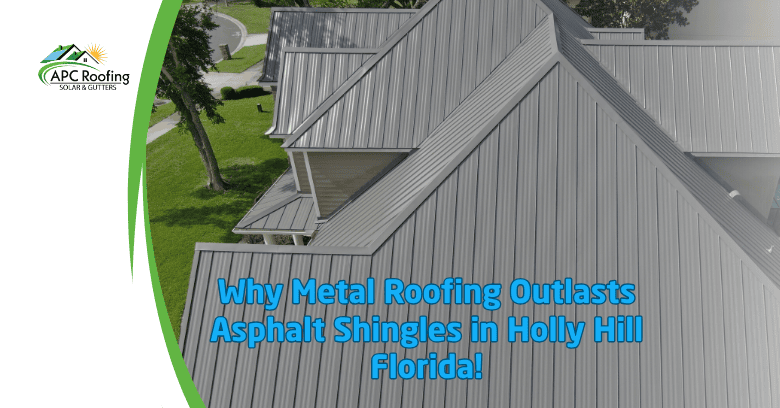
Rows of fastener heads, visible from the street, give away a screw-down roof, and clean flats between raised joints, bare of hardware, belong to standing seam. Corrugated sheet is a regular choice on barns, shops and porches, and houses carry both styles.
Profile Options: Matching a Building
Corrugated material makes a run of soft, even undulations, and a ribbed panel has trapezoid ribs separated by broad pans. Adjacent lengths share a narrow side lap, and a maker's pattern says where screws go.
Ribs make a stiffer panel that crosses longer spans, while corrugated fits a period barn or a farmhouse style. A tall rib keeps heavy rain inside a channel on a broad roof plane, and a lean-to or porch manages fine with a gentle pattern.
Fasteners in the Open – Driven Right or Wrong
A single screw pins the metal firmly to framing below, and a sealing washer beneath each head closes a drilled hole. Sun and temperature swings dry out neoprene over time, long before the painted metal gives out.
A screw set too tight crushes a washer out sideways, and a slack or crooked fastener leaks on one side.
Swapping Out Hardware – Benefits and Gaps
Washers dotted across a ribbed field grow old together, and a full re-screw is an ordinary step somewhere along the way. Old fasteners are backed out one at a time, and a screw one size larger takes each place so threads grip solid material.
Re-fastening stops water at every head and holds down sheets that lift, but red rust, gaping laps and cracked flashing need other remedies. Thread type follows whatever support lies below, since lumber and steel purlins take different screws, and tops come painted to suit a colored finish.
A Covering in Motion: Room to Travel
A steel sheet grows in afternoon heat and shrinks back by dawn, and forty feet of panel shifts roughly a quarter inch or more, while aluminum goes about twice as far. Metal screwed down with no give wears each hole into an oval, and washers begin to leak.
Ticking heard as morning sun lands on steel is ordinary expansion, and a well-built roof takes no harm from some noise.
Holding Down a Seamed Covering – Laid in Sequence
One short stretch of every long pan is pinned tight, and sliding clips everywhere else let the metal move with temperature. At an unanchored end, trim is bent with clearance, and a pan held rigid throughout tears loose or buckles.
Pans go down one at a time, with clips screwed along a single side, so each new pan conceals all hardware below.
How Seams Close: Which Suits the House
Some profiles snap together under hand pressure as each pan goes down, and mechanical versions are finished by a rolling tool. A double-lock seam rides out storms and sheds pooled water, so maker ratings reach lower pitches.
Profiles come in different widths and heights, and a choice depends on the home and a preferred style. Accessories such as clips and closures fit a single system, and a substitute from elsewhere leaves gaps.
Heavier and Lighter Stock – Beyond Appearances
Coil for roofing is sold by gauge, and higher numbers mean thinner sheet. A shop or barn frequently has twenty-nine, while houses often take twenty-six or twenty-four.
Aluminum is called out in decimal inches, and in both cases a heftier panel stays straighter and tougher. From the ground, light and heavy metal look alike, so a label or order sheet is what gets checked.
Factory Protection – Aging in Sunlight
Raw steel is galvanized, or given an aluminum-zinc treatment, before shipping, and a color coat is baked on afterward. A mark in a topcoat alone keeps steel protected, but an unprotected cut or a gouge to bare steel is where red rust starts.
PVDF finishes hold color for decades, but silicone-modified polyester goes dull and powdery earlier. Lime in fresh concrete eats into an aluminum-zinc layer, so panels are kept away from a new chimney or stone wall.
Weighing Options – Coast and Country
Aluminum has less mass than steel and cannot turn red with rust, but a dropped tool or a falling branch dents a soft sheet sooner. Beside salt water at the coastal end of our range, protective layers wear away faster, and manufacturers set limits on how near a shoreline a product may go.
A copper accent over a bay window is a familiar touch, and the metal weathers to a natural patina with no paint.
Chemistry on a Rooftop: Separation Helps
Runoff from copper eats through coated steel downhill, and discoloration arrives well before a panel gives way. Pressure-treated framing corrodes aluminum laid directly on top, and fasteners of an unsuited metal leave a ring of damage.
Replacement flashing should come from a metal already present, or tape and membrane keep dissimilar metals from meeting.
A Frequent Complaint: Setting Expectations
In trade terms, oil canning describes soft ripples across a broad flat between seams, and a sun low in the sky exaggerates every contour. Metal with a visible warp stays just as watertight, and the roof lasts no less.
Narrow pans, heavier stock and striated flats hold waves back, and an installer who does not overdrive clips helps as well. Photos of finished roofs give a fair idea of how much oil canning shows, and the final pick is yours.
Indoor Comfort – Day and Night
A shed with bare purlins under the panels rings like a drum, because a single thin skin vibrates freely. A home has sheathing, a membrane and an insulated ceiling under steel panels, and in a living room few can pick out any change from shingles.
A white, tan or light gray panel turns back much glare, and the attic beneath stays cooler on a summer afternoon. Dark metal heats up like any black roof on a clear day, and vents and insulation weigh as heavily as the choice of color. After sunset, metal sheds stored warmth quickly, and the attic below catches up before long.
Holding a Load Up There: Chosen With Care
At the colder end of our territory, snow slides readily off smooth coated steel, and a whole mass may come down at once on anything under an eave. Guards break a load into small harmless chunks, with placement over doorways, decks and equipment.
For standing seam, bolted clamps grip each upright joint, whereas on corrugated sheet, mounts go into solid wood with gasketed fasteners, and at the warm end of our range snow gear is unnecessary.
What Ice Does: What a Hit Can Open
Hail visits the colder end of our range with some regularity, and stouter panels with striations hold shape better. Where a blow splits paint, bare metal can corrode, and a trim piece pushed out of place can channel rain inside.
After any storm, each affected area is photographed and measured, with every dent pinned to a location on the roof.
Holding On in a Gale – A Denser Pattern
Suction gathers along rakes and eaves, and a loose flange gives moving air a handle. Trim hooks over a continuous strip fastened to the deck, and no gap is left to work into.
Screw and clip spacing tightens at corners and around a perimeter, set by a maker's tested layout for each exposure. Where hurricanes reach, at the coastal end of our territory, the number of fasteners goes up again, and panels carry an uplift rating to suit.
Where Something Pokes Through – Flashing Done Right
Each pipe takes a boot made for panel roofs, with a base pressed to follow corrugations, and a level stretch, not a peak, is chosen for a hole. A chimney or skylight is built up on a curb with a cricket above, so no water dams up.
Sealant finishes a joint already made watertight by folded metal, since the steel outlasts any compound many times over.
Inside Corners: Built to Drain
A broad flashing lines each valley in advance, and every sheet is trimmed on the skew. Every raw end is turned under and caught by a cleat, and no screw goes through any path where water flows.
An endlap on a long run holds sealant between overlapping sheets, and screws pass through both thicknesses, upper over lower.
Shallow Sections – When a Membrane Wins
Screw-down panels typically call for roughly three in twelve, and on flatter roofs, water works under side laps. Double-lock standing seam is rated for far shallower roofs, with some lines cleared almost down to flat.
Porches, additions and back rooms often carry a barely tilted section, and each incline is measured on site, and anything under a panel's limit is finished in a membrane.
A Base Layer: Checked on a Tear-Off
A home gets metal over a continuous plywood or OSB deck, and a high-temperature synthetic underlayment goes between, since ordinary felt dries out under sun-heated steel. On a barn or shop, panels often span open purlins, and distance between supports sets a minimum gauge.
Once an old covering comes off, spongy sheathing is found and swapped, since a clip in decayed wood holds nothing.
A Recover Instead of a Strip: What Has to Be True
Where code allows, metal can be installed over one layer of shingles, and noise and a dumpster are avoided. Sheet steel is light, at well under two pounds a square foot, and ordinary framing copes without trouble. An underlayment topped with a grid of furring strips goes over existing shingles, and screws reach through into solid wood.
A roof that was recovered once before, or a deck with decay underneath, comes off entirely, because a problem covered with steel keeps growing out of sight.
Finishing Off – Tight Against Weather
Strips cut to match a profile close off space under each rib at high and low points, so wind-blown rain and nesting animals stay out. A ridge cap can be vented to let warm air escape or left solid, depending on how an attic is ventilated.
Gutter aprons and rake trim wrap up a roof's outline, and water falls clear of fascia instead of running behind.
Care With the Metal: Slick When Wet
A seamed panel comes off a forming machine cut to the length of a run, and nothing overlaps partway up. A long panel calls for several people spaced along the metal, and a pan that gets bent should not go on the roof.
Feet go in a flat where something solid lies below, because ribs and seams crush under a boot. A damp or dew-covered pan gives a shoe nothing to hold, so owners do better keeping off the roof.
What Homeowners Can Spot: Easy to Notice
- Red staining around each screw, just above a gutter line.
- Loose screws riding high, mid-panel.
- Flashing flapping in a breeze, following a gusty night.
- A flue collar sitting crooked, beside a chimney.
- Red streaks at a raw end, at the bottom of a run.
- Color gone patchy, on a south exposure.
- A ceiling stain in a straight line, under a porch roof.
- A lap that has separated, near a valley.
How APC Roofing Goes About Corrugated Metal Roofing in Ozarks Region Missouri – Step by Step
We start by identifying which panel type is installed and how the panels are held, before each fastener, edge, boot, valley and lap is read in sequence. Notes cover gauge, finish and every kind of hardware, while the underside of the deck is inspected from the attic.
You receive a report, pictures included, and every item comes with the why. A sound covering is called sound, while replacement comes up only when a roof is truly spent.
Corrugated Metal Roofing Across Ozarks Region Missouri – Careful Assessments
Call 913-398-5020 and a visit gets put on the calendar.
Repair or Replacement – When a Tear-Off Makes Sense
One badly damaged sheet can be swapped alone, although new paint never quite matches older metal. A new pipe boot or a resealed lap ends a local drip, and a full set of screws fixes tired rubber.
Once red rust has eaten through large areas, patching no longer makes sense, and a covering failing at nearly every joint is in the same position. One tired face of the house can be redone alone, provided trouble goes no further.
Aging Gracefully – Exposed Screws Versus Hidden Clips
Good metal work frequently reaches forty years, and an estimate varies from house to house. Standing seam asks for less upkeep, since nothing pierces a pan, whereas exposed-fastener sheet needs a re-screw partway through.
Copper runoff, bare edges and caulked joints where flashing belongs shorten the life of a roof, and an occasional walk-over catches problems promptly. Leaves and needles piled in a valley or behind a chimney keep the metal wet, so removal pays off in longer-lasting paint.
If Corrugated Metal Roofing in Ozarks Region Missouri is on the table, dial APC Roofing at 913-398-5020. Someone will go over every panel, fastener and piece of trim, and a write-up leaves every decision in your hands.