In Need of Metal Roof Installation in Orlando Florida?
APC Roofing builds and maintains coverings made of coated sheet and aluminum, from a pole barn to a family home.
Dial 407-270-1129 and you will hear in plain words what condition the roof is in.
Which System Is Up There: Hints in Plain Sight
Ribbed and corrugated panels take screws through a flat or a crest, while standing seam is clipped down beneath upright folds. On homes the metal is usually coated steel, while aluminum and copper account for a minority.
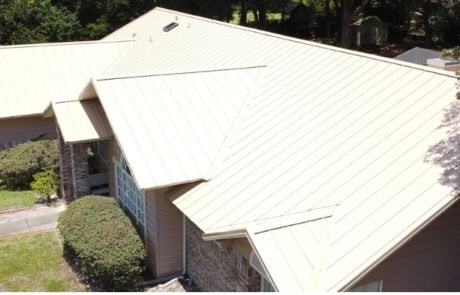
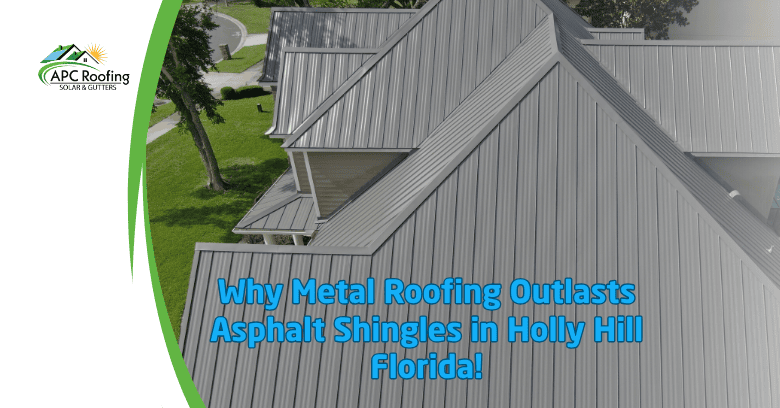
A glance from a lawn at lines of screw heads points to a through-fastened roof, and clean flats between raised joints, bare of hardware, belong to standing seam. Farm buildings and garages commonly have ribbed or wavy sheet, and houses carry both styles.
Cross-Section Choices: Old Look, New Look
Corrugated sheet rises and falls in rounded, evenly spaced waves, and a ribbed panel has trapezoid ribs separated by broad pans. Adjacent lengths share a narrow side lap, and fastener placement follows a published pattern.
A squared profile resists bending and reaches further between purlins, and corrugated remains popular for a traditional farm look. A tall rib keeps heavy rain inside a channel on a broad roof plane, and a lean-to or porch manages fine with a gentle pattern.
Hardware in the Weather: Aging in Sunlight
Each screw draws a panel snug against a rafter or purlin, and a washer under each head stops water getting in. Sun and temperature swings dry out neoprene over time, though the coated metal nearby stays sound far longer.
Overdriving tears a washer and dishes the metal, and a slack or crooked fastener leaks on one side.
Swapping Out Hardware: Scope and Limits
Washers on corrugated or ribbed panels give out as a group, so eventually a full new set of seals is needed. Each original fastener is taken out, and a wider replacement goes back in where threads can still find purchase.
A re-screw ends drips and steadies sheets that rattle in wind, but red rust, gaping laps and cracked flashing need other remedies. Screw length and thread are chosen for what sits below, wood or a steel purlin, and tops come painted to suit a colored finish.
Movement Through the Day: Why Slack Matters
Steel swells with heat and draws back as temperatures fall, and a long run can gain a quarter inch between noon and midnight, and aluminum changes nearly twice as much. Metal held too rigidly wears fastener holes into slots, and water gets past a washer.
Snapping sounds at sunrise come from panels shifting against clips, and a roof built with slack is unharmed.
Holding Down a Seamed Covering: Tucked Away
A long pan gets one fixed point, often near a ridge or an eave, and floating clips everywhere else let the pan glide. Trim at an end that travels is bent with clearance underneath, whereas a pan with no play lets go or distorts.
Pans go down one at a time, with clips screwed along a single side, so no fastener head is left out in the weather.
Closing a Seam: Choosing Between Options
A snap-together rib engages when an installer presses down, and mechanical versions are finished by a rolling tool. A double-lock grips harder against wind-driven rain, and approvals extend to flatter roofs.
Manufacturers offer a range of pan widths and rib heights, and a choice depends on the home and a preferred style. Parts made for one system rarely suit a rival brand, and a mismatch shows up as gaps and loose joints.
Light or Heavy: Reading a Label
A steel panel is rated by gauge, and numbers fall as sheet gets thicker. Twenty-nine is a regular sight on sheds and pole barns, and residential work leans on twenty-six and twenty-four.
For aluminum, sheet is sized in thousandths, and more material means fewer marks and less waviness. Different grades look identical once installed, so only a maker's label or data sheet can confirm what was bought.
Protection Built In: Choosing a Finish
Roofing steel leaves a mill with a zinc or aluminum-zinc layer over plain sheet, and a baked primer goes on before a color coat. Damage no deeper than paint is cosmetic, but a cut that reaches base steel is where corrosion takes hold.
A PVDF finish stands up to sunlight for a long time, while polyester grades dull faster in strong sun. Uncured concrete and mortar harm an aluminum-zinc coating, so a gap or barrier separates panels from new block or stone.
Weighing Options – Coast and Country
Aluminum carries less weight and does not redden, but a dropped tool or a falling branch dents a soft sheet sooner. Close to salt water, at the coastal end of our range, metallic coatings break down faster, and manufacturers set limits on how near a shoreline a product may go.
A copper accent over a bay window is a familiar touch, and with nothing applied, color shifts over the years.
Chemistry on a Rooftop – Isolation and Compatibility
Water that has crossed copper wears away any steel coating below, and a stain shows up before a leak does. Treated wood touching aluminum pits the metal at each contact, and fasteners of an unsuited metal leave a ring of damage.
Flashing added later should match whatever metal is already installed, or a strip of membrane goes between dissimilar metals.
An Appearance Question: What Can Be Done
Oil canning names shallow dips and bulges across a flat pan, and a sun low in the sky exaggerates every contour. A slightly distorted pan sheds rain like any other, and the roof ages no faster.
Thicker metal, a slimmer width and striations rolled into every pan tame rippling, and careful handling on a true deck makes a difference. Photographs of finished houses show how noticeable oil canning can be, and you decide what to order.
Inside the House – Sound and Temperature
A racket many recall comes from sheet over open framing, since a single skin is the only barrier. Metal on a home rests on a deck and underlayment, over an insulated ceiling, and loudness indoors is close to what asphalt gives.
Cool-pigment coatings return the bulk of the sunshine, so upstairs spaces bake less. Dark finishes on metal get as hot as black shingles, and without venting and insulation, color alone does little. Panels cool fast at nightfall, so upstairs rooms settle sooner at night.
Guards and Placement: Chosen With Care
At the colder end of our territory, snow slides readily off smooth coated steel, and an avalanche off an eave can flatten shrubs, gutters or anyone underneath. Guards break a load into small harmless chunks, and typical spots are above doors, walks, decks and gas meters.
For standing seam, bolted clamps grip each upright joint, while exposed-fastener sheet takes mounts screwed into framing, and at the warm end of our range snow gear is unnecessary.
Blows From Above: What a Hit Can Open
At the colder end of our range, hail arrives most years, and heavier grades with stiffening ribs shrug off more stones. A strike sharp enough to break a finish lets rust start, while a buckled seam can part enough to admit water.
Once a storm has moved on, affected spots get photographed and measured, with every dent pinned to a location on the roof.
Uplift: Trim Held Tight
Gusts tug harder at corners and along a perimeter, and once air slips under an unsecured edge, pressure can roll the metal up. Trim along every outer line is hemmed and hooked onto a continuous cleat, and nothing is left free to flap.
Screw and clip spacing tightens at corners and around a perimeter, set by a maker's tested layout for each exposure. At the coastal end of our territory, hurricane country asks for more holding power still, and panel and hardware are rated as one assembly.
Vents and Stacks: Sealant as Backup
Each pipe takes a boot made for panel roofs, with a base pressed to follow corrugations, and a hole is cut in a flat, not through a seam. A bigger penetration is framed with a curb and a small cricket upslope, and water from higher up is divided and sent past.
Caulk plays a supporting role to folded metal, because sunlight dries and cracks sealing compounds within a few years.
Changes of Direction: Built to Drain
Each valley gets a separate pan in advance of the panels, and each sheet is cut to a matching angle. Each raw end is hemmed back and hooked onto a cleat, so no fastener sits where water collects.
Where a long run needs more than one length, a lap is sealed between layers, and screws pass through both thicknesses, upper over lower.
Shallow Sections – When a Membrane Wins
Makers of exposed-fastener sheet commonly list three in twelve, and at anything less, rain creeps sideways across laps toward screws. Mechanically seamed panels are approved much lower, and some products are allowed on nearly flat decks.
Nearly level spots over sunrooms and porches turn up on plenty of houses, and a measurement comes before any panel is named, and an area that metal cannot serve is given a membrane.
A Base Layer: Checked on a Tear-Off
A house takes panels on a solid, continuous deck, and a synthetic sheet rated for heat is sandwiched between, since felt paper cooks under summer metal. On a barn or shop, panels often span open purlins, so support spacing and gauge are matched.
A stripped roof is probed, and weak sections are replaced, as fasteners driven into mush pull straight out.
Going Over the Existing Roof: Condition Decides
A single layer of shingles can usually remain under new metal, code permitting, so waste is kept out of a landfill. New steel adds well under two pounds per square foot, so rafters rarely need reinforcing. Battens on top of a synthetic membrane are laid across existing shingles, and fasteners are long enough to bite solid boards below.
If the decking flexes, or earlier leaks show from the attic, the old roof comes off, since dampness sealed beneath panels goes on rotting structural lumber.
Small Parts at Edges: All Around
Closures matching a panel shape stop up hollows under each rib at both extremes, and rain, insects and birds cannot get under the panels. A ridge cap can be vented to let warm air escape or left solid, as existing ventilation requires.
Rake trim, drip edge and an apron into a gutter close off a roof's outline, and fascia boards are kept out of runoff.
On the Job: Where to Step
A seamed panel comes off a forming machine cut to the length of a run, and nothing overlaps partway up. An extended panel needs enough hands under the metal to stay straight, and a damaged pan is replaced, not flattened out.
Each step should land in a flat with support right underneath, because a raised joint dents and deforms under load. Moisture turns a painted panel into a slide, so the safest place for the household is indoors.
What to Watch For: Without Climbing Up
- Rust circles where screws go in, low on a slope.
- A row of lifted screws, on a south exposure.
- A peeled drip edge, facing prevailing wind.
- A vent cap knocked askew, over a kitchen.
- Rust creeping from a trimmed end, next to a skylight.
- Faded paint, where afternoon light hits.
- A ceiling stain in a straight line, in a garage.
- An endlap gaping, beside a hip.
APC Roofing and Metal Roof Installation in Orlando Florida – Step by Step
We begin by figuring out which system is up there and how the panels are anchored, followed by every screw or clip, edge, boot, valley and lap. Panel grade, paint and hardware are recorded, and the attic is searched for stains and soft decking.
Every finding goes into a report with images, and every item comes with the why. If a covering needs only new screws, we say exactly that, and a finished roof is described without softening.
Metal Roof Installation for Property Owners in Orlando Florida – Straight Answers
Call 407-270-1129 and we will pick a time together for a visit.
Keeping the Roof: Guided by Evidence
One badly damaged sheet can be swapped alone, though fresh color will not match weathered neighbors. New sealant at a lap ends trouble at an overlap, while re-fastening cures aged washers.
Rust through sheet after sheet calls for a new covering, and a covering with every joint and collar given out is no different. Redoing one face of the house is a middle path, provided trouble goes no further.
Longevity: Watching Details
A carefully installed panel system can pass forty years, and an estimate varies from house to house. Standing seam, with no holes through a pan, gets by on less maintenance, while corrugated and ribbed sheet calls for fresh screws in time.
Copper runoff, bare edges and caulked joints where flashing belongs shorten the life of a roof, and regular inspection turns up faults while minor. Piles of leaves behind a chimney keep a patch of metal damp for days, and sweeping debris clear helps a finish.
Before deciding on Metal Roof Installation in Orlando Florida, phone APC Roofing at 407-270-1129. Someone will go over every panel, fastener and piece of trim, and a written report puts options in front of you.
Verified

Verified
Verified
Verified
Verified