
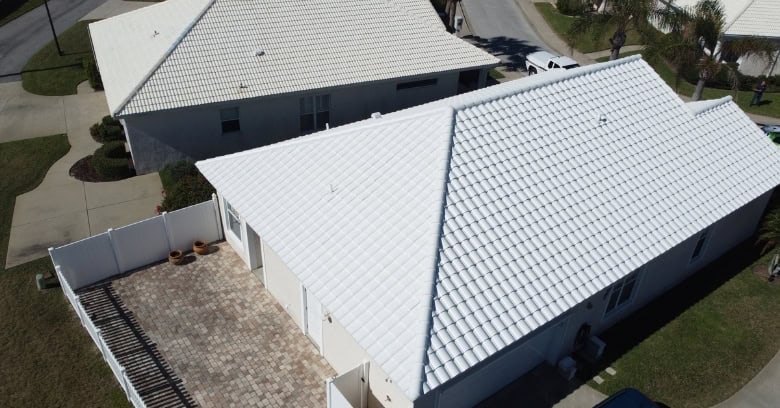
Trying to Find Residential Roofing in Ocala Florida?
APC Roofing takes on anything from a checkup to a full replacement, on asphalt, steel and clay coverings alike.
Call 407-270-1129, and a roofer sets a time to come look at the house.
A Roof's Construction, Explained: a Plain Guide
The topmost material is nothing more than the outer layer, and felt or a synthetic membrane, boards and rafters lie out of sight. Sheet-metal flashing takes over at each wall, stack and valley, and water there rarely traces back to worn shingles close by.
Airflow through the attic belongs to the roof system as much as any material, because moisture trapped up there softens plywood and rusts nails overhead. Water showing indoors may come from any level of the structure, and work confined to the outside can miss the real source.
The Jobs a Roof Performs: an Owner's Overview
A sloped covering sheds every storm's water downhill, and the fastening pattern resists wind uplift. The rafters and the deck carry the weight overhead, snow included at the colder end of our territory, and openings low and high let moisture escape the attic.
Shedding water is the covering's task, and resisting wind is the fastening's job, while what is underneath holds the whole thing steady, out of sight. A failure in one part puts pressure on neighboring parts, so the trail gets followed back before anything gets mended.
Small Components on a Roof: The First to Weaken
The shingled field is built to last for decades, but the flexible seal around a stack splits well before the shingles do. Rain finds a way down past the weak point, and a stain appears on the ceiling below.
Caulk along a wall joint hardens and pulls away in the heat, and steel flashing corrodes from trimmed edges inward. Cap shingles break along the seam, since the peak catches more weather than the rest of the roof.
A Walk Around the Property Beforehand: a Two-Step Read
From the driveway, the outline of the roof shows dips, sags and wavy planes, and the gutters and trim can be checked in the same glance. A zoom lens singles out torn collars, lifted tabs and bare patches, though some faults cannot be judged without climbing onto the roof.
Out on the roof, a roofer presses on every connector and follows each run of flashing, and the covering is checked for brittleness, granule shedding and curling. Wet shingles and sharp pitches rule out getting up there safely, and the view comes instead from a ladder at the gutter line.
The Attic: a Homeowner's Tour
A stained patch on the plywood shows water that got in before, and a wet surface under the hand means water is still getting in. Sunlight visible from inside marks a way in, and the spot gets pinned down by distance from the ridge, ready for the outside check.
Nail points gone orange signal damp air, not a leak, and a matted, gray patch backs up the same story. Fill pushed into the eave opening, or a fan duct ending in the attic, turns up only from inside, so ventilation trouble of that kind escapes a yard-only check.
The Paper That Follows: a Plain Account
A record of the visit takes the form of photographs keyed to spots on the roof, and a caption states what each picture reveals. Sound parts get listed as plainly as anything that requires work, and problem areas are ranked by urgency.
A record saved from an earlier check sets a baseline for the next inspection, and how the covering is aging shows up better than a single day's reading. A covering looked at on a regular schedule rarely catches the owner off guard, and a serious repair shows warning signs long before the work turns urgent.
Maintenance Tasks: the Basic List
Worn pipe gaskets get swapped out before failure, and aging caulk at skylights gets cut out and redone. Anything the trees drop gets brushed out of the channels, and sagging gutter hangers get tightened.
A shingle corner resealed in good weather takes little effort, but delay through a wet season can let water reach the ceiling below. Moss on a shaded slope traps moisture under the courses, and the growth gets treated and brushed off, never pressure-washed.
A Simple Habit Worth Building: the Basics
A roofer's walk-through belongs on the calendar every year, timed for right after the season that is hardest on roofs locally. The goal is seeing deterioration ahead of any drip, and nobody is left guessing about the roof's condition.
Between visits, an owner can look at the roof from the yard after rough weather, and upstairs ceilings deserve a look for new marks. A flashlight trip into the attic twice a year pays off: soft wood, tiny bright spots and soggy insulation surface long before anything reaches the space below.
A Roof's Age, Read From the Yard: What the Years Bring
Brand-new shingles look dark and consistent across every slope, and around the midpoint the sun-facing plane grows paler sooner than the rest. Close to the finish, corners lift and bald patches spread, and a repair rarely holds for long at that stage.
An appraisal from the yard supplies a decent guide, but a ladder and a closer look tell the fuller story. Once shingles are spent, patching stops making sense, and an honest contractor states that plainly, rather than pitching another repair.
A Channel That Has Given Up: The Stakes Explained
A sloped roof delivers water only to the eave, and from there a gutter does the remaining work. A clogged or sagging channel pushes water back behind the fascia, and the wood close by swells and softens.
A weak area there more often means bad drainage than a shingle issue, and replacing the roof leaves the real cause untouched. Gutter pitch and downspout discharge get checked on a visit, and the drip edge gets looked over where the metal meets the fascia line.
Keeping Things Working Underneath: Why the Details Matter
Outside air should enter under the eaves and leave near the peak, and the flow sweeps trapped heat and vapor out of the space. When that gets blocked, the attic overheats in summer and stays muggy through humid months, and the tabs curl and the plywood softens ahead of schedule.
Exhaust hardware installed with no matching intake draws conditioned air up from the rooms below, and a mismatched pairing at the ridge and gables can cut the draft short. Swapping the surface with the vents untouched repeats the same problem, so the underlying issue belongs in the scope of any re-roofing plan.
One Company, Many Conditions: How Choices Differ
At the colder end of the markets we serve, snow load and ice at the edge drive the design, so an adhered barrier goes under the lowest rows. Closest to the ocean, gusts decide how the covering gets anchored, and storm-rated trim metal and taped seams get called for.
Across the hail belt at the colder end of our territory, impact ratings matter, while strong sun bakes asphalt across every market we serve. Specifications follow the weather at the house, not custom or what happened to be on the truck.
Houses and Commercial Buildings: One Steep, One Flat
Angle and overlap work together to move water off a pitched covering, laid in asphalt, tile or metal. A store or warehouse shelters under a nearly flat, sealed membrane, and drains, scuppers and rooftop units sit built into that surface.
Some houses have a gently sloped patch over a back room, and shingles there tend to leak because water lingers before running off. A spot built that way needs a sealed membrane tucked under the pitched roof above, and putting shingles back on that spot solves nothing.
Temporary Covers After Damage: What Works and What Fails
A barrier keeps rain off a hole before repairs begin, but a quick layer does not mend anything below. A sound cover sits over the ridge and gets held down by wood battens screwed through the material, and the material gets drawn tight enough to hold quiet in a gale.
A cover needs a wide border around the hole, since water runs sideways under a short edge. Plastic left in place for months traps heat and moisture against the deck, and the covering underneath ages faster than expected.
Vertical Joints on a Roof: No Room for Guesswork
Step flashing gets woven in with each course along a wall, and a cap of counterflashing laps down from above. On a brick chimney, an apron handles the lower edge and metal runs up each edge, and any stack wider than a small one calls for a cricket set into the slope uphill.
Caulk troweled onto a bad seam lets go once temperatures shift the metal, and only a correct rebuild ends things for good. Crumbling mortar lets rain soak into the masonry higher up, and part of that repair belongs to a mason, not a roofer.
A Contract Worth Reading: What to Look For
A signed agreement should identify the shingle, the underlayment and the metal by name, and the document says whether the existing roof gets stripped to the deck. A solid outline sets a rule for any soft sheathing found mid-job, and every vent, every flashing piece and the haul-away get called out individually.
Bids laid out in full are easy to check against each other, and any gap between the two versions stands out. A business that keeps every particular verbal gives an owner nothing to hold onto, since a handshake settles nothing once a dispute starts.
Replacing a Roof, Step by Step: What Happens
Shrubs, flower beds and the driveway get protected ahead of the work, and the old covering gets stripped into a trailer. The bare deck gets checked plane by plane once the old covering is off, and weak spots come out, and solid planking follows.
A water-resistant membrane, fresh flashing and ice protection get installed next, and the new covering goes down, capped and vented at the top. The yard and drive get a magnetic sweep before the crew leaves, and a last look confirms the gutters are clear.
Beyond the Shingle Roof: Notes by Covering Type
Exposed-fastener metal panels seal at a rubber gasket under every fastener, and a worn spot gets cured with a new screw rather than caulk. Clay and concrete tile go down by more than one method, from mortar to foam to clips, and the underlayment handles the water, not the surface material.
Weight placed wrong breaks a piece, and a spare of the same profile goes in where one fails. Where part of a roof runs nearly flat, ponding and split seams are the warning signs, and the drain openings get kept free of debris.
Clues That Point to Trouble: Caught Early
- Coarse grains washing out after every rain, in amounts that keep returning each season.
- Shingle edges cupping upward, spread across more than one row.
- A split rubber collar around a plumbing vent, with a stain trail on the covering below.
- A brown patch on upstairs drywall, still visible once dry.
- Daylight through the attic boards, on a sunny afternoon.
- Moss packed into the laps, pushing up the lower edges of the shingles.
- A wave running across a plane, new since the previous year.
- Sealant pulling away at a wall, worth a closer look before the next storm.
Residential Roofing Across Ocala Florida: What APC Roofing Does
Before anything gets proposed, a roofer looks over the whole covering and the attic, and the results come back as images plus a short written summary. What is fine gets said as plainly as what needs attention, and the homeowner decides what happens from there.
Residential Roofing in Ocala Florida: a Full Look, Not a Guess
Dial 407-270-1129 and get a date on the calendar.
A Roof's Own History: Useful at Resale
Keeping the install date and the product names is a good start, and each report from a follow-up visit joins the same file. Marking down every repair, with the location and the work done, leaves useful detail, and a decade on, the trend stands out clearly.
When a house goes up for sale, a buyer's inspector asks about the roof, and a folder of dated pages settles things quickly. A second copy of the file, kept somewhere else, is worth having, so nothing depends on one paper version alone.
A Neat Result, Up Close: Points to Look For
The lines run true from eave to ridge, with rake cuts trimmed sharp, and no fastener gets left exposed. Metal against any wall or chimney rests flush and secure, and nothing gets troweled on to cover a shortcut.
The attic keeps intake and exhaust moving after the job, and the drainage runs at least as well as before. The property gets checked with a magnet for stray fasteners, and sawdust near a cut line is the most common leftover once the work wraps up.
Anyone who came here searching for Residential Roofing in Ocala Florida is closer to an answer than a listings page ever gives. Picking up the phone for APC Roofing at 407-270-1129 sets the process moving. Every stop covers the full roof, top to bottom, and no part of the roof goes unchecked.
Verified

Verified
Verified
Verified
Verified


















