
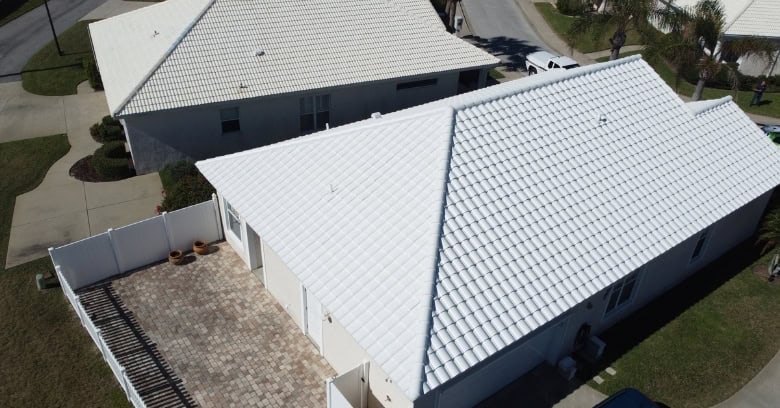
Looking for Emergency Roofing in Mineola Florida?
APC Roofing takes on jobs ranging from a basic checkup to a full replacement, whether the covering is shingle, metal or tile.
Get in touch at 407-270-1129, and a roofer sets a time to come look at the house.
What Keeps a Roof Working: a Plain Guide
The shingles or panels on top form the outer layer, and felt or a synthetic membrane, boards and rafters lie out of sight. Strips of flashing cover the gap at a chimney, a pipe or a valley, and water there rarely traces back to worn shingles close by.
The air under the rafters counts as part of the roof, the same as any material, since trapped summer heat bakes the deck from underneath. A drip inside a bedroom can come from any level of the roof, so a repair aimed only at the surface can miss the real cause.
What a Roof Does for a House: Behind the Shingles
Laps and pitch steer rainfall toward the gutters, and seal strips keep gusts from getting under the courses. What lies below carries the weight of everything on top, snow included at the colder end of our territory, and intake and exhaust let the attic breathe.
The covering deals with water, and nails and seal strips deal with wind, while gravity's pull goes to what is underneath. A problem in one material reads as damage on a different part of the roof, so repairs target the root, not the visible mark.
The Minor Pieces of a Roof: What Falls Behind First
A field of sound shingles can go for decades, but the flexible seal around a stack splits well before the shingles do. Moisture gets behind the covering and moves toward the room, and a mark spreads across the ceiling beneath.
A line of caulk at a chimney shrinks with every hot season, and galvanized flashing corrodes at folds and nail holes. Ridge caps split across the crease, since the crest takes more weather than the planes below.
Spotting Trouble Without a Ladder: Near and Far
From across the street, the profile of the roof exposes dips, sags and wavy planes, and the gutters, fascia and trim come into view at the same time. A zoom lens singles out torn collars, lifted tabs and bare patches, though failing sealant can stay hidden from the ground.
On the slope, a roofer works over every pipe connector and traces each flashing run, and every course is checked for edges that have come loose. A steep or wet roof is not walked, and the eave line, reached by ladder, becomes the vantage point.
Above the Ceiling: Clues From Below
A stained patch on the plywood shows water that got in before, and a clammy touch means the problem is ongoing. Daylight visible between the boards marks an opening, and the spot gets pinned down by distance from the ridge, ready for the outside check.
Nail points gone orange signal damp air, not a leak, and a flattened, discolored patch nearby carries the same message. Fill pushed into the eave opening, or a fan duct ending in the attic, turns up only from inside, so a yard-only look passes over faults like that.
A Homeowner's Take-Away: What Gets Handed Over
What turns up gets documented with photographs matched to locations on the roof, and a line of text says what each image shows. Solid sections are treated in the same plain language as sections that are not, and trouble spots are ranked from most to least urgent.
Keeping an older report gives the next check something to compare against, and change over time is easier to judge than condition on a single day. A roof tracked across each year brings few surprises, and a big repair signals trouble long before the work is urgent.
Keeping a Shingle Roof in Shape: Practical Habits
Worn boots around the stacks get exchanged for new ones, and aging caulk at skylights gets cut out and redone. Branches and leaf litter come off the low points and the chimney back side, and the gutters get kept running and secured.
A lifted tab sealed down early stays a small job, but putting off that step through storms can end in a drywall stain. Moss holds shingle edges up and traps water against the courses, and the growth gets treated and then brushed away, not blasted off.
Staying Ahead of Trouble: Consistency Pays Off
A roofer's walk-through belongs on the calendar every year, timed for right after the season that is hardest on roofs locally. The point is finding small faults before a leak forms, and the household gets a fair sense of the remaining service life.
In the months between visits, a look from the driveway after high wind helps, and top-floor rooms are worth checking for fresh stains. Climbing to the attic hatch with a flashlight twice a year is a smart move: dark spots, daylight and matted insulation turn up long before anything travels any further.
Judging a Roof's Age From Outside: From New to Worn
A shingle surface in the first seasons looks crisp and even, and past the midpoint the south-facing side lightens ahead of the others. At the very end, tabs turn brittle and crack, and repairs stop holding.
An appraisal from the yard supplies a decent guide, but a walk on the roof is what confirms the condition. A covering that has reached the end of a normal service life raises a replacement question, and a reliable contractor says so outright, instead of offering another fix.
The Channel at the Bottom: What to Watch For
The covering carries runoff only to the lower edge, and the gutter line handles the flow after that. A clogged or sagging channel pushes water back behind the fascia, and the wood underneath begins to rot.
A soft spot along that edge points more often to drainage trouble than to worn shingles, and a new covering will not fix what backed-up water caused. Gutter pitch and downspout discharge get checked on a visit, and the drip-edge metal and the overlap at each joint get looked over as well.
What Ventilation Is For: What Homeowners Should Know
Outside air should enter under the eaves and leave near the peak, and that path carries heat and moisture out of the attic. With the opening closed, the attic turns hot in summer and clammy in humid months, and the deck and shingles suffer early.
A roof opening installed with no matching intake draws air from the living space below, and one high point pulling toward a nearby high point can choke flow at the soffits. A roof placed over bad ventilation inherits an existing weakness, so the underlying cause gets addressed in the plan for the new roof.
One Company, Many Conditions: How Choices Differ
At the colder end of the markets we serve, snow load and ice at the edge drive the design, so a self-sealing membrane runs up from the edge. At the coast, uplift decides the fastening pattern, and hurricane-rated edges and sealed flashing get specified.
Where hail falls hard at the colder end of our territory, an impact-rated covering is worth considering, while strong sun bakes asphalt across every market we serve. Every build answers to conditions at that particular site, not routine or whatever was used on the last job.
Residential and Commercial Roofs: How the Roofs Differ
A sharply angled pitch sheds water course over course, and the surface is usually shingle, tile or metal. A business roof relies on one continuous sealed sheet, and internal drains and heating units share space on that roof.
Plenty of residences include a shallow section over an addition, and shingles in that spot often leak because runoff moves too slowly. A spot built that way needs a sealed membrane tucked under the pitched roof above, and re-shingling that spot only repeats the trouble.
Tarps and Emergency Covers: What Lasts a Few Weeks
A barrier keeps rain off a hole before repairs begin, but the underlying trouble waits for a crew. A good cover goes up and over the peak and gets fastened with wood strips, and the material gets pulled taut so wind cannot get behind the edge.
A cover needs a wide border around the hole, as driven rain works in wherever an edge falls short. Material left on for a long stretch keeps the roof from drying out, and mildew and rot follow underneath.
The Tie-In at a Chimney or Upright Surface: an Explanation
Along a wall, one bent piece of metal goes in under every course, and an overlapping strip above keeps runoff off that metal. Every chimney needs an apron at the front and metal carried up across each edge, and a wide stack gets a cricket that divides the flow around back.
A smear of mastic over a bad patch opens up within a few seasons, so the lasting answer is new metal laced in properly. Crumbling mortar lets rain soak into the masonry higher up, and some leaks like that need a mason as well as a roofer.
The Written Scope: Comparing Bids
The rundown for a job should list every product by name, and a plain line covers tearing off versus covering over. The account spells out in advance how damaged plywood gets counted, and the flashing, the exhaust work and the final cleanup all get covered.
Thorough scopes from rival bidders can be checked point by point, and the gaps between the two sets of paperwork come into view. A firm unwilling to resolve the plan in advance is telling an owner something, and a spoken assurance proves nothing after the fact.
How a Re-Roof Unfolds: What Happens
Plants take tarps and hard surfaces take padding before the crew begins, and the worn material gets pulled loose and hauled away. The bare deck gets checked plane by plane once the old covering is off, and rotten sections get rebuilt before anything gets put back down.
Ice barrier, underlayment and new flashing go down across the deck, and shingles or panels, capped at the ridge, complete the installation. A magnetic sweep covers the yard and the drive at the end of the workday, and a last look confirms the gutters are clear.
Non-Shingle Roofing Care: Particular Needs
A metal system with exposed fasteners relies on the gasket beneath every fastener, and a brittle washer gets replaced whole, never smeared with anything extra. Across our markets, tile sets by mortar, by foam or by clips, based on the property, and the layer underneath carries the job of shedding water.
A heavy step on an unsupported piece causes a crack, and a matching replacement goes in wherever one gives way. A modified-bitumen or single-ply section needs the seams and any puddling checked, and grit and leaves get cleared from the scuppers.
What Owners Tend to Notice: Outside and In
- Granules collecting in the gutters, well beyond what a new roof sheds.
- Shingle edges cupping upward, on planes that face the afternoon sun.
- A split rubber collar around a plumbing vent, with a stain trail on the covering below.
- Paint blistering overhead after a storm, still visible once dry.
- Daylight through the attic boards, wherever nothing should show through.
- Moss on a shaded slope, pushing up the lower edges of the shingles.
- A dip between rafters, often pointing to trouble in the deck beneath.
- Dried beads separating at a skylight, left behind by an earlier patch.
Emergency Roofing Near Mineola Florida: How APC Roofing Works
Before a scope gets drawn up, a roofer examines the whole covering and the attic, and the report shows up as photographs and a clear written account. What is fine gets said as plainly as what needs attention, and the next step is left to the homeowner.
Emergency Roofing for Mineola Florida Homes: a Close Look at the Roof
Reach us at 407-270-1129 and book a visit to the property.
Documentation for the Roof: Easy to Maintain
Saving the install date and the product names on the invoice pays off later, and each inspection report deserves a spot in the same folder. Listing every fix, the place and the scope, takes only a minute, and after several years the weak spots become obvious.
At sale time, questions about the roof's age and history always come up, and dated receipts make the answers easy to give. A second copy of the file, kept somewhere else, is worth having, since paper can be damaged or destroyed over the years.
What Good Work Looks Like: Details to Check
Rows sit true across each plane, with tidy trimming at the gable edges, and no fastener gets left exposed. Around chimneys and dormers, the flashing gets replaced rather than reused, and no gob of roofing cement stands in for a missing piece.
Ventilation openings stay in place and free of debris, and the downspouts remain connected and unclogged. No nails or scraps get left in the grass or on the drive, and a quick hose-down removes the last of the sawdust from a walkway.
Anyone comparing options for Emergency Roofing in Mineola Florida does not have to keep guessing about next steps. A call to APC Roofing at 407-270-1129 moves the scheduling forward. Every visit looks at the roof as a whole, not one spot alone, with no loose ends left over.
Verified

Verified
Verified
Verified
Verified


















