
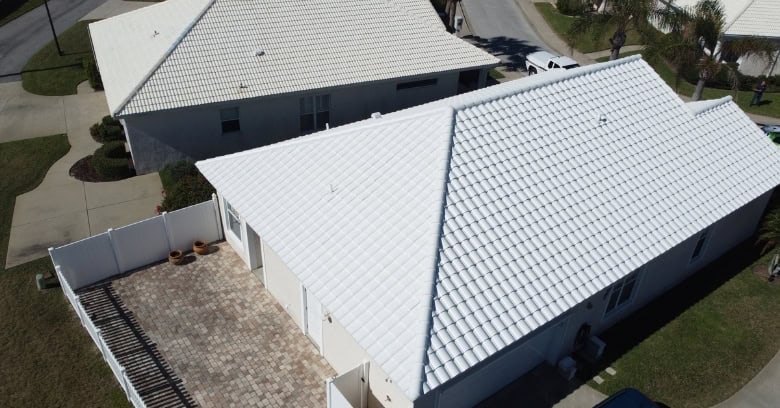
Looking for Roofing Services in Mineola Florida?
APC Roofing handles everything from a simple checkup to a full replacement, on asphalt, steel and clay coverings alike.
Dial 407-270-1129, and a roofer heads out for a look at the house.
The Roof's Working Parts: What Holds a House Together
The shingles or panels on top form the outer layer, and felt or a synthetic membrane, boards and rafters lie out of sight. Flashing bridges the crossing wherever a wall, a pipe or a valley breaks the field, and water there rarely traces back to worn shingles close by.
The attic air beneath the deck counts as part of the roof assembly, because moisture trapped up there softens plywood and rusts nails overhead. A stain on an upstairs ceiling can trace back to any level of the roof, so patching only what the yard shows can fail to reach the real cause.
The Jobs a Roof Performs: More Than Meets the Eye
A sloped covering sheds every storm's water downhill, while the fastening pattern stands up to uplift. The rafters and the deck carry the weight overhead, snow included at the colder end of our territory, while airflow through the attic moves damp air out.
Water is a job for the covering, and wind is a task for the fastening, and what is underneath keeps the whole structure standing. A failure in one part puts pressure on neighboring parts, and a lasting fix reaches back to where the fault began.
The Smaller Details Up Top: Different Timelines
An asphalt surface is expected to serve for decades, but the flexible seal around a stack splits well before the shingles do. Rain finds a way down past the weak point, and paint bubbles on the ceiling below.
Sealant around a skylight loses hold after enough summers, and coated metal rusts once the coating wears through. The capping pieces craze down the center, since the peak catches more weather than the rest of the roof.
Steps Before Heading Up: What Turns Up at Each Point
From the yard, the shape of the roof reveals dips, sags and wavy planes, and the gutters and painted trim show up in the same look. A pair of binoculars brings collars, lifted tabs and bare patches into focus, but a weak spot underfoot tells what optics cannot.
On the slope, a roofer works over every pipe connector and traces each flashing run, and the surface is checked for cracking, granule shedding and curled edges. A slippery or steep slope rules out walking, and the view comes instead from a ladder at the gutter line.
Behind the Ceiling: Evidence to Look For
A watermark on the decking shows where rain has gotten in, and a clammy touch means the problem is ongoing. Sunlight visible from inside marks a way in, and a measurement from the peak locates the spot for the outside look.
Rust on the nail shanks comes from moisture in the house, not rain, and a matted, faded patch nearby confirms the same condition. Insulation stuffed into the eaves, or a bath fan ducted into the attic instead of outside, gets found only from inside, so a look from the yard alone misses ventilation faults of that kind.
The Paper That Follows: What Gets Handed Over
Findings arrive as photographs tied to specific places on the roof, and a caption states what each picture reveals. What is holding up gets named as clearly as what is not, and faults are ordered from most to least pressing.
A saved report from an earlier stop gives the next check a baseline, and a trend across seasons is clearer than a single day's snapshot. A roof tracked across each year brings few surprises, and a large job gets seen coming well ahead of time.
Seasonal Shingle Maintenance: Small Jobs, Done Often
Vent collars get replaced before splitting, and brittle beads at the walls get cut out and run again. Pine straw and twigs get picked out of the valleys, and the gutter runs along the eaves get straightened.
A loose piece fastened back promptly stays a minor task, but waiting out a rainy stretch invites water in from beneath. Moss along a north-facing slope wedges under the laps, and the growth gets treated and brushed off, never pressure-washed.
The Habit Worth Keeping: What to Expect
A roofer should walk the roof once a year, timed for right after the season that is hardest on roofs locally. Catching things early is the whole point of a regular check, and the household gets a fair sense of the remaining service life.
Following a storm, a walk around the house with eyes on the roof is a good habit, and bedroom ceilings upstairs can be watched for fresh spots. A flashlight trip into the attic twice a year pays off: damp wood, daylight and wet insulation are easy to see long before anything reaches the space below.
A Roof's Age, Read From the Yard: From New to Worn
A shingle surface in the first seasons looks crisp and even, and past the midpoint the south-facing side lightens ahead of the others. Close to the finish, corners lift and bald patches spread, and a repair rarely holds for long at that stage.
An appraisal from the yard supplies a decent guide, but a walk on the roof is what confirms the condition. A roof near the finish line is better replaced than patched again, and a trustworthy contractor gives a plain answer, rather than selling more mending.
A Blocked Channel: What to Watch For
A roof moves water only as far as the drip edge, and the gutter line handles the flow after that. A channel hung the wrong way holds a pool against the house, and the wood close by swells and softens.
A weak patch there usually traces to a stopped-up drain, not the shingles, and new shingles will not cure a fault of that kind. The direction of fall along each gutter gets checked, together with the outlets, and the drip-edge metal and the overlap at each joint get looked over as well.
Keeping Things Working Underneath: Why the Details Matter
A balanced system draws air in low and releases air up high, and that movement removes heat and moisture from under the deck. With the opening closed, the attic turns hot in summer and clammy in humid months, and the tabs curl and the plywood softens ahead of schedule.
A powered fan with too little inlet area draws cooled air through the ceiling, and competing setups on one roof can leave the lower attic stagnant. Reroofing with poor airflow left alone carries the fault forward, so the underlying issue belongs in the scope of any re-roofing plan.
Specifications That Follow the Weather: An Overview
At the colder end of our territory, ice at the eaves and the weight of snow shape the build, and a sticky underlayment protects the lowest courses. Near the coast, wind pressure sets how every panel gets nailed, and storm-rated trim metal and taped seams get called for.
In towns at the colder end of our territory, where hailstones run large, a harder product makes sense, while ultraviolet light ages granules in every market we serve. Every build answers to conditions at that particular site, not habit or whatever a previous job used.
Homes and Businesses: Different Demands
A pitched covering sheds water through overlapping courses, laid in asphalt, tile or metal. An office or warehouse roof depends on a flat, sealed surface, and mechanical equipment and drains break through that surface.
Many houses have a gently rising porch or addition, and shingles in that spot often leak because runoff moves too slowly. A spot like that needs a welded or adhered membrane, laced under the pitched covering above, and re-laying shingles there repeats the same fault.
A Cover Until Things Get Fixed: a Short-Lived Patch
Plastic over a break keeps the rooms beneath dry for a time, but nothing gets solved underneath. A good cover goes up and over the peak and gets fastened with wood strips, and the fabric gets stretched so no loose fold can catch the wind.
A cover has to reach well past the damaged area, as driven rain works in wherever an edge falls short. A membrane left up too long traps moisture against the covering, and whatever sits below begins to suffer.
Vertical Joints on a Roof: Where Leaks Start
Every course against a wall gets a dedicated step-flashing piece, and a strip of trim above turns down over the top edges. Every chimney needs an apron at the front and metal carried up across each edge, and a wide stack gets a cricket built into the slope nearby.
Sealant slathered on a weak spot lets go as the metal expands and contracts, so a fresh tie-in, installed correctly, is the dependable way to go. Crumbling mortar lets rain soak into the masonry higher up, and some leaks like that need a mason as well as a roofer.
Getting the Scope in Writing: a Careful Look Before the Ink Dries
The plan for a job names every product by brand, and the document states whether the current layer stays or goes. A firm outline settles ahead of time how bad wood gets handled, and every vent, every flashing piece and the haul-away get called out individually.
Offers from different contractors can be weighed point for point, and the gaps between the two sets of paperwork come into view. A roofer who will not put the plan down leaves the owner guessing, because nobody can confirm later what got said.
What a Re-Roof Involves: the Basic Sequence
Shrubs, flower beds and the driveway get protected ahead of the work, and the existing layers get torn off into a dumpster. With the old material gone, the plywood gets examined board by board, and any spongy spot gets swapped for new stock.
A water-resistant membrane, fresh flashing and ice protection get installed next, and the surface material, the ridge caps and the vents close out the job. A magnetic sweep covers the yard and the drive at the end of the workday, and nothing from the cleanup stays behind in the gutters.
Upkeep on Other Coverings: What Differs by Material
A metal system with exposed fasteners relies on the gasket beneath every fastener, and a hardened washer gets swapped out along with a new screw. Across our markets, tile sets by mortar, by foam or by clips, based on the property, and the real water barrier is the underlayment, not the surface material.
A foot planted wrong breaks off a piece, and a spare of the same profile goes in where one fails. On a low-slope section, standing water and open seams are the things to watch, and grit and leaves get cleared from the scuppers.
Warning Signs Around a House: Outside and In
- Grit gathering at the downspout outlets, in amounts that keep returning each season.
- Tabs curling at the corners, most visible on the sunniest slope.
- A hardened gasket at a stack, letting water run down into the attic.
- A brown patch on upstairs drywall, close to an outside wall or a chimney.
- A glimpse of sky from under the deck, on a sunny afternoon.
- A carpet of moss along the eaves, pushing up the lower edges of the shingles.
- A hollow spot in an otherwise even stretch, often pointing to trouble in the deck beneath.
- Gaps opening where flashing meets siding, easy to spot from the yard.
Roofing Services in Mineola Florida: APC Roofing's Approach
Before any advice gets given, a roofer goes over the whole covering and the attic, and the evidence comes back as photographs and the verdict in writing. Good sections get the same plain treatment as problem areas, and the homeowner sets the order of any work.
Roofing Services in Mineola Florida: a Close Look at the Roof
Get in touch at 407-270-1129 to schedule a visit to the property.
Documentation for the Roof: Best Done Early
Tracking when the covering went on and what was used is worth the effort, and each visit's report belongs with the earlier entries. Including a line for every repair, the spot and the method, rounds out the picture, and a decade on, the trend stands out clearly.
Once a home hits the market, the roof's age and condition come up in conversation, and paperwork with dates carries more weight than recollection. A duplicate set, saved to a phone or a drive, is worth making, because a single set can be destroyed in a flood or a fire.
What Good Work Looks Like: a Homeowner's Guide
The field reads as straight bands, with crisp cuts where each slope ends, and nails stay covered by the layer above. The wall joints carry new flashing, tucked to match the way water runs, and caulk, where used at all, forms a thin, careful line.
Intake and exhaust vents stay open and unblocked, and the gutter runs finish straight and fastened. A final sweep with a magnet tidies the yard and drive, and a quick hose-down removes the last of the sawdust from a walkway.
Anyone comparing options for Roofing Services in Mineola Florida is one step away from a straight answer. Picking up the phone for APC Roofing at 407-270-1129 gets a date on the calendar. Every stop covers the full roof, top to bottom, and no part of the roof goes unchecked.
Verified

Verified
Verified
Verified
Verified


















