Need Roof Inspection in Lee's Summit Missouri?
APC Roofing covers everything from a routine checkup to a complete replacement, across shingle, metal and tile coverings.
Reach us at 913-398-5020, and a roofer sets a time to come look at the house.
The Roof's Working Parts: the Basics
What shows from the curb is just the outer layer, and underlayment, decking and rafters sit beneath the surface. Metal flashing seals the seam at a wall, a pipe or a valley, and trouble nearby seldom means a failure in the surrounding shingles.
The attic air beneath the deck counts as part of the roof assembly, because moisture trapped up there softens plywood and rusts nails overhead. A leak noticed inside can begin at any level of the roof, so patching only what the yard shows can fail to reach the real cause.
What a Roof Does for a House, Component by Component
A sloped covering sheds every storm's water downhill, while nails and seal strips resist the pull of gusts. The framing bears the load above, snow included at the colder end of our territory, and openings low and high let moisture escape the attic.
Shedding water is the covering's task, and resisting wind is the fastening's job, while gravity's pull goes to what is underneath. A weak link puts strain on the parts around the weak spot, so the cause gets traced instead of the symptom being patched.
Minor Roof Components: A Shorter Story
The main covering is built for a long run, but the gasket around a vent pipe hardens within a fraction of that span. Runoff slips through and travels toward the room, and paint bubbles on the ceiling below.
Sealant around a skylight loses hold after enough summers, and aluminum flashing pits at the bends in salt air. Ridge caps split across the crease, as nothing shelters the peak from gusts and glare.
Steps Before Heading Up: Standing Back and Then Closer
Seen from the sidewalk, the shape of the roof shows dips, sags and wavy planes, and the fascia and gutter runs are visible at the same time. Binoculars pick out torn collars, lifted tabs and bare patches, though some faults cannot be judged without climbing onto the roof.
Crouched at each pipe, a roofer feels for gaps and traces the flashing along every wall, and the field is read for brittleness, granule shedding and loose edges. Wet shingles and sharp pitches rule out getting up there safely, and the view comes instead from a ladder at the gutter line.
Above the Ceiling: Evidence to Look For
A dark ring on the sheathing shows water has come through, and dampness under the fingers shows the entry is still active. Light passing through the decking reveals a breach, and a tape measure fixes the distance from the peak and gable wall.
Nails freckled with rust show condensation at work, not rain damage, and a compressed, faded patch nearby points to the same cause. A blocked eave packed with fill, or a bathroom fan venting into the attic, shows up only on an inside look, so a check from the ground alone leaves that kind of fault hidden.
What Comes Home With You: Kept for Reference
What turns up gets documented with photographs matched to locations on the roof, and a short note describes what each image covers. Good sections get the same plain treatment as sections that do not, and problem areas are ranked by urgency.
A report kept on file lets the next check be measured against a known starting point, and a trend across seasons is clearer than a single day's snapshot. A roof tracked across each year brings few surprises, and the signs of a major repair appear well before the job becomes pressing.
Seasonal Shingle Maintenance: What Gets Done
Stiffened collars at the plumbing vents get changed early, and brittle beads at the walls get cut out and run again. Branches and leaf litter come off the low points and the chimney back side, and sagging gutter hangers get tightened.
A shingle corner resealed in good weather takes little effort, but delay through the wet months lets water get in from below. Moss on a shaded slope traps moisture under the courses, and the growth gets treated and brushed off, never pressure-washed.
The Habit Worth Keeping: The Payoff
Somebody trained in the trade should go over the roof once a year, scheduled once the harshest stretch of local weather has passed. The purpose is catching wear before a leak develops, and the family hears plainly where the roof stands.
In the months between visits, a look from the driveway after high wind helps, and top-floor rooms are worth checking for fresh stains. Climbing to the attic hatch with a flashlight twice a year is a smart move: dark spots, daylight and matted insulation turn up long before anything travels any further.
A Roof's Age, Read From the Yard: What Changes Over Time
A shingle surface in the first seasons looks crisp and even, and later in life the sun-exposed plane fades before the shaded side does. Toward the end, granules collect in the gutters and the mat starts to show, and new leaks appear in different spots.
Judging from the street supplies a reasonable idea, but a walk on the roof is what confirms the condition. Once shingles are spent, patching stops making sense, and a trustworthy contractor gives a plain answer, rather than selling more mending.
The Channel at the Bottom: The Stakes Explained
A sloped roof delivers water only to the eave, and a gutter takes the water the rest of the way. A run choked with leaves sends overflow behind the trim board, and the wood close by swells and softens.
Trouble along that edge usually comes from standing water, not the covering, and replacing the roof leaves the real cause untouched. Gutter fall and downspout placement get checked together, and the drip-edge metal and the overlap at each joint get looked over as well.
Why the Area Above Needs to Work Right: How the Design Works
Outside air should enter under the eaves and leave near the peak, and that path carries heat and moisture out of the attic. With the opening closed, the attic turns hot in summer and clammy in humid months, and the whole build's service life shortens.
Exhaust hardware installed with no matching intake draws conditioned air up from the rooms below, and competing setups on one roof can leave the lower attic stagnant. Fresh shingles laid over stale, trapped heat age nearly as fast as the old ones did, so a proper replacement addresses the same issue at the same time.
Specifications That Follow the Weather: Set by What's Nearby
At the colder end of the markets we serve, snow load and ice at the edge drive the design, and a sticky underlayment protects the lowest courses. Closest to the ocean, gusts decide how the covering gets anchored, and reinforced edge metal and sealed seams get specified.
Across the hail belt at the colder end of our territory, impact ratings matter, while intense sun dries out asphalt everywhere we work. Every material choice answers to the weather at that house, not habit or a standard default.
Houses and Commercial Buildings: How the Roofs Differ
Angle and overlap work together to move water off a pitched covering, and the material is commonly shingle, tile or metal panels. A commercial building usually has a nearly flat, sealed membrane, and internal drains and heating units share space on that roof.
A good number of homes have a shallow section over a porch or a sunroom, and shingles over an area such as that leak because standing water finds a way under the laps. A low spot like that needs a continuous membrane tied in beneath the main covering, and re-shingling that spot only repeats the trouble.
Protecting a Damaged Roof for Now: What Lasts a Few Weeks
Plastic over a break keeps the rooms beneath dry for a time, but the underlying trouble waits for a crew. A well-set cover laps over the peak and gets battened along the edges, and the cover gets tensioned before the flapping starts.
A cover has to reach well past the damaged area, as driven rain works in wherever an edge falls short. A membrane left up too long traps moisture against the covering, and the shingles beneath start to deteriorate.
Doing the Vertical Joints Properly: the Proper Method
Where shingles climb beside a wall, L-shaped pieces alternate with the courses, and trim set higher up sheds water past that metal. A brick chimney gets an apron downhill and metal set in up each edge, and a wide stack gets a cricket built into the slope nearby.
Caulk troweled onto a bad seam lets go once temperatures shift the metal, so a rebuilt detail is the only answer that lasts. Porous or cracked mortar lets moisture into the masonry higher up, and part of that repair belongs to a mason, not a roofer.
Putting Requirements on Paper: a Careful Look Before the Ink Dries
A clear plan identifies every material, from the shingle to the metal, by name, and the document states whether the current layer stays or goes. A firm outline settles ahead of time how bad wood gets handled, and every vent, every flashing piece and the haul-away get called out individually.
Offers from different contractors can be weighed point for point, and the true difference between the two shows plainly. A roofer who will not put the plan down leaves the owner guessing, and a spoken assurance proves nothing after the fact.
Replacing a Roof, Step by Step: What Happens
Beds, bushes and walkways get protected before demolition begins, and the existing layers get torn off into a dumpster. The bare deck gets checked plane by plane once the old covering is off, and anything that flexes underfoot gets sawn out and patched.
A water-resistant membrane, fresh flashing and ice protection get installed next, and the main covering, the ridge line and the vents finish the work. The yard and drive get a magnetic sweep before the crew leaves, and nothing from the cleanup stays behind in the gutters.
Beyond the Shingle Roof: Details by Material Type
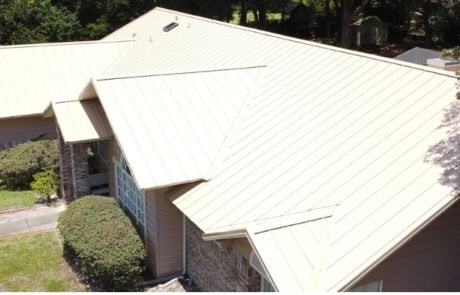
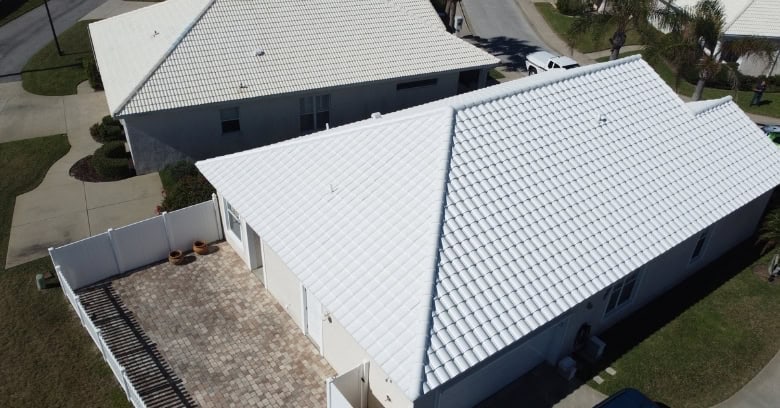
Exposed-fastener metal panels seal at a rubber gasket under every fastener, and a brittle washer gets replaced whole, never smeared with anything extra. Tile in our markets gets set by several methods, including mortar, foam adhesive and mechanical clips, and the layer underneath carries the job of shedding water.
A heavy step on an unsupported piece causes a crack, and a damaged unit gets lifted out and replaced with one of the same profile. Flat sections show trouble as standing water and raised seams, and the drain openings get kept free of debris.
Warning Signs Around a House: Caught Early
- Granules collecting in the gutters, in amounts that keep returning each season.
- Tab ends that curl instead of lying flat, in patches that widen every year.
- A split rubber collar around a plumbing vent, easy to miss without a zoom lens.
- Discoloration on a bedroom ceiling, soft at the center.
- Light leaking in near a valley or a pipe, on a sunny afternoon.
- A carpet of moss along the eaves, growing thicker every spring.
- A hollow spot in an otherwise even stretch, often pointing to trouble in the deck beneath.
- Gaps opening where flashing meets siding, often after a hot summer.
Roof Inspection Near Lee's Summit Missouri: How the Visit Works
Before any advice gets given, a roofer goes over the whole covering and the attic, and the results come back as images plus a short written summary. Good sections get the same plain treatment as problem areas, and the homeowner decides what happens from there.
Roof Inspection in Lee's Summit Missouri: Straight Answers About the Roof
Reach us at 913-398-5020 and book a visit to the property.
A Roof Timeline: A Short List
Keeping the install date and the product names is a good start, and every yearly report can go into the same file. Marking down every repair, with the location and the work done, leaves useful detail, and given enough time the pattern becomes clear.
A buyer's home inspector almost always asks about the roof's history, and a folder of dated pages settles things quickly. A second copy of the file, kept somewhere else, is worth having, in case the paper sheets go missing in a move.
Signs of a Job Done Right: Details to Check
The field reads as straight bands, with crisp cuts where each slope ends, and nails stay covered by the layer above. Metal against any wall or chimney rests flush and secure, and caulk, where used at all, forms a thin, careful line.
The attic keeps intake and exhaust moving after the job, and the drainage runs at least as well as before. The property gets checked with a magnet for stray fasteners, and wood shavings from a trimmed edge are the most common leftover from the work.
Anyone who arrived looking into Roof Inspection in Lee's Summit Missouri is one step away from a straight answer. A call to APC Roofing at 913-398-5020 gets a date on the calendar. Every visit looks at the roof as a whole, not one spot alone, and no part of the roof goes unchecked.
Verified

Verified