Exploring Tile Roof Repair for a Property in Kissimmee Florida?
APC Roofing lays kiln-fired and cement-based coverings and restores worn ones, including the valleys, ridges and wall flashings.
Phone 407-270-1129 and you will get a plain account of the condition of the house.
Layers of the System – an Overview
The clay or concrete pieces you see from the street shed most of the rain, but the waterproofing itself is an underlayment on the deck below. Gusts can push a little moisture up under the courses during a downpour, so the layer beneath has to guide that seepage out at the eave edge.
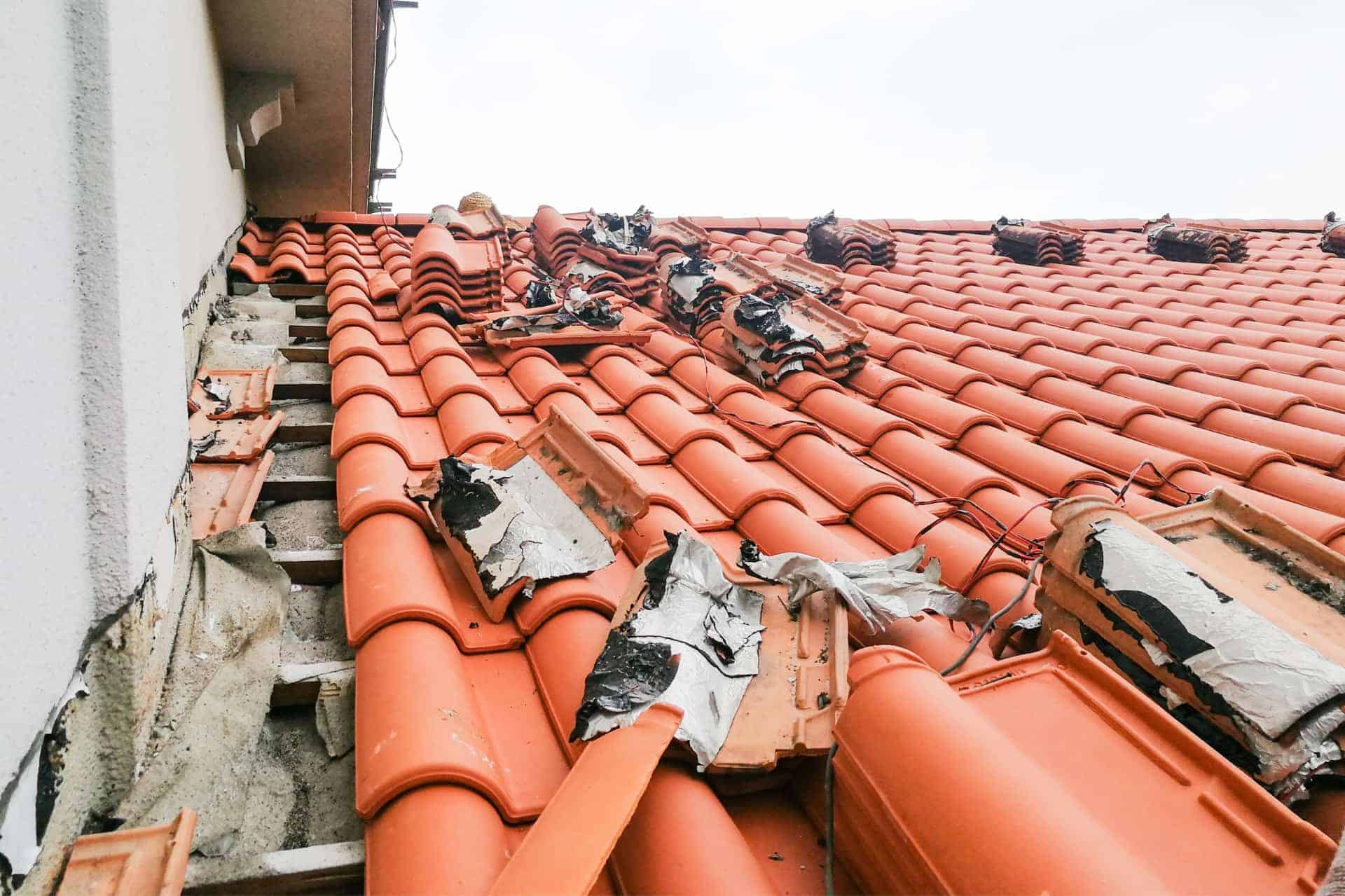
A cracked piece of tile does not by itself put a stain on a ceiling, since the sheet beneath is normally intact. Water that finds a hole in the underlayment may travel down the boards for some distance, so the mark it leaves can sit well away from the opening.
Material Choices – Weathering Compared
A clay piece starts as earth pressed to a profile and baked, and the pigment goes clear through rather than sitting on the face. Sunlight over many decades barely alters how the roof appears, while a properly made unit soaks up almost no rain.
Concrete is pressed from sand, cement and water, then cured instead of fired, but the tint on many brands is only a surface finish. A slope that gets full sun lightens over the years, and a new nick exposes gray under the weathered skin. Swapping in one unit leaves an obvious bright patch, and the contrast narrows as time ages the newcomer.
Cement-based pieces take in more rain than fired clay, and at the colder end of our territory, trapped moisture freezes and pushes outward. Over many seasons that cycle can spall the outer skin, and manufacturers test and grade stock for that exposure.
Profile Options: Rolled or Level
Mission-style barrel work lays separate pans and covers in alternating rows, and the arrangement carries the look of old Spanish churches. An S-shaped tile folds the dip and the crown into a single unit, and it is widely used on newer houses.
Flat pieces lie close to the deck and can pass for slate or heavy shake from below, while water steps down from course to course. Barrel and S patterns collect pine needles and leaves in their hollows, while smoother surfaces let the wind clear most of the debris.
Weight and Support – Switching Coverings
Per square foot, standard tile carries several times the pounds of shingles, and a house built under tile had its rafters sized for that from the start. Switching from a light covering to tile adds a burden nobody allowed for, and a sagging ridge line can be the result.
Ahead of a conversion, a structural engineer checks the rafters, the spans and the walls they bear on, and reinforcement may follow where the structure lacks strength. Makers also produce low-weight concrete, so a house with less margin can still be considered.
Anchoring the Roof – Rules and Practice
The head of each piece often carries a hole for a nail or a screw, and on many jobs each course hangs from a wood batten run across the slope. Foam-set roofs rely on beads of adhesive beneath the tiles, and a full mortar bed carries the pieces on others. Nose clips supply added restraint on certain products, and the manufacturer’s instructions plus local code decide what is allowed.
Uplift is strongest around the borders of each slope, and attachment there is increased. Hurricane rules at the coastal end of our territory call for firmer anchoring, and foam placement and screw counts are specified to comply. Patching goes by the system already on the slope, since careless prying at a glued unit breaks more than it frees.
The Layer Below – Heat and Sunlight
Old roofs mostly carry asphalt felt, frequently doubled, while self-adhered bitumen and synthetics are the newer options. Heat gathers in the space under clay or concrete and ages whatever is beneath, so a sheet not rated for those conditions goes brittle early.
A tile roof keeps the sun off the felt or synthetic under it, but a hole ends that protection and the uncovered spot deteriorates rapidly. A ceiling with no stain does not make a missing piece safe to ignore, because once the sheet beneath has failed, rain goes into the boards.
Work Below the Surface – Matching Replacements
The existing pieces on a major project are frequently hand-removed and set aside, and sagging boards get repaired. A new membrane is then laid over the mended wood, and the reclaimed tile is reinstalled over it. The home keeps the appearance it was built with, and the layer that stops leaks is at the start of a long life.
A portion of the tile breaks on the way down or back up, and older material fails at a higher rate. Fresh units must lock into the pattern already on the roof, and a line still in production supplies an identical match. When a style has been dropped by its manufacturer, salvage or a near equivalent fills the gaps, and a slight difference in shade is common.
Cracked and Broken Pieces: Prevention and Care
A good many fractured tiles were stepped on by somebody, and the walker is frequently a painter, a sweep or a satellite installer. A ladder resting on the eave line breaks pieces at the bottom, and a bracket against the wall spares the covering.
Branches that come down in wind smash entire sections, so keeping trees clear of the house removes most of that risk. Toward the colder end of our territory, hail of large size can snap a tile, while lighter strikes tend to bounce off.
Access Across the Slopes – Boards and Routes
Where a unit sits on the course beneath, it can take a person’s weight, but pressure on the middle, with nothing behind it, splits it clean. A rolled covering is crossed by stepping in the pans, not on the crowns, and walk boards spread the load along a route used again and again.
A crack made by a boot often shows only on the underside, so breakage builds up on a roof without anyone knowing. Solar crews and dish installers do well to plan their access with a roofer, and tile beneath every bracket gets removed and put back properly.
Valley Framing – Litter and Overflow
The inside corner where slopes meet collects the runoff of both, and tile jobs lay a metal liner in it. The cut on either side sets the width of the exposed strip, and a cramped gap lets a hard rain climb out over the tile.
Pieces along the edge end up small and often lose their nail holes, so foam, clips or wire ties hold them in place. Needles packed into the channel slow the water and pool it, so water finds its way sideways under the covering.
The Capping: Old and Newer Methods
The joints at the peak and the outside corners are covered with shaped trim, and plenty of roofs carry it on mortar. Bedding that has seen years of temperature swings opens up in cracks, and chunks drop out while the pieces loosen.
Newer work fastens the trim to a raised wood or metal nailer along the joint, with foam or a flexible strip sealing beneath. Certain versions breathe, letting attic air escape at the peak, but they are shaped so rain and insects cannot enter.
Chimney and Wall Junctions – Common Faults
Where a slope meets something vertical, sheet metal is bent up against the upright face, with a counterflashing set above it to cover its upper edge. Tile calls for a wide pan at the base, with a turned-up hem, while nearby tile is trimmed to leave a clear path for runoff.
A smear of roof cement along a chimney hardens and splits, so the same spot takes on water again. A repair that holds lifts the neighboring pieces and reworks the metal beneath, and new underlayment goes in at the same time.
Pipes and Vents – Mounts and Skylights
A plumbing riser gets a base flashing tied into the underlayment, with a lead jack beaten to the shape of the tile on top. A rubber boot made for shingles cannot seal against a rolled profile, so runoff slips in beneath it.
Skylights, attic vents and solar mounts each need flashing made for a tile shape, and a bracket bolted straight through a piece without it will leak.
The Eave Edge: What to Watch
At the gutter, each curved piece leaves an open mouth beneath it, and birds, wasps and blown rain get in unless something fills the gap. A contoured closure lines the fascia beneath the covering, and weep holes built into it let water escape.
Pieces at the eave lack a course below to lift their noses, and a raised board or riser strip corrects that. Without that support, the end pieces hold water on their faces, and an uneven line at the bottom shows from the ground.
Built-In Cooling: Indoor Comfort
Curved pieces and batten-hung courses sit raised off the deck, and outside air moves through the space underneath. Much of the sun’s heat leaves with that draft instead of sinking inward, so the underlayment stays cooler.
During long stretches of hot weather, upstairs remains more bearable, and dense clay or concrete holds warmth back for hours. Debris jammed along the eave, or a ridge sealed solid with mortar, closes that path, so the cavity heats up.
Moss, Lichen and Algae – What to Leave Alone
A whitish crust on fairly new concrete is usually efflorescence rising from within, and ordinary rain rinses it off within a few seasons. A mat of moss or lichen keeps the joints between pieces wet, and at the colder end of our territory freezing then flakes the face.
A pressure washer can blast the color layer off concrete pieces, and it can break pieces as the operator walks the slope. A roof cleaner and a light rinse loosen growth without force, and pulling debris out of valleys and gutters by hand matters just as much.
Warning Signs to Notice – Worth a Closer Look
- A single piece hangs crooked below the course, so the fastening there has likely failed.
- One opening in a course shows bare underlayment, leaving the layer underneath exposed to daylight.
- Shattered tile is found on the patio after wind, which means something overhead has cracked.
- Small lumps of mortar sit near the porch, and the pieces along the peak may be rocking.
- A brown ring spreads on a ceiling below the roof, while the opening that feeds it may lie higher up the slope.
- Wallpaper lifts or drywall discolors on a wall under a roof junction, and the metal along that joint may have failed.
- Lichen and moss crowd the shaded side of the house, which keeps the pieces damp between storms.
- The lowest course sags between the corners of the building, and the board under the last course may have softened.
APC Roofing and Tile Roof Repair in Kissimmee Florida: Our Method
Every slope is walked before anything else, with the material, profile and fastening noted. Valleys, ridges, wall junctions and the eave are then looked at closely, and where the answer depends on the underlayment, a few pieces come up so it can be seen. Indoors, the attic is searched for stains and spongy decking, since dark patches on the wood show past leaks.
Any problem is photographed, and its size is measured. What was seen is set out in a written report, and the reasoning behind each suggestion is spelled out. Broken pieces over a sound sheet are called a repair, while a failed underlayment is named plainly. The owner picks what to do, and holding off remains possible.
Tile Roof Repair for Kissimmee Florida Homeowners: Clear Findings
Reach us at 407-270-1129 and describe the problem.
Mending or Relaying – Slope by Slope
A cracked piece, a loose cap or a leaking wall joint is usually a contained problem, and the surrounding courses stay untouched. Choosing a small job or a relay comes down to the underlayment, while the appearance from the yard is a poor guide.
If the sheet is gone from eave to ridge on one side, the courses there are taken up and relaid, and any slope still serviceable is not touched. Underlayment installed in a single job generally gives out at about the same point, and the parts spared may follow within a few seasons.
How Tile Ages – Upkeep Matters
Dense, well-fired clay can see several generations, and concrete lasts for decades, though usually not as many. The layer under the pieces ages much faster, so its condition generally decides when work is needed.
Periodic checks and clean drainage let the roof reach its full span, but a neglected one may lose its underlayment early under one missing piece. Any figure for years is an estimate, not a promise, and product quality, fastening and the flashings at junctions shift it.
Basic Requirements – Sound Boards
Tile sheds rain through overlapping courses, not sealed joints, which means the angle has to be sufficient for water to run off. On lower pitches, maker’s rules call for a heavier or doubled underlayment, and below the minimum a different covering is the right choice.
The decking must be solid before anything is laid on top, so spongy areas come out and new wood goes in. Gutters are part of how the roof drains, and when they back up, water rises beneath the lowest course.
For advice on Tile Roof Repair in Kissimmee Florida, phone APC Roofing at 407-270-1129. The covering, the metal and the sheet beneath are inspected and written up, and the decision stays with you.
« All Services in Kissimmee Florida