
The wind howled most of the night, and in the morning there were three shingles on the lawn and a strip of something metal by the driveway. From the ground, the roof looks mostly fine. But you can’t shake the question: is that all the damage, or is there more up there you can’t see? Wind damage roof repair in Kissimmee starts with getting that question answered honestly.
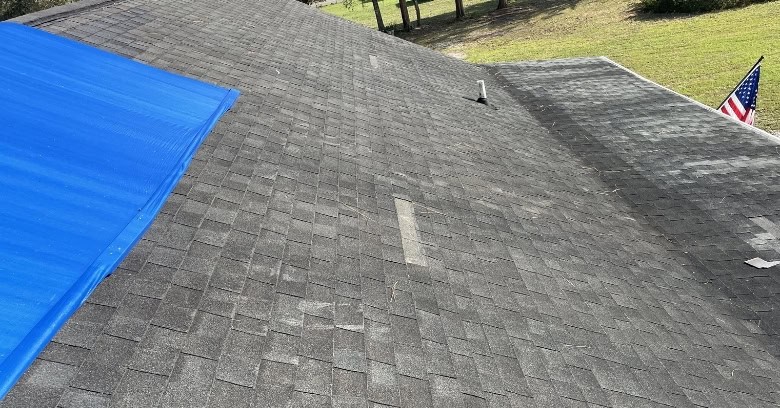
Wind damage is tricky. Some of it is obvious, and some of it hides in plain sight until the next heavy rain finds it. Then there’s the worry of who to trust, because after every big blow, strangers start showing up at doors with clipboards. You deserve a local roofer who’ll get up there, take pictures and tell you what’s actually wrong.
APC Roofing has worked on Central Florida roofs since 2017. We’re GAF Certified, licensed in Florida (CCC1337030) and insured, and your inspection is free. Call 407-270-1129.
How wind actually damages a roof
Wind doesn’t push straight down on a roof. As it moves over the top, it creates lift, a bit like air over an airplane wing. The pull is strongest at the edges, the corners and along the ridge, which is why damage usually starts there.
On a shingle roof, each shingle is held by nails and by a strip of sealant that bonds it to the row below. Strong gusts can break that seal. Once a shingle’s edge is loose, the wind can lift it over and over, bending it back at the nail line until it creases. A creased shingle may lie flat again after the storm and look fine from the street, but it’s weakened and much more likely to tear off in the next blow.
Tile roofs react differently. Wind can loosen tiles, crack them or shift them out of line, especially along the ridge and hips, where tiles are often set in mortar or foam. On metal roofs, wind usually goes after the trim and the edges first, and repeated flexing can loosen fasteners.
Flashing, the metal that seals walls, chimneys and roof edges, can also bend or pull loose. A small gap at a wall joint can let a surprising amount of water in.
Wind-driven rain and flying debris
Kissimmee’s summer thunderstorms often bring rain sideways. Wind can push water uphill under shingles or past flashing that would shed a normal rain just fine. If you notice a leak that only shows up in storms with strong wind, that’s a strong hint the problem is a lifted shingle or a gap at a flashing joint.
Then there’s what the wind throws. Palm fronds, branches and patio furniture all end up on roofs after a big storm. A heavy limb can crack decking even when the shingles over it look intact.
Why Kissimmee roofs see so much wind
Kissimmee is inland, but hurricanes and tropical storms crossing the peninsula still bring hours of sustained wind to Osceola County. Hurricane season runs June 1 through November 30. Between those big events, summer thunderstorms build on hot afternoons and throw short, strong gusts that can be enough to break shingle seals on an older roof.
Sun plays a supporting role. Years of UV and heat make shingles stiffer and the sealant strips weaker, so an aging roof loses shingles in a storm that a newer one would ride out.
What you can check from the ground
You don’t need a ladder to spot the most common signs, and please don’t climb onto the roof yourself after a storm. Walk around the house and look for:
- Shingle pieces, tile fragments or metal trim in the yard
- Gaps or lines of shingles that look different in color, which often means shingles are missing
- Shingle edges that stick up or flutter in a breeze
- Bent or loose metal along the roof edges or around the chimney
- New stains on ceilings, especially along outside walls
Check the attic too, if you can get up there safely. Daylight where there shouldn’t be any, or damp spots on the underside of the deck, tell you water has a way in.
Take photos of anything you find, with the date. That record helps if you decide to file an insurance claim.
Repair or replacement after wind damage
Most wind damage is repairable. Replacing a section of shingles, resetting or replacing tiles or refastening flashing usually handles it. A new section of shingles can look slightly different from the older ones around it at first, because colors fade and shingle lines change over time. A good repair gets as close as the available product allows.
Replacement makes more sense when damage is spread across several slopes, when the shingles are brittle enough that they crack when handled or when the roof was near the end of its life before the storm. Florida’s building code also has rules on how much of a roof can be repaired before more of it has to meet current code. We’ll show you the photos and explain which side of the line your roof falls on.
If water is already coming in, see our page on emergency roofing in Kissimmee for what to do first. For leaks that show up after the weather clears, roof leak repair in Kissimmee explains how the source gets traced.
Wind damage and your insurance claim
If the storm caused the damage, you may have a claim. You file it with your insurance company, and you pay your deductible. We inspect the roof, document the wind damage with photos, give you a written estimate and work with your adjuster. Our insurance roof claims in Kissimmee page explains how that process usually goes.
Be wary of anyone who offers to waive or cover your deductible. Trust matters.
How it works with APC Roofing
- Book your free inspection. Call 407-270-1129 or request a free estimate online.
- Get a clear, honest assessment and estimate. We check the whole roof, not just the spot you noticed, and give you photos and a written estimate. Financing is available through Aqua Finance, Fortifi, Hearth and Home Run Finance if you need it.
- Your roof gets repaired and the site gets cleaned up. The crew cleans up before they leave.
Wind damage that sits through a few rainy afternoons tends to grow. A lifted shingle that lets in a little water can soak the deck underneath long before a stain shows up indoors.
Wind damage questions from Kissimmee homeowners
My roof looks fine from the street. Could it still have wind damage?
Yes. Creased shingles and broken seals often lie flat after a storm and are hard to see from the ground. An up-close inspection is the only way to know.
How soon after a storm should I get the roof checked?
As soon as it’s practical, and before the next round of heavy rain if you can. Many insurance policies also have time limits on reporting damage, so check yours.
Can lifted shingles just be glued back down?
Sometimes a shingle that lifted without creasing can be resealed. A creased or torn shingle should be replaced, because it won’t hold in the next storm.
Does wind damage always mean a new roof?
No. Most wind damage is repaired. A full replacement usually only makes sense when damage is widespread or the roof was already worn out.
Wind damage roof repair in Kissimmee, done right the first time
Call 407-270-1129 or start your free estimate online. We’ll come out, look at the whole roof and show you what the wind did.
Then you can stop wondering about every gust, knowing your roof is sound, your house is dry and nothing up there is waiting to surprise you.


















