Looking for Metal Roof Installation Here in Kissimmee Florida?

APC Roofing works on ribbed sheet and concealed-clip panels alike, whether for a shop, a porch or a whole house.

Dial 407-270-1129 and a roofer will come out and describe what the metal shows.


Sorting Out Types: Visible Clues

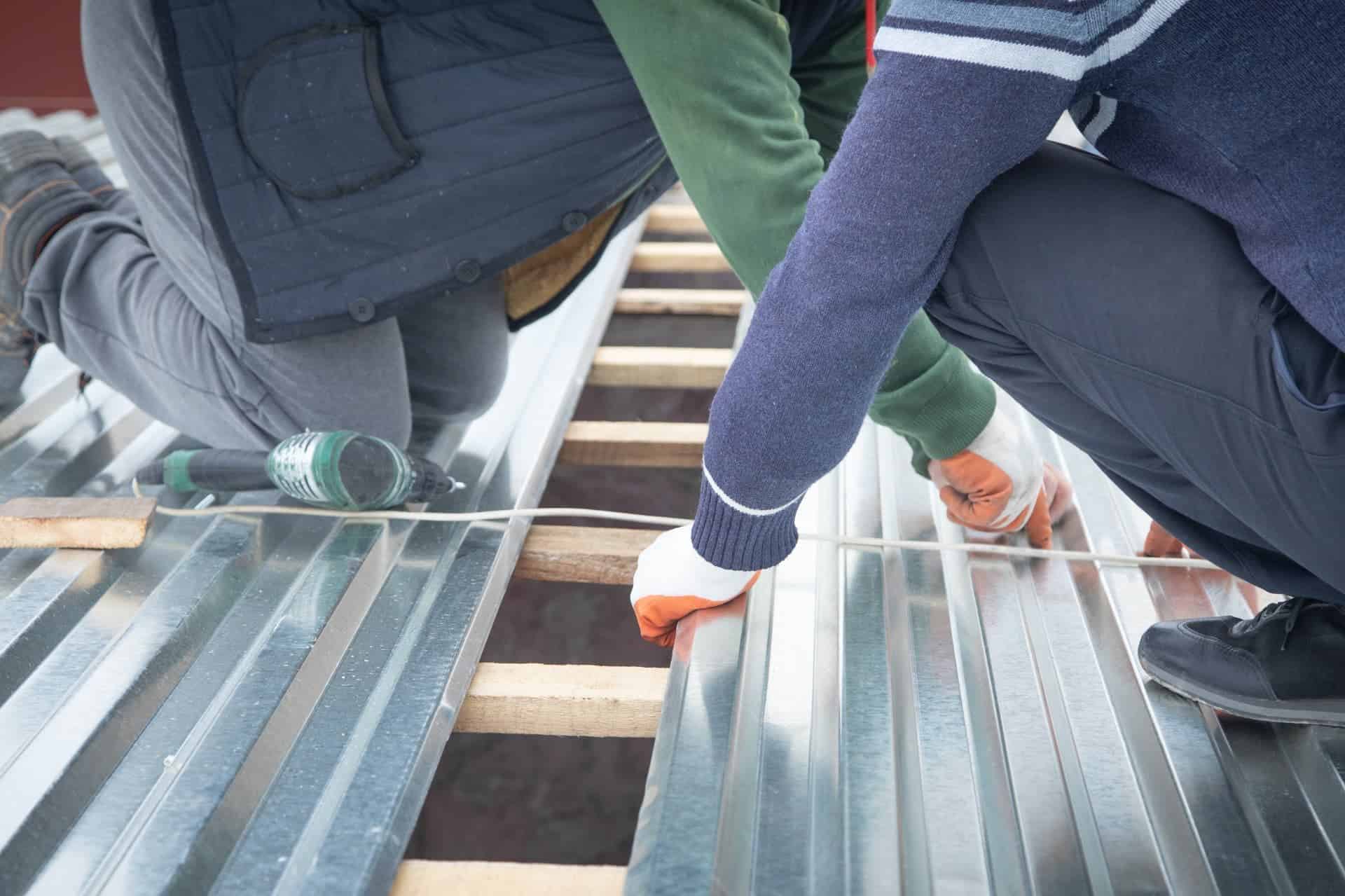
Ribbed and corrugated panels take screws through a flat or a crest, whereas standing seam relies on clips that sit under locked joints. Most metal on houses is coated steel, though aluminum and copper have a place too.

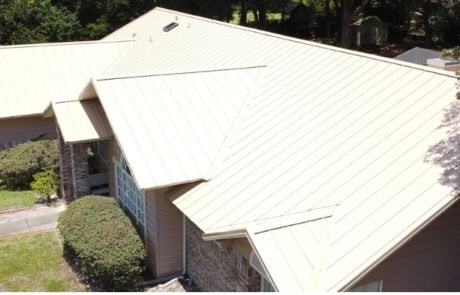
Screw heads marching in rows, easy to spot from below, point to exposed fasteners, while flat pans divided by upright folds with no hardware showing are standing seam. Barns, workshops and porches often wear corrugated or ribbed sheet, and dwellings use both.

Cross-Section Choices: Which Suits a Building

Corrugated material makes a run of soft, even undulations, while ribbed panels carry squared ribs with wide flats between. Side by side, adjoining lengths overlap by one crest, and screw locations follow a published diagram.

A squared profile resists bending and reaches further between purlins, and corrugated suits older buildings and a farmhouse look. Taller ribs give runoff more room on a long slope, while modest runs need little depth.

What Keeps Sheet Down: Small Parts, Big Job

Every screw draws a panel down onto a support, while a washer at each head keeps rain from following a shank. Sun and temperature swings dry out neoprene over time, and the panels can go on for decades more.

A screw set too tight crushes a washer out sideways, while too little pressure or a crooked angle leaves an opening.

Hardware Swaps – Where Help Stops

Rubber rings across a ribbed or corrugated field wear out together, and a whole-roof re-screw is routine over the years. Tired fasteners are pulled one by one, and a slightly fatter screw goes into each hole so a thread bites fresh wood or steel.

A full re-screw with new washers closes leaks at each head and tightens loose sheets, though perforations, split laps and faulty trim remain as before. Thread type follows whatever support lies below, since lumber and steel purlins take different screws, and color-matched tops blend in with a painted finish.

Movement Through the Day – Stress at Screw Holes

A steel panel stretches in sunshine and draws in after dark, and a long run adds up to a measurable distance, while aluminum goes about twice as far. A tightly fixed panel enlarges fastener holes a little with every cycle, and washers begin to leak.

Creaks as the day warms come from steel adjusting, and a properly detailed roof suffers no harm.

Under Upright Joints: Tucked Away

A long pan gets one fixed point, often near a ridge or an eave, and floating clips everywhere else let the pan glide. Trim at an unanchored end leaves a gap for travel, while a pan fastened hard along every foot pulls loose or ripples.

As a pan is laid, clips are driven into the deck along one leg, and an adjacent pan then covers every anchor point.

Seam Styles – Suited to Pitch

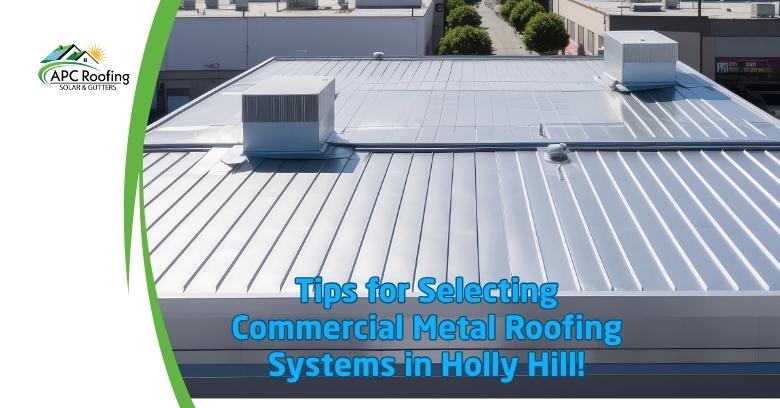
Some profiles snap together under hand pressure as each pan goes down, while machine-rolled designs get folded over by a motorized seamer. Double-lock construction resists uplift and ponding, and published ratings run down to lower slopes.

Manufacturers offer a range of pan widths and rib heights, and a home's design and a buyer's taste guide selection. Accessories such as clips and closures fit a single system, so any repair hinges on knowing exactly which panel is installed.

Heavier and Lighter Stock: Dents and Ripples

Panel thickness in steel is stated in gauge, and higher numbers mean thinner sheet. Twenty-nine is a regular sight on sheds and pole barns, while a dwelling generally takes twenty-six or twenty-four.

Aluminum is called out in decimal inches, and across the board thicker goods resist dents and ripple less. A view from below reveals nothing about grade, so printed product data gives a firm answer.

Rust Resistance: When Damage Matters

Raw steel is galvanized, or given an aluminum-zinc treatment, before shipping, and a primer and a colored enamel are baked over the metal. Scrapes confined to paint are harmless, whereas a gouge through to bare metal soon shows red.

A PVDF finish stands up to sunlight for a long time, and polyester types chalk white sooner. An aluminum-zinc surface is damaged by contact with fresh mortar, and a separator goes wherever panels touch new brick.

Base Material: Near the Water

Aluminum has less mass than steel and cannot turn red with rust, but a dropped tool or a falling branch dents a soft sheet sooner. Salt air at the coastal end of our territory attacks zinc-based layers, and manufacturers set limits on how near a shoreline a product may go.

Copper is usually kept to small accent roofs over a bay or a porch, and the metal weathers to a natural patina with no paint.

Metals That React: Separation Helps

A copper pipe or flashing above steel sends corrosive drainage down over the panels, and staining shows up well ahead of pinholes. Pressure-treated framing corrodes aluminum laid directly on top, and an ordinary screw of an unsuited alloy fails as well.

Replacement flashing should come from a metal already present, or tape and membrane keep dissimilar metals from meeting.

A Frequent Complaint: What Can Be Done

Oil canning names shallow dips and bulges across a flat pan, and faint hollows show at sunrise and fade by noon. A warped look in the metal lets no rain through, and useful life is unchanged.

Thicker metal, a slimmer width and striations rolled into every pan tame rippling, and an installer who does not overdrive clips helps as well. Photographs of finished houses show how noticeable oil canning can be, and the choice of panel is yours.

For People Inside – Day and Night

A shed with bare purlins under the panels rings like a drum, as no material absorbs vibration. On a house, a solid deck, underlayment and ceiling insulation sit below the panels, and loudness indoors is close to what asphalt gives.

Light tones and cool pigments bounce a large share of sunlight away, and the attic takes in far less. Dark finishes on metal get as hot as black shingles, and airflow and insulation lower down count just as much. Metal loses daytime warmth shortly after the sun sets, so upstairs rooms settle sooner at night.

Holding a Load Up There: Chosen With Care

Where winters bring real snow in our territory, slick panels shed a snowpack quickly, and a whole mass may come down at once on anything under an eave. Retention bars keep a load up top to melt off gradually, and hardware sits over entries, paths and meters.

A standing seam roof gets brackets that squeeze an upright joint rather than pierce a pan, whereas on corrugated sheet, mounts go into solid wood with gasketed fasteners, and in our warmer markets a house goes without.

Pounding From the Sky – Photographs and Measurements

Hail is a fact of life at the colder end of our service area, and heavier grades with stiffening ribs shrug off more stones. A strike sharp enough to break a finish lets rust start, and a trim piece pushed out of place can channel rain inside.

Once a storm has moved on, affected spots get photographed and measured, and the depth of each dent is gauged.

Storm-Ready Attachment: Trim Held Tight

Gusts tug harder at corners and along a perimeter, and once air slips under an unsecured edge, pressure can roll the metal up. Finishing trim is hemmed and caught on a cleat for a whole run, and nothing is left free to flap.

Screw and clip spacing tightens at corners and around a perimeter, set by a maker's tested layout for each exposure. At the coastal end of our territory, hurricane country asks for more holding power still, and panel and hardware are rated as one assembly.

Penetrations: Keeping Water Out

A pliable-based collar is shaped to fit a panel and clamped onto a pipe, and placement is down in a pan rather than on a crest. Square penetrations take a curb and a cricket on a high side, so runoff is steered aside.

Sealant finishes a joint already made watertight by folded metal, since weather hardens and splits any compound long before the panels are done.

Changes of Direction: Hooked and Clear

A valley pan goes down ahead of any panel, and panels are sheared to a matching slant. Each raw end is hemmed back and hooked onto a cleat, so no hole sits where runoff gathers.

A sealed endlap connects consecutive lengths on an extended run, and fasteners through both thicknesses keep water from backing up.

Additions and Wings: Where Membrane Takes Over

Through-fastened sheet generally wants about three inches of rise per foot, since anything less lets rain back up at overlaps. Machine-folded seams go much lower, and product literature states an exact minimum.

Many homes have a gentle stretch over a porch or a later addition, and a measured angle decides what goes on, and a part too low for any panel gets a membrane instead.

What Lies Underneath – Purlins on Outbuildings

Metal on a dwelling is installed over full sheathing, and a heat-rated synthetic membrane goes in between, since felt paper cooks under summer metal. Pole buildings commonly have metal spanning between purlins with air below, and distance between supports sets a minimum gauge.

Once an old covering comes off, spongy sheathing is found and swapped, since punky fibers offer a screw no bite.

A Recover Instead of a Strip – Battens and Underlayment

A single layer of shingles can usually remain under new metal, code permitting, and noise and a dumpster are avoided. A steel covering adds only slight dead load, so most framing takes extra weight without reinforcement. Furring strips and a new underlayment go down over existing shingles, and screws reach through into solid wood.

Where a roof was already recovered once, or the decking is soft, everything comes off, since trapped dampness under metal has no way to dry.

Completing the Job: Done Properly

Closure strips shaped to a panel profile plug hollows under every rib where a run starts and stops, and driving rain and wasps are blocked. A ridge cover can include a vent or be solid, according to how an attic sheds heat and moisture.

A drip edge along an eave and trim on each rake complete a border, and runoff is steered clear of a fascia board.

Care on Site – Carrying and Stepping

Standing seam panels are formed at full slope length, and no cross joint interrupts runoff. Carrying an extended panel takes people spaced along the metal, and a damaged pan is replaced, not flattened out.

Weight should go only into pans over framing, as a seam under a boot can bend open. Morning dew alone can make metal treacherous, and a homeowner is better off staying on the ground.

Signs Worth a Call: Plain to See

  • Red staining around each screw, partway down a pitch.
  • Hardware sticking up, mid-panel.
  • Trim bent up at a corner, following a gusty night.
  • A collar gapping around a stack, on a back slope.
  • A sheared end streaked orange, at the bottom of a run.
  • Blotchy color, across one face of the house.
  • Water marks lined up on drywall, in a garage.
  • An endlap gaping, at the low end of a panel.

How APC Roofing Tackles Metal Roof Installation in Kissimmee Florida – Step by Step

The first thing we do is identify which panel system is on the house and what holds the panels down, before each fastener, edge, boot, valley and lap is read in sequence. We note thickness, coating and hardware along the way, and from inside, the attic shows any old leaks.

A report with photos sets out what is up there, and each recommendation carries reasons. A sound covering is called sound, and a roof at the end of service life is named as such.

Metal Roof Installation for Property Owners in Kissimmee Florida – Straight Answers

Dial 407-270-1129 and we will schedule an inspection.


Repair or Replacement: Piece by Piece

One badly damaged sheet can be swapped alone, although new paint never quite matches older metal. A new pipe boot or a resealed lap ends a local drip, while re-fastening cures aged washers.

Widespread perforation puts replacement on the table, and metal torn loose over entire slopes is no better off. Redoing one face of the house is a middle path, when harm is local.

The Long View – Exposed Screws Versus Hidden Clips

A carefully installed panel system can pass forty years, though climate, care and material all make a difference. A seamed pan roof has fewer parts that age, whereas exposed-fastener sheet needs a re-screw partway through.

Galvanic contact, unfinished cuts and caulk in place of flashing hasten replacement, and an occasional walk-over catches problems promptly. Piles of leaves behind a chimney keep a patch of metal damp for days, so clearing debris away helps paint last.

If Metal Roof Installation in Kissimmee Florida is on the table, phone APC Roofing at 407-270-1129. We will inspect all hardware, every edge and each penetration, and a write-up leaves every decision in your hands.


Frank Smith

Verified

★★★★★
Our experience with APC roofing began with an introduction and quote by Lucio. He came to our home, explained the process and immediately went on the roof to access the damage. As we began to inquire further about what to expect Lu got us in contact with Adrian. Now Adrian became an invaluable partner in very honestly and sincerely letting us know what APC could and couldn’t do to repair or replace our damaged roof. Hurricane Milton left us scrambling to come up with thousands to meet our deductible. Patiently and empathetically Adrian dispelled our apprehension about working with a contractor or being left incomplete and in need of legal help to resolve any disputes. He gave us his assurance that he would oversee the entire project. I have to admit that he kept his word. Even when we thought there would be a last minute hiccup with financing he put me in-touch with Lucy and she did not give up until we got the information and terms I wanted. This was a truly great team from start to…

Mike Price

Verified

★★★★★
Everything went smooth on schedule nice clean job would recommend to anyone Mike Price was a great guy to work with

Tom Lewis

Verified

★★★★★
This company does fantastic work from start to finish. I couldn’t be more pleased and will refer anyone I know to APC Roofing!
★★★★★
APC Roofing recently installed a beautiful new roof on our home. Our experience, from the first visit by Lance, the APC salesman through to the finished product, was absolutely great. Their crew arrived in the morning and prepared the site, covering everything around the house so no damage would be done. They finished the job by late afternoon. The crew was polite, worked quickly, and all surrounding areas were meticulously cleaned. From the salesmen, to the hard-working roofing crew, to the team in the office, I couldn't be more satisfied. My sincere thanks to you all.

Elsa Kate Nichols

Verified

★★★★★
They were very helpful in working through and explaining the insurance process beforehand. The crew arrived earlier in the day both days than promised and worked hard. The roof and details are beautiful and everyone, from the gentleman delivering the trash trailer to the roofers to the manager, treated our property with respect and care protecting plants and cleaning up nicely.