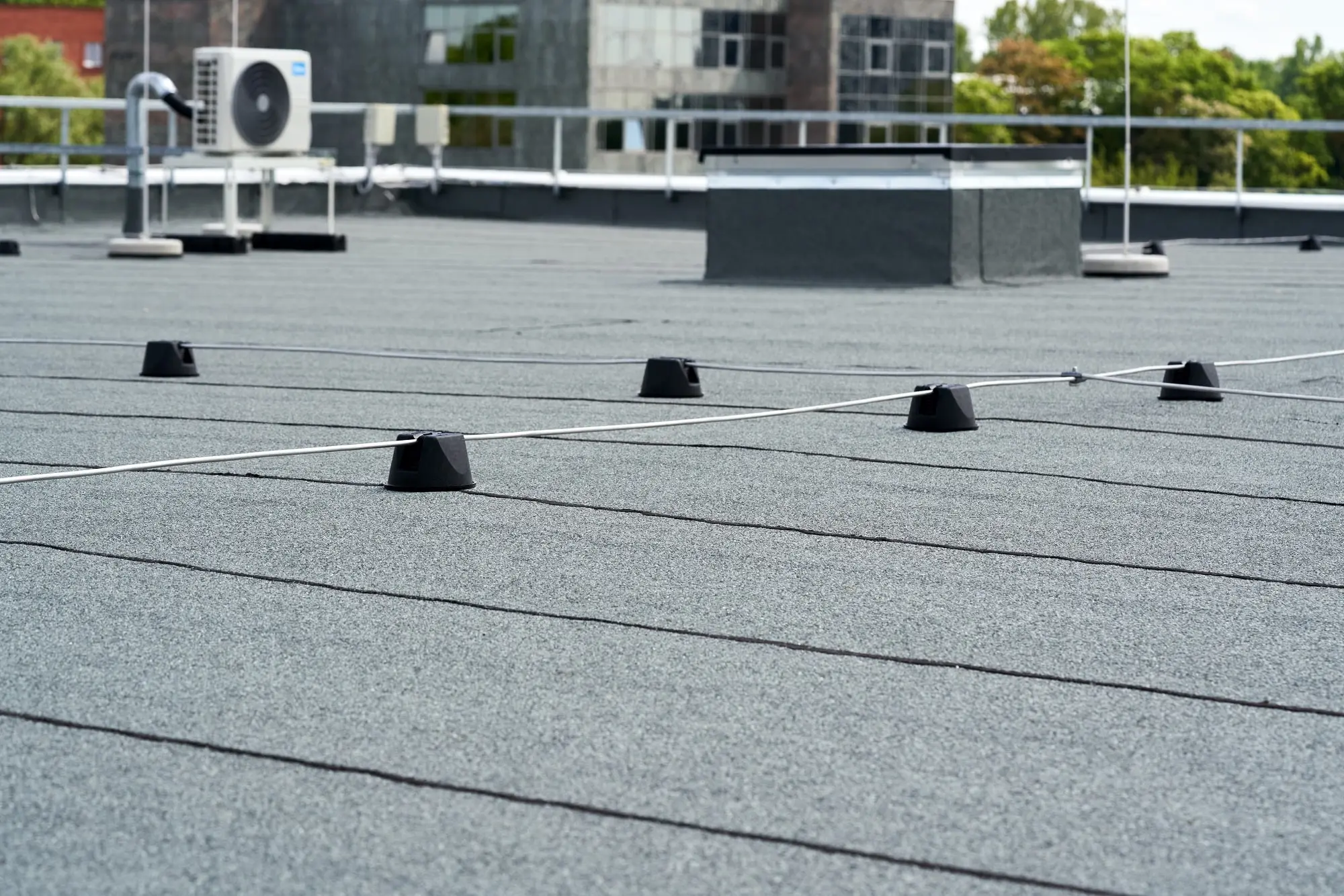
Hoping to find Commercial Roof Repair in Kissimmee Florida?
APC Roofing builds and mends the wide, low coverings above places of work, taking in the edges, the outlets and every curb.
Dial 407-270-1129 and a roofer will walk the surface and explain the findings.
Business Property: Where the Job Differs
Customers, goods and running machines fill the space beneath the covering, so a drip can shut down a shift instead of staining a tile. Across a large building, the upper surface is broad and barely sloped, so rain runoff and wind loads are set by design numbers.
Air handlers, fans and communications gear sit on the membrane, and every pipe, duct or support must have a sealed opening. How the building is used guides the specification, and a freezer warehouse needs details an office never does.
Kinds of Low-Slope Covering: a Plain Primer
One flexible layer of TPO, PVC or EPDM is what single-ply describes, modified bitumen is rubberized asphalt sold by the roll, and built-up roofing alternates felt with hot tar. Thermoplastic seams are welded with heated air, whereas rubber splices rely on primer and adhesive tape.
Cooking vents on a restaurant leave fat beside the fans, and asphalt or EPDM turns soft under oily buildup, so PVC is often specified in the affected zone. A stone-covered built-up system is weighty and tough, since the aggregate protects the felts from ultraviolet light.
Steel Over a Warehouse – Details Worth Knowing
Screws through the flats hold an exposed-fastener sheet in place, and the threads grip purlins or joists underneath. Rubber washers under the heads harden and crack in the sun, and the fasteners wiggle loose as the sheets expand and contract.
On standing seam, concealed clips hold each rib to the deck, and the pans shift slightly through the day. Corrosion gathers where sheets overlap and at trimmed ends. Caught early, rusted panels and fasteners can be replaced before the damage spreads.
The Deck: Reading the Substrate
How the system is held down is set by the structure under the insulation, and a new covering goes over the same framing. Steel with flutes holds screws securely, a poured slab gets adhesive or anchors in bored holes, and plywood takes nails or plate fasteners.
Years of dampness can corrode metal decking in patches, and failing stretches are replaced rather than covered. The structure’s underside is checked from indoors when access permits, and a few test openings from the surface fill in the gaps.
Keeping a Membrane in Place – Pros and Cons
A fastened install uses plates and screws in the overlaps, adhered work is glued from edge to edge, and ballasted sheets lie free beneath river rock or concrete pavers. The kind of deck, the height and the wind at the site decide the pick, and a heavy design goes ahead only once the framing is confirmed adequate.
Between the plates, a fastened sheet balloons in stiff gusts, whereas glue keeps a sheet calm only over a dry, clean base. Ballast makes any inspection slow, as every seam remains hidden until the stone or pavers are shifted.
Wind Across a Wide Roof – a Matter of Engineering
Corners take the strongest suction, because moving air curls and speeds up on spilling over the edge. The strips along the sides rank next, and the interior bears a light load.
Screws and plates are packed tighter toward corners and edges, with the layout drawn from design tables for the site. Skimping on anchors at the outside angle lets the covering pry loose, and the opening grows as each gust gets beneath.
Foam Insulation: More Than Warmth
Polyisocyanurate panels cover the deck with offset joints, and a tough cover board over the stack takes foot traffic. Insulation keeps utility bills in check, and tapered stock tilts the finished surface toward the drains.
Wet polyiso loses much of the R-value, and the added weight and dampness corrode metal decking. Meter readings confirmed by cut cores trace the extent, and every ruined section is replaced rather than covered.
Outlets on a Big Building: The Path Down
Each interior sump wears a cast strainer dome, which keeps litter from entering the pipe. A grate packed with sludge chokes the flow, and a pond spreads across the field.
A raised overflow waits above each primary drain, so a steady discharge up high means a jam below. An inch of standing water weighs about five pounds per square foot, and a puddle that survives two days hints at settling or a choked strainer.
Tracing a Leak – No Guesswork
A stained ceiling tile marks only where the drops fell, though the actual flaw may be far across the bay. The valleys in a steel deck steer seepage lengthwise, and seams in the foam layer offer extra routes.
A roofer probes the laps, curbs and outlets upslope of the stained area, and electronic leak detection can locate a pinhole. Sealing whatever sits above the soggy tile rarely fixes anything, and moisture finds a way in at the next storm.
Rooftop Mechanical Units – Practical Notes
Each large machine stands on a raised curb, and the covering turns up the sides beneath metal counterflashing. The corners are the fussiest detail up there, and a small gap lets wind-driven rain into the structure.
When a heating contractor swaps a machine, an adapter curb often goes on unflashed, and the ceiling underneath begins to spot. Condensate discharged straight onto the covering discolors and softens the surface, and the fix is carrying the flow to a drain.
Objects That Rise Above the Surface: Handling Each Type
A round plumbing stack gets a molded boot clamped at the top, while awkward profiles are boxed in a pitch pocket and packed with filler. The compound shrinks and cracks as the years pass, so topping up is part of routine upkeep.
Gas lines and electrical conduit should sit on loose blocks, as a stand screwed into the deck punctures the waterproofing. A rubber pad beneath every foot distributes the weight, so heat and vibration scuff the buffer instead of the membrane.
Glazing and Access Points: What Wears
Years of strong sun make plastic lenses chalky and brittle, and fractures tend to start at the fastener holes. A shrunken gasket or a separated miter lets water through, and the covering gets accused of a fault in the glazing.
Every trip up the ladder means lifting the hatch cover, so the hinges, latch and weatherstrip wear out. Automatic smoke vents must deploy when heat melts a link, and no roofing work may block the mechanism.
Walls That Rise Past the Deck – Sealing the Junction
The field sheet continues upward as base flashing, a screwed termination bar secures the top, and metal counterflashing laps down from higher up. A coping cap spans the crest to push rain aside, though a cracked seam beneath lets runoff in.
Porous brick or block can pass water straight through to the interior, so the stain that appears gets blamed on the membrane. An inspection covers the coping, the counterflashing and the wall as well as the membrane, and a gap in the mortar is repointed, never just caulked.
Edge Metal Without a Parapet – Wind at the Border
The flange is hooked onto a cleat fastened along the eave, and a cover strip of membrane is laid over the upper face. Codes want perimeter pieces that pass uplift testing for the site, since loose metal becomes a lever that gusts use against the field.
An eave gutter on a big building collects runoff from a vast surface, so hanger spacing and outlet size follow the flow. Bent or lifted trim belongs on the repair list, since securing the metal now keeps the sheet from tearing.
Everyone Who Goes Up There: Living With Guests
Mechanics who tend the condensers make the same trip many times a year, and the route wears a visible track into the field. A dropped screw gets pressed through the membrane by the next boot, and an access panel set down on a corner slices a gash.
Thick rubberized pads trace a safe path to each unit, and grinding hits dense material instead of the field. A note at the ladder can ask every trade to stay on the protected strips, and screws and scraps can be bagged and taken down.
Planned Care for a Membrane: Timing and Tasks
A commercial system benefits from a walk-through twice annually, and a damaging storm earns an additional check. Good upkeep empties drain baskets of leaves and litter, the seams are traced with a probe, and brittle sealant gets marked for replacement.
Preparing for the stormy months means close scrutiny of outlets and perimeter metal, and the next round, after a hard season, searches for fresh movement. Every minor fault is recorded with the exact spot, so decisions can be made calmly and in advance.
Paperwork Worth Keeping – Notes That Help
A sketch of the whole area places each unit, drain and hatch, and a section view names each material from deck to membrane. A dated photo log follows each repair, and moisture readings are added as taken.
Many older properties change hands without a scrap of information about the covering, and each roofer who climbs up has to investigate afresh. Roof records belong with the building, not with whoever did the work, and a copy can go to a successor or a buyer.
Mend or Start Over: Reading the Evidence
A sound membrane with a handful of local faults simply gets patched. Extensive saturated boards make the job a replacement, and brittle joints throughout lead the same way, while a date on the calendar decides little.
Taking out just the spoiled areas occasionally works as a halfway measure, if the rest of the sheet remains in good shape.
Planning a Reroof – the Rules and the Reasons
With a recover, the old sheet stays and a new membrane goes over the top, and a thin board keeps the surfaces apart. Building codes accept an overlay where only a single covering is in place, as long as the insulation below is dry.
Tearing off takes the assembly back to the bare structure, and an open view shows what needs mending. Fresh tapered boards can give a dead-flat surface some fall, and a cricket between outlets divides the flow.
Warning Signs – Reasons to Call
- Rain gushing out of the high overflow, which exposes a blocked lower drain.
- A brown ring overhead that widens with each downpour, which reveals the foam above is getting soaked.
- Blotches or efflorescence on brick under the coping, which can come from open joints up top.
- Rattling trim along an open eave, which can expose the border to uplift.
- Standing water in the same place long after a downpour, which may mean a low spot or a blocked outlet.
- A skylight dome gone cloudy or crazed, which may give way under a misstep.
- Wet insulation hanging from an open ceiling, which shows a leak traveling inside the assembly.
- A gutter pulling away from the hangers, which can reflect loose brackets or a jam.
How APC Roofing Tackles Commercial Roof Repair in Kissimmee Florida: Readings Before Advice
The first thing we examine is each drain, scupper and overflow, and the seams, curbs and edges are next in line. On a leaking building, cores and a meter check the foam, and no recommendation is made until the readings are in.
What we see is set down in writing, photographs and a drawing included, and every defect is keyed to a location. The conclusion is repair, partial replacement or full replacement, and the reasoning is laid out for you to question.
Commercial Roof Repair for Property Owners in Kissimmee Florida: What Needs Doing Up Top
Reach us at 407-270-1129 and we will fix a time to see the building.
Business as Usual Downstairs – Planning Together
Drilling a steel deck sounds like thunder to everyone below, and solvent smells from adhesives can be drawn into the ventilation. The facility manager hears in advance when the noisy stage is coming, and vents close to the work can be blocked until curing ends.
Debris leaves by chute into a dumpster, and desks and machines under an open section can be shielded. A water-borne glue smells much milder than a solvent type, so gentle formulas are often specified above working space.
Staged Work on a Big Surface – the Discipline Involved
The amount torn off is capped by what can be dried in by nightfall, and the bare deck gets new boards and membrane promptly. A night seal links the finished part to the untouched field, and the extra piece is sliced off the next morning.
The outlook decides how far the tear-off goes, and a front on the way shrinks the stretch. A downpour on exposed insulation leaves the boards waterlogged, and drips can fall on whatever sits underneath.
The Weather We Work In – Market by Market
The colder end of our territory adds hail and snow load to the list, so impact-resistant cover boards and a framing check make sense. Wherever we operate, ultraviolet light and heat age the sheet, so a bright, reflective finish reduces solar gain.
The coastal end of our territory demands fastening designed around hurricane gusts, and heavy tropical rain calls for extra overflows. Some adhesives will not cure below a set temperature, but a welder copes with cool air far better than with a shower.
Safety for Everyone Who Goes Up – Measures Worth Having
Many low buildings have no wall at the perimeter to catch a misstep, and anyone near the edge works inside warning lines or clipped to anchors. Plastic skylights break under someone who stumbles onto the dome, and fixed screens rule out a plunge into the space below.
Permanent anchors make later visits by other trades less risky, and a self-closing gate at the hatch adds a barrier. Our findings name each missing screen or rail, since a fall from even a single story can cause serious injury.
For Commercial Roof Repair in Kissimmee Florida, contact APC Roofing at 407-270-1129. A roofer will inspect the drainage, the seams and the flashings, and you receive the findings in writing and decide from there.
« All Services in Kissimmee Florida