Looking for Shingle Roof Repair Across Independence Missouri?
APC Roofing puts down granule-surfaced coverings from the deck up for homes of every age and size.
Reach us at 913-398-5020 and a visit will show what condition everything is in.
Components and Construction: The Makeup Explained
Each shingle is built on a fiberglass mat for strength, while asphalt soaked through the sheet turns rain away, and a layer of granules on top screens out ultraviolet light.
Seemingly similar products often follow very different recipes, and weight per square often tracks with durability. A sample board shows color alone, but the manufacturer's printed sheet gives the test results.
Choosing a Profile: How the Designs Differ
A three-tab piece has one layer and two notches that divide its face into tabs, and the result is a regular brick-like pattern. An architectural product bonds a contoured upper strip to a solid backer, so the extra depth gives relief.
Laminated products carry more asphalt and weigh more per square, and listed wind classes are generally higher. Nails on a dimensional shingle go through the zone where the plies meet, and the maker marks the correct spot on each piece.
Strip Products in Use: Sensible Settings
A detached garage, a shed or a porch often suits three-tab well, and new work can blend with existing courses of that kind. Several makers now offer that style in fewer colors than before, and a favorite shade may be gone for good.
A dimensional surface disguises minor unevenness in the sheathing, while a thin strip follows every undulation. Either style goes over the same underlayment and flashings, while the shingle alone sets the two apart.
The Granule Surface – Early and Late Stages
Shingles fresh from the bundle drop leftover grains in their opening months, and that is no cause for concern. Thick deposits of grit below an old covering show that its surface is worn, and uncovered asphalt dries out and cracks in sunlight.
Planes aimed south or west receive the harshest sun, and bald spots usually show up there ahead of the rest.
The Factory Sealant Band: Early Weeks
Glue is applied to every shingle at the plant as a narrow stripe, and warm days melt it just enough to anchor the next row. A stuck course stands up to gusts that would otherwise flip its edge, while nails hold every shingle for its whole life on the house.
During cold stretches at the colder end of our territory, sealing is delayed, so tabs stay at risk from wind for a while. Dabs of asphalt cement applied by the installer are what makers specify in that case, and a printed label spells out quantity and spacing.
Attachment Basics – Frequent Errors
Nails land in a slim target stripe laid out by the manufacturer, where the shank also catches the headlap of the row below. Most shingles take four fasteners apiece, and high-wind or steep work moves the number to six.
Nails placed high skip the course below, excess air pressure buries the head in the mat, and a cocked shank raises a hump in the shingle overhead. A bundle's wind class holds only when the printed pattern is followed, while a bad compressor setting repeats itself on every shot.
Under the Underlayment – Before New Courses Go On
Flat sheets of plywood or OSB make up the deck, since fasteners must bite into something continuous. Older houses sometimes keep the gapped boards once used under shakes, and full sheathing is added on top before any shingles.
Sections that are soft, delaminated or rotted get cut out and replaced during a tear-off, since decayed material lets go of whatever is driven into it. Adjacent sheets are spaced slightly apart at their edges, as boards butted tightly lift into ridges when they absorb moisture.
Old Paper, New Fabric – Types in Use
Shingles never go straight onto bare decking, since a water-resistant membrane comes between, and its seams are lapped so rain crosses them without entering. Synthetic material has taken over from traditional felt on most jobs, as the modern fabric is tougher and does not ripple after rain.
Moisture that sneaks beneath a shingle is carried off by the membrane, yet leaving it bare for long shortens its useful life.
Ice Dams at the Overhang: Trapped Runoff
Across the colder end of our territory, snow over a warm attic turns to water, and meltwater hardens again once it reaches the cold rim. Held back up the slope, water works its way under the tabs, where ordinary underlayment lets it through at every nail.
Where cold winters bring ice dams, a sticky rubberized barrier is applied at the eaves, and it continues until it passes the wall line inside the house. Everywhere in our territory, it is also a regular choice for valleys and around chimneys, as water collects and lingers there.
Finishing the Borders: Sequence Matters
A bent metal drip edge runs along the eaves and up the rakes, so rain falls free beyond the woodwork. The lower flashing sits under the underlayment, and at the gable ends that sequence is reversed.
Many building codes now require edge metal on every border of a shingled plane, as water tends to wrap under an unprotected rim.
The Launch Point of Each Plane – Rakes Too
A starter strip goes down beneath the first visible course, so the sealant is positioned right at the lip. A rotated field piece strands the adhesive several inches up, and the tabs at the low border are held only by nails.
The sloped gable edges frequently get starter strips too, because gusts pry at a roof's perimeter.
Drainage Between Planes: Debris and Flow
An open valley shows a strip of metal running down the crease, while the closed-cut type runs shingles from one side across and trims the other side along a chalk line. Interlacing rows from each plane suits single-layer products, while makers generally advise against it for architectural shingles.
The middle of the trough is kept free of fasteners, and a waterproof underlayment is laid beneath along the full run. Collected leaves and twigs slow the flow and keep the surface wet, so water starts finding a path under the sides.
Roof-to-House Joints – Chimney Aprons
Step flashing along a wall is set one to a course, while the exterior finish overlaps the upright flange. A kickout diverter belongs where the lowest course runs into the face of the house, so water is thrown clear into the gutter.
Masonry chimneys take a base apron, side step flashing and counterflashing grooved into the joints, and a broad stack calls for a saddle upslope.
Where Drain Lines Exit: Timing a Swap
Every pipe boot pairs a flat base of metal or plastic with a snug neoprene collar, and sun eventually opens cracks where the seal wraps the stack. Shingles uphill cover the top of the flange, and water running down the slope passes over the exposed lower part.
Collars frequently need attention while the rest of the covering is healthy, so new boots come with every new covering.
Where Slopes Crest: Cold and Cracking
Cap shingles straddle the ridge and run down every hip, and on a laminated covering the manufacturer supplies a thicker matching version. Improvised pieces from cut tabs are lighter and thinner, and on frigid days at the colder end of our territory the crease may crack.
The caps often conceal a vent along the peak, so the nails must be long enough to pass through it and bite the sheathing.
A Healthy Upper Story – Blocked Paths
Outside air should come in through vents under the eaves, while an exhaust at the peak lets it escape. Loose-fill insulation piled into the corners can smother the flow, and foam or cardboard baffles hold a channel clear.
A stuffy attic adds heat beneath the deck, and moisture from the living areas lingers up there. Across the colder end of our territory, a crust of frost builds on the nail points, and the water runs down as the day goes on. Combining different exhaust types can make one vent pull air in through another, which leaves the eaves without movement.
Local Extremes: Wind, Sun and Winter
Our markets take in mountain snow in one place and tropical heat in another, and asphalt meets a different set of stresses in each. At the coastal end of our territory, a hurricane can drive powerful gusts for many hours, so manufacturers list a high-wind nailing schedule. Constant heat pushes the lighter oils out of the asphalt, and lasting humidity gives algae room to grow.
At the colder end of our territory, ice forming in hairline cracks forces them apart, while snow cover keeps the eaves cold for weeks at a time.
Frozen Pellets: Surface and Below
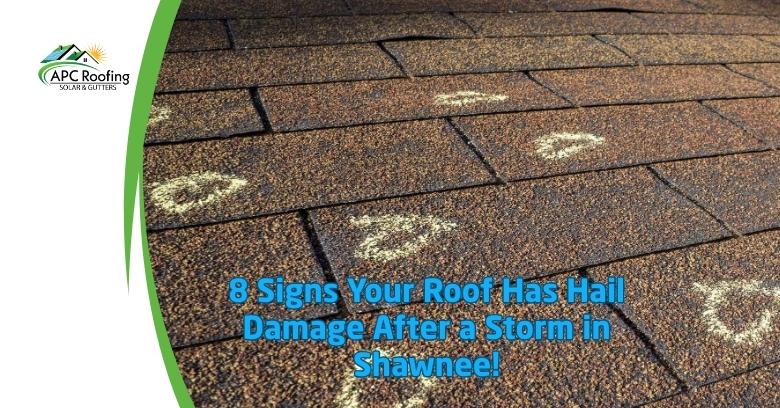
At the colder end of our territory, hail falls in many storm seasons, so shingles designed to resist impact are widely sold. A single stone can leave a dark circle where the granules came off, and a violent one can split the reinforcement beneath.
Laboratories rate impact resistance by dropping steel balls from set heights, and a higher grade means passing a tougher trial. Some companies add rubber polymers to the asphalt, and the extra give absorbs part of each blow.
Strong Gusts: Folded Tabs
Suction pulls hardest along the eaves, the rakes and the corners of a roof, so any piece that has come unstuck shakes in each blast. Once a tab is doubled back, a crease forms where it bent, and the mat never regains its strength along that line. A piece in that state is swapped out, while an unfolded one can be sealed again with roofing cement.
A missing tab leaves bare underlayment facing the sky, and daylight starts breaking it down at once.
Stains and Green Growth: Shade and Damp
Algae is what paints the long black marks on many slopes, which survives by feeding on limestone filler. Shady, slow-drying planes at the humid end of our territory tend to go dark soonest, but the streaking by itself is largely about looks.
Moss is more serious, because it stays wet for days, and as it creeps it breaks the tabs' seal. Pressure washing takes the granules along with the growth, so a light misting of a purpose-made solution is used instead. Some lines carry copper in the top layer to resist algae, while rain running over a zinc band near the ridge holds the stain back.
Color on the Slope: Beyond Looks
Dark shingles soak up more sunlight and run hotter, while pale ones stay cooler. Some product lines use specially coated granules that turn back more radiation, and a measured reflectance number comes with them.
The look can drift from one manufacturing lot to the next, and makers advise mixing bundles across a slope. Blends that combine many colors mask small mismatches, while a uniform finish lets them stand out.
Standing on a Slope: Care Underfoot
By midday in warm weather the material becomes tender, so a shoe sole scrapes away grit. At the colder end of our territory, icy mornings leave the tabs ready to crack underfoot, and a skin of frost leaves the pitch slick.
Keeping both feet in the yard is safer for an owner, and a look from across the street tells a great deal.
Laying Over the Old Covering: What Gets Missed
A re-roof over a prior roof is legal in many towns, but never over two, or over boards that are wet or rotten. A layover keeps the worn shingles sitting on top, so a spongy section just stays put.
Irregularities beneath carry up into the finished roof, while aging flashing frequently stays put. A doubled covering rests on structure never meant for that weight, while the fasteners need more length to bite into the boards.
Things That Turn Up – Worth a Closer Look
- Dark sand gathers where the spouts empty, and the layer thickens with each storm.
- Some tabs flap loose or are gone altogether, and wind has pried the adhesive apart.
- The lower margins cup into a shallow dish, and the asphalt is drying out.
- Straight breaks run through a few pieces, and the layer below begins to soak up water.
- Bald areas look black and shiny, because the granules there are gone.
- A flue or vent collar has turned brittle and torn, and rain slips through into the house.
- A strip of flashing at a dormer is rattling free, which lets wind-driven rain in behind it.
- A damp patch shows up on the ceiling after heavy rain, while the opening outside can be several feet off.
How APC Roofing Approaches Shingle Roof Repair in Independence Missouri: Findings You Can Use
An inspection starts by walking each slope in turn, taking in the valleys, the vents, the flashings and the edges. From inside, the attic is searched for water stains and pinholes of light, since discolored sheathing shows where water has traveled.
Any problem is photographed, and damage is measured where size matters. The results are put in writing in everyday words, and each recommendation carries its reasons. A modest problem is presented as modest, while a covering at the end of its life is called that. What happens next is the owner's decision, including the option of doing nothing for now.
Shingle Roof Repair in Independence Missouri: Findings in Plain Words
Reach us at 913-398-5020 to have someone come out.
Keep or Tear Off: Knowing the Limit
A failed vent collar, a lifted flashing or several damaged tabs calls for ordinary repair, and the rest of the shingles stay where they are. Patched areas show a visible contrast at first, while the manufacturer may have retired that design.
On a worn covering, tabs are brittle and crack when lifted to reach the nails, and one fix can turn into several. If hard, curled courses run from eave to ridge, a patch simply moves the problem along.
Life Expectancy: Care Along the Way
A three-tab product commonly gives around fifteen to twenty years, while laminated lines often reach close to thirty. The real number depends on sun, attic air movement and how the nails went in, and a severe storm can cut a covering's life short.
Checking the flashings and pipe seals now and then is sensible upkeep, because small faults caught in time never reach the deck.
For a roofer's view of Shingle Roof Repair in Independence Missouri, dial APC Roofing at 913-398-5020. The covering is inspected from the gutters to the ridge, and the written findings let you decide.
Verified

Verified