Hoping to find Commercial Roof Repair in Holly Hill Florida?
APC Roofing installs and mends membrane and metal coverings on business buildings, down to the drains, edge trim and equipment curbs.
Reach us at 386-259-8425 and a roofer will inspect the whole surface and report back.
Above a Shop or Office – an Overview
Workers, merchandise and equipment depend on a sound covering, and seepage can empty an aisle or stall a packing station. Wide commercial buildings carry a top surface that is nearly flat, and runoff and uplift are engineered rather than guessed.
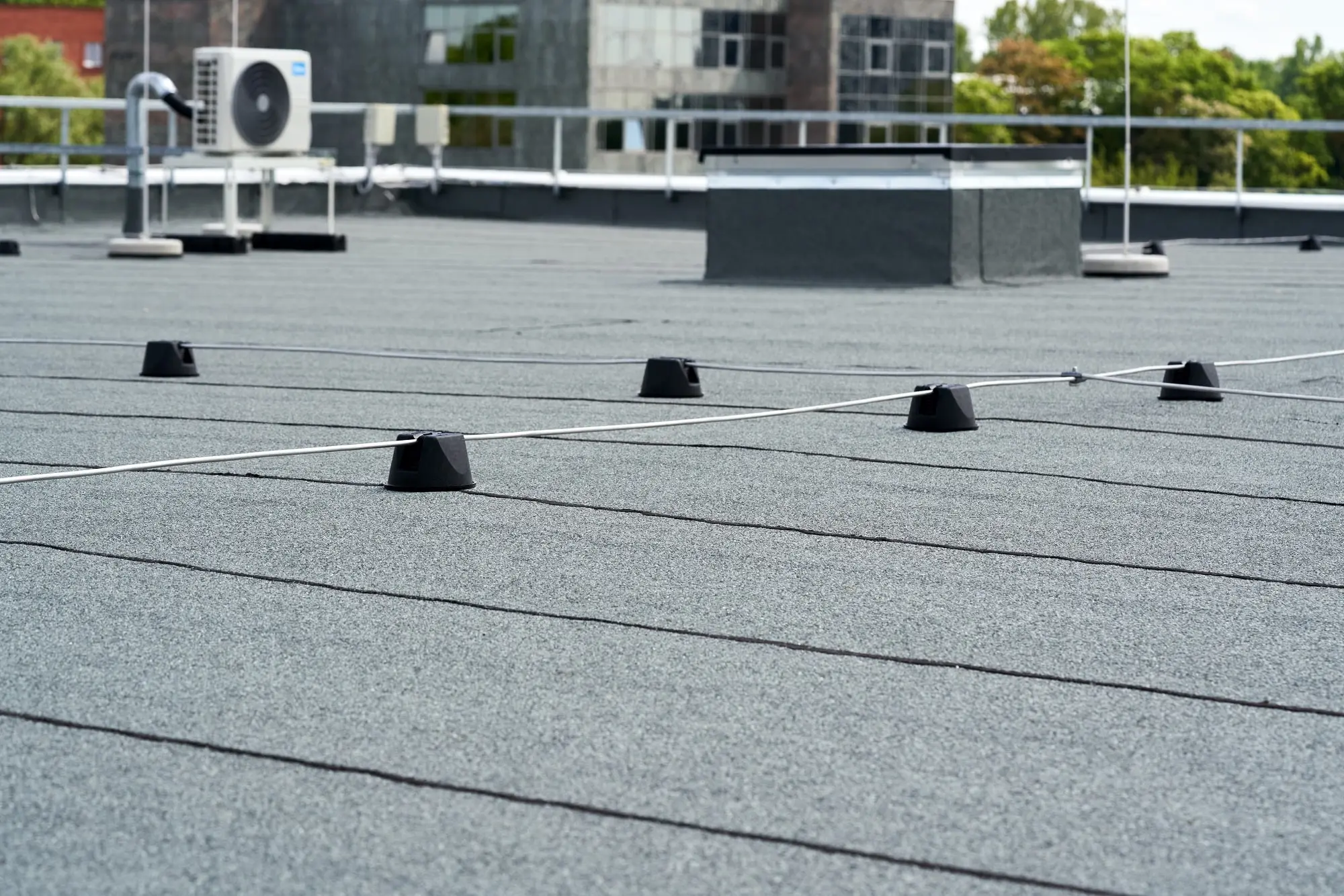
Package units, vent stacks and dishes are bolted in place above the ceiling, and every duct or conduit crossing the covering demands a watertight seal. How the building is used guides the specification, and cold storage calls for vapor control an office can skip.
The Principal Membranes – Sorting the Catalog
A single-ply job uses one layer of TPO, PVC or EPDM, modified bitumen comes as polymer-rich asphalt on a roll, and built-up roofing alternates felt with hot tar. A walk-behind welder fuses the overlaps on thermoplastic material, whereas a rubber splice depends on primer and tape.
Cooking vents on a restaurant leave fat beside the fans, and oily residue softens asphalt and EPDM, so PVC is a common pick for the spot. Built-up plies under a gravel layer make a heavy, durable assembly, because the loose aggregate keeps ultraviolet light off the bitumen.
Panel Roofs on Low Buildings – Wear Over Time
On an exposed-fastener system, screws pass straight through the face of each sheet, and the threads grip purlins or joists underneath. The neoprene washer at each head dries out under years of sunlight, and the fasteners wiggle loose as the sheets expand and contract.
On standing seam, concealed clips hold each rib to the deck, and the pans shift slightly through the day. Corrosion gathers where sheets overlap and at trimmed ends. Caught early, corroded panels and fasteners can be replaced before the damage spreads.
Deck Types: Grip and Strength
Fastening choices depend on the structure below, and the framing outlasts several coverings. Formed steel grips a screw well, concrete is glued or drilled for anchors, and plywood takes nails or plate fasteners.
Water held against a metal deck for years can thin the sheet, and a damaged area is removed and a new piece fastened in place. From inside, the underside is inspected wherever the ceiling allows, and small cuts from the upper side answer the rest.
Keeping a Membrane in Place: Weighing the Choices
Some commercial sheets go down with plates and screws at the seams, adhered systems are rolled into a coat of adhesive, and a ballasted build lies loose under gravel or pavers. The deck, the building’s height and the site’s exposure steer the decision, and the framing’s spare load capacity limits how much weight can go on top.
A mechanically fastened sheet billows between fastener rows in strong gusts, but adhered work stays motionless and needs a dry surface to grip. Ballast makes any inspection slow, since rock or pavers have to be cleared before a lap can be read.
Uplift on a Big Building: Setting the Screw Pattern
Pull is greatest at the outside angles, as vortices form where the flow crosses the parapet line. A band along each side takes somewhat less, and the interior bears a light load.
Screws and plates are packed tighter toward corners and edges, and design tables for the height and exposure set the spacing. Skimping on anchors at the outside angle lets the covering pry loose, and the opening grows as each gust gets beneath.
Foam Insulation – Several Jobs at Once
Polyiso is set on the deck in one or more courses, and a tough cover board over the stack takes foot traffic. Good insulation trims the demand on the HVAC system, and tapered units can slope a dead-flat deck to the outlets.
Wet polyiso loses much of the R-value, and the heavy mass adds weight and rusts a steel deck. Nondestructive meters and cored samples show how far the problem reaches, and each sodden piece is removed instead of buried.
Drains and Overflows: Clogs and Standing Water
A basket-shaped strainer caps each interior opening, and the slots hold back gravel and plastic bags. A grate packed with sludge chokes the flow, so a shallow lake forms across the low area.
Codes call for a backup outlet mounted above the main drain, so a steady discharge up high means a jam below. Rain held across a wide area can put tons onto the beams, and a puddle still there two days after a storm indicates a sag or a matted strainer.
Following Water Back to the Entry Point: The Method
A stained ceiling tile marks only where the drops fell, though the actual flaw may be far across the bay. Corrugated decking channels seepage the length of the building, and joints between foam panels open more paths.
The roofer works uphill of the stain along laps, curbs and outlets, and a low-voltage test can trace an elusive leak. Repairs aimed at the spot directly over the drip tend to miss, and the next rain brings the trouble back.
Cabinets and Condensate: Keeping Water Out
A built-up curb lifts each machine above the field, and flashing wraps the sides up to a sheet-metal cover. The corners are the fussiest detail up there, and a pinhole at the crease lets rain run down behind.
When a heating contractor swaps a machine, an adapter curb often goes on unflashed, and drips show up indoors within weeks. Condensate lines left dribbling onto the membrane grow algae, so the stream ought to be carried to a drain.
Everything Else That Passes Through: Handled Case by Case
A round plumbing stack gets a molded boot clamped at the top, while oddly shaped items get a metal pan poured full of sealant. Over time the compound pulls away and splits, and a top-up is standard upkeep.
Runs of conduit and gas line rest on unattached blocks, since every screw driven through the sheet is a future leak. A square of sacrificial material under each foot spreads the pressure, and the cushion saves the sheet from abrasion as the piping moves.
Skylights, Hatches and Smoke Vents: What Wears
Years of strong sun make plastic lenses chalky and brittle, and splits appear around the screws along the rim. A gap at the frame corner lets rain inside, yet the membrane usually takes the blame.
The access hatch is lifted on every service visit, so the hinges, latch and weatherstrip wear out. Smoke vents are life-safety devices that pop open in a fire, so nothing placed during roofing work may pin the covers down.
Parapets on Commercial Buildings – Getting the Details Right
The field sheet continues upward as base flashing, a termination bar grips the upper end, and a counterflashing strip sheds water outward. Coping over the crest steers rain to either side, but an open joint between sections lets storms into the wall below.
Brick and block soak up a long downpour, and to anyone downstairs the wet ceiling seems like a roof leak. Coping, wall and flashing are all looked at in the same inspection, and failing mortar is raked out and repointed.
Perimeter Trim on Open Edges – Parts and Purpose
The folded hem of the flange hooks over a cleat on the nailer, and a strip of membrane seals the joint on top. Gauge and profile are matched to the wind exposure at the building’s height, and an undersized section flexes until the metal pulls away.
A box gutter on a long wall moves a torrent in heavy rain, and the hangers, joints and leaders must be sized generously. Crumpled or raised trim is a clear repair item, and fastening down loose runs helps stop the membrane peeling away.
Visitors Who Are Not Roofers: Living With Guests
Refrigeration mechanics may call on a large store every few weeks, and the direct path slowly abrades the covering. A stray sheet-metal screw is driven into the membrane underfoot, and a toolbox dragged across the top tears the surface.
Thick rubberized pads trace a safe path to each unit, and grinding hits dense material instead of the field. Property managers can ask each contractor to keep off bare membrane, and loose screws and scraps should leave in a bucket.
Planned Care for a Membrane – Staying Ahead of Leaks
A commercial covering should get a professional walk-through twice annually, plus a further check after a storm with high wind. Upkeep includes emptying every strainer, seam edges are tested with a probe, and caulked joints are examined for cracking.
Before the stormy part of the year, attention goes to outlets and perimeter flashing, and a follow-up hunts for whatever a harsh stretch of weather pulled apart. Little defects go into a log, each tied to a spot on the plan, which lets repairs be scheduled instead of rushed.
Roof Records – Notes That Help
A useful dossier includes a plan with every unit, drain and hatch marked, and the assembly is described from the structure to the membrane. Photos with dates accompany every repair entry, and new moisture findings are added over the years.
Plenty of older buildings arrive with no history at all, which leaves every new contractor guessing. Roof documentation outlasts any single service firm, and a copy travels with a sale.
Sizing Up the Job: The Main Signals
A membrane that is mostly intact needs only spot patching, while an elderly but dry surface can accept a new liquid system. Insulation ruined over broad areas points to tear-off, as does brittleness at every lap, but the calendar alone is no verdict.
Pressure washing and repairs have to precede the coating, since damp layers below stay hidden and soggy. Swapping only the ruined sections is sometimes a sensible middle course, if the rest of the sheet remains in good shape.
Routes to a Reroof – the Rules and the Reasons
In a recover, a fresh membrane goes directly over the old surface, and a cover board sits in between. Codes limit an overlay to buildings with a single covering in place, and only over dry insulation.
A full tear-off removes every layer, right down to bare metal or concrete, so rusted or soft decking gets fixed in the open. New tapered insulation can correct ponding during the same project, and saddles between drains steer water sideways.
Things to Flag: Before a Small Fault Grows
- Water pouring from an overflow scupper during rain, which exposes a blocked lower drain.
- A ceiling tile whose stain spreads after every shower, which confirms a path through the assembly.
- Blotches or efflorescence on brick under the coping, which can suggest flashing trouble near the top.
- Edge metal visibly bent or lifted from the ground, which can hand a gale a lever.
- Ponding visible from a higher window days after rain, which may reflect a depression or a sluggish drain.
- A hazy plastic dome over the warehouse floor, which can shatter under a person’s weight.
- Wet insulation hanging from an open ceiling, which suggests an opening some distance uphill.
- A downspout that backs up in heavy rain, which can soak the wall and the ground below.
How APC Roofing Plans Commercial Roof Repair in Holly Hill Florida: What Happens and When
Our first stop is every drain, scupper and overflow, and the seams, curbs and edges are next in line. When a leak is present, the boards beneath are scanned, and the advice waits for the numbers.
Everything we find is written up with photographs and a sketch, and every defect is keyed to a location. The conclusion is repair, restore or replace, and you get reasons to weigh for yourself.
Commercial Roof Repair Across Holly Hill Florida: Plan the Next Step
Call us at 386-259-8425 and we will schedule a time to come out.
Business as Usual Downstairs: Practical Arrangements
Power fastening through steel echoes through the space beneath, and glue fumes can travel down through open intakes. The facility manager hears in advance when the noisy stage is coming, and vents near the work can be shut while the cement cures.
Old membrane and foam are lowered by hoist or dropped through a covered chute, and tarps can go over whatever sits below. A water-borne glue smells much milder than a solvent type, and the gentle option fits a store that stays open.
Sequencing a Big Replacement – Order and Timing
No more old material comes off than can be closed up before dark, and new insulation and membrane go onto the opened area in the same pass. A holding seal ties the completed edge to the untouched field each night, and the stopgap is lifted at the restart.
The outlook decides how far the tear-off goes, and a threatening sky scales the plan back. A downpour on exposed insulation leaves the boards waterlogged, and the contents beneath may get wet.
The Weather We Work In – Market by Market
At the colder end of our territory, hail and snow load both count, so impact-resistant cover boards and a framing check make sense. Wherever we operate, ultraviolet light and heat age the sheet, so a bright, reflective finish reduces solar gain.
At the coastal end, attachment is engineered for hurricane gusts, and tropical downpours need generous overflow capacity. Glues and primers carry a temperature floor, while hot-air welding copes with cool days but not with showers.
Staying Safe Aloft: a Standard Part of the Job
Short parapets and bare perimeters leave nothing between a worker and the ground, and anyone near the edge works inside warning lines or clipped to anchors. A skylight dome cannot carry a person’s weight, and fixed screens rule out a plunge into the space below.
Permanent tie-off points benefit the service crews who visit later, and a self-closing safety gate beside the hatch adds a barrier. Our findings mention any guard that is lacking, because a fall from a low roof can still be serious.
If Commercial Roof Repair in Holly Hill Florida is on your agenda, contact APC Roofing at 386-259-8425. Someone will go up and check the outlets, the laps and the edge metal, and you receive the findings in writing and decide from there.
« All Services in Holly Hill Florida