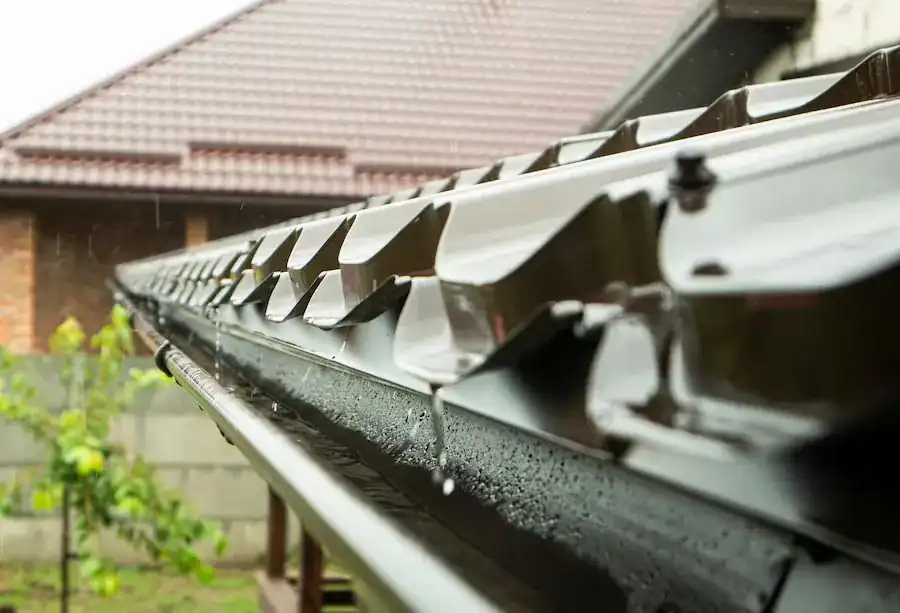
Every hard rain, water sheets over the front of your gutters and splashes into the flower bed. Maybe there’s a dark streak down the siding, a washed-out spot in the mulch, or a damp corner in the garage. Rain gutters are supposed to stop exactly that, and when they don’t, it’s usually not obvious why.
It’s an easy problem to put off, because the house isn’t leaking from the roof. But the water still has to go somewhere, and where it lands matters. You deserve gutters that are sized and hung right for your roof, and a clear explanation of why yours aren’t keeping up.
APC Roofing installs rain gutters on homes and small commercial buildings across Central Florida, the Daytona Beach area, the Kansas City metro and Springfield, Missouri. We’ve been in business since 2017, we’re licensed and insured, and estimates are free. Call 866-995-0704.
How much water your rain gutters handle
One inch of rain on 1,000 square feet of roof is about 620 gallons of water. All of it runs to the edge of the roof. Your gutters decide whether it leaves in a controlled stream through a downspout or pours off in a sheet right next to the foundation.
That’s the whole job, and it’s why the most common gutter mistake isn’t bad installation. It’s gutters that are too small for the roof they serve.
Signs your gutters aren’t keeping up
- Water spilling over the front edge in heavy rain, even when the gutters are clean
- Stains or streaks on siding or fascia below the gutter
- Washed-out soil, mulch or gravel under the roof edge
- Gutters pulling away from the house or sagging between hangers
- Peeling paint or soft wood on the fascia board behind the gutter
- Water pooling near the foundation, or dampness in a garage, crawlspace or basement
Sizing is the decision that matters most
Gutter capacity comes from three things working together: how wide the trough is, how big the downspouts are, and how many downspouts serve each run.
Moving from a 5-inch gutter to a 6-inch one adds a lot of capacity. A larger downspout, such as 3×4 inches instead of 2×3, drains far more water than the smaller one. Adding a downspout to a long run can do as much as either. Steep roofs send water to the gutter faster than shallow ones, and wherever a valley pours two roof slopes into one spot, the gutter needs extra capacity right there.
The right size depends on your roof area, its pitch and how hard it rains where you live. A gutter sized for an average storm will overflow in every storm that counts.
Gutter styles and materials
K-style gutters are on most houses. From the ground, the front face looks a bit like crown molding, and the shape holds more water than a rounded gutter of the same width. Half-round gutters are a simple curved trough, often on visible brackets. They suit older and historic homes and shed debris a little more easily.
Aluminum is the most common material. It’s light, doesn’t rust and comes in many baked-on colors. It’s also sold in more than one thickness, and heavier aluminum resists dents from ladders, hail and ice much better. Steel is stronger but will eventually rust. Copper lasts a very long time and weathers to a green-brown patina, at a much higher cost. Vinyl struggles in hard sun and in hard cold, which covers most of the places we work.
Sectional or seamless gutters
Sectional gutters come in stock lengths that get joined on site, so a long wall ends up with several joints along the run. Each joint is a spot where sealant ages and debris catches. Seamless gutters are formed to the full length of each wall, so the only joints are at the corners and downspouts. Fewer joints usually means fewer drips. Our seamless gutters page explains how they’re made and what to ask about.
Florida downpours and Midwest winters
Climate changes what your gutters need to handle. In Central Florida and the Daytona Beach area, afternoon thunderstorms and tropical systems can dump a lot of rain in a short time, so capacity and downspout count matter most. Many Florida homes sit on slabs with landscaping right up against the house, and water that overflows there erodes beds and splashes onto walls.
In the Kansas City metro and around Springfield, gutters deal with fall leaves, ice and snow. Ice sitting in a trough adds weight and strains the hangers, so solid fastening into sound wood is important. Hail can dent thinner aluminum. And where homes have basements, water dumped at the foundation is the problem you most want to avoid.
Where the water ends up
Whatever else you do, make sure each downspout sends water several feet away from the house, using an extension or a splash block. A gutter that collects every drop perfectly and drops it all at the foundation has done half the job.
Keep the gutters clean, too. Twice a year is a good baseline, more often if you have trees overhanging the roof. After a big storm, check for a run that’s shifted, a downspout knocked loose, dents from hail, or a pile of shingle granules in the trough. Heavy granule loss is a sign to have the roof looked at, not just the gutters.
New gutters and a new roof go well together. If your roof is due, our roof replacement page covers that side of the job.
How it works
- Book your free estimate. Call 866-995-0704 or request a free estimate online.
- Get a clear, honest assessment and estimate. We’ll look at your roof area, pitch, current gutters and fascia, and where the water is going now. You’ll get a written estimate with the gutter size, material and downspout plan spelled out. Financing is available through Aqua Finance, Fortifi, Hearth and Home Run Finance.
- Your gutters get installed and the site gets cleaned up.
Rain gutter questions
Do I really need gutters?
Most homes benefit from them. Without gutters, roof water falls in a line along the house, splashes onto siding and soaks the ground at the foundation.
What size gutters do I need?
It depends on your roof area, its pitch and local rainfall. Many homes use 5-inch gutters, but larger or steeper roofs often need 6-inch gutters and bigger downspouts.
Can new gutters go on my old fascia?
Only if the fascia is solid. Gutters are only as strong as the wood they’re fastened to, so soft or rotted fascia should be replaced first.
Gutters you don’t have to think about
The goal is simple: rain that leaves your roof and ends up well away from your house, a dry foundation and no surprise repairs. Call 866-995-0704 or request your free estimate online. You can see all our gutter work on the gutters page.