
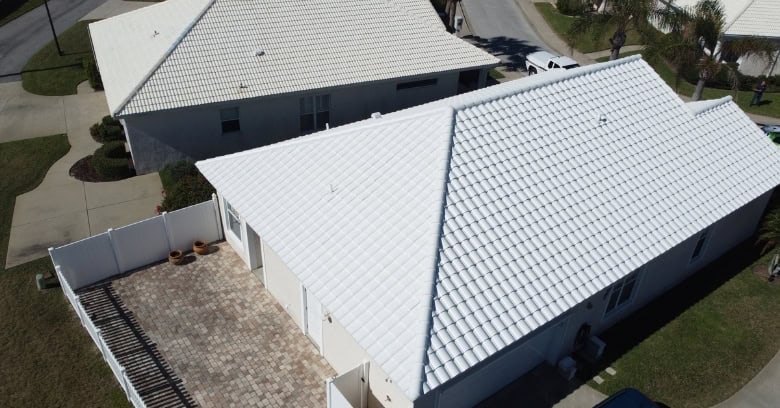
Searching for Emergency Roofing in Groveland Florida?
APC Roofing takes on jobs ranging from a basic checkup to a full replacement, across asphalt, metal and tile alike.
Call 407-270-1129, and a roofer schedules a visit to look at the house.
A Roof's Construction, Explained: a Plain Guide
The visible covering on top is only the outer layer, and a moisture barrier, sheathing and framing sit underneath. Flashing bridges the crossing wherever a wall, a pipe or a valley breaks the field, and trouble nearby seldom means a failure in the surrounding shingles.
The air under the rafters counts as part of the roof, the same as any material, because trapped heat and damp age the deck and shingles above. A drip inside a bedroom can come from any level of the roof, so attention paid only to the outside can miss where the water entered.
The Jobs a Roof Performs, Component by Component
Laps and pitch steer rainfall toward the gutters, while nails and seal strips resist the pull of gusts. The trusses and sheathing support the load above, snow included at the colder end of our territory, while vents let damp air leave the attic.
Water is a job for the covering, and wind is a task for the fastening, while gravity's pull goes to what is underneath. Trouble in one element tends to show up far from the original problem, and a lasting fix reaches back to where the fault began.
The Minor Pieces of a Roof: What Falls Behind First
A field of sound shingles can go for decades, but the rubber boot at a drain stack wears through much earlier. Water works past that spot and follows the framing down, and a brown patch forms on the ceiling underneath.
Sealant along metal edges dries and shrinks in strong sun, and coated metal rusts once the coating wears through. Shingles bent into caps split at the seam, since the peak catches more weather than the rest of the roof.
Spotting Trouble Without a Ladder: Before Anyone Climbs
From across the street, the profile of the roof exposes dips, sags and wavy planes, and the gutters and painted trim show up in the same look. Good binoculars show up torn collars, lifted tabs and bare patches, yet a few conditions still need a hand on the surface.
On the slope, a roofer works over every pipe connector and traces each flashing run, and the surface is checked for cracking, granule shedding and curled edges. Nobody walks a covering that is wet or too steep, and the eave, reached by ladder, provides the vantage point instead.
Above the Ceiling: Clues From Below
A watermark on the decking shows where rain has gotten in, and a clammy touch means the problem is ongoing. Daylight visible between the boards marks an opening, and a measurement from the peak locates the spot for the outside look.
Rust on the nail shanks comes from moisture in the house, not rain, and a matted, gray patch backs up the same story. A soffit choked with insulation, or a bath fan venting into the attic space, is spotted only from inside, so a look from the yard alone misses ventilation faults of that kind.
A Homeowner's Take-Away: Kept for Reference
The visit produces photographs linked to particular spots on the roof, and a written line explains what each image shows. What is holding up gets named as clearly as what is not, and faults are ordered from most to least pressing.
A saved report from an earlier stop gives the next check a baseline, and change over time is easier to judge than condition on a single day. A roof tracked across each year brings few surprises, and the signs of a major repair appear well before the job becomes pressing.
Routine Care for a Shingle Roof: What Gets Done
New rubber boots go on the pipes ahead of any cracking, and shrunken caulk along the flashing gets a fresh bead. Needles and leaves get cleared from valleys and from behind chimneys, and every outlet gets checked for an open path.
A slipped shingle put back early is easy work, but putting off that step through storms can end in a drywall stain. Lichen keeps the surface damp and works in under the shingles, and a biocide treatment clears the growth, with no pressure washer involved.
A Simple Habit Worth Building: What to Expect
An experienced roofer should read the covering once every year, placed right after the toughest season for roofs in that market. The point is finding small faults before a leak forms, and the household gets a fair sense of the remaining service life.
Between checks, a glance from the lawn after a storm is useful, and top-floor rooms are worth checking for fresh stains. A flashlight trip into the attic twice a year pays off: dark spots, daylight and matted insulation turn up long before anything travels any further.
A Roof's Age, Read From the Yard: What the Years Bring
Brand-new shingles look dark and consistent across every slope, and later in life the sun-exposed plane fades before the shaded side does. Late in a roof's run, tabs cup and granules wash into the downspouts, and a repair rarely holds for long at that stage.
An appraisal from the yard supplies a decent guide, but a ladder and a closer look tell the fuller story. A roof near the finish line is better replaced than patched again, and a trustworthy contractor gives a plain answer, rather than selling more mending.
A Channel That Has Given Up: A Quick Look
A roof moves water only as far as the drip edge, and the gutter picks up the flow at the edge. A hanger that has given way tips the run toward the wall, and the rafter tails nearby rot over seasons.
Trouble along that edge usually comes from standing water, not the covering, and a fresh covering does nothing for a fault at the edge. The slope of every gutter and where each downspout empties get checked, and the drip-edge metal and the overlap at each joint get looked over as well.
How the Roof Breathes: How the Design Works
Fresh air is meant to come in at the soffits and exit along the ridge, and the flow sweeps trapped heat and vapor out of the space. When that gets blocked, the attic overheats in summer and stays muggy through humid months, and the shingles age prematurely.
Adding roof openings without matching intake draws air from the rooms beneath, and competing setups on one roof can leave the lower attic stagnant. Reroofing with poor airflow left alone carries the fault forward, so the underlying issue belongs in the scope of any re-roofing plan.
Roofing That Fits Where You Live: What Shifts From Place to Place
At the colder end of our range, ice and drifting snow set the build, so a self-sealing membrane runs up from the edge. On the coastal side of our area, storm winds set the nail pattern, and reinforced edge metal and sealed seams get specified.
Across the hail belt at the colder end of our territory, impact ratings matter, while ultraviolet light ages granules in every market we serve. Every build answers to conditions at that particular site, not habit or a standard default.
Residential and Commercial Roofs: How the Roofs Differ
A sloped covering sheds rain by lap, finished in asphalt, clay or steel. A business roof relies on one continuous sealed sheet, and scuppers and equipment penetrate that same surface.
A good number of homes have a shallow section over a porch or a sunroom, and a shingled surface there lets rain linger long enough to work under the courses. A low spot like that calls for a sealed sheet, tucked beneath the steeper roof above, and a second round of shingles there fails the same way.
Protecting a Damaged Roof for Now: What Holds Up
A barrier over a torn area keeps water out in the meantime, but nothing gets solved underneath. A sound cover sits over the ridge and gets held down by wood battens screwed through the material, and the material gets pulled taut so wind cannot get behind the edge.
Extra reach past the opening matters on any temporary cover, since water runs sideways under a short edge. Material left on for a long stretch keeps the roof from drying out, and mildew and rot follow underneath.
Where the Roof Changes Direction: Where Leaks Start
Along a wall, one bent piece of metal goes in under every course, and a strip of trim above turns down over the top edges. A chimney gets an apron across the downhill face and metal tied in up each edge, and a broad stack gets a saddle set into the slope nearby.
Caulk troweled onto a bad seam lets go once temperatures shift the metal, so a fresh tie-in, installed correctly, is the dependable way to go. Crumbling mortar lets rain soak into the masonry higher up, and that kind of trouble calls for a mason alongside a roofer.
Putting Requirements on Paper: Items to Expect
A signed agreement should identify the shingle, the underlayment and the metal by name, and a plain line covers tearing off versus covering over. A dated form covers what happens if rotten boards turn up, and flashing, ventilation and cleanup each appear as a separate line.
Bids laid out in full are easy to check against each other, and the real differences between the two documents come into view. A roofer who will not put the plan down leaves the owner guessing, and a spoken assurance proves nothing after the fact.
What a Re-Roof Involves: What Changes at the House
Shrubs, flower beds and the driveway get protected ahead of the work, and the worn material gets pulled loose and hauled away. Once exposed, the sheathing gets a careful look for rot and breaks, and rotten sections get rebuilt before anything gets put back down.
Underlayment, new metal and ice-and-water membrane go on across the open deck, and the surface material, the ridge caps and the vents close out the job. The yard and drive get a magnetic sweep before the crew leaves, and nothing from the cleanup stays behind in the gutters.
Upkeep on Other Coverings: What Differs by Material
Exposed-fastener metal panels seal at a rubber gasket under every fastener, and a brittle washer gets replaced whole, never smeared with anything extra. Across our markets, tile sets by mortar, by foam or by clips, based on the property, and the layer underneath carries the job of shedding water.
A heavy step on an unsupported piece causes a crack, and a matching replacement goes in wherever one gives way. On a low-slope section, standing water and open seams are the things to watch, and leaves get removed from the outlets regularly.
Clues That Point to Trouble: Outside and In
- Grit gathering at the downspout outlets, in amounts that keep returning each season.
- Corners turned up across a slope, spread across more than one row.
- Torn rubber where a pipe exits the deck, above a bathroom or a kitchen exhaust.
- A brown patch on upstairs drywall, close to an outside wall or a chimney.
- A glimpse of sky from under the deck, spotted during a flashlight check.
- Clumps of moss under overhanging trees, pushing up the lower edges of the shingles.
- A sag along the ridge line, widening a little each season.
- Dried beads separating at a skylight, left behind by an earlier patch.
Emergency Roofing Across Groveland Florida: APC Roofing, Step by Step
Before a scope gets drawn up, a roofer examines the whole covering and the attic, and what turns up gets delivered as pictures along with a written explanation. Sound parts get named as plainly as parts that need work, and the homeowner sets the order of any work.
Emergency Roofing Near Groveland Florida: a Full Look, Not a Guess
Call 407-270-1129 and get a date on the calendar.
Documentation for the Roof: Easy to Maintain
Noting when the covering went on, along with the brands used, is worth doing, and each visit's report belongs with the earlier entries. Marking down every repair, with the location and the work done, leaves useful detail, and looking back after enough time shows what keeps recurring.
Selling a property brings questions about what is overhead, and paperwork with dates carries more weight than recollection. A duplicate set, saved to a phone or a drive, is worth making, because a single set can be destroyed in a flood or a fire.
Standards Worth Holding a Crew To: Quality You Can See
The field reads as straight bands, with crisp cuts where each slope ends, and every fastener stays hidden under the shingle above. The wall joints carry new flashing, tucked to match the way water runs, and no gob of roofing cement stands in for a missing piece.
Intake and exhaust vents stay open and unblocked, and every gutter ends up hanging correctly. The lawn and driveway get a magnetic pass at the end of the job, and a quick hose-down removes the last of the sawdust from a walkway.
Anyone researching Emergency Roofing in Groveland Florida is closer to an answer than a listings page ever gives. Reaching out to APC Roofing at 407-270-1129 moves the scheduling forward. Every visit covers the roof and the attic together, with no loose ends left over.
Verified

Verified
Verified
Verified
Verified


















