
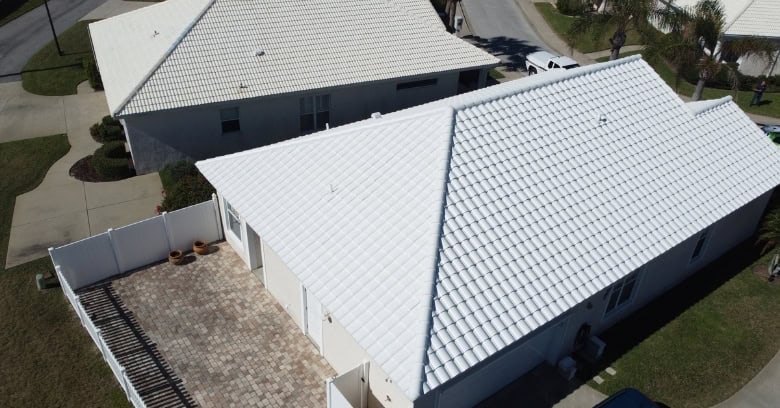
Need Roofing Services in Groveland Florida?
APC Roofing takes care of a routine checkup right up to a complete replacement, on shingle, metal and tile alike.
Call 407-270-1129, and a roofer heads out for a look at the house.
The Roof's Working Parts: What Holds a House Together
The visible covering on top is only the outer layer, and a water barrier, plywood and framing sit below the surface. Sheet-metal flashing takes over at each wall, stack and valley, and water there rarely traces back to worn shingles close by.
The attic air beneath the deck counts as part of the roof assembly, since heat and humidity held there wear down the wood and covering overhead. A drip inside a bedroom can come from any level of the roof, and work confined to the outside can miss the real source.
Everyday Work of a Roof, Component by Component
A sloped covering sheds every storm's water downhill, while the fastening pattern stands up to uplift. What lies below carries the weight of everything on top, snow included at the colder end of our territory, while vents give damp attic air a way out.
Water is the covering's job, and wind is the fastening's task, while what is underneath answers for holding the roof up, unnoticed. Trouble in one element tends to show up far from the original problem, and the real remedy sits back where the fault started.
Minor Roof Components: What Falls Behind First
The shingled field is built to last for decades, but a rubber collar at a vent pipe gives out far sooner. Water works past that spot and follows the framing down, and paint bubbles on the ceiling below.
Sealant along metal edges dries and shrinks in strong sun, and steel flashing corrodes from trimmed edges inward. Ridge caps split across the crease, since the peak catches more weather than the rest of the roof.
What Appears Early: Standing Back and Then Closer
At a distance, the outline of the roof gives away dips, sags and wavy planes, and the gutters, fascia and trim come into view at the same time. Good binoculars show up torn collars, lifted tabs and bare patches, yet a few conditions still need a hand on the surface.
Once on the roof, a roofer checks every connector closely and follows the flashing at each wall, and every course is checked for edges that have come loose. A steep or wet roof is not walked, and the eave line, reached by ladder, becomes the vantage point.
Behind the Ceiling: a Homeowner's Tour
A stained patch on the plywood shows water that got in before, and a soft, wet feel means the entry point is still open. A pinpoint of sky through the boards marks a gap, and the distance from the ridge and gable gets measured so the spot can be found outside.
Rust on the nail shanks comes from moisture in the house, not rain, and a matted, gray patch backs up the same story. Insulation stuffed into the eaves, or a bath fan ducted into the attic instead of outside, gets found only from inside, so a yard-only look passes over faults like that.
After the Roofer Leaves: What Gets Handed Over
Each finding is recorded with a photograph tied to a place on the roof, and a caption states what each picture reveals. Good sections get the same plain treatment as sections that do not, and faults are ranked by how soon repair is needed.
A filed report from an earlier check-up serves as a reference going forward, and change over time is easier to judge than condition on a single day. A roof checked on a steady yearly cycle seldom surprises the owner, and large jobs show warning signs well ahead of the work becoming pressing.
Maintenance Tasks: Practical Habits
New rubber boots go on the pipes ahead of any cracking, and dried sealant at walls and flues gets redone. Anything the trees drop gets brushed out of the channels, and downspouts get flushed so water moves through.
A loose piece fastened back promptly stays a minor task, but a season of neglect can end in a ceiling mark. Moss on a shaded slope traps moisture under the courses, and the growth gets treated and brushed off, never pressure-washed.
How Often the Checkup Should Happen: What to Expect
Somebody trained in the trade should go over the roof once a year, set for just after the roughest local weather each season. The point is finding small faults before a leak forms, and the family hears plainly where the roof stands.
In the months between visits, a look from the driveway after high wind helps, and bedroom ceilings upstairs can be watched for fresh spots. Looking around the attic with a flashlight now and then makes sense: dark spots, daylight and matted insulation turn up long before anything travels any further.
The Age of a Roof Seen From the Ground: What the Years Bring
Newer asphalt lies smooth and uniform in tone, and past the midpoint the south-facing side lightens ahead of the others. At the very end, tabs turn brittle and crack, and mending one area seems to open another.
What the lawn view suggests is a solid baseline, but a roofer nearby will always see more. When shingles are exhausted, the candid conversation turns to replacement, and a straightforward contractor says so directly, instead of selling one more fix.
The Trough Behind the Fascia: The Stakes Explained
A sloped roof delivers water only to the eave, and a gutter takes the water the rest of the way. A channel hung the wrong way holds a pool against the house, and the framing at that spot decays.
A soft spot along that edge points more often to drainage trouble than to worn shingles, and a fresh covering does nothing for a fault at the edge. How each gutter runs and where the water discharges get checked, and the drip-edge metal and the overlap at each joint get looked over as well.
What Ventilation Is For: What Homeowners Should Know
Outside air should enter under the eaves and leave near the peak, and that path carries heat and moisture out of the attic. Once that gets shut off, the attic bakes in summer and stays soggy in humid weather, and the whole build's service life shortens.
A powered fan with too little inlet area draws cooled air through the ceiling, and stacking two setups the wrong way can leave one choking the other. Swapping the surface with the vents untouched repeats the same problem, so the arrangement gets corrected while the deck is already open.
What Gets Chosen and Why: How Choices Differ
At the colder end of the markets we serve, snow load and ice at the edge drive the design, so an adhered barrier goes under the lowest rows. On the coastal side of our area, storm winds set the nail pattern, and impact-and-wind-rated shingles and sealed seams get chosen.
In the hail-prone part of our range, at the colder end, a tougher product deserves a look, while heat takes a toll on roofs everywhere we work. Specifications follow the weather at the house, not routine, and not whatever a past project called for.
Residential and Commercial Roofs: Split by Structure Type
A sharply angled pitch sheds water course over course, and shingle, tile and metal all serve that role. A business roof relies on one continuous sealed sheet, and mechanical equipment and drains break through that surface.
Plenty of residences include a shallow section over an addition, and shingles over an area such as that leak because standing water finds a way under the laps. A spot like that needs a welded or adhered membrane, laced under the pitched covering above, and a second round of shingles there fails the same way.
Tarps and Emergency Covers: Done the Right Way
A barrier keeps rain off a hole before repairs begin, but a quick layer does not mend anything below. A cover done right crosses the ridge and gets screwed down through battens, and the fabric gets stretched so no loose fold can catch the wind.
A cover needs a wide border around the hole, because rain travels sideways toward a gap that stops short. Plastic left in place for months traps heat and moisture against the deck, and the shingles beneath start to deteriorate.
Doing the Vertical Joints Properly: No Room for Guesswork
Every course against a wall gets a dedicated step-flashing piece, and counterflashing tucked into the masonry covers that metal from above. Every chimney needs an apron at the front and metal carried up across each edge, and a wide stack gets a cricket built into the slope nearby.
Caulk troweled onto a bad seam lets go once temperatures shift the metal, so a fresh tie-in, installed correctly, is the dependable way to go. A failing chimney crown lets moisture into the stack above the roofline, and some leaks like that need a mason as well as a roofer.
Putting Requirements on Paper: What to Look For
The plan for a job names every product by brand, and a plain line covers tearing off versus covering over. A dated form covers what happens if rotten boards turn up, and every vent, every flashing piece and the haul-away get called out individually.
Thorough scopes from rival bidders can be checked point by point, and the real differences between the two documents come into view. A firm unwilling to resolve the plan in advance is telling an owner something, since a spoken promise cannot be checked later.
Replacing a Roof, Step by Step: What a Homeowner Sees
Anything near the eaves that could get damaged gets protected ahead of time, and the existing covering gets removed completely. Once exposed, the sheathing gets a careful look for rot and breaks, and any spongy spot gets swapped for new stock.
A water-resistant membrane, fresh flashing and ice protection get installed next, and the new covering goes down, capped and vented at the top. A magnetic sweep covers the yard and the drive at the end of the workday, and no debris gets left in the gutters.
Care for Non-Shingle Roofs: Details by Material Type
Where panels get fastened through the face, a gasket under the head keeps rain out, and a cracked washer gets replaced along with a fresh screw. Tile in our markets gets set by several methods, including mortar, foam adhesive and mechanical clips, and the membrane is what keeps the interior from taking on water.
Walking on the wrong spot cracks a piece, and a damaged unit gets pulled and replaced to match the surrounding pattern. Where part of a roof runs nearly flat, ponding and split seams are the warning signs, and leaves get removed from the outlets regularly.
Signs Worth a Closer Look: From the Yard or the Attic
- Sand-like mineral grains in the gutter runs, from a covering that is no longer new.
- Corners turned up across a slope, in patches that widen every year.
- A pipe boot with an open gap, with a stain trail on the covering below.
- A ceiling ring in a top-floor room, new since the previous season.
- Light leaking in near a valley or a pipe, wherever nothing should show through.
- Moss packed into the laps, soaking up water after every rain.
- A bulge that catches the light at dusk, often pointing to trouble in the deck beneath.
- Sealant pulling away at a wall, left behind by an earlier patch.
Roofing Services Around Groveland Florida: APC Roofing's Approach
Before any advice gets given, a roofer goes over the whole covering and the attic, and the results come back as images plus a short written summary. Good sections get the same plain treatment as problem areas, and the homeowner decides what happens from there.
Roofing Services Near Groveland Florida: Straight Answers About the Roof
Get in touch at 407-270-1129 to schedule a visit to the property.
An Archive for the Roof: Best Done Early
Writing down the installation date and the materials used is a smart habit, and each visit's report belongs with the earlier entries. Including a line for every repair, the spot and the method, rounds out the picture, and a decade on, the trend stands out clearly.
When a house goes up for sale, a buyer's inspector asks about the roof, and paperwork with dates carries more weight than recollection. A backup copy of the whole file keeps one bad day from erasing the whole thing, since paper can be damaged or destroyed over the years.
Signs of a Job Done Right: Points to Look For
Courses run straight and the cuts along the rakes come out clean, and the nailing stays out of sight across the roof. Metal against any wall or chimney rests flush and secure, and caulk, where used at all, forms a thin, careful line.
Air can move from the eaves to the peak without obstruction, and the gutters return to position, clean and fastened. No nails or scraps get left in the grass or on the drive, and a quick hose-down removes the last of the sawdust from a walkway.
Anyone who came here searching for Roofing Services in Groveland Florida can get a straight answer without more digging. Reaching out to APC Roofing at 407-270-1129 gets a date on the calendar. Every visit covers the roof and the attic together, and nothing is left to guess at.
Verified

Verified
Verified
Verified
Verified


















