
Your concrete tile roof has gone chalky and pale on the sunny side, a few pieces near the gutter are cracked, and now there’s a stain on the ceiling you can’t explain. Or you’re about to replace an old roof and wondering whether concrete tile is worth it over shingles. Either way, you want a straight answer on concrete tile roofing in Orlando from someone who isn’t angling for the biggest possible job.
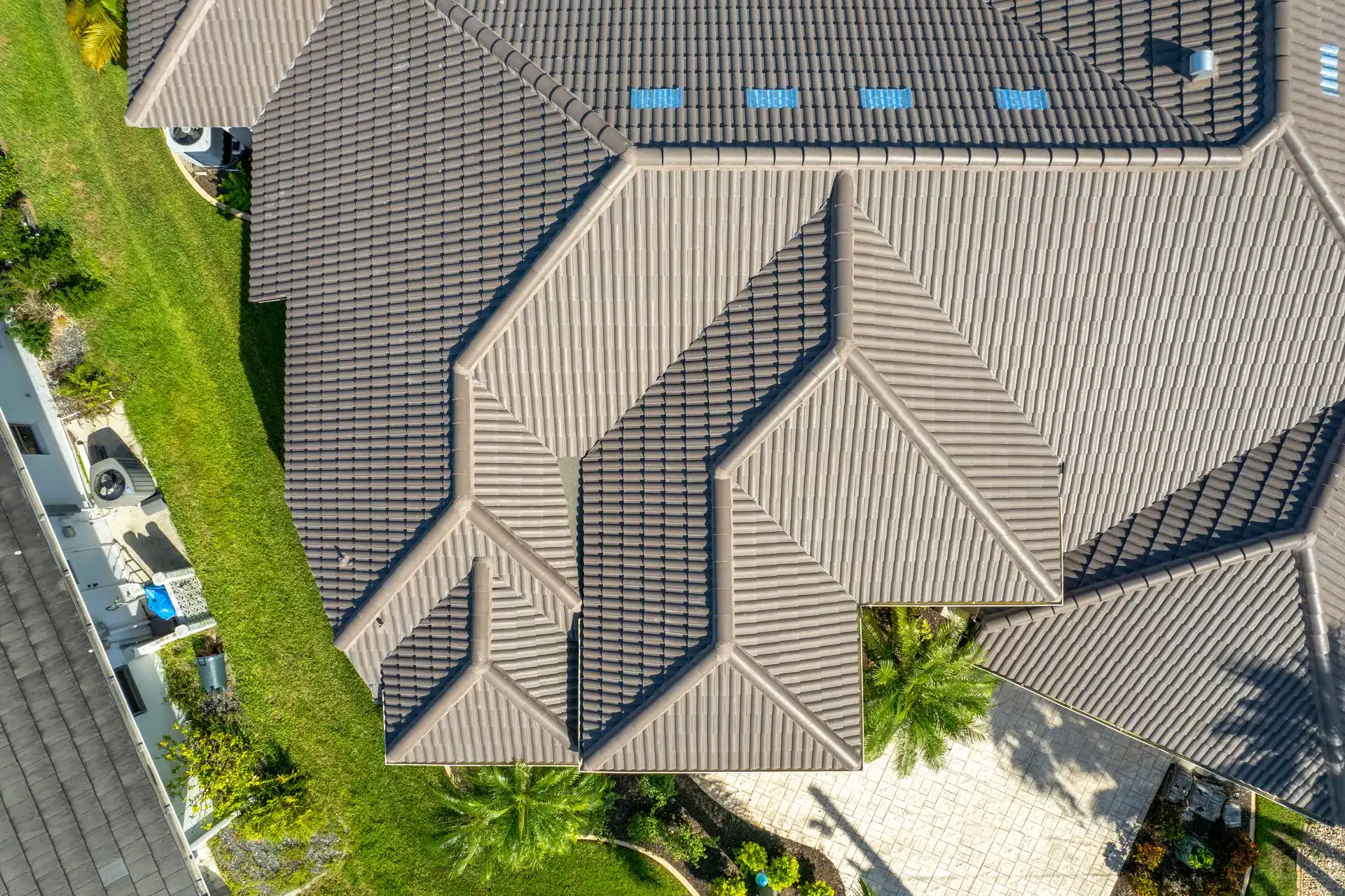
Tile roofs confuse a lot of homeowners, and that’s fair. The tile you see from the yard is rarely the part that fails first, so it’s easy to pay for too much work or too little. You should know what’s really going on up there before you spend anything.
APC Roofing is GAF Certified, licensed in Florida (CCC1337030) and insured, and we’ve been roofing in Central Florida since 2017. Your inspection and estimate are free. Call 407-270-1129 to set one up.
How a concrete tile roof keeps Orlando rain out
A concrete tile roof is really two layers doing two jobs. The tiles on top shed most of the rain and shade everything below them from the sun. Under the tile sits the underlayment, a waterproof sheet laid over the roof deck. That sheet is what actually stops a leak when wind pushes rain between the tiles.
That’s why one cracked tile doesn’t always mean water inside, because the underlayment is still working. And a roof that looks perfect from the street can still leak, because the underlayment under it has worn out. When water does get through, it often runs along the decking before it drips, so the stain on your ceiling may sit several feet from the real problem.
What Central Florida weather does to concrete tile
Concrete tile suits the Orlando area well, but the weather still wears on it, usually not where homeowners expect.
The sun works slowly. On many concrete tiles the color is a coating on the surface, and years of UV fade the south and west slopes lighter than the rest. Heat also builds up under the tile and bakes the underlayment. Older felt underlayment turns brittle over time, and that, far more often than the tile itself, is what brings a tile roof to the end of its life.
Summer storms work fast. Heavy afternoon rain blown sideways finds any opening: a slipped tile, a cracked piece, crumbling mortar at the ridge, or a valley packed with leaves that sends water sideways under the tile.
Hurricane season is the hard test. Wind pulls hardest at the edges, rakes and ridge. A tile whose foam, nail or clip has let go can lift, break and crack its neighbors on the way down. Falling limbs and flying debris do the rest.
Humidity is the quiet one. Concrete absorbs more water than clay, so algae, mildew and moss settle into the laps between tiles and hold moisture against the roof.
Concrete tile vs. clay tile
You’ll see both all over Central Florida. Clay is fired in a kiln, so its color runs all the way through and barely changes in the sun. Concrete is cast from sand and cement. It usually costs less up front, comes in many profiles, and can look like barrel tile, S-tile, slate or wood shake. The trade-off is the fading surface color and a bit more water absorption.
Neither is wrong. If clay is on your list, our page on clay tile roofing in Greater Orlando covers it.
Repair, re-lay or replacement
A repair makes sense when the damage is local and the underlayment under it is still sound. Cracked or slipped tiles get replaced one at a time, loose ridge pieces get reset, and worn flashing at a wall or chimney gets redone the right way, by lifting the tile rather than smearing sealant on top. If your tile profile is still made, a match is straightforward. If it’s discontinued, the replacement may come from salvage or the closest match, and the color can differ a little until it weathers.
A re-lay is the option many homeowners have never heard of. When the tiles are fine but the underlayment is worn out, the tiles come off by hand and get stacked. Any soft decking is replaced, new underlayment goes down, and the same tiles go back on. Some tiles always break during removal, so expect a few replacements.
Replacement makes sense when the tiles themselves are failing in large numbers, when you want a different profile or color, or when the roof has other problems a re-lay won’t solve.
Switching from shingles to concrete tile is a bigger decision. Tile weighs several times more than shingles, so the roof framing has to be checked before the change. Lighter-weight concrete tiles exist and can widen your options. See our tile roof repair page if a repair is what you need.
Getting a concrete tile roof installed right in Florida
Florida’s building code sets how tile has to be attached for wind, and the products used must be approved for the state. Depending on the tile and the design, each piece is held with nails or screws, roof tile foam adhesive, clips or a mix of these, with extra attachment at the edges and ridge where wind pulls hardest. The job is permitted and inspected.
Ask any roofer what underlayment goes down, because that’s the layer you’re really counting on, and how the ridge and eaves are finished. The open ends of curved tile at the eave need a closure so birds and wind-blown rain stay out.
A few ways to make a tile roof last
Keep people off it when you can. Tile breaks under a misplaced foot, and a lot of hidden damage comes from satellite and solar visits. Ask anyone going up to coordinate with a roofer.
Be careful with pressure washing. A high-pressure blast can strip the color coat off concrete tile and crack pieces as someone walks the roof. A gentle cleaning solution and clear valleys and gutters do more good.
Have it looked at after a big storm, even if nothing is leaking yet.
How it works
- Book your free inspection. Call 407-270-1129 or request a free online estimate.
- Get a clear, honest assessment and estimate. You’ll see photos of what we found and hear whether it’s a repair, a re-lay or a replacement, with a written estimate. Financing is available through Aqua Finance, Fortifi, Hearth and Home Run Finance.
- Your roof gets done and the site gets cleaned up. Broken tile and debris leave with the crew.
If a storm caused the damage, you file the claim with your insurance company and pay your own deductible. We document the damage, give you the estimate and work with your adjuster. Our hurricane damage roof repair page explains more.
A worn underlayment doesn’t fix itself. Every rainy season it lets a little more water reach the decking, and a re-lay that would have been simple can turn into decking replacement too.
Concrete tile roofing questions from Orlando homeowners
Is concrete tile a good roof for the Orlando area?
For many homes, yes. It handles heat, doesn’t burn, and stands up well to wind when it’s attached to code. The main things to watch are fading color and the age of the underlayment under it.
Can you replace just a few cracked concrete tiles?
Usually. If the underlayment below is sound, broken tiles can be swapped out one at a time. We’ll check under the tile before recommending anything bigger.
Can I switch from shingles to concrete tile?
Often, but the roof framing has to be checked first because tile is much heavier. Lightweight concrete tile can help.
Do you install new concrete tile roofs?
Yes. We install new concrete tile roofs and re-lay existing ones over new underlayment. You can read more about tile roof installation in Greater Orlando.
Get help with concrete tile roofing in Orlando
Call 407-270-1129 or start your free estimate online. We’ll tell you what your tile roof needs and what it doesn’t.
Then you can stop guessing about that ceiling stain. You’ll have a dry house, a tile roof that’s ready for the next storm season, and no surprise on the bill. Trust matters.


















