
Your flat roof has been patched more times than you can count, water still sits on it after every storm, and the ceiling below is showing it. Maybe you’re adding a room or a carport and need a low-slope roof done right the first time. Either way, flat roof installation in the Orlando area comes down to one thing: getting water off the roof before it finds a way in.
It’s hard to compare bids when you can’t see what’s under the membrane. You want to know the new roof won’t end up with the same puddle and the same leak as the old one.
APC Roofing is based in Clermont and works across the Orlando metro. We’re GAF Certified, licensed in Florida (CCC1337030) and insured, and the inspection and estimate are free. Call 407-270-1129 to talk it through.
Why Central Florida is hard on flat roofs
A sloped shingle roof sheds a downpour in seconds. A low roof has to manage water that lingers, and here that water comes hard and often. Summer afternoon storms can drop inches of rain in an hour, hurricane season adds wind that pulls at the edges, and the sun bakes the surface for most of the year. Shortcuts that might last a while somewhere milder tend to show up fast in this climate.
Most flat roof failures trace back to a short list of causes. The membrane went down without a plan for ponding water. Seams weren’t fully bonded. Flashing at walls, curbs and pipes was undersized or loosely fastened. Or there was no real drainage plan at all, just a flat surface and hope.
How flat roof installation in Orlando works
Your new low-slope roof goes on in the same order, whatever your building or membrane:
- Check the deck. Soft spots, rot and damage get found, and bad sections are replaced before anything new goes on.
- Set the slope. If water doesn’t drain to a scupper, gutter or drain, tapered insulation or a cricket fixes the pitch. This step matters more than the membrane you choose.
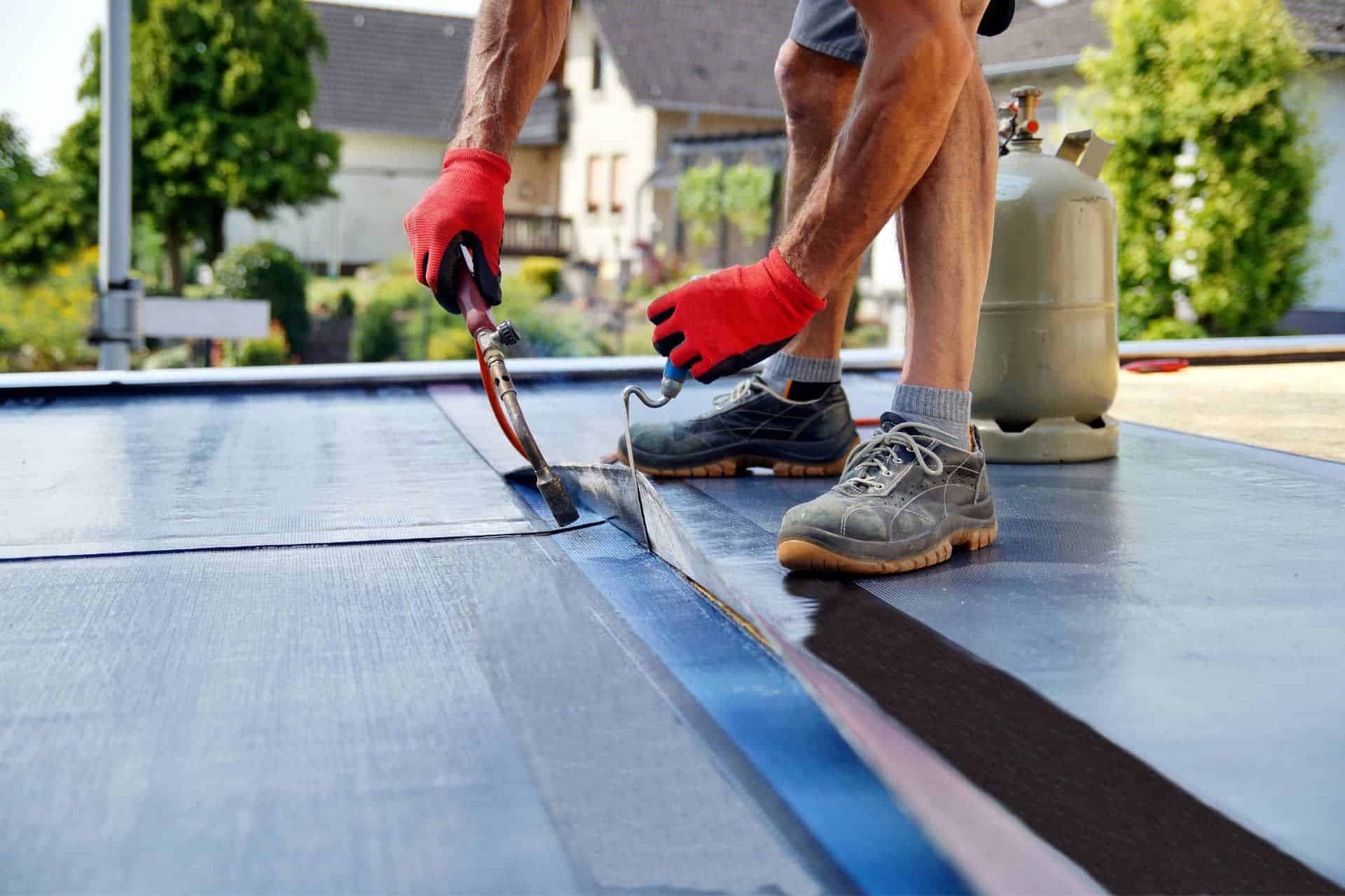
- Install the membrane. Seams get welded or bonded to the manufacturer’s specs and checked by hand.
- Flash the details. Walls, curbs, drains, vents and AC stands are where most flat roof leaks start, so they get the most attention.
- Test the drainage. Before the crew leaves, you’ll know water moves off your roof the way it was designed to.
All permitted roofing work in Florida has to meet the Florida Building Code, including wind uplift and drainage rules, and the installation is built to that standard.
TPO, EPDM or built-up: picking the right membrane
Two single-ply membranes cover most residential flat roofs here.
TPO roofing is a bright white membrane with heat-welded seams. The white surface reflects a lot of the sun, which keeps the roof and the room under it cooler, and welded seams don’t depend on glue or tape. For most Central Florida homes it’s a strong default.
EPDM is a black synthetic rubber. It stays flexible through years of heat cycles and has a long track record, though it absorbs more heat than TPO, and its seams depend on adhesive tape.
Built-up roofing (BUR) and modified bitumen are asphalt-based systems in layers. They still make sense on some buildings, especially where a roof gets regular foot traffic.
The right choice for you depends on how you use the space below, how much sun your roof takes and what equipment sits on it. You’ll get a recommendation with the reasons behind it, and the decision stays yours. A lower bid often means fewer drains, no tapered insulation and generic flashing, which pushes the water problem a few years down the road instead of solving it.
Flat roof replacement or a new install?
Replacing an old flat roof starts with a moisture check. If the insulation is dry and there’s only one roof on the building, a new membrane can sometimes go over it with a cover board. If the insulation is wet, or there are already two roofs, everything comes off to the deck. Wet insulation doesn’t dry under a sealed membrane, and covering it just hides the damage.
If your current roof only has a leak or two, you may find that flat roof repair is all you need for now. You’ll get a straight answer on which one fits.
Residential flat roofs and light commercial work
On homes, low-slope roofs usually sit over porches, garages, carports and additions, often where they tie into a sloped shingle roof. That tie-in matters a lot. The membrane has to run up under the shingles so water lands on top of it, never behind it.
We also install flat roofs on small commercial buildings where rooftop units, drains and service traffic add more details to get right. Walkway pads to the AC units keep service visits from wearing a path into the membrane.
How it works with APC Roofing
- Book your free inspection. Call 407-270-1129 or request a free online estimate.
- Get a clear, honest assessment and estimate. You’ll see photos and moisture readings, a recommended membrane and the reasons behind it, all in writing.
- Your roof gets done and the site gets cleaned up. The crew protects the area around the building and clears every scrap before leaving.
Financing is available through Aqua Finance, Fortifi, Hearth and Home Run Finance.
Flat roof questions from Orlando-area property owners
What’s the best flat roof material for Florida?
For most homes here, TPO is a strong choice because it reflects heat and has welded seams. EPDM and built-up systems still fit some roofs. The deck, drainage and use of the roof decide it.
Can a flat roof be installed over the old one?
Sometimes. It’s only an option when the existing insulation is dry and there’s just one roof on the building. Otherwise, the old roof comes off.
Why does water pond on my flat roof?
The deck has sagged or the roof was built without enough slope toward the drains. Tapered insulation, a cricket or an added drain fixes it. A new membrane alone won’t.
Do you install flat roofs on homes or only businesses?
Both. On homes, flat roofs usually sit over porches, garages and additions, and we handle those along with light commercial roofs.
A flat roof you can stop thinking about
Waiting until a leak spreads through the insulation usually turns a planned roof replacement into a bigger repair inside the house too. You don’t need to rush, but it helps to know where your roof stands.
Heavy rain comes through and runs right off. The ceiling stays dry, the bill matches the estimate and you know the roof was built right. Call 407-270-1129 to book your free inspection, or start with our free online estimate.


















