
A flat roof doesn’t warn you the way a sloped one does. There’s no missing shingle to spot from the yard, just a stain on the ceiling under the porch, the addition or the back office after a hard afternoon rain. If you’re looking for flat roof repair in Orlando, you’re probably wondering how far the water has spread, and whether a patch will hold or you’re facing a whole new roof.
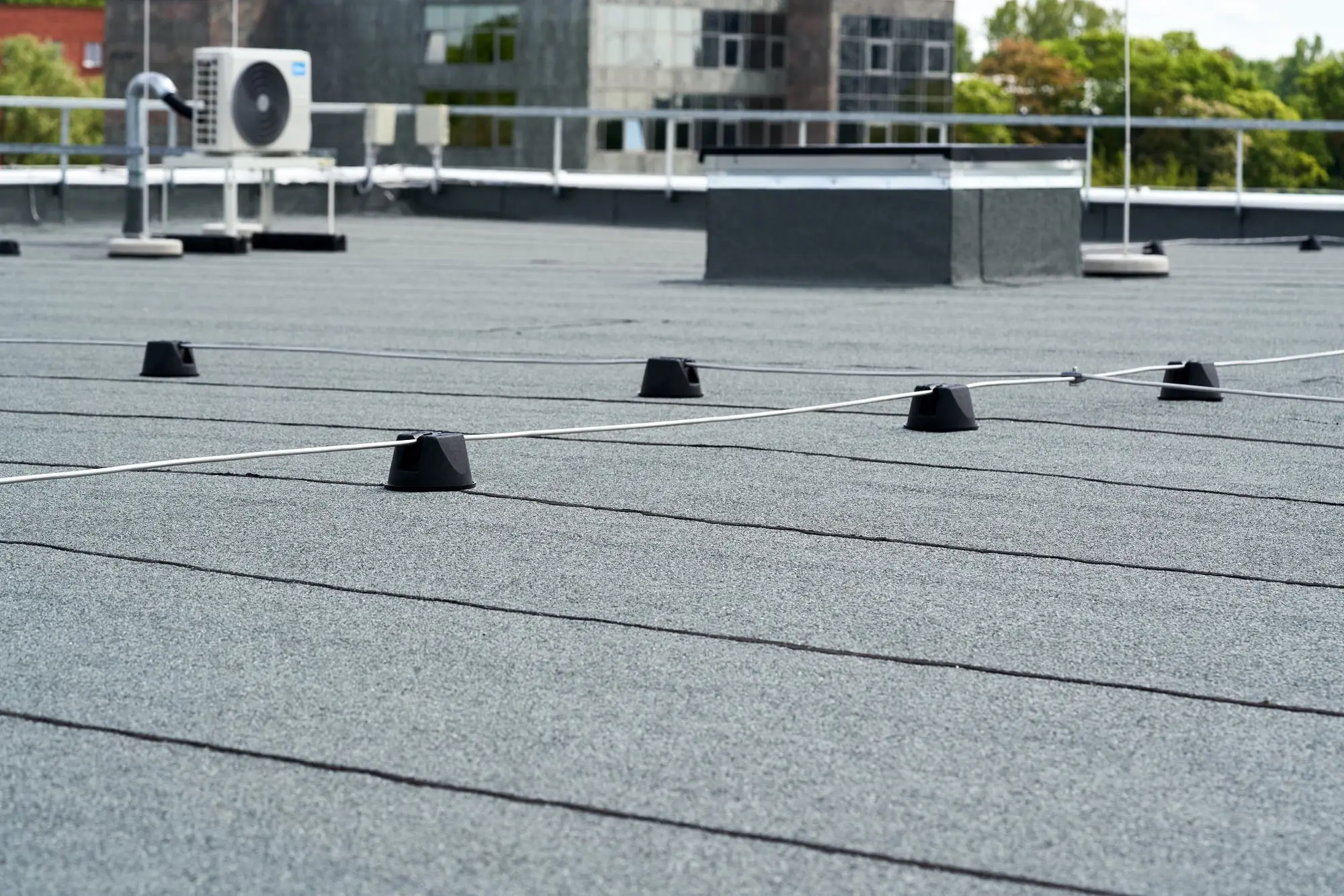
That’s a reasonable worry. Flat roof leaks are hard to trace, and too many get a quick patch over the stain that fails by the next storm. You should know what’s actually wrong before you pay to fix it.
APC Roofing is a GAF Certified roofing contractor based in Clermont, licensed in Florida (CCC1337030) and insured. We repair flat and low-slope roofs on homes and light commercial buildings across the Greater Orlando area, and inspections and estimates are free. Call 407-270-1129 to book a visit, or see all our flat roofing services in the Orlando area.
Why flat roofs struggle in Central Florida
A flat or low-slope roof depends almost entirely on its membrane and its drainage, because there’s little pitch to move water off quickly. Central Florida tests both, every year:
- Strong sun almost every day breaks down the surface of the membrane over time.
- Heavy afternoon downpours test drains, scuppers and edge seals all at once.
- Water that sits after a storm slowly stresses seams and flashing.
- Hurricane-season wind pushes rain into any gap around vents, pipes and rooftop units.
Hot days followed by cooler nights also make the materials expand and shrink, over and over. Any one of these shortens a flat roof’s life. Together they explain why most flat roof leaks trace back to the same few failure points.
Where flat roofs usually leak
Water on a flat roof rarely comes through where it went in. It travels along the membrane or through the insulation before dripping somewhere else. That’s why a patch on the spot above the stain often does nothing.
A proper flat roof inspection looks at the whole system and traces the water back to where it entered. The usual culprits:
- Seams that have separated or lost their bond
- Punctures from foot traffic, dropped tools or storm debris
- Flashing at walls, curbs and roof edges that has cracked or pulled loose
- Seals around vents, pipes and AC units that have dried out
- Ponding areas where standing water has started to break down the membrane
Once the real failure point is found, the repair uses materials that match the existing roof, so the new section bonds properly and doesn’t lift or crack within a season.
Ponding water on a flat roof
A little standing water right after a storm is normal on many low-slope roofs. The trouble starts when it’s still there two days later. Water that sits puts steady weight on the membrane, speeds up sun damage in that spot, and eventually opens a soft spot or blister.
Fixing ponding usually means fixing the drainage, not just resealing the surface. That can mean clearing clogged drains and scuppers, building up low spots, or adding tapered insulation so water flows toward the drains. Left alone, a ponding area tends to grow, and so does the repair bill.
Picking the right membrane for a repair or a re-roof
Not every flat roof repair is a patch. Sometimes a section has broken down so far that replacing that area makes more sense than patching it again. When that happens, the membrane matters.
TPO is a common choice in Florida. Its seams are heat-welded into a strong bond, and its light, reflective surface helps keep heat down under the Florida sun. You can read more on our TPO roofing in the Orlando area page. EPDM, a rubber membrane, has a long track record for flexibility. Built-up and modified bitumen roofs are still common on older buildings, and they can often be repaired with matching materials.
If the deck is wet in many places or the roof has reached the end of its life, a new roof may be the better use of your money. Our flat roof installation page covers that.
Flat roofs on homes and businesses
Plenty of Orlando-area homes have a flat section: a porch roof, a carport, a Florida room or an addition. These small roofs often get less attention than the main roof, and they’re a common source of leaks. The same membranes and repair methods apply.
Flat roofs on shops, offices and small commercial buildings bring more rooftop equipment and more penetrations to seal. For those, see our commercial roof repair page.
Keeping a flat roof healthy through storm season
The flat roofs that hold up best are the ones checked before storm season, not after a leak. A pre-season look can catch a lifting seam or a cracked pipe boot while it’s still a small fix. A simple routine goes a long way:
- Have the seams, flashing and penetrations checked twice a year, before and after storm season.
- Clear leaves and debris from drains and scuppers, especially after high wind.
- After a heavy rain, note any spot where water is still standing two days later.
- Get small punctures and seam separations fixed quickly, before sun and rain widen them.
- Book an inspection after any major storm, even if nothing is leaking yet.
How it works with APC Roofing
- Book your free inspection. Call 407-270-1129 or request a free online estimate.
- Get a clear, honest assessment and estimate. You’ll get photos of the seams, flashing and drains, with the source of the leak marked and a written price for the fix.
- Get your roof repaired and your property cleaned up. The crew makes the repair, removes the old material and leaves the site clean.
For larger jobs, financing is available through Aqua Finance, Fortifi, Hearth and Home Run Finance.
Questions about flat roof repair in Orlando
Can a flat roof be repaired, or does it need replacing?
Many flat roofs can be repaired, especially when the problem is a seam, a flashing detail or one damaged area. Replacement makes more sense when the insulation or deck is wet across large areas or the membrane is worn out everywhere.
Why does my flat roof leak far from where the stain is?
Water travels along the membrane and through the insulation before it drips through. The inspection traces it back to the actual entry point.
Is standing water on my flat roof a problem?
If it clears within a day or two, usually not. If it sits longer, the drainage needs attention before the membrane breaks down in that spot.
Do you repair flat roofs on houses, or only businesses?
Both. Porch roofs, carports and additions get the same care as commercial roofs.
A flat roof you can stop worrying about
A small seam separation or a slow-draining low spot rarely stays small in Central Florida. Sun and storm rain can turn a minor problem into a real leak within a season or two, and then the repair reaches the insulation and the deck. Catching it early keeps the fix simple.
After a repair done right, the next downpour is just rain. The room below stays dry, there’s no surprise bill, and you know the problem was fixed at its source. Call 407-270-1129 to book your free inspection, or start with our free online estimate.


















