
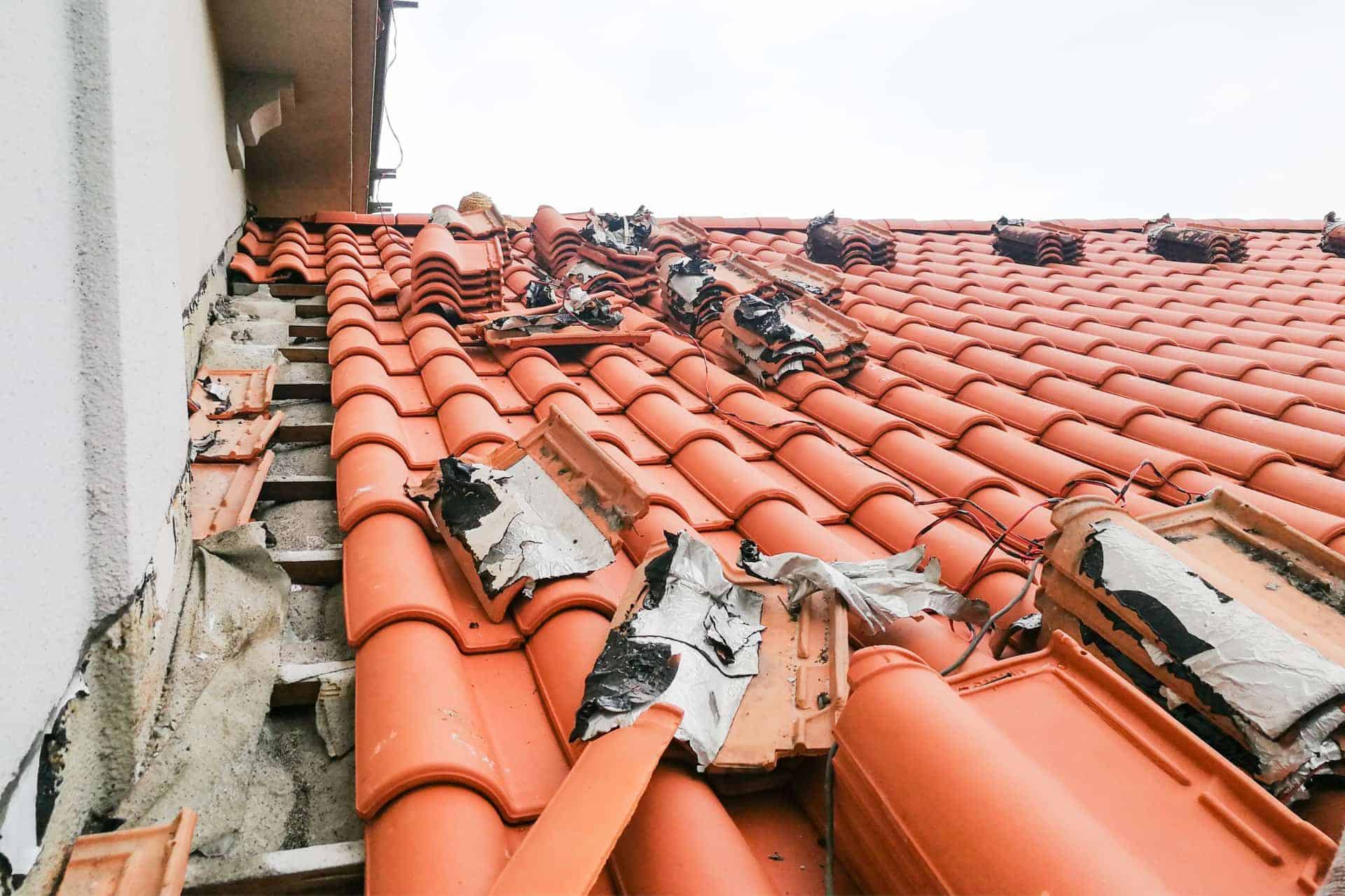
You spot a cracked tile near the ridge, or a few pieces have slid out of line after a windy storm. Maybe there’s a damp spot on the ceiling, maybe not yet. Either way, you need tile roof repair in Daytona Beach from someone who’ll tell you whether this is a small fix or a sign of something bigger, without jumping straight to a full replacement.
That’s a fair thing to want. Tile roofs cost a lot to replace, and it’s hard to judge from the driveway what’s going on under all that weight. You shouldn’t have to guess.
APC Roofing repairs clay and concrete tile roofs across the greater Daytona Beach area. We’re GAF Certified, licensed in Florida (CCC1337030) and insured, and your inspection is free.
Why a broken tile isn’t always where the leak is
The tile you see does most of the work of shedding rain. The layer under it, called the underlayment, is what actually keeps water out of your house. Rain that gets past the tile runs down that layer and off the edge of the roof.
So a cracked tile doesn’t always mean a leak, at least not right away. The trouble starts when the underlayment under that gap sits exposed to sun and rain. It breaks down much faster once the tile isn’t shading it. And when water does get through, it can run along the roof deck before it drips, so the stain on your ceiling may be several feet from the real opening.
That’s why a good tile repair starts with finding where water is getting in, not just swapping the broken piece you can see.
What Daytona-area weather does to a tile roof
Tile handles Florida sun well. The underlayment beneath it has a harder time. Years of heat build up in the space under the tile, and older felt underlayment dries out and cracks long before the tile itself wears.
Summer afternoon storms push heavy rain sideways off the ocean. Wind-driven water finds its way under slipped tiles, cracked ridge caps and loose pieces along the edges.
Hurricane season brings the biggest test. Wind pulls hardest at the eaves, the rakes, the hips and the ridge, so that’s where tiles tend to loosen or break first. A storm that passes offshore can still loosen enough pieces to start a leak.
Being close to the coast adds salt air, which is hard on metal. Flashing at walls, chimneys and valleys can corrode over time, and that metal is what keeps water out at every joint.
Common tile roof repairs
Most tile repairs fall into a handful of types:
- Cracked or broken tiles. Often from wind, a fallen branch or someone walking on the roof in the wrong spot. The broken piece comes out and a matching one goes in, set the same way as the tiles around it.
- Slipped or loose tiles. When the foam, fastener or clip holding a tile fails, it slides out of line. It gets reset and secured.
- Ridge and hip caps. Older mortar-set caps crack and work loose as they age. Loose caps are one of the most common sources of tile roof leaks.
- Flashing at walls, chimneys and valleys. If the metal has rusted or pulled away, the tiles around it are lifted so the flashing can be fixed properly, not covered with a bead of caulk that splits in a year.
- Pipe and vent flashings. A rubber boot made for shingles can’t seal against a curved tile, so these need flashing shaped to the tile.
Matching clay and concrete tile
Clay tile holds its color for a very long time because the color runs all the way through. Concrete tile is often colored mostly on the surface, so it fades on the sunny side of the house. A new concrete tile can look brighter than its neighbors for a while.
If your tile profile is still made, a close match is usually possible. If it’s been discontinued, the options are salvaged tile or the closest shape available. Either way, you’ll know what to expect before any work starts.
Repair, re-lay or replace?
If the underlayment is still in decent shape and the damage is limited to a few areas, a repair is usually the right call.
If the underlayment has failed across a whole slope, swapping tiles won’t stop the leaks. On some roofs the existing tile can be lifted, new underlayment put down and the sound tile set back in place. On others, a full tile roof installation makes more sense. Which way to go depends on the condition of the tile, the underlayment and the deck, and we’ll show you photos of all three.
One tip in the meantime: try to keep people off the roof. Tile breaks easily when it’s stepped on in the middle, and a lot of hidden cracks come from satellite installers, chimney sweeps or well-meaning relatives.
Storm damage and insurance
If a storm broke or loosened your tiles, you file your own claim with your insurance company and pay your own deductible. We inspect the roof, document the damage with photos, write up the estimate and work with your adjuster so the damage is clearly accounted for. Be wary of anyone who offers to waive or cover your deductible. More on storm work is on our hurricane damage roof repair page.
How tile roof repair works with APC Roofing
- Book your free inspection. Call 386-259-8425 or request a free estimate online. A roof inspection covers every slope, not just the spot you noticed.
- Get a clear, honest assessment and estimate. You’ll see photos of the broken tiles, the flashing and, where it matters, the underlayment, plus a written estimate that explains each item.
- Your roof gets repaired and the site cleaned up. Broken pieces are replaced, loose tiles are secured, and the crew picks up before leaving.
Financing is available through Aqua Finance, Fortifi, Hearth and Home Run Finance if you’d like to spread out the cost.
A small gap in a tile roof can stay quiet for a while. Underneath, though, sun and rain keep working on the underlayment and the wood, and a quick repair can turn into a slope that needs to come apart.
Tile roof repair questions from Daytona Beach homeowners
Can you replace just a few broken tiles?
Yes, as long as the underlayment under them is still sound. Broken pieces can be removed and replaced one at a time.
Will the new tiles match my roof?
If your tile profile is still made, we can usually get close. Concrete tile on an older roof has often faded, so a new piece may look a little different at first.
My ceiling stain is in a different spot from the broken tile. Is that normal?
It’s common. Water can run along the underlayment or roof deck before it drips, so the leak and the stain are often several feet apart.
Is a tile roof worth repairing, or should I replace it?
Tile itself lasts a long time. If the underlayment is in good shape, repairing is usually worth it. If the underlayment has worn out, a bigger job may be the better use of your money, and we’ll explain why.
Book a tile roof inspection in the Daytona Beach area
Call 386-259-8425 or start your free estimate online. For more on tile, see our Daytona-area tile roofing page.
What you’re after is a tile roof that stays dry through storm season, an honest answer about what it needs and no surprise bill. Trust matters, and that’s how we work.


















